how to limit screen time for kids
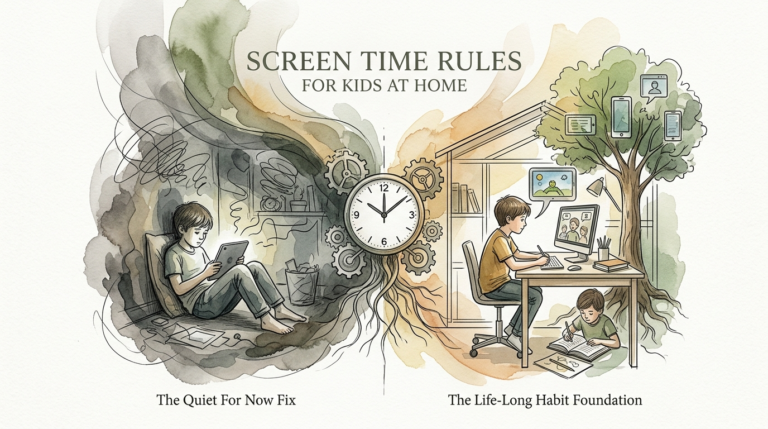
Pro parents don’t just ‘stop’ screen time; they ‘transition’ out of it. Here is the secret to zero-meltdown limits. Simply banning screens causes friction. The ‘Pro’ approach uses a buffer zone to help the brain transition from high-dopamine screens to low-dopamine reality. Limit screens without the fight.

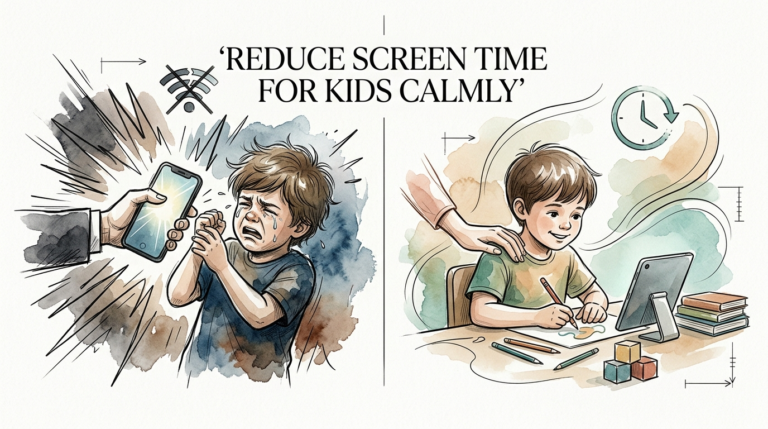
You have seen it before. The tablet comes out, and the peace follows. But then, the 20-minute limit expires. You reach for the device, and the explosion happens. Tears, screaming, and a mood that ruins the entire evening. It feels like you are fighting a losing battle against a piece of glass.

The problem is not your child’s behavior. The problem is biological. Screens are high-dopamine environments designed to keep the brain hooked. When you suddenly cut that supply, the brain experiences a “dopamine crash.” This crash triggers a stress response in the amygdala, the emotional center of the brain. You aren’t just taking away a toy; you are causing a physiological withdrawal.
Pro parents use a different playbook. They understand that the brain needs a braking distance. Instead of a hard stop, they build a bridge. This guide will show you exactly how to implement the Buffer Zone strategy to reclaim your family’s peace and help your child build a healthy relationship with technology.
how to limit screen time for kids
Limiting screen time for kids is the process of setting intentional boundaries on digital consumption to protect a child’s neurological and emotional development. It is not about being “anti-tech.” It is about being “pro-brain.” Screens provide rapid-fire rewards that a developing prefrontal cortex—the part of the brain responsible for impulse control—simply cannot handle on its own.
In the real world, this looks like moving away from rigid “minutes per day” rules and moving toward a “rhythm of life” approach. Current pediatric guidelines have shifted. Experts now suggest that the quality of content and the context of use are just as important as the quantity of time. A child spending an hour video-calling a grandparent is doing something very different than a child scrolling through 15-second autoplay videos.
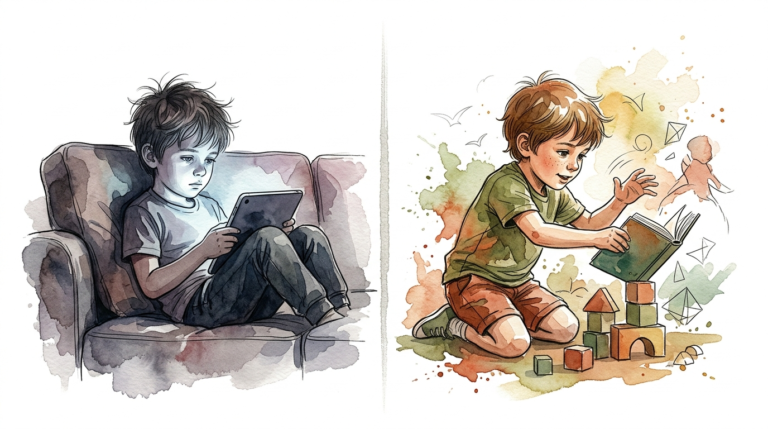
The “why” behind these limits is simple: balance. When a child is glued to a screen, they are missing out on “green time” (nature), “social time” (face-to-face interaction), and “boredom time” (where creativity is born). By setting limits, you are creating space for the activities that actually build a resilient, happy human being. Think of screen time like dessert. It is fine in moderation, but it cannot be the whole meal.
The Science of the Dopamine Loop
Every like, every level-up, and every new video triggers a hit of dopamine in the brain. This is a neurotransmitter linked to motivation and reward. Because children’s brains are still under construction, they are particularly vulnerable to these “dopamine loops.” When the screen goes black, those dopamine levels drop sharply. This leaves the child feeling irritable, resentful, and dysregulated.
This is why the standard “just turn it off” method fails. It is like asking a car going 100 mph to stop instantly. There is going to be a wreck. The buffer zone acts as the brakes, allowing the brain to slow down and prepare for the low-arousal reality of everyday life.
How the Buffer Zone Strategy Works Step-by-Step
Transitioning away from screens requires a strategic sequence of events. You cannot just yell from the kitchen and expect compliance. You must enter their world and guide them back to yours. Here is how the pros do it.
Step 1: The Connection Bridge
Before you even mention the time, sit down next to your child. Look at what they are doing. Ask a genuine question. “Whoa, how did you build that castle in Minecraft?” or “What is happening in this video?” By doing this, you are validating their engagement. You are shifting from an adversary who takes things away to a partner who is interested in their world. This lowers their defensive guard immediately.
Step 2: The Incremental Warnings
Time blindness is a real thing for children, especially those with ADHD. They genuinely do not know how much time has passed. Give them a 10-minute, 5-minute, and 1-minute warning. But here is the secret: make sure they acknowledge it. Have them repeat the time back to you. Use a visual timer if possible so they can see the “red” disappearing. This makes the abstract concept of time concrete.
Step 3: The Natural Ending
Don’t stop them mid-sentence or mid-boss-fight. Find a “natural break.” Ask, “How many more rounds do you have left?” or “Tell me when this video is over.” Giving them the power to choose the exact stopping point within a 2-minute window provides a sense of autonomy. This reduces the urge to fight back because they feel in control of the ending.
Step 4: The Physical Reset
The transition from a high-dopamine screen to a “boring” room is jarring. Break the spell with physical movement. Have them do five jumping jacks, a “big stretch,” or a quick run to the kitchen. Physical activity stimulates different neural pathways and helps reset the nervous system. It “shakes off” the digital fog and brings them back into their body.
Step 5: The “What’s Next” Landing
Never end screen time into a vacuum. A brain coming off a dopamine high needs a landing pad. “We are turning off the iPad now so we can go set the table for taco night” or “Once the TV is off, we are going to start the Lego challenge.” Give them a low-stress, engaging activity to transition into. This prevents the “I’m bored” meltdown that often leads right back to more screen requests.
Benefits of the Buffer Zone Approach
Using a transition strategy rather than a hard ban offers measurable improvements in family dynamics and child development. When you stop the fighting, you start the healing.
- Reduced Emotional Dysregulation: By preventing the dopamine crash, you see fewer meltdowns and less aggression during transitions.
- Improved Executive Function: Helping a child manage their own transitions builds the prefrontal cortex. They learn how to self-regulate, a skill that carries over into school and future careers.
- Strengthened Parent-Child Bond: You stop being the “bad guy” who takes away the fun and become the guide who helps them navigate their day.
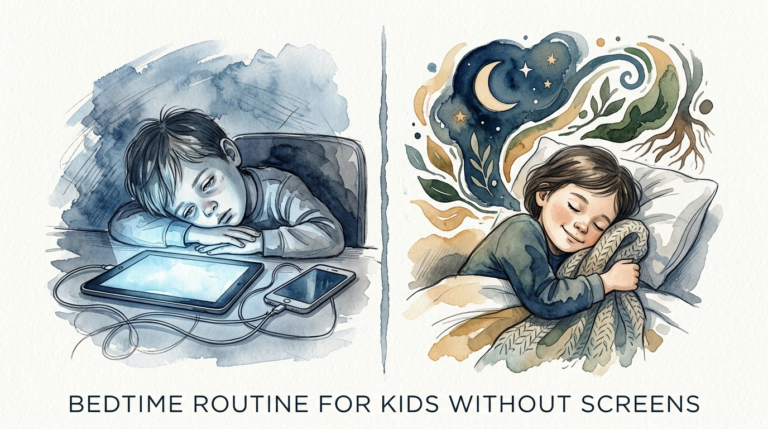
- Better Sleep Quality: Implementing a buffer zone that includes a “no-screen hour” before bed allows melatonin to rise naturally, leading to faster sleep onset and deeper rest.
- Increased Creativity: When screens are limited intentionally, children are forced to engage with their physical environment, leading to imaginative play and problem-solving.
Challenges and Common Mistakes
Even with a great strategy, hurdles will appear. The key is recognizing them before they derail your progress. Most screen-time failures come from a lack of consistency or a misunderstanding of the child’s brain.
The “One More Minute” Trap: This is the most common pitfall. You give a warning, they beg for one more minute, and you give in. You have just taught them that boundaries are negotiable. If you give an inch, they will take a mile every single time. Stick to the agreed-upon stopping point, even if it is difficult.
Using Screens as a “Default” Babysitter: It is tempting to hand over the phone whenever you need 10 minutes of peace. While occasionally necessary, making it a habit creates an expectation. When the screen is used to manage a child’s boredom or big emotions, they never learn how to manage those feelings themselves.
Inconsistent Consequences: If the rules change based on your mood or energy level, the child becomes confused. They will push the limits every day just to see where the line is today. Clear, predictable rules actually reduce anxiety for children.
Empty Threats: Saying “If you don’t turn that off now, I’m throwing it in the trash” is a losing move. You won’t actually do it, and the child knows it. This undermines your authority and increases friction.
Limitations: When the Buffer Zone Needs Tweaking
The Buffer Zone strategy is powerful, but it is not a magic wand for every situation. There are times when environmental or neurological factors require a different approach.
For neurodivergent children, such as those with ADHD or Autism, transitions are significantly harder. Their brains can “hyper-focus” on digital content to the point where they truly do not hear your voice. In these cases, a 5-minute warning might need to be a physical touch on the shoulder and a visual countdown timer placed directly in their line of sight. The transition might take 20 minutes instead of five.
Environmental factors also play a role. If a child is in a high-stress environment or going through a major life change (like a move or a new sibling), their reliance on screens as a “security blanket” may increase. During these times, a rigid transition might cause more harm than good. Flexibility is a tool, not a failure of the system.
Finally, the strategy depends on the content. If a child is playing a highly competitive online game where they cannot pause without being penalized by their team, the “natural ending” is more complex. You must plan for these specific games by setting limits based on “matches” rather than “minutes.”
Comparing the Standard Ban vs. Pro Buffer Zone
| Feature | Standard ‘No Screens’ Ban | Pro ‘Buffer Zone’ Strategy |
|---|---|---|
| Primary Goal | Immediate compliance/Control | Neurological transition/Regulation |
| Atmosphere | Confrontational / High-Stress | Collaborative / Low-Stress |
| Brain Impact | Dopamine Crash / Amygdala Hijack | Gradual Descent / Prefrontal Engagement |
| Long-term Skill | Avoidance/Sneaking | Self-Regulation/Digital Literacy |
| Success Rate | Low (leads to daily fights) | High (creates lasting habits) |
Practical Tips and Best Practices
Implementation is where the theory hits the road. Use these practical tools to make the transition smoother today.
- Use Visual Timers: Apps or physical “sand” timers work wonders. Children who cannot read a clock can see the time disappearing. This removes the “you’re being mean” element because the timer is the one setting the limit.
- Create a Family Media Agreement: Sit down as a family and write out the rules. When everyone agrees on the limits during a calm moment, there is less resistance when the limit is actually enforced.
- Model the Behavior: You cannot ask your child to put down their tablet if you are constantly scrolling through your phone. Set “phone-free zones” for the whole family, especially during meals.
- Leverage Built-in Tools: Use Apple’s Screen Time or Google’s Family Link to set hard “downtime” limits. This automates the process and makes the device itself the one that “shuts off,” which redirects the child’s frustration away from the parent.
- Curate High-Quality Content: Encourage slow-paced educational content or creative apps over high-intensity, fast-cut videos. Content that requires active problem-solving is less likely to cause a dopamine-driven meltdown.
Advanced Considerations for Long-Term Success
As your child grows, the “how to limit screen time for kids” question evolves. A toddler needs a distraction; a teenager needs a discussion. For older children, the goal shifts from limitation to literacy. You want them to eventually be able to recognize their own digital fatigue and put the phone down themselves.
Talk to them about how apps are designed. Explain the “infinite scroll” and how notifications are meant to pull their attention. When a child understands that they are being “hacked” by an app developer, they often feel a sense of rebellion against the screen rather than against you. This builds critical thinking and autonomy.
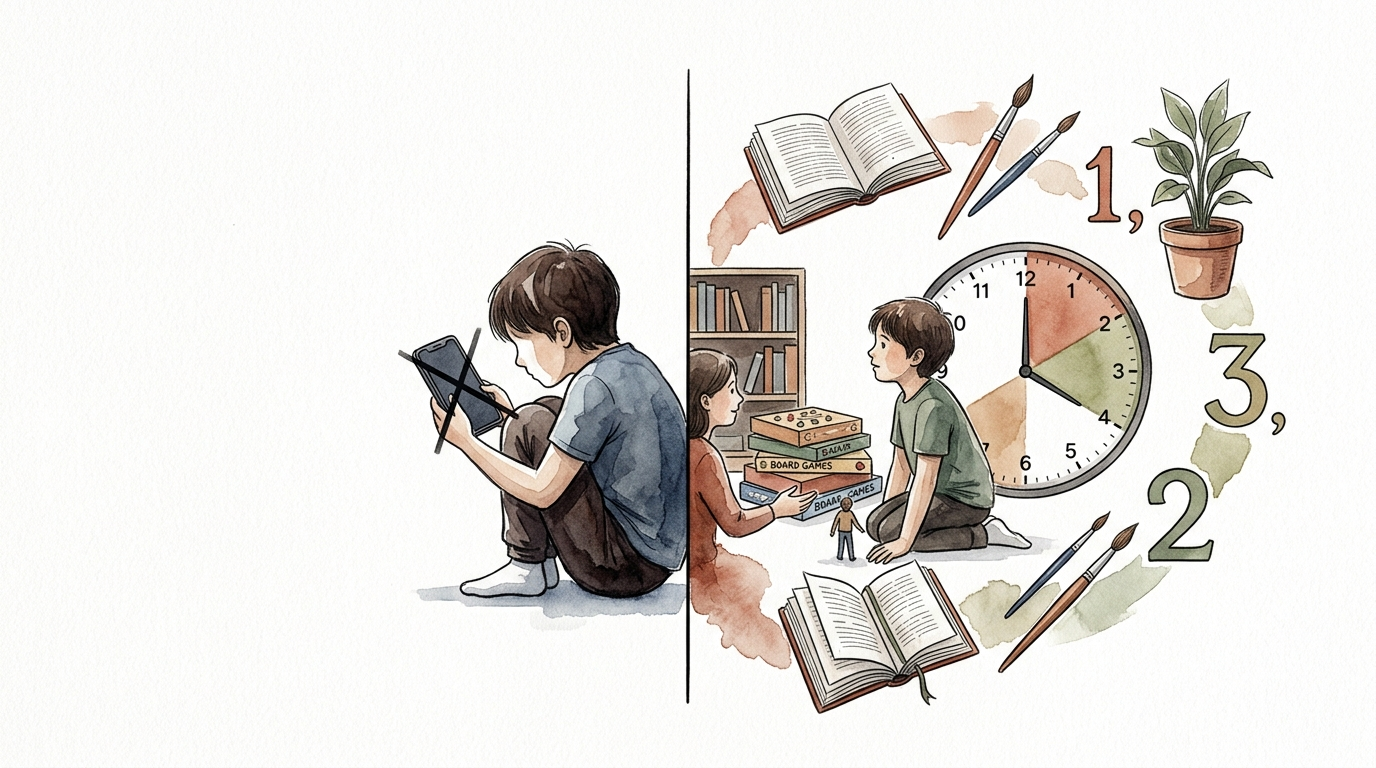
Also, consider the “substitution” principle. If you take away an hour of screen time, you must ensure they have high-quality alternatives available. If the only thing to do is sit in a clean room, they will fight for the screen. Ensure they have access to creative tools, books, sports equipment, or social opportunities. The goal is to make reality more interesting than the digital world.
Example Scenario: The Minecraft Transition
Let’s look at a real-world application. Imagine your 8-year-old is deep into a Minecraft build. Usually, you’d yell from the door, “Dinner in five minutes!” and then spend 15 minutes fighting them to get to the table. Here is the Pro Transition:
At 15 minutes out: You walk into the room and sit on the edge of the bed. “Whoa, look at that redstone circuit! What does it do?” You spend 60 seconds listening. Then you say, “Okay, we have 10 minutes until dinner. What is one thing you want to finish before you save the game?” They pick a task. You both agree: task done = screen off.
At 5 minutes out: You poke your head in. “5 minutes! You’re halfway through that task. Can’t wait to see it finished.”
At 0 minutes: You walk in. “Time’s up! Show me the finished product.” They show you. You say, “That is awesome. Now, give me five big jumps to the kitchen—go!” They jump out of the room, the physical movement breaks the digital spell, and they arrive at the dinner table regulated and ready to eat.
Final Thoughts
Managing screen time is not a one-day fix. It is a long-term strategy that requires patience and a deep understanding of how your child’s brain works. By moving away from the “stop and fight” model and adopting the “transition and bridge” approach, you are giving your child the tools they need to thrive in a digital world. You are teaching them that technology is a tool to be used, not a master to be served.
Remember that you will have off days. There will be times when the meltdown happens despite your best efforts. That’s okay. The goal is not perfection; it is progress. Every time you successfully navigate a transition using a buffer zone, you are strengthening your child’s prefrontal cortex and building a more peaceful home environment. Stay consistent, stay connected, and keep building those bridges.
Start small. Choose one screen-time transition today—maybe the one before bed or the one before homework—and try the Buffer Zone strategy. You might be surprised at how quickly the “fight” turns into a “flow.”
Sources
1 childrenandscreens.org | 2 thescreenguardians.com | 3 nurture.is | 4 peaceathomeparenting.com | 5 peaceathomeparenting.com | 6 freyadawson.com.au | 7 childhealthassociatespc.com | 8 aap.org | 9 parentingwithfocus.org | 10 myscreencoach.com | 11 carolinaadhdcoaching.com | 12 umich.edu | 13 childcareed.com | 14 screenagersmovie.com | 15 sf-stemful.com | 16 commonwealthpeds.com