no phone summer challenge
Your attention span has become fragile. It’s time to rebuild your mental resilience. Modern tech has made our focus fragile. This 30-day challenge is designed to make your mind resilient again. Can you handle the silence? #SummerChallenge #MentalHealth
Living in the digital age means navigating a world designed to steal your attention. Every notification, red dot, and infinite scroll is a calculated attempt to keep you plugged in. Over time, this constant stimulation erodes your ability to focus on deep, meaningful tasks. This isn’t just a hunch; it is a documented neurological shift where our brains prioritize quick hits of dopamine over long-term fulfillment.
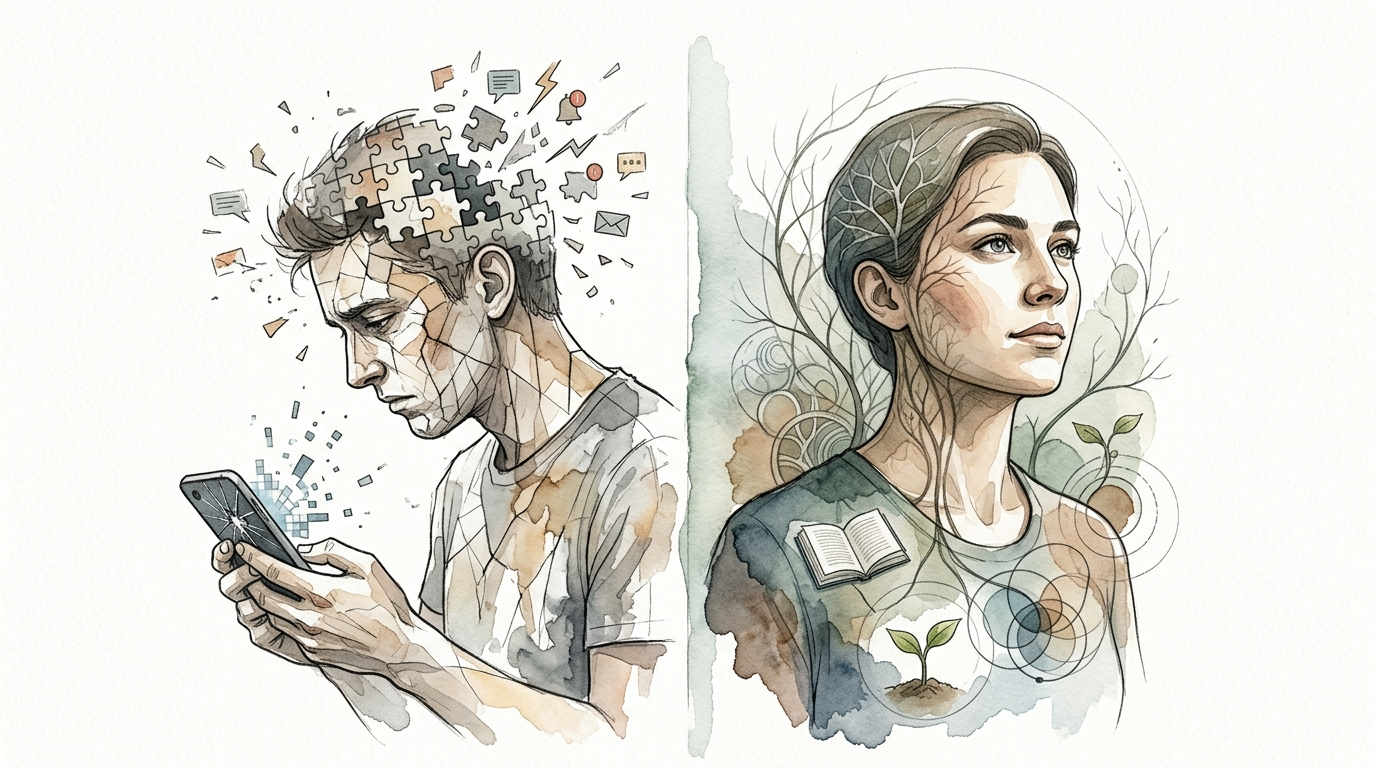
Reclaiming your mind requires more than just a quick break. It demands a structured reset. The goal of this challenge is not to delete technology forever, but to rebuild your relationship with it from the ground up. You are moving from a state of “Fragile Focus,” where every buzz interrupts your flow, to a “Resilient Mind,” capable of sustained concentration and genuine presence.
no phone summer challenge
The no phone summer challenge is a 30-day developmental experiment designed to break the cycle of digital dependency. It is a structured “digital detox” that targets the compulsive habits we have built around our smartphones. Instead of using your phone as a default for every spare second of boredom, you learn to sit with the silence and engage with the physical world again.
In the real world, this challenge is used by high-performance athletes, creative professionals, and students who have noticed their productivity slipping. It exists because the average person now checks their phone over 144 times per day, often without a specific reason [1.4.2]. This behavior creates a “fragmented” existence where we are never fully present in our surroundings or our thoughts.
Think of your phone usage like a diet. Most of us are consuming “digital junk food”—short-form videos, endless news cycles, and social media likes—that provide zero nutritional value for the brain. This challenge is a 30-day “cleanse” meant to reset your internal rewards system. It pushes you to replace the glass screen with tangible activities like reading physical books, walking in nature, or having uninterrupted conversations.
Summer is the ideal time for this reset. The longer days and warmer weather provide natural opportunities for outdoor activities that don’t require a screen [1.3.8]. Whether you are at a backyard barbecue or walking through a local park, the “no phone summer” mindset encourages you to capture the memory with your eyes rather than your camera lens.
How It Works: The 4-Week Framework
Successfully completing a 30-day challenge requires a plan that scales in difficulty. Going “cold turkey” on day one often leads to immediate failure because the brain hasn’t been prepared for the sudden drop in dopamine. This framework is broken into four distinct phases to help you transition from dependency to autonomy.
Week 1: Awareness and Notification Assassination
The first seven days are about seeing the problem clearly. You cannot fix what you do not measure. Start by checking your built-in screen time report to see exactly where your hours are going [1.1.6]. Most people are shocked to find they spend the equivalent of a full workweek every month just scrolling [1.4.9].
During this week, your primary task is to “assassinate” your notifications. Turn off every non-human alert. This means no “likes,” no news alerts, and no promotional pings. If a human isn’t reaching out to you personally, your phone should not make a sound. This simple step immediately reduces the “switch cost” that ruins your focus throughout the day.
Week 2: Boundary Setting and Tech-Free Zones
Once the noise is reduced, you must establish physical boundaries. Define specific “No-Go” zones in your home. The bedroom and the dining table are the most critical areas to reclaim. Using your phone in bed disrupts your circadian rhythm and delays sleep onset [1.4.4].
Establish a “Screen-Free Morning” ritual. Do not touch your phone for the first hour after you wake up [1.3.3]. This prevents your brain from starting the day in a reactive state. Instead of responding to the world’s demands, you spend your first hour on your own terms—meditating, stretching, or enjoying a quiet breakfast.
Week 3: Deep Detox and The 72-Hour Reset
This is the most challenging phase. It involves removing the most addictive apps—usually social media and mobile games—entirely for seven days. Research suggests that 72 hours of intentional “digital silence” is the minimum time required to kickstart neuroplasticity and begin rewiring your brain’s craving circuits [1.5.3, 1.5.7].
Expect to feel “phantom buzzes” during this week. These are sensations where you feel your phone vibrating in your pocket even when it isn’t there [1.5.5]. This is a physiological withdrawal symptom. Sit with the discomfort. Use this time to engage in “slow” hobbies like journaling, gardening, or long-form reading that require sustained attention.
Week 4: Rebuilding the Baseline
The final week is about intentional re-entry. You aren’t going back to your old habits; you are designing new ones. Re-download only the apps that provide genuine value or are necessary for work. Set strict app limits for anything that tends to lead to mindless scrolling [1.1.6].
Implement a “Digital Sabbath”—one full day per week (usually Sunday) where the phone stays in a drawer for 24 hours. This practice ensures that the resilience you built over the month becomes a permanent part of your lifestyle. You have moved from being a victim of the attention economy to a conscious user of a tool.
Benefits of Reclaiming Your Mind
The practical benefits of a no-phone summer are measurable and immediate. Within the first week, most participants report a significant reduction in “background anxiety.” This is the low-grade stress caused by the constant need to check for updates or respond to messages [1.2.3].
Improved Cognitive Function: When you stop multitasking with your phone, your “deep work” capacity increases. You will find it easier to read for an hour, solve complex problems, and engage in creative thinking. Your prefrontal cortex—the part of the brain responsible for executive function—begins to recover from the constant “ego depletion” caused by digital noise [1.5.3, 1.5.8].
Physical Health Recovery: Reducing screen time directly impacts your sleep quality. By cutting out blue light and the high-alert state of scrolling before bed, you fall asleep faster and reach deeper stages of REM sleep [1.4.4]. Many participants also find they move more, simply because they aren’t sitting on a couch for five hours a day staring at a screen [1.3.4].
Emotional Stability: Constant social media use often leads to “social comparison,” where you judge your internal life against everyone else’s curated highlight reel [1.2.5]. Stepping away removes this trigger, allowing your self-esteem to stabilize. You start living for your own experiences rather than for the “likes” they might generate.
Challenges and Common Mistakes
The biggest challenge you will face is the “Dopamine Deficit State.” When you remove the constant stream of high-stimulation content, your brain will feel bored and restless. This is not a sign that you are doing something wrong; it is a sign that your brain is healing from overstimulation [1.5.2].
The “Emergency” Fallacy: Many people fail because they convince themselves they *must* have their phone on them at all times for emergencies. While safety is important, the reality is that 99% of “emergencies” can wait 30 minutes. If you are truly worried, give your close family a way to reach you via a landline or a smartwatch with limited functionality.
Passive Replacement: A common mistake is replacing phone scrolling with another screen, like a television or a laptop. To get the full benefits, you must replace the digital input with analog output. If you are bored, don’t just switch screens; go for a walk, write in a journal, or clean your living space.
Lack of Accountability: It is incredibly hard to do this alone when everyone around you is still glued to their devices. Find a partner or a group of friends to join the challenge with you [1.3.7]. Having someone to text (from a computer) or call to discuss your progress makes it much more likely that you will stick to the rules.
Limitations and Realistic Constraints
While the goal is a “no phone” summer, total abstinence is often impossible in a modern economy. Many jobs require 2FA (Two-Factor Authentication) or communication via specific apps. Acknowledge these “utilitarian” uses early on so you don’t feel like a failure when you have to use your device for work.
The Social Coordination Barrier: Our social lives are now built on instant messaging. If you suddenly disappear from group chats, your friends might think something is wrong. The solution is to communicate your intentions clearly before you start. Tell your inner circle: “I’m doing a 30-day reset. If you need me, call me. I won’t be checking texts until the evening.”
Environmental Pressure: We live in a world that assumes everyone has a smartphone. From digital menus at restaurants to boarding passes at airports, the “analog” path is often the harder one. Prepare for this by printing tickets in advance or asking for a physical menu. These small hurdles are part of the challenge—they test your resolve to stay present.
Fragile Focus vs. Resilient Mind
To understand why this challenge matters, we have to look at the two different states of human attention. Most modern humans operate in a state of Fragile Focus. This is a state where your attention is easily shattered by the slightest external stimulus. A Resilient Mind, however, can ignore distractions and stay deeply engaged in a single task for extended periods.
| Feature | Fragile Focus (Current State) | Resilient Mind (Target State) |
|---|---|---|
| Distractibility | High; interrupted by every notification. | Low; can ignore external pings. |
| Mental Energy | Rapidly depleted by multitasking. | Sustained; focused on one task. |
| Information Processing | Shallow; skims headlines and clips. | Deep; absorbs complex information. |
| Emotional State | Reactive, anxious, and FOMO-driven. | Stable, calm, and present. |
| Boredom Tolerance | Zero; must reach for phone instantly. | High; views boredom as a creative spark. |
Developing a Resilient Mind is like building a muscle. It requires “progressive overload.” Each time you feel the urge to check your phone but decide to stay present instead, you are strengthening the neural pathways responsible for self-control [1.5.4, 1.5.7]. Over 30 days, these small wins accumulate into a significant cognitive shift.
Practical Tips for Immediate Application
You don’t need a lifestyle overhaul to start. There are several “friction” techniques you can use to make your phone less appealing to your brain. The goal is to make the mindless choice harder to execute.
- Activate Grayscale Mode: Most of the addiction to smartphones comes from the bright, vibrant colors of the icons. Switching your phone to black-and-white (Grayscale) immediately reduces the dopamine hit you get from looking at the screen [1.5.4].
- The “Out of Sight” Rule: If you are working or eating, keep your phone in another room. Research shows that just having a phone on the table—even if it is face down—reduces your cognitive performance [1.3.9, 1.5.5].
- Carry an “Analog Companion”: Always have a physical book, a notebook, or a deck of cards with you. When you are waiting in line or sitting on a train, reach for the analog item instead of your pocket.
- Use a “Dumb” Watch: Stop using your phone to check the time. Every time you pick up your phone to “just check the time,” you risk seeing a notification and falling into a 20-minute scroll hole.
Advanced Considerations for Long-Term Change
For those who want to go beyond the 30-day reset, consider the concept of “Digital Minimalism.” This philosophy, popularized by Cal Newport, suggests that we should only use tools that provide a massive benefit to our lives, rather than using every shiny new app that comes out [1.2.2].
Neurobiological Recovery: Be aware that your brain’s dopamine receptors will take time to upregulate. In the first week, things that used to be fun might feel “boring.” Stick with it. As your receptors recover, you will find that “normal” things—like a conversation with a friend or a walk in the sun—start to feel much more rewarding than they did when you were constantly overstimulated [1.5.2, 1.5.6].
Identity Shifting: The most successful participants are those who change how they view themselves. Instead of saying “I’m trying to use my phone less,” say “I am the kind of person who is present and doesn’t get distracted by screens.” This shift in identity makes the daily choices much easier to maintain.
Scenario: A Weekend Without the “Digital Leash”
Imagine a Saturday morning during this challenge. Usually, you would spend the first 45 minutes of your day in bed, scrolling through news that makes you angry or social posts that make you feel inadequate. Your brain would be “fried” before you even had coffee.
Instead, you wake up and leave the phone on the charger in the kitchen. You make coffee and sit on your porch, listening to the birds. You notice the way the light hits the trees. Because your mind isn’t searching for the next “hit,” your thoughts start to wander. You remember a creative project you wanted to start months ago. You spend the afternoon at a local lake, completely untethered. You don’t take a single photo, yet the memories of the water and the laughter of your friends feel more vivid than any digital image ever could.
By Sunday evening, you feel “full” rather than drained. You have more energy for the coming week because you actually rested. This isn’t a fantasy; it is the natural state of a Resilient Mind when it is allowed to disconnect from the noise.
Final Thoughts
The no phone summer challenge is not about hating technology. It is about loving your own attention enough to protect it. Our ability to focus is our most valuable asset, and it is under constant siege. By taking 30 days to step back, you aren’t missing out on the world; you are finally seeing it clearly.
Rebuilding your mental resilience is a journey of small, daily choices. Some days will be easy, and some will feel like a struggle against a physical addiction. But at the end of the month, you will have something that 99% of people have lost: the ability to sit in silence, think deeply, and be fully present in your own life. Start today by turning off your notifications. Your mind will thank you.
Sources
1 medium.com | 2 medium.com | 3 insightspsychology.org | 4 powerhouseplanners.com | 5 hiddengemsaba.com | 6 positivepsychology.com | 7 frontiersin.org | 8 sagetherapy.com | 9 reddit.com | 10 ordinaryandhappy.com | 11 ch-dc.org | 12 regis.edu | 13 regis.edu | 14 substack.com | 15 refreshpsychiatry.com | 16 augustinerecovery.com | 17 thechallenge.org | 18 washingtonpost.com | 19 mindfulsuite.com