educational activities for kids easy
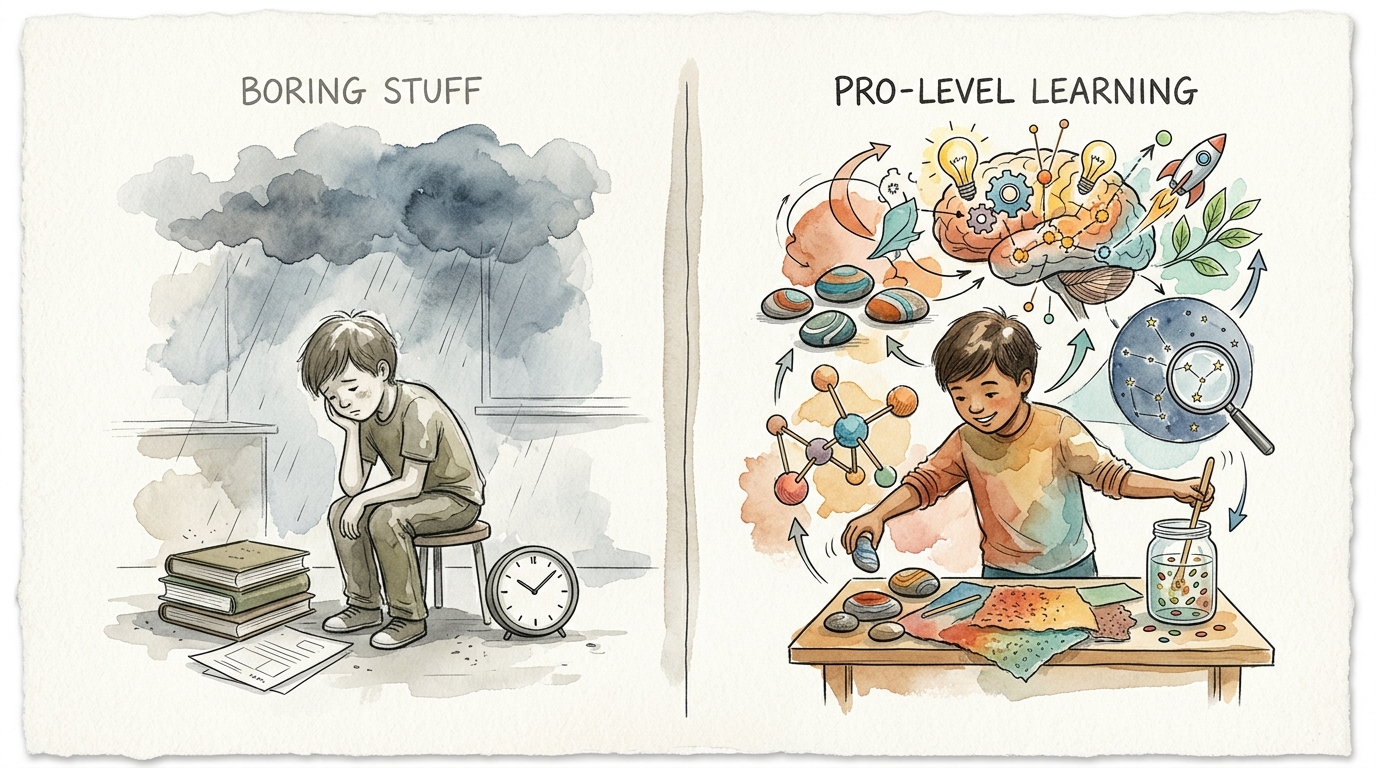
Stop the brain drain and start the discovery with these low-prep ideas. Standard play is passive. Pro-level play is active discovery. Transform your afternoon with these 10 easy educational activities that require zero prep but deliver maximum engagement.
Everything around your house is a laboratory waiting to happen. You do not need a subscription box or a Pinterest-perfect craft room to ignite a child’s curiosity. In fact, some of the most profound learning occurs when children engage with the mundane objects of their daily lives.
This guide will show you how to turn a kitchen sink into a physics lab and a pile of pillows into an engineering challenge. We are moving beyond the “sit and watch” model of entertainment and into the “do and discover” realm of active learning.
educational activities for kids easy
Finding educational activities for kids easy enough to do on a whim is the holy grail for busy parents and educators. At its core, “easy” educational play refers to activities that use readily available materials—things you already have in your junk drawer, pantry, or backyard—to teach fundamental concepts in STEM, literacy, and social-emotional development.
These activities exist because children are natural scientists. They are biologically wired to test hypotheses, observe patterns, and solve problems through trial and error. When we provide low-prep setups, we are simply clearing the path for their natural instincts to take over.
In the real world, this type of learning is everywhere. An architect uses spatial reasoning first learned while building pillow forts. A programmer uses the same logic used in a scavenger hunt to debug code. By focusing on these easy, high-impact activities, you are building the neural scaffolding that supports complex thinking later in life.
How Active Discovery Works: The Science of Scaffolding
Active discovery works through a concept known as “scaffolding.” This is a temporary structure you provide to help a child reach a learning goal they couldn’t achieve alone. Just like a construction scaffold, you provide the support—the idea, the materials, the “what if” question—and then slowly remove it as the child gains mastery.
Psychologists often refer to the “Zone of Proximal Development” (ZPD). This is the sweet spot between what a child can do independently and what they can do with a little bit of help. Educational activities for kids easy enough for daily use aim for this ZPD. They aren’t so hard that the child quits in frustration, but they aren’t so easy that the child gets bored.
The underlying principle is “guided play.” In this model, the adult sets the stage but the child directs the action. Research shows that when children are active creators and problem-solvers rather than passive recipients of information, they retain knowledge more effectively and develop stronger executive functions.
10 Pro-Level Educational Activities for Kids (Zero Prep)
1. The Kitchen Sink Physics Lab (Sink or Float)
This is the ultimate entry-level science experiment. All you need is a sink or a plastic bin filled with water and a handful of household objects (a spoon, a cork, a plastic toy, a grape, a coin).
- The Process: Before dropping each item, ask the child to make a prediction. Will it sink or float? Why?
- The Lesson: This introduces density and buoyancy. They learn that size doesn’t always determine weight and that some materials are “heavier” for their size than others.
- Pro Tip: Take it further by adding salt to the water to see if it changes the results, introducing the concept of water density.
2. Shadow Trace Theater
If the sun is out, you have a science lab. If it’s dark, grab a flashlight. Place various toys on a piece of paper and trace their shadows.
- The Process: Have the child trace the shadow at 10:00 AM, then again at 2:00 PM without moving the object.
- The Lesson: This teaches optics and the movement of the Earth. It demonstrates how the angle of light changes the shape and length of a shadow.
- Logic: Children begin to understand that light travels in straight lines and is blocked by opaque objects.
3. The Great Household Pattern Hunt
Patterns are the foundation of mathematics. This activity requires nothing but your eyes.
- The Process: Challenge the child to find “AB” patterns (red sock, blue sock) or “AAB” patterns in the house. Check floor tiles, wallpaper, or even the arrangement of windows.
- The Lesson: This builds algebraic thinking. Recognizing and predicting patterns is a precursor to understanding functions and sequences in higher math.
4. Non-Standard Measurement Challenge
Forget the ruler. Today, we measure the hallway in “shoes” or the couch in “remote controls.”
- The Process: Ask the child to guess how many “spoons” long the kitchen table is. Then, have them lay spoons end-to-end to verify.
- The Lesson: This teaches spatial awareness and the concept of standard vs. non-standard units. It helps them understand that “length” is a relative value.
5. The Alphabet Post-It Race
Write letters on Post-It notes and stick them all over a room at different heights.
- The Process: Call out a sound (not just the letter name) like “Find the thing that makes the ‘Buh’ sound!” or “Race to find the letter that starts the word CAT!”
- The Lesson: This combines gross motor skills with phonics. It is “kinesthetic learning,” where movement helps the brain encode the information faster.
6. The Logic of Lids and Jars
Go to your Tupperware drawer or recycling bin. Take the lids off 5-10 different containers and mix them up.
- The Process: Ask the child to find the “match” for each container.
- The Lesson: This is fundamental geometry and mechanical engineering. They are learning about circumference, diameter, and threading (if the lids screw on).
- Advantage: It builds fine motor strength and problem-solving resilience.
7. Rice or Bean Sensory Bin Quantification
Fill a bin with dry rice, beans, or even water. Provide different sized cups and scoops.
- The Process: Ask, “How many small scoops does it take to fill the big cup?”
- The Lesson: This is a hands-on introduction to volume and estimation. It’s early calculus—understanding how many small parts make up a whole.
8. Pillow Obstacle Course Engineering
Use every pillow, cushion, and blanket in the living room.
- The Process: The child must build a path from one side of the room to the other without touching the “lava” (the floor).
- The Lesson: This is structural engineering and gross motor planning. They have to decide which cushions are stable enough to stand on and how to bridge gaps.
9. Household Story Stones (Object Narratives)
Gather three random objects: a key, a toy dinosaur, and a whisk.
- The Process: The child must tell a story that connects all three items. “The dinosaur used the whisk to cook, but he lost the key to the kitchen!”
- The Lesson: This develops narrative structure, vocabulary, and creative sequencing. These are the core pillars of literacy.
10. Reverse Charades (Social-Emotional Learning)
One person acts out an emotion or a simple action (like “feeling cold” or “being excited”) without speaking.
- The Process: The other person has to guess the feeling.
- The Lesson: This focuses on non-verbal communication and empathy. Learning to read body language is a critical social skill that often gets lost in digital communication.
The Practical Benefits of Low-Prep Play
Choosing educational activities for kids easy enough to start in seconds offers more than just a momentary distraction. The benefits are measurable and long-lasting:
- Executive Function: Activities like the pillow obstacle course require planning, working memory, and cognitive flexibility. These are the “CEO” skills of the brain.
- Scientific Literacy: By asking “Why do you think that happened?” during a sink-or-float session, you are teaching the scientific method before they even know the word “hypothesis.”
- Independence: Because these activities use everyday items, children often learn how to initiate their own play without needing an adult to buy a new kit or set up a complex game.
- Zero Cost: High-level discovery doesn’t have a price tag. It relies on curiosity and the resources already in your environment.
Challenges and Common Mistakes to Avoid
Even with the best educational activities for kids easy setups, things can go sideways. Here are common pitfalls and how to avoid them:
- The “Taskmaster” Trap: Don’t treat these activities like a school assignment. If you focus too much on the “right” answer, the child will stop exploring. If the child thinks a rock will float, let them drop it. The splash is the teacher.
- Over-Explaining: Adults often talk too much. If you explain the physics of buoyancy for ten minutes before the first drop, the child’s brain will check out. Provide the materials, ask one question, and step back.
- Mistaking Mess for Failure: A rice sensory bin will likely result in rice on the floor. An engineering challenge might result in a collapsed pillow fort. This is part of the process. If you are too worried about the mess, the child will feel your stress and stop taking risks.
Limitations: When Low-Prep Isn’t Enough
While educational activities for kids easy setups are powerful, they have realistic boundaries. They are excellent for “discovery” but may not be ideal for “mastery” of specific rote skills like multiplication tables or spelling rules, which sometimes require more structured repetition.
Environmental limitations also play a role. If you live in a small apartment, a “gross motor obstacle course” might be physically impossible. In those cases, you have to trade “big movement” for “fine motor” activities, like the lid-matching game. Additionally, these activities rely heavily on the child’s current attention span. If a child is tired or hungry, even the most engaging shadow tracing won’t work.
Comparing Passive vs. Active Play
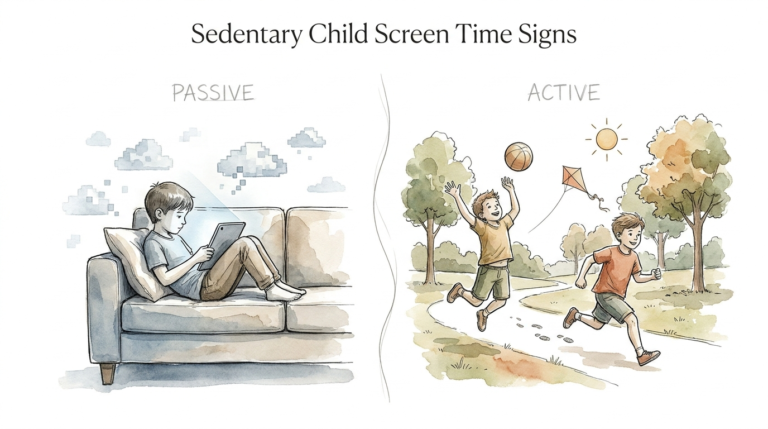
The difference between standard passive play (like watching a video) and pro-level active discovery is profound.
| Factor | Passive Play (Standard) | Active Discovery (Pro-Level) |
|---|---|---|
| Brain State | Alpha waves (Relaxed/Consumer) | Beta/Gamma waves (Problem Solving) |
| Retention | Low (Information in, Information out) | High (Internalized through doing) |
| Prep Level | Zero (Pushing ‘Play’) | Minimal (Gathering household items) |
| Skill Built | Observation | Innovation and Critical Thinking |
| Social Link | Isolated | Collaborative/Communicative |
Practical Tips for Success
To get the most out of these educational activities for kids easy ideas, follow these best practices:
- Set the Stage: Instead of asking “Do you want to do science?”, simply place a bowl of water and five objects on the table and wait for them to notice. Curiosity is more powerful than a command.
- Use Open-Ended Questions: Replace “Is it heavy?” with “What do you notice about how this feels?” Replace “It’s sinking!” with “I wonder why that happened?”
- Document the Journey: If they are doing shadow art, take a photo of the shadow at different times. Showing them the “data” later makes the concept of time and light tangible.
- Time it Right: The best time for active discovery is usually after a meal but before the “witching hour” of evening fatigue. Aim for 15-20 minutes of deep engagement rather than an hour of distracted play.
Advanced Considerations for Long-Term Growth
For serious practitioners—parents or educators who want to go beyond the basics—consider the concept of “Global Competency.” This means helping the child see how their small discovery connects to the wider world.
If you are doing the “Lid and Jar” activity, talk about how engineers design packaging to keep food safe. If you are doing “Shadow Tracing,” mention how ancient civilizations used sundials to tell time. This adds a layer of real-world context that turns a simple game into a foundational life lesson.
As your child gets older, increase the complexity. Instead of just tracing a shadow, have them predict where the shadow will be in one hour and mark it with a piece of string. This introduces variables and prediction models, moving from simple observation into formal scientific inquiry.
Real-World Scenarios
Scenario A: The Rainy Afternoon Meltdown
The kids are bored, the TV has been on too long, and everyone is irritable. Instead of another movie, you grab a handful of coins and a glass of water. You start the “How many pennies can fit in a full glass of water before it overflows?” challenge.
Result: They are suddenly quiet, focused on surface tension, and making careful observations. You just turned a potential tantrum into a physics lesson.
Scenario B: The Waiting Room Rescue
You’re stuck at a doctor’s office with no toys. You use the “Non-Standard Measurement” trick. “How many ‘fingers’ long is this chair? How many ‘hand-spans’ wide is the door?”
Result: The child is moving, thinking, and practicing math estimation instead of asking for your phone.
Final Thoughts
Transforming your daily routine into a series of educational activities for kids easy enough to do anywhere is about changing your perspective. You are moving from a “provider of entertainment” to a “facilitator of discovery.” The materials are already in your home; the curiosity is already in your child. You just need to provide the spark.
Remember that the goal isn’t a perfect outcome. It’s the “Aha!” moment when a child realizes they can figure things out on their own. These small wins build the confidence and resilience required for academic success and lifelong learning.
Start small. Pick one activity from this list—maybe the pattern hunt or the shadow tracing—and try it today. You’ll be surprised at how much “pro-level” learning can happen with just a few minutes of active discovery.
Sources
1 handsonaswegrow.com | 2 theabcis.com | 3 cadence-education.com | 4 famly.co | 5 teachstone.com | 6 lessonflows.com | 7 babygizmo.com | 8 bereanbuilders.com | 9 edutopia.org | 10 medium.com | 11 momkidhub.com | 12 hmhco.com | 13 waterford.org