Preventing Screen Time Tantrums Strategically
A screen meltdown isn’t inevitable; it’s a sign that your survival system needs a visual boundary. Most ‘screen-time’ stress comes from the transition, not the device itself. When we use screens without a system, we invite chaos into an already difficult day. Creating order through choices and rituals allows you to get the rest you need without the power struggle at the end.
Every parent knows the feeling of the “Screen Sinkhole.” You finally sit down to breathe while your child watches a favorite show. The room is quiet, the house is still, and you finally feel a sense of peace. Then comes the moment of truth: you announce it is time to turn the device off.
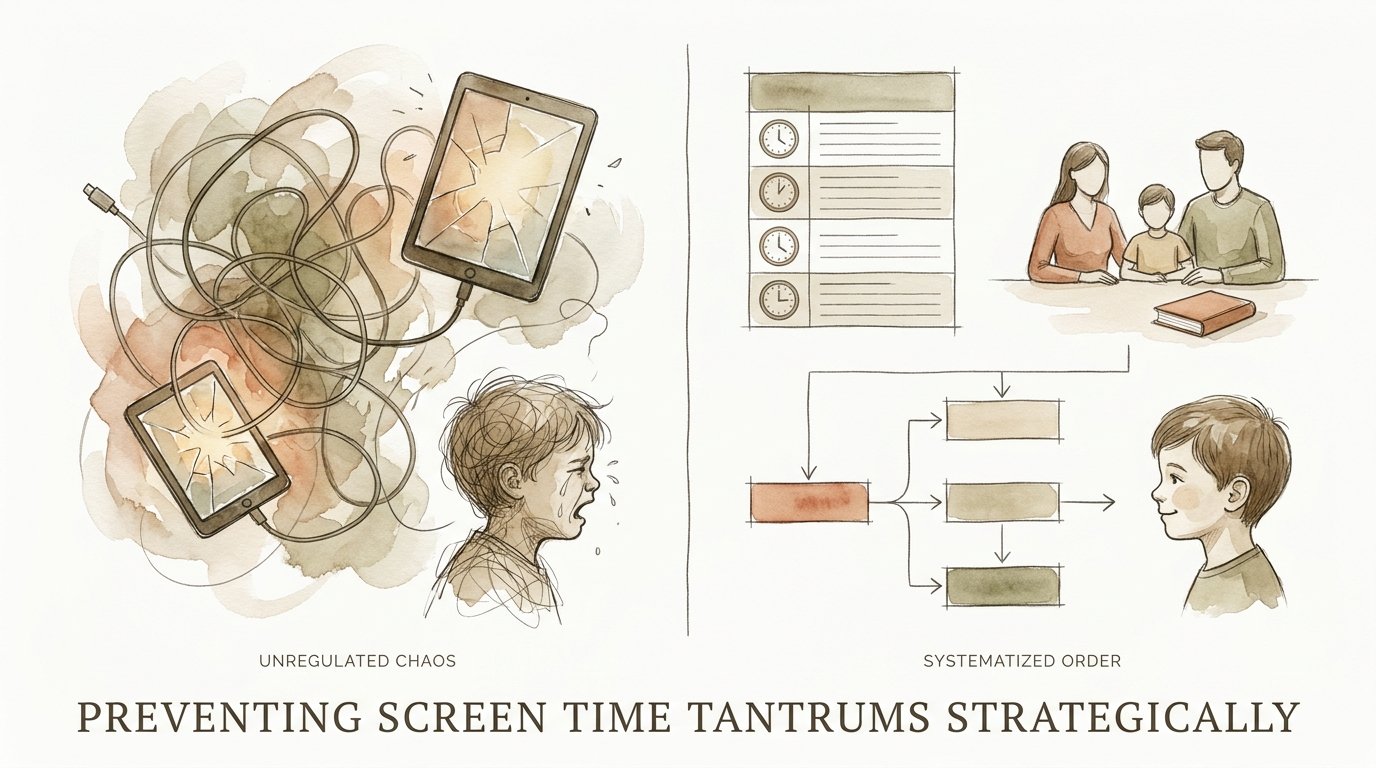
The resulting explosion can feel personal, but it rarely is. It is a biological reaction to a sudden shift in brain chemistry. Understanding how to manage this shift is the difference between a restful afternoon and a battle of wills that leaves everyone drained. We are going to look at the strategies that move your family from unregulated chaos to a systematized order that respects both the child’s brain and your sanity.
Preventing Screen Time Tantrums Strategically
A screen time tantrum is a neurological event rather than a simple act of defiance. When children engage with high-stimulation digital content, their brains are flooded with dopamine, the neurotransmitter responsible for pleasure and reward. This creates a “dopamine loop” where the brain constantly seeks the next hit of excitement provided by a game or a video. Research shows that this surge creates a powerful reinforcement loop, making it physically difficult to stop. [1.2, 1.6]
Turning off the device causes dopamine levels to drop sharply. This “dopamine drop” leaves the child’s nervous system in a state of temporary withdrawal. Without a system to bridge this gap, the child experiences frustration, anger, or even panic. [1.6, 1.7]
Strategic prevention focuses on managing this transition before it happens. It involves creating a predictable environment where the child feels a sense of control. This is where “visual boundaries” become essential. A visual boundary is a concrete representation of time or rules that a child can see and understand, rather than a vague verbal command from another room.
Real-world examples include using a physical sand timer or a specialized visual countdown app. These tools translate the abstract concept of “five minutes” into a shrinking red disc or a pile of falling sand. This simple shift reduces the cognitive load on a child’s developing prefrontal cortex, which is still learning how to manage impulses and transitions. [1.4, 1.8]
How the Transition Bridge System Works
Implementing a successful transition requires more than just a timer. It requires a “Bridge System” that guides the child from a high-dopamine state back to the real world. Follow these steps to build your own system.
Step 1: The Human Connection Entry
Walk over to your child five minutes before the end of their screen time. Avoid shouting from the kitchen or the doorway. Physical proximity breaks the “screen trance” without being confrontational. Ask a curious question about what they are watching or playing. Engaging with their world for sixty seconds creates a “human bridge” that prepares them to listen to your upcoming instruction. [1.1, 1.18]
Step 2: The Choice-Based Warning
Provide a warning that includes an element of autonomy. Instead of saying “Five minutes left,” try saying “We have five minutes left. Do you want to turn it off yourself, or should the timer do it for you?” Offering a choice gives the child a sense of agency over a situation where they usually feel powerless. [1.2, 1.12]
Step 3: The Visual Countdown
Place a visual timer where the child can easily see it. The timer serves as the “neutral third party.” It is the clock saying time is up, not the parent. This removes the personal element from the boundary. Children often find it easier to accept a limit when it is dictated by a consistent, non-emotional tool. [1.4, 1.15]
Step 4: The High-Reward “Landing Strip”
Plan a “bridge activity” to do immediately after the screen goes off. Moving from a video game to a boring task like setting the table is a recipe for disaster. Instead, transition to another high-reward activity like a quick game of tag, a favorite snack, or reading a book together. This “landing strip” provides a gentler descent for their dopamine levels. [1.3, 1.18]
Step 5: The Physical Closure Ritual
Encourage the child to physically close the laptop, press the power button, or put the tablet in its “charging house.” Physical actions signal to the brain that the activity has reached a completion point. This closure is much more effective than having the device snatched away by an adult. [1.12, 1.13]
Benefits of a Systematized Approach
Transitioning from a chaotic “turn it off now” approach to a structured system offers measurable benefits for the whole family. These go beyond just avoiding a single afternoon meltdown.
- Reduced Mental Fatigue: Parents no longer have to negotiate or argue every time a screen session ends. The system handles the heavy lifting, preserving your emotional energy for other tasks.
- Enhanced Self-Regulation: Children learn how to recognize their own frustration and manage transitions. These are essential executive function skills that translate to school performance and social interactions. [1.2, 1.3]
- Improved Trust: Predictable boundaries create a sense of safety. Children are less likely to hide device use or lie about screen time when they know the rules are fair and consistent.
- Better Sleep Quality: Implementing a “Screen Curfew” as part of your system ensures that brains have time to wind down before bed. Research suggests turning off screens at least one hour before sleep significantly improves rest. [1.16, 1.20]
- Protects the Prefrontal Cortex: Consistent systems help children exercise impulse control. This part of the brain is not fully developed until the mid-twenties, so external systems act as temporary “scaffolding” for their growth. [1.8, 1.11]
Challenges and Common Mistakes
Even the best systems can hit roadblocks. Recognizing common pitfalls allows you to adjust your strategy before the next session begins.
The “One More Minute” Trap
Granting “just one more minute” when a child begs or bargains seems like a path to peace. However, it actually teaches the child that the boundary is negotiable. This leads to more intense bargaining in the future. Consistency is the most important factor in a working system. If the timer says time is up, the screen must go off. [1.4, 1.13]
The Vague Verbal Warning
Calling out “Ten minutes!” from another room is rarely effective. Most children are so immersed in their digital content that they do not truly register the warning. They are blindsided when you reappear ten minutes later to take the device. Always ensure you have eye contact or a physical acknowledgment when giving a warning. [1.14, 1.18]
The “Boredom Void”
Turning off a screen without a plan for what comes next creates a “void.” A brain used to high-speed stimulation will find real life incredibly slow and frustrating in that moment. Always have the next activity ready to go before the screen turns off. [1.1, 1.9]
The Emotional Escalation
Meeting a child’s frustration with your own anger often escalates a minor protest into a full-blown meltdown. A parent’s job is to “be the thermostat, not the thermometer.” Staying calm and validating their feelings while holding the boundary is the fastest way to de-escalate. [1.2, 1.9]
Limitations and Practical Constraints
Systems are not magic. There are times when even the best-laid plans will fall apart due to external factors.
Physical State: Hunger, thirst, or exhaustion can override a child’s ability to follow a routine. If a child is already “at their limit” before screen time starts, the transition will be significantly harder regardless of your system. [1.1, 1.18]
Content Complexity: Some games do not allow for easy saving. Forcing a child to quit in the middle of a multi-player match or a level they have worked on for an hour creates genuine distress. It is helpful to ask “How much longer is this round?” rather than relying strictly on a clock. [1.2, 1.14]
Environmental Changes: Traveling, staying at a relative’s house, or being sick can disrupt established routines. In these cases, it is often better to acknowledge the change: “Today is a weird day because you are sick, so we are going to be more flexible, but tomorrow we go back to our timer.”
Neurodivergence: Children with ADHD or Autism may have a much more intense reaction to transitions. For these children, screens often serve as a vital tool for regulation or “winding down.” These families may need more intensive visual supports and longer transition periods to achieve the same results. [1.4, 1.8]
Order vs. Chaos: A Comparison of Approaches
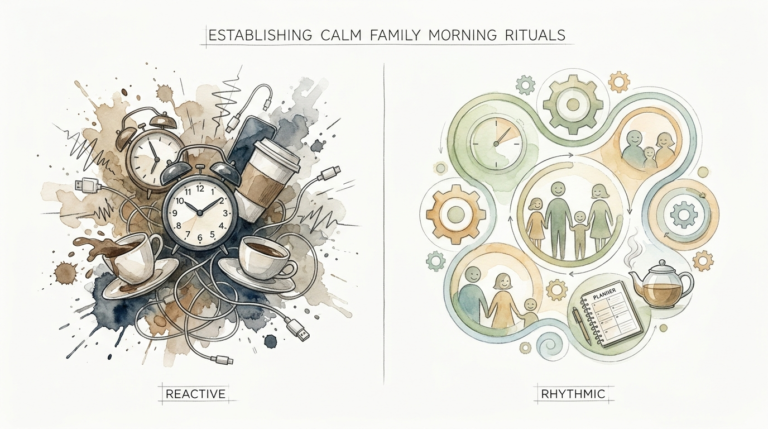
Moving from a reactive parenting style to a proactive system changes the entire family dynamic. The following table highlights the differences between these two approaches.
| Feature | Unregulated Chaos | Systematized Order |
|---|---|---|
| Warnings | Shouted from another room; often ignored. | Visual and physical; confirmed with eye contact. |
| The “Off” Trigger | Parental frustration or arbitrary timing. | Neutral visual timer or pre-agreed episode count. |
| Child’s Agency | Zero; device is usually taken away. | High; child chooses transition details. |
| Ending Goal | To stop the “bad” behavior immediately. | To bridge into the next positive activity. |
| Family Atmosphere | Tense, combative, and unpredictable. | Calm, predictable, and cooperative. |
Practical Tips for Immediate Implementation
You can begin reducing screen-time friction today by applying these small adjustments.
- Use the A.C.T. Method: Acknowledge the feeling (“I know it’s hard to stop!”), Communicate the boundary (“But the timer is up, and it’s time to put it away.”), and Transition to a “Yes” (“Let’s go outside and see if the swing is free!”). [1.9, 1.13]
- Implement a Tech-Free Zone: Designate the dining table and bedrooms as screen-free areas. This creates physical boundaries that support your mental boundaries. [1.15, 1.22]
- Model the Behavior: Avoid checking your phone while you are telling your child to get off theirs. Children mirror adult behavior. Narrate your own breaks: “I’m putting my phone away now because I want to play with you.” [1.2, 1.5]
- The “Save Point” Check: Before the final five minutes, check in on the game status. If they are in a boss battle, negotiate a “stopping point” rather than a “stopping time.” This shows respect for their effort. [1.14, 1.18]
- Try Audio Instead: If the visual connection is too strong, transition to an audiobook or music first. Breaking the visual link while keeping some entertainment can soften the landing. [1.12]
Advanced Considerations: Low-Dopamine Content
Not all screen time is created equal. Understanding the difference between high-dopamine and low-dopamine content can revolutionize your system.
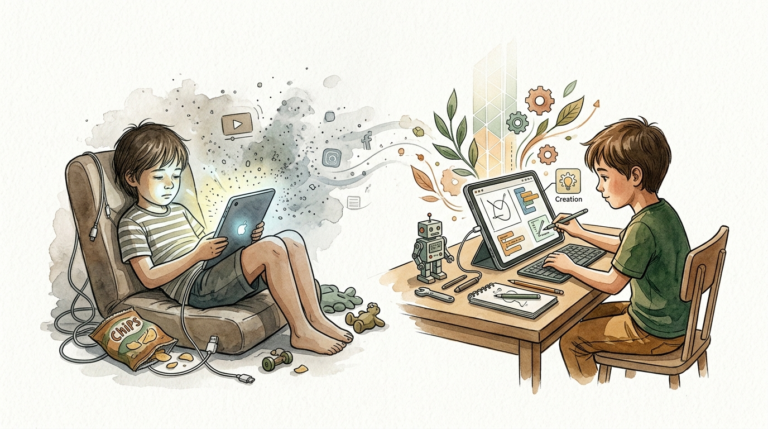
High-dopamine content includes fast-paced YouTube videos with rapid cuts, “endless scroll” social media, or games with constant flashing rewards. These are designed to keep the brain in a state of high arousal. Transitioning away from this type of content is significantly harder because the “dopamine cliff” is much steeper. [1.11, 1.17]
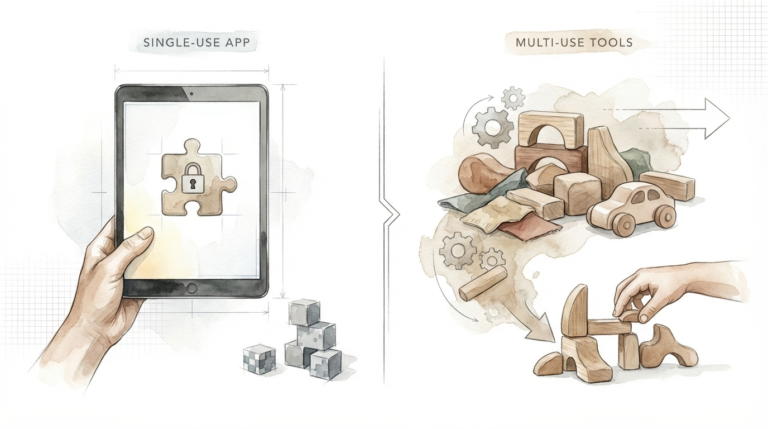
Low-dopamine content involves slower-paced shows, creative building games (like Minecraft in creative mode), or educational apps that require active problem-solving. Research suggests that these “active” digital experiences are easier to walk away from because they involve sustained focus rather than constant spikes of excitement. [1.16, 1.19]
Serious practitioners should audit their child’s media diet. Replacing a high-arousal show with a slower, story-driven alternative can reduce tantrums by up to 50% without changing the actual time spent on the device. Consider apps that encourage digital literacy and creation over passive consumption. [1.17]
Real-World Scenario: The Tuesday Afternoon Shift
Imagine it is 5:00 PM on a Tuesday. In the “Chaos Model,” the parent yells “Dinner’s ready, turn that off!” from the kitchen. The child ignores it. The parent yells again, then marches into the room and snatches the tablet. The child screams, throws a pillow, and dinner is ruined by tears and frustration.
Now consider the “Systematized Model.” At 4:50 PM, the parent walks over and sits next to the child for one minute. “Wow, that’s a cool house you’re building! Ten minutes left. Do you want to save your game now or in five minutes?” The child chooses five minutes. The parent sets a visual timer on the coffee table. At 5:00 PM, the timer beeps. The child finishes their last “block,” closes the app, and says “Look what I made!” They walk together to the kitchen to have the snack they planned earlier. The transition is smooth because the child’s brain was prepared and their autonomy was respected. [1.13, 1.18]
Final Thoughts
Preventing screen time tantrums is about more than just managing a device; it is about supporting a developing nervous system. Acknowledge that the transition is a physical challenge for your child’s brain. When you provide visual boundaries and predictable rituals, you are giving them the tools they need to navigate a high-stimulation world successfully.
Consistency is your greatest ally. While the first few days of a new system may involve some “extinction bursts” or intensified protests, staying the course will eventually lead to a new normal. You are building a foundation of self-regulation that will serve them long after they have outgrown their current favorite show. [1.4, 1.13]
Start small by introducing one visual tool or one “bridge activity” this week. Experiment with what works for your family’s unique rhythm. Reclaiming your peace is possible when you stop fighting the technology and start managing the system. [1.16, 1.22]
Sources
1 biglittlefeelings.com | 2 daar.com.au | 3 sparkandstitchinstitute.com | 4 nurture.is | 5 peaceathomeparenting.com | 6 thejacobsladdergroup.org | 7 healthywithin.com | 8 kidswellhealth.com | 9 sf-stemful.com | 10 childcareed.com | 11 occupationaltherapy.com.au | 12 kidsclubaba.com | 13 linksaba.com | 14 geniebook.com | 15 brighthorizons.com | 16 daar.com.au | 17 ckfamilyservices.org | 18 swpedi.com | 19 utah.edu