outdoor learning activities for kids
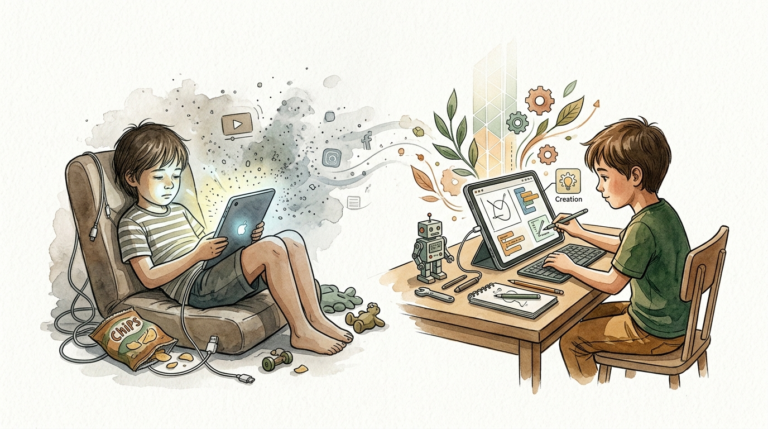
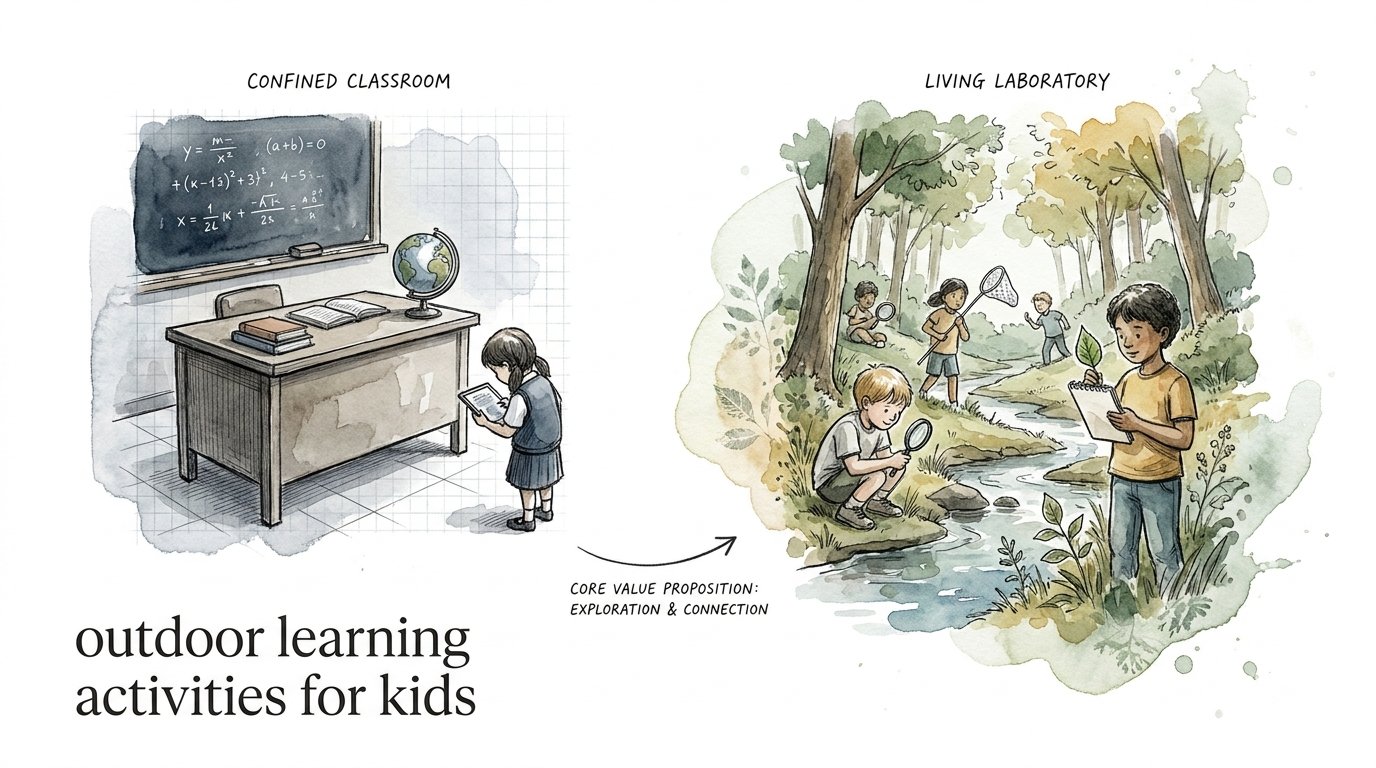
The contrast between a glowing blue screen and the rich, textured colors of a forest floor. We were never meant to learn about the world through a screen. True curiosity is sparked when hands touch soil and eyes track the flight of a hawk. Transition from the sterile to the wild with these outdoor learning essentials.
Modern education often feels like a series of boxes. We sit in square rooms, look at rectangular screens, and follow linear paths. But the human brain evolved in the wild. It thrives on the unpredictable, the sensory, and the tactile. Moving the classroom outdoors isn’t just a “break” from real work; it is where the real work begins.
Nature-based education has surged in popularity as we realize the limitations of digital-only learning. Educators and parents are now embracing “Forest Schools” and “Living Laboratories” to bridge the gap between theory and reality. This guide explores how to turn any patch of green into a high-performance learning environment.
outdoor learning activities for kids
Outdoor learning activities for kids turn the environment into a co-teacher. Instead of reading about biology in a textbook, students observe it in the life cycle of a beetle. Instead of solving abstract math problems, they measure the circumference of an oak tree or the angle of a shadow. This approach is called experiential learning, and it is used everywhere from elite private schools to community-run homeschool groups.
These activities are not just for fun. They align with core curriculum standards in science, math, and literacy. By moving outside, children engage their bodies and minds simultaneously, which leads to better information retention and a genuine love for discovery.
The Nature Scavenger Hunt
Create a checklist that goes beyond “find a leaf.” Challenge kids to find something “rough,” something “fragile,” or something “pollinated.” This sharpens their observational skills and introduces scientific vocabulary in a natural context.
Nature Journaling
Equip every student with a sketchbook and a pencil. Ask them to sit quietly for five minutes and record what they see, hear, or feel. This practice builds literacy skills and mindfulness while encouraging deep attention to detail.
DIY Weather Stations
Build simple rain gauges or wind vanes using recycled materials. Tracking daily changes helps students understand meteorology and data collection. They become citizen scientists, noticing patterns in the world around them.
Bug Hotels and Habitat Building
Constructing shelters for insects using sticks, pinecones, and hollow reeds teaches engineering and ecology. Students learn about the specific needs of different species while practicing hands-on construction skills.
How to Implement Outdoor Education
Implementing outdoor learning doesn’t require a 50-acre forest. You can start in a schoolyard, a local park, or even a community garden. The process begins by identifying your learning objectives and then looking for “affordances” in the environment that support those goals.
Establish a clear routine early on. Students need to know that being outside is for learning, not just “recess 2.0.” Start with a “circle time” on logs or stumps to ground the group. Transition into active exploration, and then end with a reflection period where students share their findings.
Preparation is the backbone of success. Ensure you have a mobile “outdoor kit” that includes clipboards, magnifying glasses, and first aid supplies. Planning for the weather—rather than fighting it—is essential. Waterproof gear and “sit pads” ensure that a little dampness doesn’t derail the lesson.
Powerful Benefits of Learning Outside
Spending time in nature reduces cortisol levels and lowers stress for both students and teachers. Research shows that children who learn outdoors have improved focus and longer attention spans when they eventually return to the indoor classroom. This “Attention Restoration Theory” suggests that nature allows the brain to recover from the fatigue of concentrated digital work.
Physical health is another major win. Outdoor learning naturally increases movement and develops gross motor skills. Climbing a hill or balancing on a log provides a level of sensory-motor integration that a desk simply cannot match. Furthermore, students develop “grit” and resilience as they learn to navigate different weather conditions and terrains.
Social-emotional growth flourishes in the wild. Outdoor tasks often require more collaboration than indoor worksheets. Building a shelter or mapping a trail requires communication, leadership, and team problem-solving. This builds a sense of community and belonging that is difficult to replicate in a confined space.
Common Challenges and Pitfalls
Weather is the most common excuse for avoiding outdoor education. Many adults fear the rain or the cold more than the children do. This “weather anxiety” can trickle down and make students reluctant. To avoid this, model a positive attitude. If the teacher is excited about the puddles, the students will be too.
Risk aversion is another significant barrier. In our current era of hyper-safety, some educators are afraid of every scraped knee or insect bite. This fear can lead to overly restrictive rules that stifle curiosity. The key is to distinguish between “hazard” and “risk.” A hazard is something that can cause serious harm, while a risk is a challenge that allows a child to learn their own limits.
Isolation can make teachers feel like they are doing something “extra” rather than something “essential.” Without administrative support, outdoor learning can feel like a lonely uphill battle. Seeking out a community of practice or a local “Forest School” network can provide the moral support and resources needed to keep going.
Realistic Limitations
Urban environments present unique challenges for outdoor learning. Not every school has access to a forest or a lush park. In these cases, educators must get creative. A “weeds walk” along a sidewalk crack can teach more about resilience and biodiversity than a pristine garden ever could.
Curriculum pressure can also limit the time spent outside. Standardized testing often demands a focus on paper-and-pencil tasks. However, outdoor education should be seen as a way to deliver the curriculum, not an escape from it. A math lesson on geometry is more memorable when students are measuring real-world angles in architecture or nature.
Safety ratios are another practical boundary. Taking a large group of young children into a wild space requires more adult supervision than a classroom. This can make logistics difficult. Partnering with parents or community volunteers is often necessary to make these excursions viable.
Confined Classroom vs. Living Laboratory
Understanding the difference between these two environments helps educators choose the right tool for the job. While the traditional classroom is excellent for focused, quiet study, the Living Laboratory is superior for discovery and application.
| Feature | Confined Classroom | Living Laboratory |
|---|---|---|
| Primary Focus | Abstract concepts and symbols | Physical reality and systems |
| Environment | Static, controlled, and sterile | Dynamic, responsive, and changing |
| Sensory Input | Primarily sight and sound | Full five-sense engagement |
| Student Agency | Structured and teacher-led | Exploratory and student-driven |
| Complexity | Simplified for ease of delivery | Rich, interconnected, and real |
Practical Tips and Best Practices
Start small to build confidence. You don’t need a four-hour excursion to see benefits. Even a 20-minute math session on the playground can shift a student’s energy. Consistency is more important than duration. Make “Outdoor Tuesdays” or “Forest Fridays” a non-negotiable part of your schedule.
Assemble a “Go-Bag” for every student. This kit should include a clipboard, a pencil tied with a string (so it doesn’t get lost), a magnifying glass, and a waterproof sit-pad. Having these tools ready to grab makes the transition outside seamless and professional.
Communicate with parents early and often. Explain the “why” behind your outdoor sessions. Provide a clear gear list so that every child is dressed for success. When parents see the enthusiasm and the academic results, they become your biggest advocates.
Use “Place-Based” learning strategies. Connect your lessons to the local history, culture, and ecology of your specific area. If you are near a river, focus on water cycles. If you are in a city, focus on urban planning and “street science.” This makes the learning feel urgent and relevant.
Advanced Considerations
Deeper mastery of outdoor education involves moving from “learning outside” to “outdoor learning.” In the latter, the environment is not just a backdrop; it drives the curriculum. This requires a flexible mindset and the ability to pivot lessons based on what nature provides that day.
Scaling outdoor education across an entire school requires systemic change. This involves professional development for all staff and a rethink of the traditional timetable. Advanced practitioners often use “Ecological Literacy” frameworks to ensure that students are not just learning in nature, but learning from nature’s systems of sustainability and interconnectedness.
Interdisciplinary projects are the peak of outdoor education. Imagine a project where students design a community garden. They use math for measurements, science for soil testing, literacy for signage, and social studies for community outreach. This holistic approach prepares children for the complexities of the adult world.
The “Weeds Walk” Scenario
Consider a simple 30-minute activity called the “Weeds Walk.” Instead of going to a pristine forest, a teacher takes a group of 12-year-olds to the edge of the school parking lot. The mission is to find life in the harshest conditions.
Students find dandelions pushing through asphalt and moss growing in the shade of a dumpster. They use hand lenses to observe the tiny ecosystems living within a single square foot of “waste” land. They sketch the root systems and hypothesize how these plants survive without a gardener.
This session covers biology (adaptation), math (measuring growth), and even philosophy (resilience). No expensive equipment was used. No long bus ride was required. The “Sterile” parking lot was transformed into a “Wild” laboratory through nothing more than curiosity and a different perspective.
Final Thoughts
The gap between the digital world and the natural world is growing, but it isn’t permanent. By bringing outdoor learning essentials into our daily routines, we offer children a more balanced, vibrant, and effective way to learn. They develop the skills they need for the future while staying grounded in the reality of the present.
True education is about more than just downloading information. It is about the spark of wonder that occurs when a child discovers a secret hidden in the dirt or watches the wind change the shape of a cloud. These moments are the foundation of a lifelong love of learning.
Start today by taking one lesson—just one—outside the walls of your room. Watch how the energy changes. Watch how the questions become deeper. The world is waiting to be your classroom; all you have to do is step through the door.
Sources
1 themuddypuddleteacher.co.uk | 2 wgu.edu | 3 eealliance.org | 4 ecoschoolnetwork.org | 5 edutopia.org | 6 thrivewithoutdoorlearning.com | 7 greenschoolsnationalnetwork.org | 8 loveoutdoorlearning.com | 9 thrivewithoutdoorlearning.com | 10 wondervalleyoe.com | 11 childrenandnature.org | 12 cremedelacreme.com | 13 klaschools.com