Ipad Withdrawal Tantrums Into Creativity
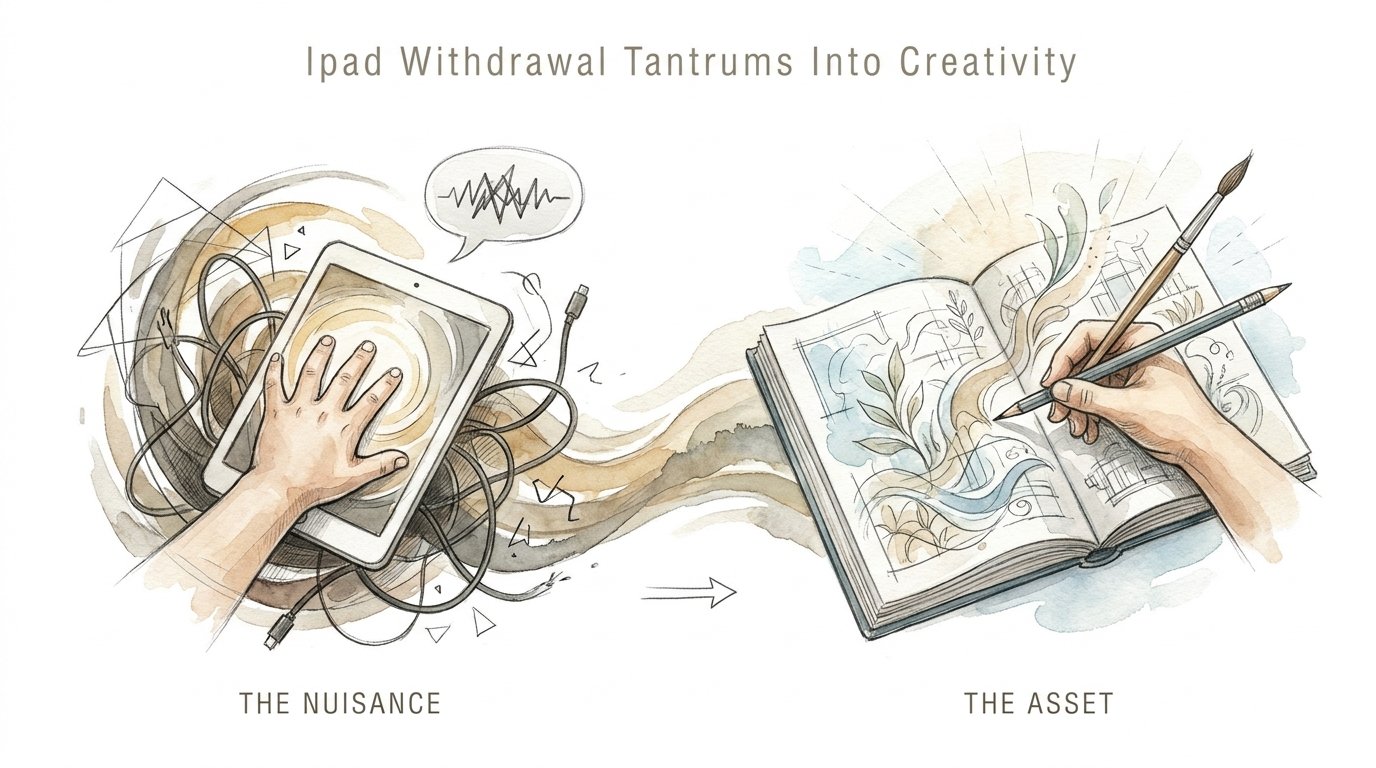
That high-pitched tablet scream isn’t a behavior problem—it’s raw, unchanneled energy looking for a mission. We often see the ‘withdrawal scream’ as a nuisance to be silenced. During the Reset, we view it as an asset: high-intensity energy. The same lungs that power a tantrum can power a theatrical performance or a backyard anthem. We don’t stop the noise; we change the frequency.
If you have ever felt that pulse of panic when the screen goes dark and your child begins to vibrate with rage, you are not alone. You aren’t failing as a parent, and your child isn’t “broken.” What you are witnessing is a physiological event—a neurochemical transition that is as real as a physical reflex. By understanding what is happening under the hood, we can stop managing fires and start fueling potential.
This guide will walk you through the process of taking that volatile, high-decibel energy and pivoting it toward something constructive. We are going to look at the science of the “dopamine crash,” the mechanics of the transition, and how to build a home environment where creativity becomes the natural outlet for high-intensity emotions.
Ipad Withdrawal Tantrums Into Creativity
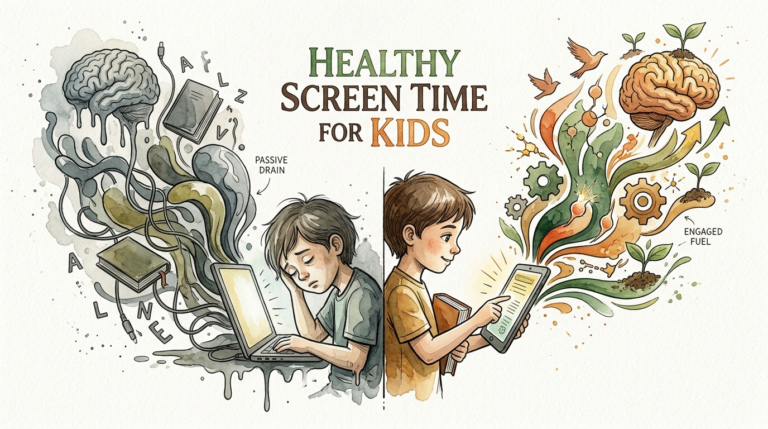
iPad withdrawal tantrums are not typical “naughty” behavior; they are the result of a sudden drop in dopamine levels. When a child engages with high-stimulation digital media—think fast-paced edits, bright colors, and instant rewards—their brain releases massive amounts of dopamine. This neurotransmitter is responsible for pleasure and motivation. When the screen is removed, that “tap” is turned off instantly, causing a neurochemical crash.
In the real world, this looks like a meltdown. The child feels a physical sense of loss, frustration, and overstimulation. Because their prefrontal cortex—the part of the brain responsible for impulse control—is still under construction, they don’t have the “brakes” to slow down their reaction. They have all the engine power of a Ferrari with the brakes of a tricycle.
We call this “High-Intensity Energy.” Instead of trying to suppress it (The Nuisance), we learn to pivot it (The Asset). If a child is screaming at the top of their lungs, they have incredible lung capacity and vocal projection. If they are throwing pillows, they have significant motor drive. The goal is to catch that energy at its peak and provide a creative “landing strip” where it can be safely deployed.
How the “Energy Pivot” Works Step-by-Step
Turning a tantrum into a creative mission requires a strategy that respects the child’s biology. You cannot reason with a brain that is currently drowning in cortisol and craving dopamine. You have to move the body first.
1. The 15-Minute Buffer Zone
Never end a screen session abruptly. The brain needs a “glide path” to descend from a high-dopamine state. Start giving warnings at the 10, 5, and 1-minute marks. This doesn’t necessarily stop the tantrum, but it prepares the nervous system for the transition. Use a visual timer so the child can see the time “disappearing” rather than just hearing you say it.
2. The Physical “Discharge” Phase
Before you ask a child to sit down and draw, they need to discharge the physical energy. If they are in a high-arousal state, their body is in “fight or flight” mode. Use “Heavy Work” to ground them. This includes activities like:
- Wall Pushes: Have them “push” the wall as hard as they can for 20 seconds.
- Animal Walks: Challenge them to move like a heavy bear or a hopping frog.
- Pillow Piles: Let them jump into a pile of cushions to provide proprioceptive input to their joints.
3. Introducing the “Creative Mission”
Once the peak of the physical rage has passed, introduce a mission that matches the intensity of their current mood. If they are loud, give them a “theatrical mission.” If they are chaotic, give them a “splat art” mission. The key is to make the creative alternative more interesting than the vacuum left by the iPad.
4. Matching the Frequency
If your child is at a “Level 10” energy, you cannot meet them with a “Level 2” activity like quiet reading. You must match the frequency. Use high-energy music, large-scale canvases (like a cardboard box), or dramatic role-play. You are providing a container for the energy they already have.
Benefits of Redirecting Withdrawal Energy
When we stop viewing tantrums as something to be “put out” and start seeing them as energy to be “moved,” the benefits extend far beyond a quiet house.
Building Emotional Resilience: By navigating the “dopamine crash” without a total meltdown, children learn that they can survive big feelings. They begin to develop the self-regulation skills needed to handle frustration in all areas of life.
Authentic Creative Discovery: Some of the most incredible art and performance comes from raw emotion. When a child uses their “withdrawal energy” to paint a messy masterpiece or build a complex fort, they are discovering that their internal world can be translated into the external world.
Strengthened Parent-Child Bond: Instead of being the “policeman” who takes the tablet away, you become the “coach” who helps them navigate a difficult transition. This builds trust and reduces the power struggles that typically define screen-time limits.
Neuroplasticity and Skill Building: Active play and creative problem-solving stimulate different parts of the brain than passive screen consumption. By shifting to creative tasks, you are helping the brain build more robust neural pathways for focus, fine motor skills, and spatial awareness.
Common Mistakes and How to Avoid Them
The most common mistake is trying to talk it out too soon. A child in a withdrawal tantrum is not thinking logically. Avoid asking “Why are you acting like this?” or “Don’t you want to be a big kid?” These questions only increase the cognitive load on an already overwhelmed brain.
Another pitfall is “The Shush Trap.” Trying to force a child to be quiet during a high-energy transition is like trying to put a lid on a boiling pot. The pressure will find a way out. Instead of demanding silence, demand “directed noise.” Ask them to sing a “mad song” or make the loudest dinosaur roar they can. Give the noise a purpose.
Finally, avoid inconsistency. If the tantrum sometimes results in “five more minutes” of screen time, the brain will learn that the tantrum is a successful strategy for dopamine retrieval. This is called intermittent reinforcement, and it makes the behavior much harder to extinguish. Stick to the limit, but be the “safe harbor” during the storm.
Limitations: When the Pivot Might Not Work
While the “Reset” approach is powerful, it is not a magic wand for every situation. There are environmental and physiological boundaries to keep in mind.
Extreme Neurodiversity: For children with severe sensory processing disorders or profound autism, the “dopamine crash” may trigger a sensory meltdown that is different from a typical tantrum. These situations often require specialized occupational therapy and environmental modifications beyond simple creative redirection.
Physiological Exhaustion: If a child is hungry, tired, or getting sick (the “HALT” acronym: Hungry, Angry, Lonely, Tired), their capacity for redirection is significantly diminished. In these cases, the creative mission will likely fail, and the focus should remain on meeting basic physical needs first.
Environmental Hazards: If you are in a public place or a small apartment, “high-intensity” redirection like wall-pushing or loud singing may not be practical. You have to scale the “Asset” to fit the space. If you can’t be loud, be “intense” in other ways—like squeezing playdough as hard as possible or doing a “silent scream.”
Comparison: Suppression vs. Channeling (The Reset)
| Feature | Traditional Suppression | The Reset (Channeling) |
|---|---|---|
| Primary Goal | Silence and Compliance | Energy Redirection |
| View of Tantrum | A Nuisance / Bad Behavior | An Asset / Raw Energy |
| Outcome | Suppressed Emotions | Creative Expression |
| Long-term Skill | Fear of Punishment | Emotional Intelligence |
Practical Tips for a Successful Transition
Preparation is the difference between a chaotic afternoon and a creative breakthrough. Use these tips to prime your environment for the “Reset.”
- Create a “Prop Box”: Keep a box of high-intensity creative tools that only come out when the screens go off. This could include large chalk sticks, musical instruments, capes for role-play, or a roll of butcher paper.
- Designate a “Yes Space”: Have an area of the house where “messy” creativity is allowed. If a child knows they can paint with their hands or build a massive fort in a specific spot, they are more likely to head there during a transition.
- Use “Audio Bridges”: Switch from the visual stimulation of an iPad to the auditory stimulation of an audiobook or high-energy podcast. This keeps the narrative “hook” alive while allowing the eyes to rest and the body to move.
- The “First 15” Rule: Commit to being 100% present for the first 15 minutes after the screen goes off. Most meltdowns happen in the vacuum left by the device. If you fill that vacuum with shared activity, the “crash” is much smoother.
Advanced Considerations: Resetting the Dopamine Baseline
For serious practitioners of “The Reset,” the goal isn’t just managing the tantrum—it’s resetting the child’s dopamine baseline. If a child is constantly exposed to high-intensity digital stimulation, their “boredom threshold” becomes incredibly low. Real-world activities like playing with blocks or drawing feel “boring” because they don’t provide the same rapid-fire dopamine hits.
To fix this, you may need a “Digital Fast”—a period of several days or weeks with zero screens. This allows the brain’s dopamine receptors to “up-regulate,” or become more sensitive again. After a reset, you’ll notice the “withdrawal energy” becomes easier to manage because the gap between the screen’s stimulation and the real world’s stimulation has narrowed.
Consider the “Ratio of Input to Output.” For every hour of “Input” (consuming content), encourage at least an hour of “Output” (creating content). This ensures the brain doesn’t get stuck in a passive consumption loop.
Scenario: From Kitchen Floor to Living Room Stage
Imagine your 5-year-old has just been told “iPad time is over.” They are currently face-down on the kitchen tiles, let out a scream that could shatter glass.
Step 1: The Acknowledgment. You get down on their level. “I see that scream. That is a BIG engine running right now. You have so much power in those lungs!”
Step 2: The Physical Pivot. “Before we move that energy to the living room, I need you to help me ‘push’ this fridge. It’s too heavy! Push! Push!” (Heavy work).
Step 3: The Mission. “Now that your muscles are ready, I need a Rockstar. Here is your ‘microphone’ (a wooden spoon). I need you to sing a song about being mad as loud as you can while I drum on this pot.”
Step 4: The Creative Landing. The singing eventually turns into a “performance.” You suggest they build a stage out of couch cushions. The “nuisance” of the scream has been successfully channeled into the “asset” of a theatrical build.
Final Thoughts
The transition away from screens doesn’t have to be a battle of wills. When we stop fighting the noise and start changing the frequency, we unlock a level of creativity and connection that digital devices can never replicate. That high-pitched scream is just power without a purpose; your job is to give it a mission.
By applying these “Reset” strategies, you are doing more than just stopping a tantrum. You are teaching your child how to master their own internal chemistry. You are showing them that their “big energy” is a gift, not a problem, and that they have the power to turn frustration into something beautiful.
Start small. The next time the screen goes dark, don’t reach for a “shush.” Reach for a “pivot.” See where that energy can take you when it’s given a place to land. You might just find that the most creative moments of your day happen right after the Wi-Fi goes off.
Sources
1 youtube.com | 2 happyyouhappyfamily.com | 3 oddhogg.com | 4 familyfelicity.com | 5 friendshipcircle.org | 6 blissyogasg.com | 7 mandalafamilywellness.com | 8 mollydefrank.com