healthy screen time schedule
Rigid schedules fail. Dynamic flows create lasting habits. Stop setting a timer and start setting a flow. A ‘Dynamic’ schedule treats screens as a reward for physical and mental effort, making the transition off the device much easier for everyone involved.
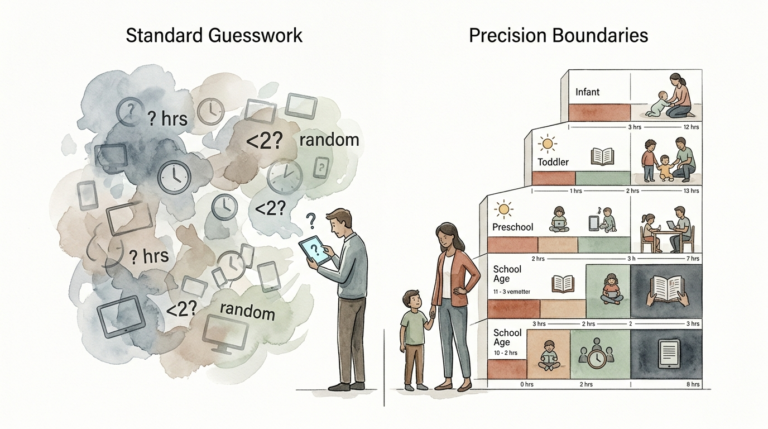
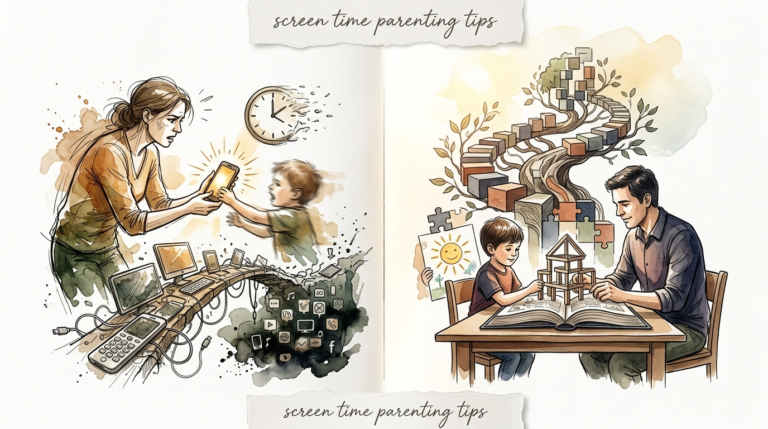
Most of us have tried the “timer method.” You set a 30-minute alarm, the alarm goes off, and then the battle begins. Your child screams, you feel like a drill sergeant, and the device eventually gets yanked away. It is an exhausting cycle that leaves everyone feeling depleted.
What if there was a better way to manage technology in your home? Instead of fighting the device, we can learn to work with the brain’s natural reward systems. By focusing on a healthy screen time schedule that prioritizes flow over rigid minutes, you can turn screen time from a point of contention into a tool for motivation.
healthy screen time schedule
A healthy screen time schedule is not just a list of “no” and “stop.” It is a living framework that balances digital consumption with physical activity, creative play, and social connection. In the modern world, screens are everywhere—from schoolwork to socializing—so a “zero-screen” policy is often unrealistic for the average family [1.1.3, 1.1.5].
This schedule exists to prevent what neuroscientists call “brain rot” or the dopamine loop [1.4.3]. When we scroll through fast-paced videos or play high-intensity games, our brains are flooded with dopamine. This makes it incredibly hard to stop because anything else—like doing homework or cleaning a room—feels boring by comparison [1.4.1, 1.4.4].
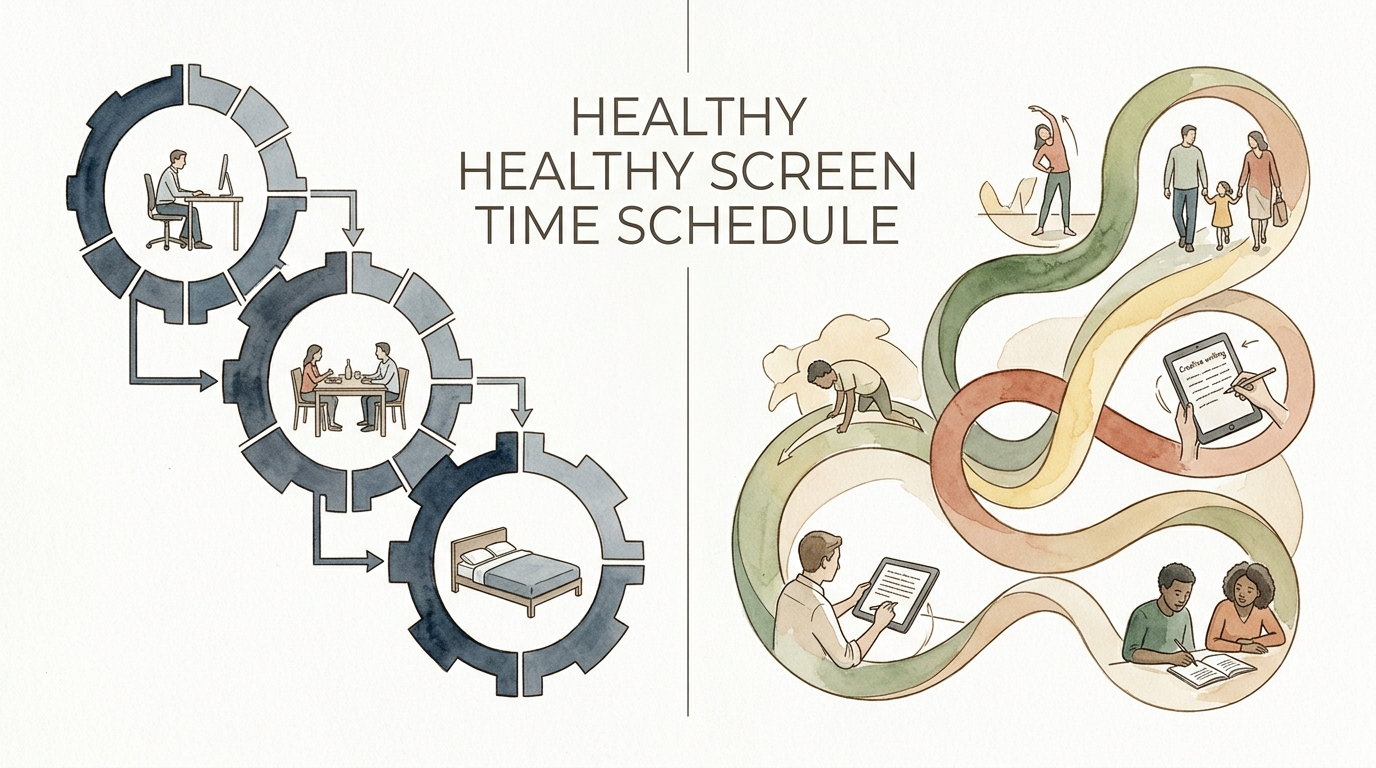
In real-world situations, a healthy schedule looks like a “flow chart” rather than a ticking clock. For example, a child might earn 20 minutes of gaming by finishing a book or playing outside for an hour [1.3.6]. This teaches them that digital rewards come after meaningful effort, mirroring how adults manage their own professional and personal lives.
Think of it like a nutritious diet. You wouldn’t eat only dessert all day, but you don’t have to ban it entirely either. A healthy screen time schedule places “digital dessert” at the end of a “nutritious” day of movement and learning [1.3.8].
How to Implement a Dynamic Screen Time Flow
Moving from a rigid schedule to a dynamic flow requires a shift in mindset. You are moving away from being a “time cop” and toward being a “life coach.” Here is how you can set up a system that actually works.
Step 1: Audit Your Current Usage
Before you change anything, observe how your family currently uses devices. Which times of day are the most screen-intensive? Are screens being used to self-soothe during stress? [1.1.7, 1.4.6]. Identifying these patterns helps you see where a “flow” is needed most.
Step 2: Define “Green Light” Activities
These are the non-negotiable activities that must happen before the screen turns on. They might include:
- Physical movement (30–60 minutes of playing outside or exercise).
- Household contributions (chores or tidying up).
- Creative play (building with blocks, drawing, or reading).
- Social connection (a family meal or a face-to-face conversation).
Step 3: Create a “Transition Bridge”
The hardest part of any schedule is the moment the screen turns off. Instead of an abrupt “Stop now!”, use a bridge activity. This is a low-stimulation task that helps the brain ramp down from a high-dopamine state [1.4.4]. Examples include setting the table for dinner or listening to a five-minute audiobook.
Step 4: Use Visual Flow Charts
Children—and many adults—respond better to visuals than verbal commands. Create a simple chart that shows the order of events. “First, we move our bodies. Second, we do our chores. Third, we have our tech time.” This makes the expectations predictable and reduces the need for constant negotiation [1.3.1, 1.6.4].
Benefits of a Dynamic Flow Approach
Choosing a dynamic flow over a static limit provides measurable benefits for both mental health and family harmony.
Reduced Power Struggles: When the rules are based on a flow, the child knows exactly what they need to do to “unlock” their time. The device is no longer something you are “taking away”; it is something they are “earning” through their own actions [1.3.6].
Improved Emotional Regulation: Abruptly stopping a high-dopamine activity causes a sharp drop in feel-good chemicals, leading to meltdowns [1.4.4]. A flow-based schedule includes natural ramp-down periods, making transitions much smoother for the nervous system [1.6.7].
Fostering Intrinsic Motivation: By tying screen time to effort, you are teaching your brain to value hard work. Instead of just waiting for the clock to strike “tech time,” you are actively engaging in other healthy behaviors to get there.
Better Sleep Quality: A core part of any healthy screen time schedule is a “digital sunset.” By ending screen use at least one hour before bed, the brain can produce the melatonin needed for deep, restorative sleep [1.1.3, 1.4.5].
Challenges and Common Mistakes
Even with the best intentions, families often hit roadblocks. Recognizing these early can help you stay on track.
Mistake 1: Being Too Rigid with the “Rules”
If you turn the flow into a rigid, unforgiving system, you will face the same resistance as before. Life happens. Sometimes a child is sick, or it’s a rainy day, and the “flow” needs to be adjusted. Flexibility is the key to longevity.
Mistake 2: Using Screens as the Only Reward
If every good behavior is rewarded with a screen, you accidentally teach the brain that screens are the *only* thing worth working for. Ensure there are other “prizes” in the mix, like a trip to the park or choosing the family movie [1.3.3].
Mistake 3: Forgetting to Model the Behavior
This is the most common pitfall. If you are telling your child to put down the tablet while you are scrolling through your phone, the message is lost. Children learn by observing. If they see you following a “flow”—putting your phone away during meals or after work—they are much more likely to do the same [1.2.8, 1.5.6].
Limitations: When This Approach May Not Work
While dynamic flows are highly effective, they are not a universal cure-all. There are specific situations where this method may need significant modification.
Neurodivergent Considerations: For children with ADHD or Autism, transitions are notoriously difficult. While a flow provides predictability, they may still struggle with the “executive function” required to move from one task to another [1.6.2, 1.6.5]. In these cases, you may need more frequent visual cues and even more gradual transition bridges [1.6.7].
Environmental Constraints: If you live in an area where outdoor play isn’t always safe or accessible, finding “green light” activities becomes harder. You may have to get creative with indoor physical movement, like “living room Olympics” or yoga videos.
Professional Requirements: For adults or older teens, screens are often mandatory for work or school. It is important to distinguish between “active/productive” screen time (writing a paper) and “passive/consumptive” screen time (doom-scrolling) [1.1.7, 1.5.3]. The flow should primarily regulate passive consumption.
Static Limits vs. Dynamic Flow
To help visualize why the dynamic approach is often superior, consider this comparison of the two methods.
| Feature | Static Limits (Old Way) | Dynamic Flow (New Way) |
|---|---|---|
| Primary Goal | Hitting a specific minute count. | Establishing a healthy daily rhythm. |
| Transition Type | Abrupt (Timer-based). | Gradual (Task-based). |
| Parental Role | Enforcer/Timekeeper. | Coach/Guide. |
| Brain Impact | Dopamine “crash” at cutoff. | Balanced reward/effort cycle. |
| Flexibility | Low (Black and white). | High (Context-dependent). |
Practical Tips and Best Practices
If you are ready to start today, these tips will help you optimize your new healthy screen time schedule for maximum success.
- Quality Over Quantity: The American Academy of Pediatrics (AAP) now emphasizes that *what* you watch is just as important as *how long* you watch [1.1.4, 1.2.1]. Prioritize interactive, educational, or creative content over mindless scrolling.
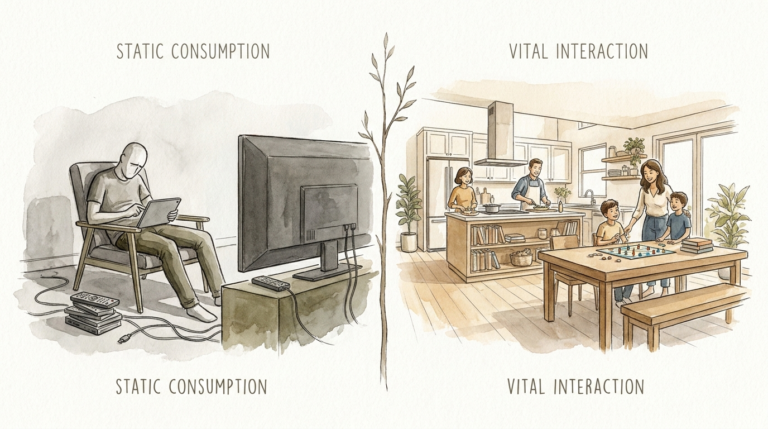
- Create Tech-Free Zones: Establish “sacred spaces” where devices are never allowed. The dining table and the bedroom are the most important areas to keep screen-free [1.1.4, 1.2.8, 1.5.4].
- Co-Viewing: Whenever possible, use screens *with* your child. Watching a show together or playing a game allows you to discuss what’s happening and keeps the experience social rather than isolating [1.1.4, 1.5.3].
- Use Hardware Controls: Don’t rely solely on willpower. Use built-in features like Apple’s “Screen Time” or Android’s “Digital Wellbeing” to automatically enforce the “digital sunset” at the end of the day [1.3.7, 1.2.2].
- The “One-More-Minute” Rule: Instead of cutting a child off mid-game, give them a chance to find a saving point or finish the round. This tiny amount of respect for their digital effort goes a long way in preventing a meltdown [1.6.5].
Advanced Considerations for Serious Practitioners
For those who want to take their digital management to the next level, consider the physiological impact of “interactivity.”
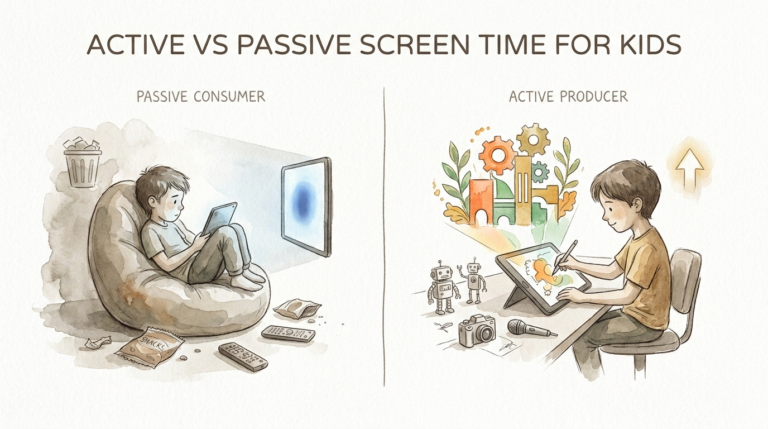
Passive vs. Active Consumption: Watching a movie is passive. Building a world in Minecraft is active. Active screen time often requires higher executive function and can actually be beneficial for problem-solving skills [1.3.6, 1.5.3]. When setting your flow, you might allow more time for “active” sessions and less for “passive” scrolling.
Neuroplasticity and Recovery: If your family has been in a high-conflict screen loop for a long time, the brain may need time to “reset” its dopamine receptors. This is sometimes called a “digital detox.” While a total detox isn’t always necessary, starting your dynamic flow with very low screen time for the first week can help “resensitize” the brain to non-digital rewards [1.4.3].
Digital Citizenship: As children get older, the schedule should shift toward teaching them how to manage themselves. Instead of you setting the flow, have them draft their own “Digital Contract.” Ask them: “How do you feel after two hours of TikTok?” or “What happens to your mood when you don’t play outside?” Developing this self-awareness is the ultimate goal of any healthy screen time schedule [1.1.4, 1.3.7].
Real-World Example: The “Saturday Morning Flow”
Let’s see how this works in a practical Saturday scenario.
In a **Static Schedule**, the child wakes up at 7:00 AM and is allowed screens until 8:00 AM. At 8:00 AM, the parent takes the iPad. The child, who was in the middle of a YouTube video, screams because they didn’t finish. The rest of the morning is spent in a bad mood.
In a **Dynamic Flow**, the Saturday routine looks like this:
- Wake Up & Breakfast: No screens at the table.
- The “Checklist”: The child must get dressed, brush their teeth, and clear their breakfast plate.
- The “Earn”: The child spends 45 minutes playing with Legos or helping in the garden.
- The “Reward”: Once the earn is complete, they get 45 minutes of screen time.
- The “Bridge”: Five minutes before the end, the parent says, “Finish this level, then we’re going to help me bake cookies.”
The child feels a sense of accomplishment because they “unlocked” their time, and the transition off the screen is easier because they are moving toward another engaging (but lower-dopamine) activity.
Final Thoughts
Building a healthy screen time schedule is not about being “anti-tech.” It is about being “pro-balance.” Technology is a powerful tool that can open doors to learning and connection, but it is also designed to be addictive. By implementing a dynamic flow, you protect your family’s mental and physical health while still enjoying the benefits of the digital age.
Remember that this is a journey, not a destination. There will be days when the flow breaks down, and that is okay. The goal is to create a predictable rhythm that prioritizes real-world experiences over digital ones.
Start small. Choose one “green light” activity for tomorrow and see how it changes the energy in your home. You might be surprised at how much more peaceful life becomes when you stop fighting the clock and start finding your flow. Experiment with these systems, involve your family in the conversation, and watch as your digital habits transform from a source of stress into a foundation for a healthier lifestyle.
Sources
1 thriveglobal.com | 2 firstthings.org | 3 myhspediatrics.com | 4 rewise.co.uk | 5 rewise.co.uk | 6 alexandriaymca.com | 7 psychologytoday.com | 8 peaceathomeparenting.com | 9 thejacobsladdergroup.org | 10 cacfp.org | 11 uchealth.org | 12 pepparent.org | 13 childrenandscreens.org