family digital detox weekend ideas
Most families treat digital detox like a punishment. Here is how the pros turn it into an adventure. Simply taking away the phones leads to boredom. A ‘Pro’ detox replaces screens with high-engagement primitive skills. Try these 5 weekend swaps to make your family actually enjoy being unplugged.
The average child now spends seven or more hours per day staring at a screen for entertainment. Parents are not far behind, often logging six hours or more on personal devices. This constant connectivity often leaves us feeling harried, anxious, and disconnected from the people standing right in front of us. Stepping away from the digital world is no longer just a “nice idea” for a vacation; it is a vital reset for our mental health and family bonds.
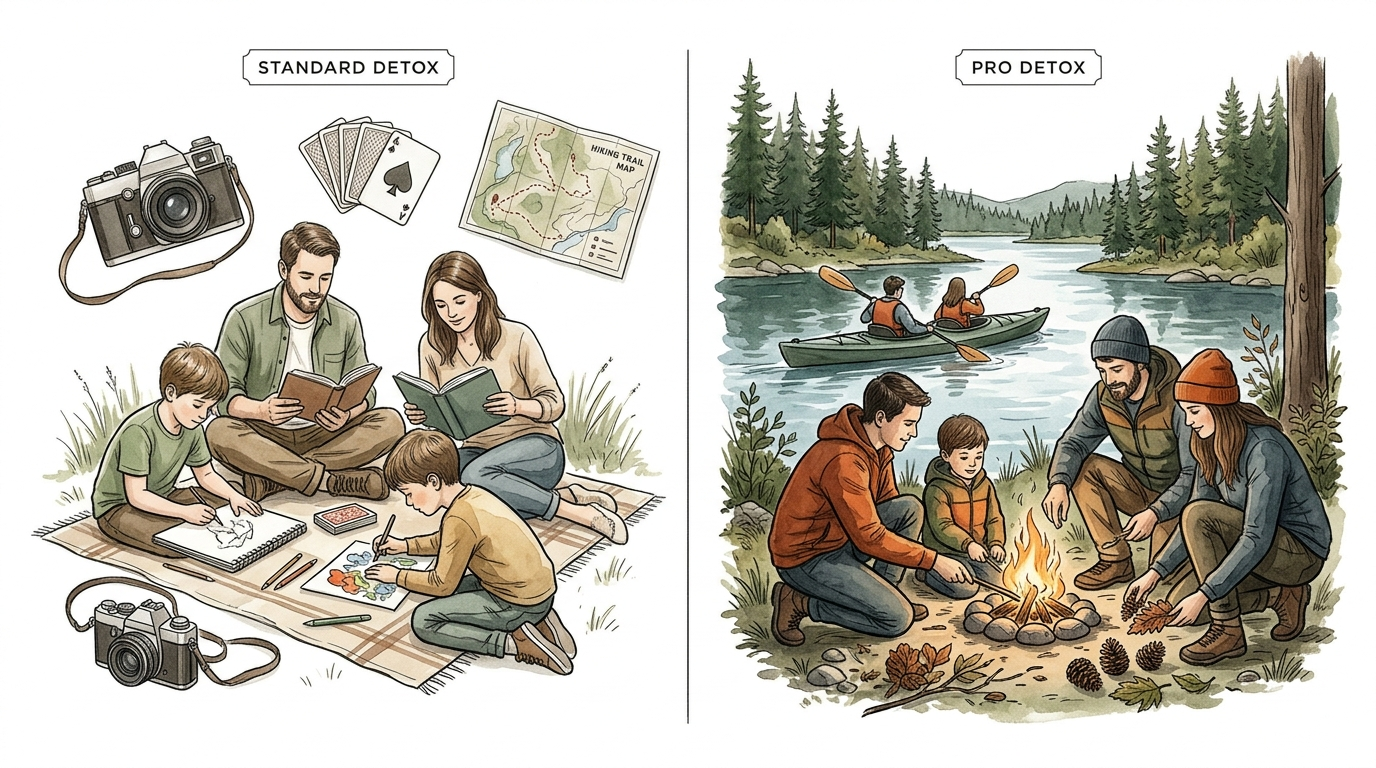
Most attempts at a digital detox fail because they focus entirely on what is being taken away. When you remove a high-dopamine activity like gaming or social media and replace it with nothing, you create a vacuum of boredom. The “Pro” approach to a digital detox is different. It is about replacing the digital with the visceral. You trade virtual achievements for real-world mastery. Instead of scrolling, you build. Instead of streaming, you track.
This guide will show you how to take a standard weekend and transform it into a primitive skills workshop. You will learn how to engage your children’s natural curiosity and your own sense of adventure. By the end of forty-eight hours, the goal is not just to have survived without a phone, but to have gained skills that make the digital world feel a little less necessary.
family digital detox weekend ideas
A family digital detox weekend is an intentional period where all members of a household agree to put away smartphones, tablets, computers, and televisions. Unlike a simple “screen-free Sunday,” this weekend focuses on a specific theme: primitive skills and wilderness survival. This approach gives the family a shared mission and a concrete set of goals to achieve together.
These ideas exist to bridge the gap between “being bored” and “being present.” In a real-world setting, these skills were once essential for survival. Today, they serve as powerful metaphors for focus, patience, and resilience. When a child learns to start a fire with a few sticks, they experience a rush of self-efficacy that no video game level can replicate. The physical nature of these activities also provides a welcome rest for tired eyes and sedentary bodies.
You do not need to be an expert woodsman to make this work. You just need a willing spirit and a small patch of nature. Whether it is your backyard, a local park, or a remote campsite, the “adventure” comes from the engagement with the natural world. These activities are designed to be tactile, rewarding, and challenging enough to keep every family member focused on the task at hand rather than the phone in their pocket.
How the Pro-Detox Framework Works
The “Pro” digital detox is a structured intervention that mimics the intensity of a survival situation without the actual danger. It works because it engages the brain’s problem-solving centers. Here is the step-by-step process to set up your weekend adventure.
Preparation begins with a family meeting on Thursday night. Everyone must understand the “why” behind the detox. Research shows that children are more likely to cooperate when they feel part of the planning process. Explain that this is not about losing your phones, but about gaining “ancient powers.” Let each family member choose one skill they want to master over the next two days.
Physical preparation is equally important. You must remove the temptation by creating a “Tech Vault.” This can be a simple shoebox or a locked cabinet. Place all devices, including chargers, inside the vault on Friday evening. Removing the devices from your immediate physical environment eliminates the “iPhone effect,” where even the sight of a phone nearby reduces cognitive performance and focus.
Execution requires a “Backdrop Shift.” If you stay in the living room where the TV usually sits, the habit loops will be too strong. You must change the environment. Go outside. Build a base camp. The physical transition helps signal to the brain that the rules of engagement have changed. For the next 48 hours, the “main characters” are the people standing next to you.
5 High-Engagement Weekend Swaps
To keep the family energized, you need to replace common digital habits with specific primitive skill challenges. These swaps are designed to offer the same sense of progression and reward found in digital apps but with physical results.
Swap 1: Social Media Scrolling vs. Wildlife Tracking
Social media offers a constant stream of “new” information that keeps us scrolling. Wildlife tracking offers the same mystery but requires much more focus. Instead of checking feeds, go for a “Track Walk.” Look for disturbances in the dirt, bent blades of grass, or animal scat. Try to piece together the story of what happened in that spot ten minutes ago. This builds “Green Time” and significantly boosts attention spans.
Swap 2: Video Games vs. Debris Shelter Building
Video games allow kids to build bases and survive in virtual worlds. Replace this with a “Debris Hut Challenge.” Using only fallen branches and leaf litter, work as a team to build a waterproof shelter large enough for one person to sit inside. This teaches the physics of insulation and the importance of teamwork. The physical reward of sitting inside a structure you built with your hands is immense.
Swap 3: Microwave Meals vs. Open Fire Cooking
Microwave cooking is about instant gratification. Primitive cooking is about process. Challenge the family to cook one full meal over a fire that you started using a “Pro” method like a Ferrocerium rod or a bow drill. Preparing food over an open flame requires patience, temperature management, and constant attention. The food tastes better because you worked harder for it, providing a natural dopamine reward.
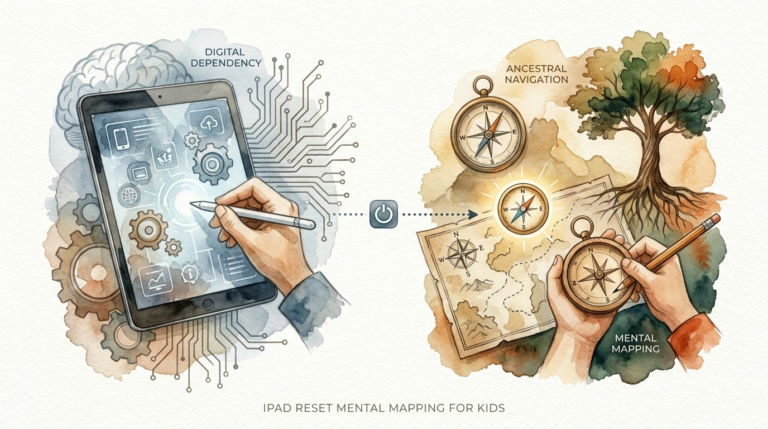
Swap 4: GPS Navigation vs. Natural Signs and Compass
We have outsourced our sense of direction to Google Maps. This weekend, turn off the GPS. Use a paper map and a compass to navigate to a specific landmark in a local park. If you want a more “Pro” challenge, learn “Natural Navigation.” Use the position of the sun, the thickness of moss on trees, or the direction of the wind to find your way. This reconnects the family with their immediate surroundings.
Swap 5: Streaming Movies vs. Primitive Tool Making
Instead of watching a movie on Saturday night, sit around the fire and make something. “Cordage making” is a perfect activity. Find long fibers from plants like nettles or cedar bark and learn to twist them into a strong rope using the “reverse-twist” method. This is a meditative, tactile task that keeps the hands busy and the mind calm. You can use the rope you make to help with tomorrow’s shelter build.
Benefits of the Adventure Detox
The practical benefits of this approach are measurable and observable almost immediately. By moving from a passive state of consumption to an active state of creation, the family’s dynamic shifts from individual isolation to collective success.
Mental health sees the most significant boost. Reducing screen time is clinically linked to lower levels of anxiety and depression. Stepping away from social comparison allows every family member to feel more like themselves. Participants in 48-hour digital detoxes frequently report better mood stability and a feeling of “mental lightness” that persists for days afterward.
Sleep quality improves dramatically when you remove blue light. Electronic screens interfere with natural melatonin production, making it harder to fall asleep. By spending the evening around a fire and then sleeping in a dark environment, you reset your circadian rhythm. This leads to deeper, more restorative rest, which in turn reduces irritability during the day.
Stronger family bonds are the ultimate “Pro” benefit. When you are forced to work together to build a fire or navigate a trail, you communicate more effectively. There are no notifications to interrupt a conversation. You learn things about your children or your spouse that were previously buried under the noise of the digital world. These shared memories of “the time we finally got the fire going” become part of your family’s core identity.
Challenges and Common Mistakes
The biggest pitfall families face is “The Boredom Wall.” This usually happens around 2:00 PM on Saturday. The initial novelty has worn off, and the brain is screaming for a quick dopamine hit. Many parents give in and allow “just one movie.” This resets the detox clock to zero. To avoid this, you must have a “Reserve Activity” ready to go—something high-energy like a fire-starting race or a scavenger hunt.
Another common mistake is lack of skill preparation. If you try to start a friction fire without ever having seen it done, you will likely fail and everyone will get frustrated. Watch a few “how-to” videos together on Friday *before* you lock the phones away. Treat the learning phase as part of the fun. Accept that failure is part of the process; the goal is the effort, not necessarily the perfect result.
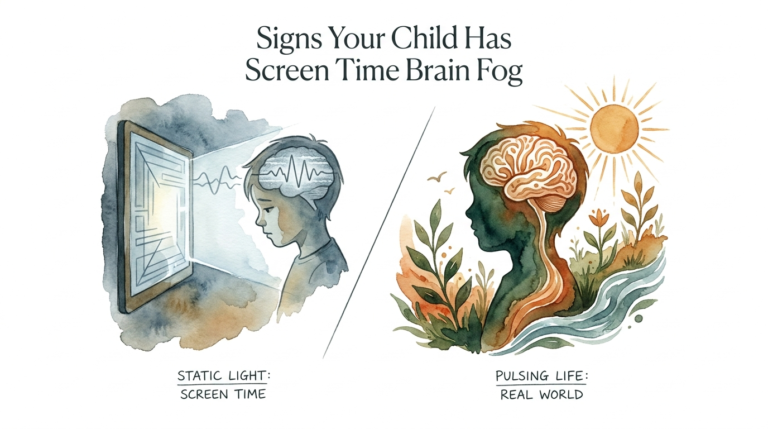
Withdrawal symptoms are real. You might notice increased agitation, moodiness, or even headaches in the first 24 hours. Research indicates that these symptoms are common when breaking a digital habit. Do not take the irritability personally. Acknowledge it, stay hydrated, and stay physically active. Movement is the fastest way to flush the stress of withdrawal out of the system.
Limitations and Realistic Constraints
Environmental limitations are a major factor. If you live in a high-rise apartment in a city, building a debris shelter or starting a fire is not realistic. In these cases, you must adapt. A “Pro” detox in the city might involve visiting a climbing gym, a woodshop, or a botanical garden. The principle remains the same: high-engagement physical skills must replace passive screen time.
Weather can also be a trade-off. A rainy weekend can either be a disaster or the ultimate survival challenge. If you are not equipped for the wet and cold, a digital detox can quickly turn into a miserable experience that everyone resents. Have a “Plan B” for indoor primitive skills, such as leatherworking, knot-tying practice, or indoor plant identification using books rather than apps.
Safety should never be compromised for the sake of the “adventure.” Using knives for whittling or handling fire requires strict supervision and basic safety training. Ensure you have a well-stocked first aid kit and that everyone understands the “Circle of Safety” when using tools. The goal is to build resilience, not to visit the emergency room.
Standard Detox vs. Pro Adventure Detox
The following table illustrates the key differences between a standard approach and the high-engagement adventure method. Understanding these differences helps in planning a weekend that actually sticks.
| Feature | Standard Digital Detox | Pro Adventure Detox |
|---|---|---|
| Primary Goal | Abstinence from screens. | Mastery of new skills. |
| Mental State | Passive waiting for it to end. | Active engagement and curiosity. |
| Activity Level | Low (reading, board games). | High (building, tracking, hiking). |
| Dopamine Source | None (leads to boredom). | Achievement and physical success. |
| Outcome | Temporary relief. | New hobbies and lasting bonds. |
Practical Tips for Success
Success starts with the “Clean Slate” rule. Before the detox begins, clear all chores and digital obligations. Pay the bills, answer the emails, and finish the homework. You cannot fully engage in a primitive weekend if the “Real World” is still hanging over your head. This mental clearance allows you to be 100% present in the woods.
Pack a physical reference library. Since you won’t have YouTube to look up how to tie a bowline knot, bring a few high-quality books on bushcraft and wilderness survival. Having a physical book to flip through is a great screen-free way to solve problems. It also teaches children how to find information without a search engine.
Focus on “Micro-Wins.” Primitive skills can be hard. If you can’t get a fire going with sticks, don’t just give up. Move to a Ferrocerium rod. If you can’t build a full shelter, build a simple lean-to. Celebrate every small success. These micro-wins keep morale high and provide the motivation to keep going through the harder parts of the weekend.
Advanced Considerations
For those who want to take their skills further, consider the “Internalization Phase.” A digital detox shouldn’t just be a one-off event. The goal is to integrate these “analog” moments into your daily life. After the weekend is over, keep one primitive habit. Maybe Saturday mornings remain tech-free for a “Skill Hour.” This prevents the “Relapse Effect” where families return to even higher screen usage immediately after a detox.
Think about scaling the difficulty. Once your family can build a shelter and start a fire, move on to more complex tasks like water purification or making simple stone tools. These advanced skills require a deeper understanding of biology and geology. This provides an ongoing educational framework that makes nature feel like a never-ending classroom.
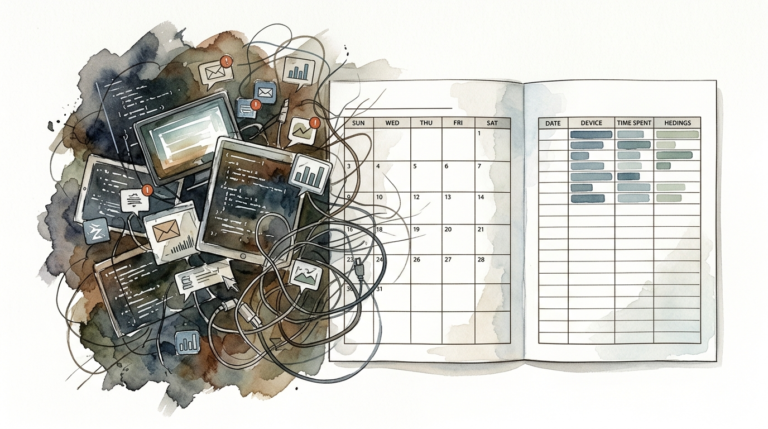
Performance optimization is also key. Track your progress. How long did it take to get the fire going this time compared to last month? Did the shelter stay dry in the rain? Using simple notebooks to record these metrics gives the “Pro” detox a sense of professional development. It turns a family outing into a genuine journey of self-improvement.
Scenario: The 48-Hour Survival Simulation
To see how this works in practice, let’s look at a typical Saturday schedule for a family of four in a local state park.
08:00 AM – The Unplug: The family arrives at the site. Phones are placed in a locked box in the trunk of the car. The mission is briefed: “By tomorrow morning, we must have a functional shelter and a fire for cooking.” This immediate goal-setting focuses the mind.
10:00 AM – Shelter Site Selection: The family spends two hours scouting for the perfect spot. They learn to look for “widowmakers” (dead branches that could fall) and flat ground with good drainage. They gather “the three layers of insulation”—long sticks, smaller ribs, and a thick coating of leaves.
01:00 PM – The Foraging Lunch: While eating pre-packed sandwiches, the family uses a field guide to identify three edible or medicinal plants in the area. They don’t eat them (safety first!), but they learn to spot plantain for stings or pine needles for tea. This turns a simple lunch into a scavenger hunt.
03:00 PM – The Fire Challenge: The “Dopamine Wall” hits. Instead of resting, they start the fire-making process. They spend an hour gathering “tinder,” “kindling,” and “fuel.” The kids are in charge of the tinder bundle. The struggle is real, but when the first spark catches, the energy level in the camp triples.
07:00 PM – The Night Watch: After a dinner cooked over the fire, the family sits in total darkness. They listen to the “Night Choir.” Without the distraction of screens, their hearing sharpens. They tell stories, not about what they saw online, but about what they did that day. They are asleep by 9:00 PM.
Final Thoughts
Most families treat digital detox like a punishment because they view it as a loss of freedom. In reality, the “Pro” approach proves that true freedom is the ability to function and thrive without a battery-powered device. By replacing the scrolling with the sharpening of a knife or the twisting of cordage, you reclaim your attention and your connection to your loved ones.
This weekend adventure is just a starting point. The skills you learn—patience, observation, and teamwork—are universal. They will make your children better students and you a more focused professional. The “dirt time” spent together creates a unique bond that no amount of shared Netflix accounts can replicate. It is a reminder that the most high-definition experience available is the one happening in the woods right now.
Encourage your family to see this not as a break from life, but as a return to it. Experiment with different skills, embrace the failures, and celebrate the small fires you start together. You might find that once the phones come back out of the vault on Sunday night, nobody is in a particularly big hurry to check them.
Sources
1 travelwyoming.com | 2 youtube.com | 3 clazyu.com | 4 westgateresorts.com | 5 susanbarico.com | 6 nih.gov | 7 medium.com | 8 youtube.com | 9 muddypuddles.com | 10 bestchoicecounselling.com | 11 medicalnewstoday.com | 12 littlecedars.co.uk