weekly family planning sheet
Stop fighting your phone notifications and start looking at one page. Are you constantly toggling between apps just to figure out who is picking up the kids? Stop the ‘active’ management struggle. One physical sheet on the fridge creates a ‘passive’ flow where everyone stays informed without the digital noise. Get our template here.
Managing a modern household often feels like running a small logistics firm. Between soccer practice, doctor appointments, and meal prep, the mental load is staggering. Most parents try to solve this with a dozen different apps, yet they still feel behind. This is because digital tools require active management—you have to open them, find the right tab, and hope the sync didn’t fail.
A weekly family planning sheet changes the game. It moves the information from your pocket to your wall. This simple shift creates a shared environment where every family member can see the big picture at a glance. It’s not just about a calendar; it’s about creating a centralized hub for your life.
When information is visible to everyone, the “manager” parent doesn’t have to constantly repeat themselves. Kids begin to understand the flow of their own days. Stress levels drop because the “unknowns” are removed. Let’s dive into how you can reclaim your time with a physical system that actually works.
weekly family planning sheet
A weekly family planning sheet is a physical, one-page document that summarizes every critical event, meal, and task for the upcoming seven days. It serves as the primary visual cue for the entire household. Unlike a digital calendar that lives behind a lock screen, this sheet is “always on.” It is typically placed in a high-traffic area, such as the refrigerator or a kitchen command center.
This tool exists to solve the problem of fragmented information. In many homes, Mom knows the meal plan, Dad knows the practice schedule, and the kids are just along for the ride. The planning sheet synchronizes these disparate pieces of data. It creates a single source of truth that anyone can consult without needing a device or a login.
In real-world terms, this sheet is your home’s “dashboard.” Imagine driving a car where the speedometer and gas gauge were hidden in different apps on your phone. You’d probably crash. A family planning sheet puts your household’s “vital signs” right in front of you. It covers the 5 W’s: Who, What, Why, When, and Where.
You might include sections for daily schedules, dinner menus, a “to-buy” list, and a spot for upcoming big events. For families with children, it often includes a “chore of the week” or a “habit tracker” to encourage independence. It is the bridge between a chaotic week and a structured flow.
How It Works: Implementing Your System
Setting up a weekly system is about more than just printing a piece of paper. It requires a repeatable process that your family can rely on. This is where you move from “trying to be organized” to “having a system.”
The most effective method is the “Sunday Reset.” This is a 20-minute window every Sunday evening where the family gathers to populate the sheet for the coming week. Check your work calendars, school newsletters, and sports apps. Transfer the high-level details onto the physical sheet. This act of writing helps you mentally process the week ahead.
Once the sheet is filled out, post it in the exact same spot every time. Consistency is the secret sauce. If the sheet moves, the system breaks. The kitchen is usually the best spot because it’s where the most “management” decisions are made—like what to eat for dinner or what time to leave for a game.
Use color coding to make the sheet scannable. Assign each family member a specific color. At a glance, you can see if Tuesday is a “Blue” day (Dad) or a “Pink” day (Daughter). This visual shorthand reduces the time it takes to process the information. It turns a complex schedule into a simple pattern.
When a change happens during the week, update the physical sheet immediately. If a practice is canceled, cross it out. If a new appointment is made, write it in. This ensures the sheet remains the trusted source. If the paper doesn’t match reality, the family will stop looking at it and go back to their phones.
The Major Benefits of Physical Planning
The primary advantage of a physical planning sheet is the reduction of the mental load. Research shows that visual schedules create predictability and reduce anxiety, especially for children. When kids know what to expect, they are less likely to experience meltdowns during transitions.
Physical sheets also promote independence. Instead of a child asking, “What’s for dinner?” or “Do I have dance today?”, you can simply point to the sheet. This shifts the responsibility from the parent to the system. Over time, children develop better time-management skills and a sense of autonomy.
Another benefit is the elimination of “app fatigue.” We are bombarded with notifications all day. A physical sheet offers a screen-free way to coordinate. It creates a “passive flow” of information. You don’t have to do anything to receive the information other than walk past the fridge. This is much less taxing on your brain than navigating a digital interface.
Finally, a physical sheet creates accountability. When a chore is written down in black and white for everyone to see, it’s harder to ignore. It serves as a gentle, non-verbal reminder. This reduces the need for “nagging,” which improves the overall emotional atmosphere of the home.
Challenges and Common Mistakes
One of the most common mistakes is trying to fit too much detail on the page. This isn’t a journal; it’s a summary. If you try to write down every single task, the sheet becomes cluttered and overwhelming. This leads to people ignoring it entirely. Focus on the “big rocks”—the events that move the needle.
Consistency is another major hurdle. Many families start strong for two weeks and then forget to do the Sunday Reset. When the sheet stays empty, the system dies. This usually happens because the process was too complicated. Keep your “Reset” session short and focused.
Another pitfall is the “Manager Trap.” This occurs when one person does all the planning while everyone else remains passive. For the system to work, everyone needs to have “buy-in.” If the kids are old enough, let them write in their own events. If your partner has a commitment, make sure they are the ones to add it. Shared ownership leads to shared success.
Poor placement can also kill your progress. If you put the sheet inside a pantry door or on a side wall where no one looks, it won’t be effective. Visual reminders need to be “concurrently distinctive”—meaning they should stand out in their environment to be effective cues.
Limitations: When the Sheet Isn’t Enough
A physical sheet is excellent for day-to-day flow, but it has its limits. It is not a great tool for long-term planning. You wouldn’t use a weekly sheet to track a vacation six months from now. For long-lead items, a digital calendar or a master wall calendar is a better fit.
Large families with extremely complex schedules might find a single sheet too restrictive. If you have five kids in three different sports each, the boxes on a standard template will be too small. In these cases, you might need a larger dry-erase board or a multi-page system.
Privacy is another consideration. If you have sensitive appointments or visitors coming over, a sheet on the fridge is visible to everyone. For some, this total transparency is a drawback. You have to decide what information is “public” for the family and what stays in a private digital calendar.
Finally, the sheet is static. It doesn’t send you a ding ten minutes before you need to leave. For time-sensitive appointments where you are prone to “spacing out,” a digital alarm is still a necessary backup. The sheet provides the context; the phone provides the alert.
Active Management vs. Passive Flow
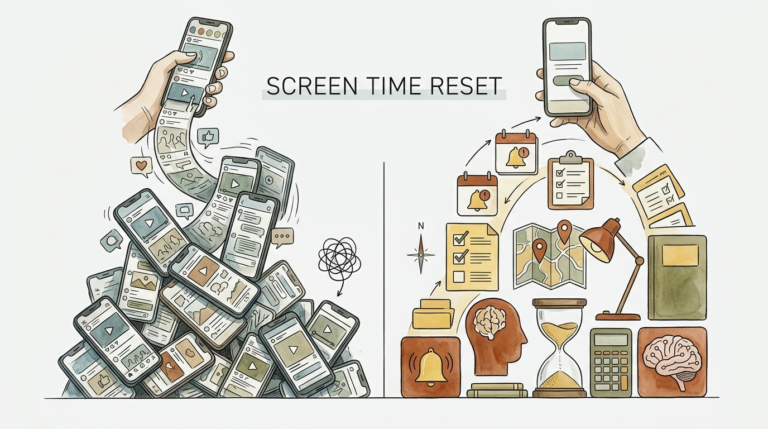
In the world of productivity, there is a massive difference between active management and passive flow. Digital apps are active tools. You must engage with them, navigate menus, and respond to pings. This creates a high cognitive load because you are constantly “checking” the system.
A weekly planning sheet facilitates a passive flow. The information is always there, waiting for you to glance at it. It integrates into your environment rather than demanding your attention. This is a much more natural way for a family to stay in sync. It allows the household to run on “autopilot” for the routine parts of life.
| Feature | Active (Digital Apps) | Passive (Physical Sheet) |
|---|---|---|
| Access Speed | Slow (Unlock, open app) | Instant (Glance at wall) |
| Mental Load | High (Notification fatigue) | Low (Visual cue) |
| Shared Visibility | Requires login/sync | Universal (Everyone sees) |
| Engagement | Individualistic | Collaborative |
Practical Tips for Best Results
To get the most out of your weekly sheet, follow these best practices. First, use high-quality writing tools. A messy, smudged sheet is hard to read and demoralizing to look at. If you use a dry-erase system, get fine-tip markers. If you use paper, choose pens that don’t bleed through.
Include a “Menu” section. Deciding what to eat at 5:00 PM is a major source of family stress. By deciding on Sunday and writing it on the sheet, you eliminate the daily “What’s for dinner?” debate. This also makes grocery shopping much easier and reduces food waste.
Don’t forget to include “White Space.” A schedule that is packed from 6:00 AM to 10:00 PM is a recipe for burnout. Seeing the empty spaces on your sheet can remind you to protect your family’s downtime. If the sheet looks too full, it’s a visual sign that you need to say “no” to something.
Consider a “Notes” or “Wins” section. This is a great place to jot down a grocery item you ran out of or to highlight a success from the week. Adding a small positive element makes the sheet more than just a list of tasks—it makes it a part of your family culture.
Advanced Strategies for Power Users
Once you’ve mastered the basic weekly sheet, you can start optimizing for even more efficiency. One advanced technique is to sync your physical sheet with a meal-prepping routine. Use the sheet to identify “heavy” nights where you won’t have time to cook, and plan for slow-cooker meals or leftovers on those specific days.
Another strategy is to integrate “Zone Cleaning” into your weekly sheet. Instead of a vague “clean the house” task, assign a specific room to a specific day. Having this visible on the sheet helps ensure the work is distributed throughout the week rather than piling up on Saturday.
If you are managing a neurodiverse household, look into adding more icons and visual symbols. Research shows that for kids with ADHD or autism, icons are often processed faster than text. Using a small “soccer ball” sticker or icon next to a practice time can significantly improve their ability to follow the schedule.
You can also use the sheet to track “Family Rituals.” Whether it’s a Friday movie night or a Wednesday board game session, putting these on the official sheet gives them the same importance as a doctor’s appointment. It ensures that the fun stuff doesn’t get pushed aside by the “productive” stuff.
A Realistic Scenario: A Tuesday with the Sheet
Imagine it’s a Tuesday morning. In a digital-heavy house, Mom is checking her phone while drinking coffee, Dad is looking at his work laptop, and the kids are asking what time they have to be at practice. No one is on the same page.
In a house with a weekly planning sheet, the experience is different. As the kids grab their breakfast, they look at the fridge. They see that today is “Taco Tuesday” and that Mom is picking them up from school because Dad has a late meeting (highlighted in his color).
The kids see a small “library book” icon next to their names, reminding them to put their books in their backpacks. There are no frantic texts at 3:00 PM asking about the pickup plan because the plan was agreed upon Sunday and has been visible all week. The family moves through the day with a sense of calm “passive flow.”
Final Thoughts
Implementing a weekly family planning sheet is one of the simplest and most effective ways to lower the temperature in your home. By moving from active digital management to a passive physical flow, you create a shared environment of clarity and accountability. It’s a low-cost, high-impact solution to the chaos of modern life.
Start small. You don’t need a perfect, Pinterest-worthy command center to begin. Just print a simple template, grab a few colored pens, and commit to a 20-minute meeting this Sunday. You will be surprised at how quickly the “where is everyone?” questions disappear once the answers are right on the fridge.
The goal isn’t to become a perfect, rigid robot. The goal is to build a system that supports your family so you can spend less time managing and more time enjoying each other. Give the physical sheet a try this week and see how much lighter your mental load feels.
Sources
1 planifyfam.com | 2 theturquoisehome.com | 3 linksaba.com | 4 mangodisplay.com | 5 lifesorted.com | 6 sageorganizingco.com | 7 familymind.ai | 8 childandfamilydevelopment.com | 9 helpz.com.au | 10 myhomeschoolwithaview.com | 11 nih.gov | 12 threebythree.com | 13 erincondren.com | 14 lifehacker.com | 15 theseanamethod.com | 16 thegirlcreative.com | 17 ahundredaffections.com