Sensory Play For Ipad Meltdowns
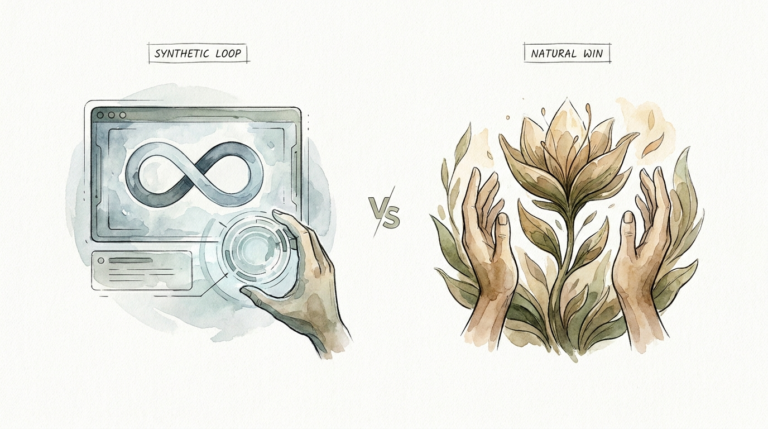
A child’s nervous system wasn’t designed for digital pings; it was designed for pinecones and puddles. If your child is melting down, it’s because their environment is too loud and too shallow. The 7-day reset moves them from the digital city to the sensory wild.

You’ve seen the transformation. One minute, your child is peacefully absorbed in a tablet. The next, the timer goes off, and the world ends. This isn’t just a tantrum; it is a physiological crash landing. Modern screens offer high-intensity dopamine rewards with zero physical effort, leaving the nervous system “top-heavy” and disconnected from the physical world.

The solution isn’t just taking the device away. It is about filling the sensory void that remains. When we trade digital noise for wild sensory input, we give the brain the specific signals it needs to self-regulate, focus, and find peace. This guide will show you exactly how to navigate that transition.
Sensory Play For Ipad Meltdowns
Sensory play for iPad meltdowns is a therapeutic approach used to recalibrate a child’s nervous system after it has been overstimulated by digital media. When a child uses an iPad, their brain is flooded with rapid-fire visual and auditory signals. These “digital pings” trigger massive dopamine releases, but the body remains sedentary. This creates a disconnect: the brain is sprinting while the body is standing still.
This state is often called “The Digital City.” It is an environment characterized by high cognitive load but low sensory depth. When the screen is removed, the child experiences a “dopamine crash.” Without the screen’s artificial stimulation, the real world feels painfully quiet and boring. The resulting meltdown is the nervous system’s way of screaming for the input it just lost.
Sensory play acts as the bridge back to reality. By engaging the “heavy” senses—proprioception (muscle/joint pressure) and the vestibular system (balance/movement)—we provide a natural, grounding type of stimulation that calms the amygdala. Instead of an abstract digital reward, the child receives tangible, biological feedback from their own body. This is the “Sensory Wild,” where input is slow, deep, and organizing.
Think of it like a deep-sea diver returning to the surface. If they come up too fast, they get “the bends.” A screen meltdown is the neurological equivalent of the bends. Sensory play is the decompression chamber that allows the brain to adjust to the “normal” pressure of the physical world without exploding.
How to Do a 7-Day Sensory Reset
A 7-day reset is a structured period designed to drain the “digital bucket” and refill the “sensory bucket.” It requires a complete break from personal devices to allow the brain’s reward pathways to stabilize. Here is the step-by-step process for a successful reset.
Day 1-2: The Detox and Heavy Work Phase
The first 48 hours are the hardest. As dopamine levels drop, irritability will peak. During this phase, focus exclusively on “heavy work”—activities that provide deep pressure to the muscles and joints. This input is inherently organizing for a dysregulated brain. Heavy work includes pushing a weighted laundry basket, doing “wall push-ups,” or wearing a slightly weighted backpack during a walk.
Day 3-4: Reintroducing the Vestibular System
Once the initial “tech withdrawal” eases, focus on movement. The vestibular system, located in the inner ear, tells the brain where the head is in space. Controlled spinning, swinging on a hammock, or jumping on a trampoline can help re-center a child who feels “floaty” or unfocused after days of screen immersion. Gentle, rhythmic movement is calming, while fast, varied movement is alerting.
Day 5-6: Tactile Exploration and Creativity
Now that the body is more regulated, engage the hands. Digital play is “non-tactile”—a glass screen feels the same regardless of what is happening on it. In the “Sensory Wild,” textures matter. Use sensory bins filled with dry rice, kinetic sand, or water beads. Encourage “messy play” like mud kitchens or finger painting. This builds fine motor skills and forces the brain to process complex, multi-sensory data streams.
Day 7: The Nature Immersion
The final day should be spent entirely in a natural environment. Nature provides “fractal” visual patterns and ambient sounds that are naturally soothing to the human brain. Unlike the “Hard Attention” required by screens, nature invites “Soft Fascination,” which allows the prefrontal cortex to rest and recover. A long hike, a trip to a creek, or simply sitting in a park completes the reset.
Benefits of Choosing Sensory Play Over Screens
The practical benefits of shifting from digital noise to sensory-rich play are measurable and immediate. Research suggests that engaging in sensory play can reduce stress and anxiety in children by up to 65%. This is because sensory activities trigger the release of oxytocin and serotonin—the body’s natural “feel-good” chemicals—without the addictive “spike-and-crash” cycle of dopamine.
One primary advantage is improved emotional regulation. A child who frequently engages in proprioceptive “heavy work” develops a better “body map.” They become more aware of their physical boundaries and internal states, making them less likely to be overwhelmed by environmental stressors. This builds a foundation of resilience that screens cannot provide.
Another benefit is enhanced cognitive growth. A 2024 study confirmed that children experiencing multi-sensory learning demonstrate 34% better engagement and retention compared to traditional single-sense learning. When a child touches, smells, and moves while learning, they create more neural pathways, making the information “stick” in a way that watching a video never will.
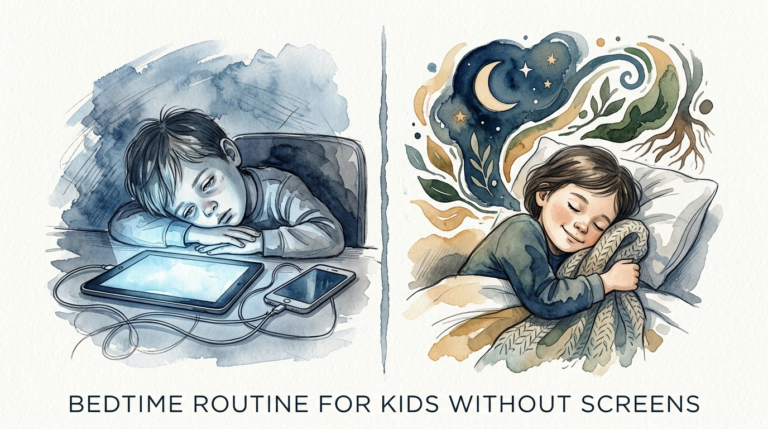
Finally, sensory play supports better sleep quality. Digital devices emit blue light that suppresses melatonin, the hormone responsible for sleep. Conversely, physical sensory play—especially outdoors—helps regulate the circadian rhythm and tires the body out naturally, leading to deeper, more restorative sleep cycles.
Challenges and Common Mistakes
Transitioning from screens to sensory play is not without its hurdles. One of the most frequent errors is expecting an immediate “zen” state. In the first few days of a reset, your child may seem more hyperactive or aggressive. This is often because they are “sensory seeking”—their brain is starving for the high-level input it used to get from the iPad, and they are trying to find it by crashing into furniture or yelling.
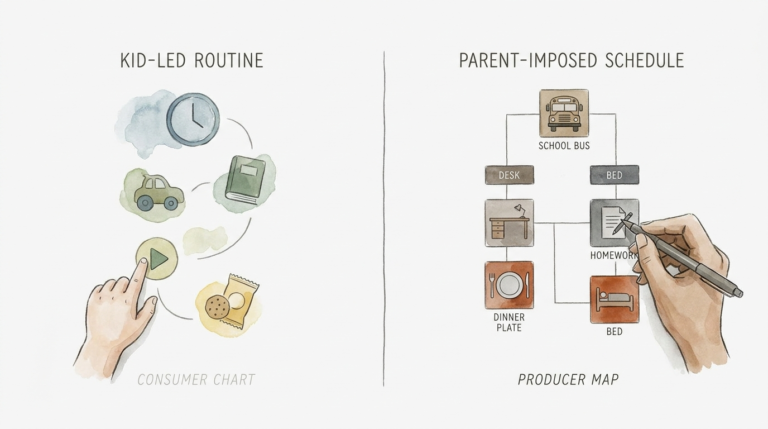
A second common pitfall is over-scheduling the reset. Parents often feel the need to fill every minute of the “no-screen” time with organized activities. This can lead to parent burnout and a child who never learns how to deal with boredom. Boredom is actually a vital state; it is the “waiting room” for creativity. The goal of sensory play is to provide the *tools* for exploration, not to direct every second of it.
Additionally, many parents fail to model the behavior. If you are asking your child to put down the iPad while you are simultaneously scrolling through social media, the reset will fail. Children are highly sensitive to “digital hypocrisy.” For the reset to work, the entire household must participate in “tech-free zones” and engage in the sensory wild together.
Limitations and Environmental Constraints
While sensory play is a powerful tool, it is not a “magic wand” for every situation. Children with diagnosed Sensory Processing Disorder (SPD) or Autism Spectrum Disorder (ASD) may have specific “aversive” reactions to certain sensory inputs. For some, the texture of sand or the sound of a blender is physically painful. In these cases, a “general” sensory reset must be modified under the guidance of an Occupational Therapist.
Environmental limitations also play a role. A family living in a small urban apartment may not have easy access to a “wild” forest or space for a trampoline. In these settings, parents must get creative with “indoor heavy work,” such as using weighted blankets or creating “indoor obstacle courses” using couch cushions and painter’s tape on the floor.
It is also important to recognize that sensory play cannot replace medical intervention for underlying neurological conditions. If meltdowns are persistent, violent, or occur regardless of screen time, it is essential to consult a pediatrician or child psychologist to rule out other issues.
Digital Noise vs. Wild Sensory Input
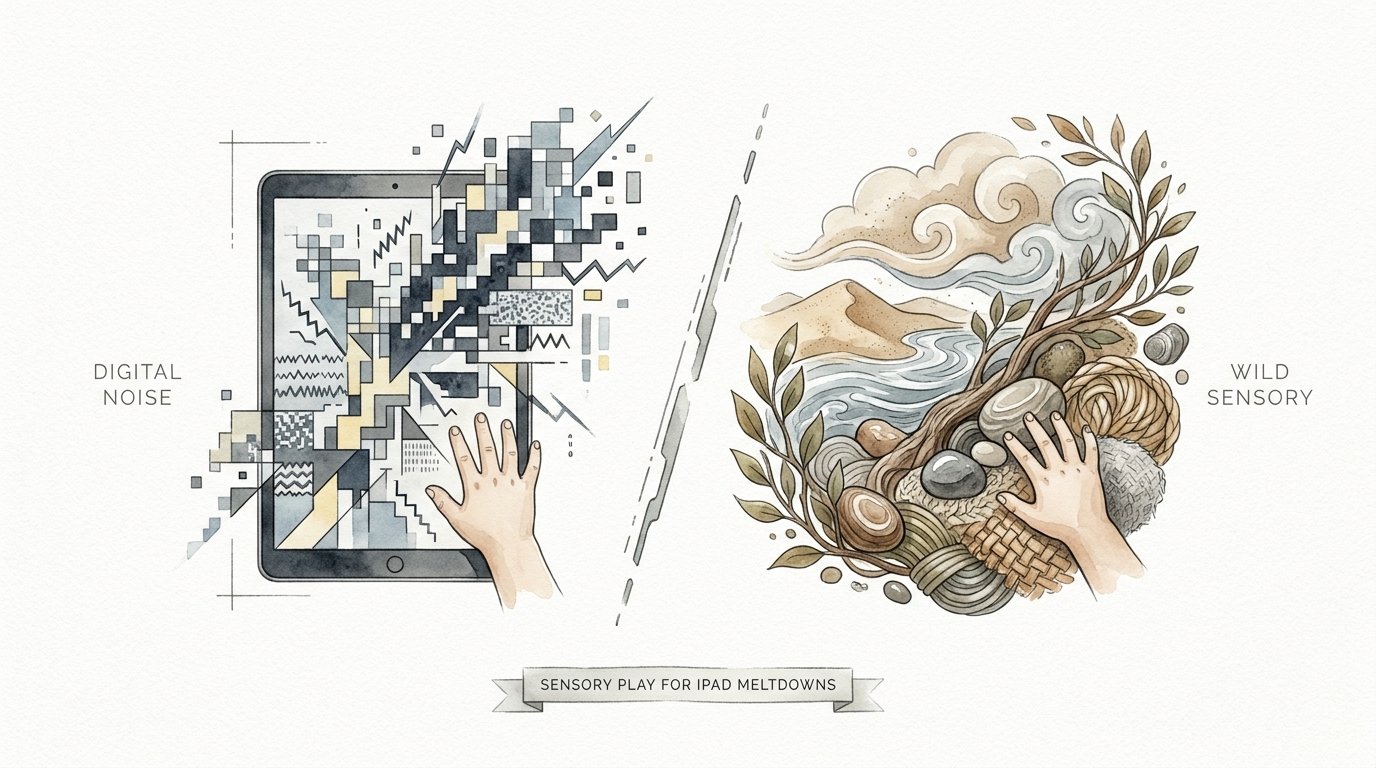
To understand why this reset is necessary, we must compare the two types of environments our children inhabit. The “Digital City” and the “Sensory Wild” affect the brain in fundamentally different ways.
| Feature | Digital Noise (The iPad) | Wild Sensory (Physical Play) |
|---|---|---|
| Dopamine Level | High/Spiky (Addictive) | Moderate/Stable (Sustaining) |
| Physical Effort | Near Zero (Sedentary) | High (Muscle Engagement) |
| Attention Type | Hard/Directed (Tiring) | Soft Fascination (Restorative) |
| Sensory Depth | 2D (Sight/Sound only) | 3D+ (All 7-8 Senses) |
| Regulation Effect | Dysregulating (Over time) | Organizing (Calming) |
As the table shows, digital stimulation is “efficient” but “shallow.” It gives the brain a lot of data but very little “nourishment.” Wild sensory input is “inefficient”—it takes work to climb a tree or dig a hole—but it provides the deep, multi-sensory feedback that the human nervous system evolved to require for stability.
Practical Tips for a Successful Reset
Implementing a sensory reset requires more than just willpower; it requires a strategy. Use these best practices to make the transition smoother and more effective.
- The “Popsicle Stick” Strategy: Write 20 quick sensory activities on popsicle sticks (e.g., “10 bear crawls,” “Squeeze a stress ball,” “Drink a cold smoothie through a thick straw”). When a child asks for a screen, have them pull a stick instead.
- Use Visual Timers: When you eventually reintroduce screens, use a visual countdown clock. This allows the child to “see” time passing, which is much easier for their brain to process than an abstract “five more minutes.”
- Front-Load the Day: Start the morning with 15 minutes of “heavy work.” Pushing against a wall or doing animal walks before the day starts helps “set” the nervous system for better focus and fewer meltdowns later on.
- Create a “Calm-Down Corner”: Build a space with a bean bag chair, a weighted blanket, and some tactile fidgets. This isn’t a “time out” spot, but a “sensory gym” where the child can go to regulate their own energy.
- Crunchy and Chewy Snacks: Oral input is a powerful regulator. If a child is starting to spiral, offer a crunchy carrot or a piece of chewy dried fruit. The resistive act of chewing sends calming signals directly to the brain.
Advanced Considerations: The Hidden Senses
For serious practitioners, it is helpful to look beyond the “Big Five” senses. To truly master sensory play for iPad meltdowns, you must understand the three hidden senses: Proprioception, Vestibular, and Interoception.
Proprioception is the sense of where your body is in space, provided by receptors in the muscles and joints. It is the “internal GPS.” Digital play starves this sense. “Heavy work” (carrying, pushing, pulling) feeds it. This is why a child who has been sitting still for two hours often starts “crashing” into things—they are literally trying to find where their body ends and the world begins.
Vestibular Processing involves the inner ear and regulates balance and movement. It is the most powerful sensory system in terms of its effect on the brain. If a child is “sluggish” after screen time, they may need alerting vestibular input (jumping, spinning). If they are “wired” and frantic, they need calming vestibular input (slow rocking, linear swinging).
Interoception is the ability to feel what is happening inside the body—hunger, thirst, heart rate, and emotions. Excessive screen time “mutes” interoception. Children become so absorbed in the digital world that they don’t notice they need to use the bathroom or that they are becoming hungry and “hangry.” Sensory play reconnects them to these internal signals, which is the first step toward true self-regulation.
Scenario: The 5:00 PM Meltdown
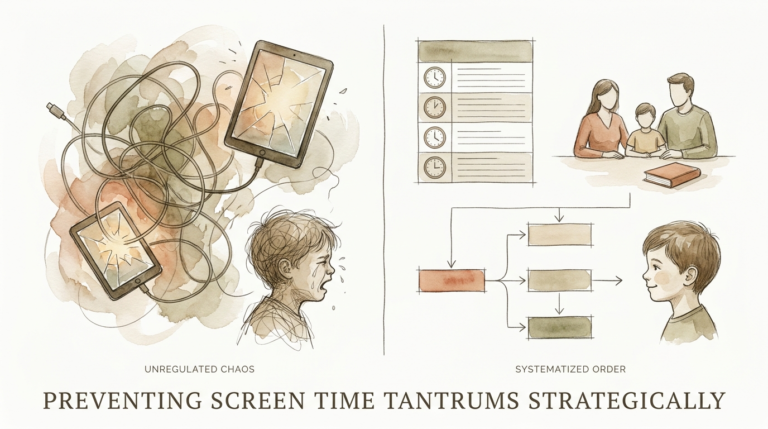
Let’s look at a common real-world example. It’s 5:00 PM. You are trying to cook dinner. Your 6-year-old has been on the iPad for 45 minutes. You announce that it’s time to eat and take the device away. Instantly, the child drops to the floor, screaming and kicking. This is the “Dopamine Crash” in action.
The Wrong Way: You yell at the child to stop, threaten to take the iPad away for a week, or give the device back for “just 10 more minutes” to finish the pasta. All of these responses either escalate the stress or reinforce that “screaming = more screen time.”
The Sensory Way: Before you take the device away, you give a 2-minute warning. When the time is up, you don’t just leave a “void.” You offer a Heavy Work Transition. You say, “iPad time is over. I need a ‘strong helper’ to push this heavy basket of groceries to the kitchen.” The act of pushing provides the proprioceptive input that “shuts off” the fight-or-flight response. By the time they reach the kitchen, their brain has started to recalibrate, and the meltdown is averted.
Final Thoughts
A child’s meltdown after screen time isn’t a sign of “bad parenting” or a “bad kid.” It is a biological response to an environment that offers too much “Digital Noise” and not enough “Wild Sensory” input. The human brain was built for the complexities of the physical world—the weight of a rock, the smell of rain, and the effort of a climb.
By implementing a 7-day reset and focusing on the three “hidden senses,” you aren’t just taking away a tablet; you are giving your child back their nervous system. You are teaching them how to feel grounded, how to focus, and how to find joy in the “quiet” moments of life. This is the greatest developmental gift you can offer in the digital age.
Start small. Tomorrow morning, replace five minutes of screen time with five minutes of animal crawls. Watch how their energy changes. The path from the digital city to the sensory wild is a journey, but it is one that leads to a calmer, happier, and more resilient child. It’s time to trade the pings for the puddles.
Sources
1 daar.com.au | 2 geniebook.com | 3 funandfunction.com | 4 calmmamacoaching.com | 5 kids-activities.net | 6 rchsd.org | 7 familyitguy.com | 8 rochester.edu | 9 substack.com | 10 childrenstherapycenter.com | 11 napacenter.org | 12 childrenswi.org | 13 senseationalyou.com | 14 standrewssukhumvit.com | 15 forestfrontiers.co.uk | 16 sensoryprocessingdisorderparentsupport.com | 17 mindmarvels.com | 18 pentagonplay.co.uk | 19 senseationalspaces.com | 20 mamasensory.com | 21 sensorysid.com | 22 westgateresorts.com | 23 connectpediatrictherapy.com | 24 occupationaltherapy.com.au | 25 growinghandsonkids.com