Morning Routine Organization For Kids
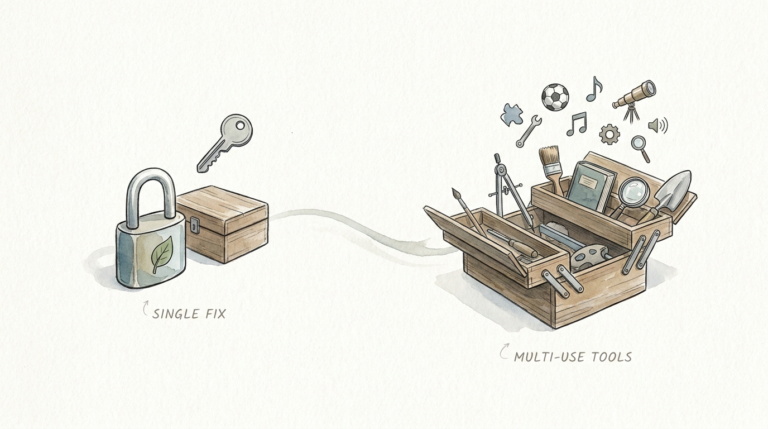
Is your morning a race to the finish line or a foundation for the day? Chaos isn’t a lack of discipline; it’s a lack of a map. When a child wakes up to a world of endless, unorganized choices, their nervous system redlines. A visual roadmap provides the boundaries they need to feel safe. See how subtraction—removing the clutter and adding a simple 3-step anchor—turns the morning rush into a morning ritual.
Morning Routine Organization For Kids
Morning routine organization for kids is the strategic design of a child’s early hours to prioritize predictability, independence, and emotional regulation. At its core, it is about creating a “visual roadmap” that transforms abstract expectations like “get ready” into concrete, manageable actions. Instead of a parent acting as a drill sergeant, the system itself becomes the guide.
This approach exists because children, especially those still developing executive function skills, do not naturally perceive time or sequence in the way adults do. To a child, a morning without structure is a series of jarring transitions and confusing demands. Organization provides the scaffolding they need to move from one task to another without cognitive overload.
In the real world, this is used to mitigate the “fight or flight” response often triggered by the morning rush. When a child knows exactly what happens after they brush their teeth, their brain moves out of a reactive state and into a productive one. It is a tool for building self-reliance that serves them well beyond the front door.
Think of it like a GPS for the first 60 minutes of the day. Without it, you are constantly making U-turns and asking for directions; with it, you simply follow the path. This structure is essential for all children but is particularly transformative for those with sensory processing sensitivities or attention challenges.
How to Build a Frictionless Morning Roadmap
Creating an organized morning begins with a process called “backward mapping.” Start by identifying the hard deadline—the moment you must pull out of the driveway or walk to the bus stop. From there, work backward in five-minute increments to determine when the wake-up call needs to happen.
Effective organization relies on the “When-Then” principle. This involves structuring the routine so that a highly desirable activity occurs only after the “must-do” tasks are complete. For instance, “When your shoes are on and your bag is packed, then we have time for ten minutes of LEGOs.” This naturally motivates the child to move through the less exciting parts of the morning.
A central pillar of this system is the visual schedule. For younger children, use high-contrast pictures showing a toothbrush, a bowl of cereal, and a backpack. For older children, a checklist with time estimates works best. Place these charts in the “action zones” where the tasks occur, such as the bathroom mirror or the back of the bedroom door.
Limit the routine to a “3-step anchor” during the busiest times. Overcomplicating the morning with too many chores often leads to failure. Focus on the essentials: body (hygiene), fuel (breakfast), and prep (bags/shoes). Anything else should be considered a “bonus” task if time allows.
Step-by-Step Implementation
First, conduct a “morning audit” on a quiet weekend. Time how long it actually takes your child to put on their shoes or eat a bowl of oatmeal. Most parents underestimate these durations, which leads to a constant sense of being behind schedule.
Second, prepare the environment the night before. This is the “subtraction” phase. Subtract the stress of finding matching socks by laying them out in advance. Subtract the “missing shoe” hunt by creating a dedicated launchpad near the exit. The goal is to remove as many decisions as possible from the morning hours.
Third, introduce the new routine during a calm period, not in the middle of a Tuesday rush. Walk through the visual chart together and let the child “practice” the steps. Giving them a sense of ownership over the map makes them much more likely to follow it.
The Tangible Benefits of a Visual Roadmap
The primary advantage of organized morning routines is the reduction of cognitive load. When the routine is visual and predictable, children don’t have to use their mental energy to figure out what comes next. This preserves their “brain power” for the academic and social challenges of the school day.
Emotional regulation is another significant benefit. Research shows that clear routines lower cortisol levels in both parents and children. When everyone knows the plan, the need for nagging, yelling, and power struggles diminishes. This leads to a more connected, peaceful family dynamic before everyone separates for the day.
Independence grows naturally within these boundaries. A child who can follow a chart to get dressed and pack their bag develops a sense of agency and “can-do” spirit. They stop being passive participants in their morning and start becoming the directors of their own success.
Other key benefits include:
- Improved Time Management: Children begin to understand the relationship between their actions and the ticking clock.
- Decreased Anxiety: Predictability is the greatest antidote to the “unknown” that often causes morning meltdowns.
- Long-Term Habit Formation: These early organizational skills lay the foundation for adult productivity and self-care.
Common Pitfalls: Why Routines Fail
The most frequent mistake is creating a routine that is too rigid or contains too many steps. If a child feels like they are on a conveyor belt, they may rebel just to reclaim a sense of control. Routines should be a framework, not a cage.
Another pitfall is the “parent as the primary engine” syndrome. If the routine only moves forward when the parent gives a verbal command, the child never learns to self-start. The goal is for the visual chart or the timer to be the “boss,” not the adult’s voice.
Neglecting the parent’s own morning needs often sabotages the child’s routine. If you are rushing, panicked, and unorganized, your child will mirror that energy. A calm child requires a regulated parent. Waking up even fifteen minutes before the children to have coffee or shower in peace can change the entire frequency of the home.
Misunderstanding the child’s physical state is a common error. A child who is chronically underslept will struggle with even the most perfect routine. Before fixing the morning, ensure the “sleep hygiene” and bedtime routines are supporting their biological need for rest.
When the System Hits a Wall
Environmental factors and life transitions can occasionally make a structured routine feel impossible. During illnesses, family emergencies, or the first week of a new school, the “roadmap” may need to be temporarily simplified to the absolute bare minimum.
Age transitions are another limiting factor. A system that worked for a five-year-old will often feel insulting to a ten-year-old. The routine must evolve with the child’s development, moving from simple picture charts to more complex digital calendars or planners as they age.
Neurodivergent children may have days where their “executive function battery” is empty before they even wake up. In these cases, even a visual routine can feel overwhelming. Flexibility is required to step in and provide “body doubling” or extra support without making the child feel like they have failed the system.
Morning Chaos vs Daily Order
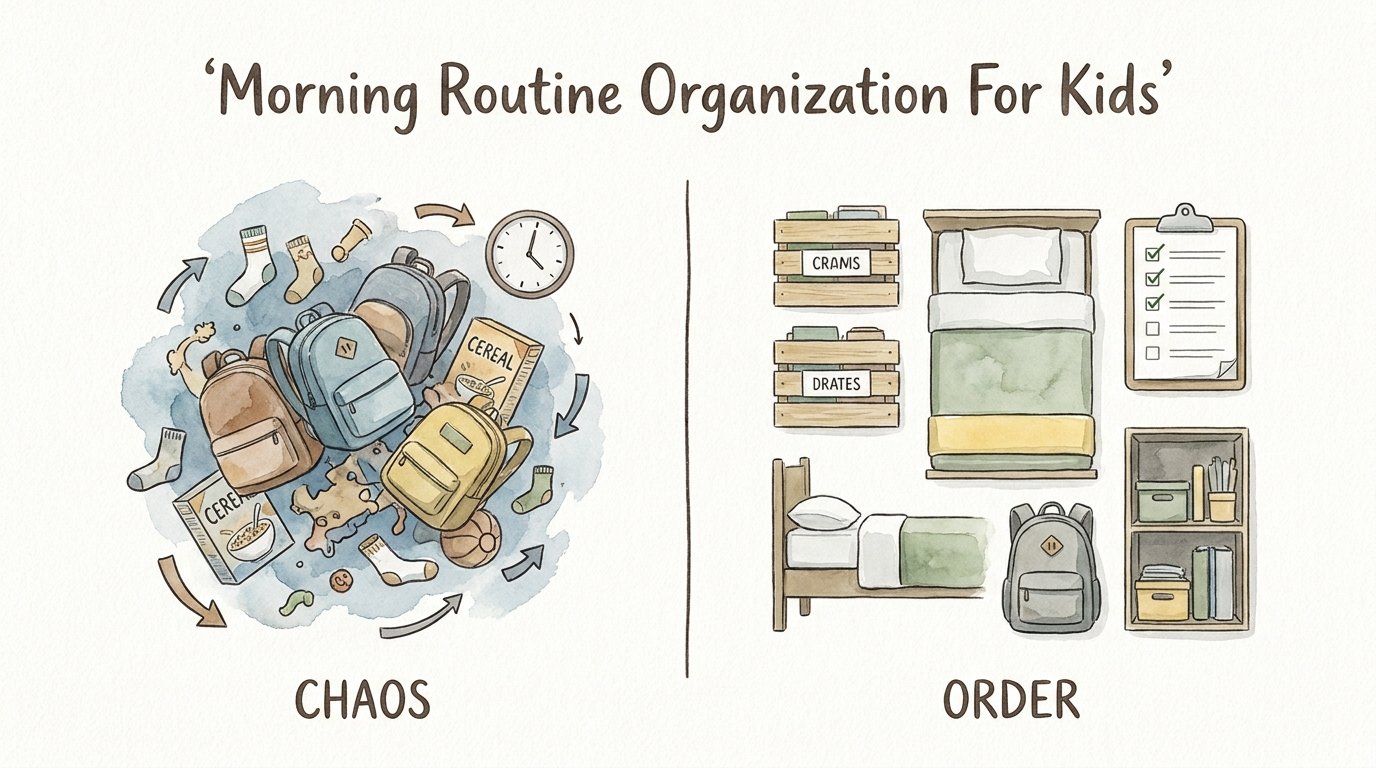
Understanding the difference between a reactive morning (chaos) and a proactive morning (daily order) helps in maintaining consistency. Chaos relies on adrenaline and urgency; order relies on systems and habits.
| Feature | Morning Chaos | Daily Order |
|---|---|---|
| Primary Driver | Verbal nagging and urgency | Visual schedules and systems |
| Decision Making | Constant “What’s next?” choices | Pre-determined sequence |
| Energy Level | High stress / “Redlining” | Calm and steady focus |
| Ownership | Parent-led / Dependent | Child-led / Independent |
Practical Best Practices for Busy Parents
Use a “launchpad” strategy. Designate a specific spot near the door where everything—backpacks, sports gear, library books—must live. If it isn’t on the launchpad by 8:00 PM the night before, it doesn’t exist. This single organizational tweak eliminates 50% of morning stress.
Implement a “Zero Tech” rule until the routine is complete. Screen time is a dopamine-heavy activity that makes the “boring” tasks of dressing and eating feel physically painful to a child’s brain. Keep devices off and away until the child is fully ready to leave.
Incorporate sensory-friendly wake-ups. Instead of a jarring alarm, try using a “sunrise” light that slowly brightens the room or play gentle music. For children who struggle with the transition from sleep to wake, a five-minute “snuggle buffer” can provide the proprioceptive input they need to regulate their nervous system.
Practical tips for consistency include:
- The 5-Minute Warning: Use a visual timer (like a Sand Timer or a Time Timer) to show how much time is left for a task.
- Checklists Everywhere: Have a “mini-checklist” specifically for the bathroom mirror (Brush teeth, Wash face, Hair).
- Staging Outfits: Use a hanging closet organizer with labels for each day of the week to prep all five school outfits on Sunday.
Advanced Strategies for Consistency
For parents ready to level up, “habit stacking” is the gold standard of routine organization. This involves taking a task the child already does automatically (like going to the bathroom after waking) and “stacking” a new task immediately after it (like washing their face). This uses the brain’s existing neural pathways to anchor new behaviors.
Consider the “Power of Two.” When giving choices to maintain a sense of autonomy, always offer only two options. “Would you like to wear the blue shirt or the green shirt?” “Do you want to brush your teeth before or after you put on your socks?” This gives the child a feeling of control without the paralysis of too many choices.
Advanced practitioners also focus on “Emotional Priming.” Spend the last minute of the morning connection time talking about one specific thing the child is looking forward to. This shifts the focus from the “chore” of getting ready to the “purpose” of the day, creating a positive psychological association with the morning routine.
From Theory to Table: A Sample Schedule
Let’s look at a realistic 60-minute organized morning for a seven-year-old child who needs to leave by 8:00 AM. This schedule uses the “anchors” and “buffers” discussed throughout this guide.
7:00 AM – The Gentle Wake-Up: Lights are dimmed up or curtains opened. Parent provides 5 minutes of connection (snuggling or a quick chat) to ground the child’s nervous system.
7:10 AM – The Hygiene Stack: Child follows the bathroom mirror checklist. Because clothes were laid out the night before, “Get Dressed” takes only 5 minutes instead of a 20-minute battle.
7:25 AM – Fueling Station: Breakfast is served. This is a “No-Nag Zone.” If the child is a slow eater, use a visual timer to show them how much “eating time” is left before the next transition.
7:45 AM – The Final Launch: Child moves to the launchpad. They check their backpack list: Lunch? Homework? Water bottle? Shoes go on last. This is the “When-Then” reward window—if they are done early, they get 5 minutes of a preferred quiet activity.
8:00 AM – Departure: The family leaves the house. Because the system was the guide, the parent’s energy is calm, and the child arrives at school feeling capable rather than frazzled.
Final Thoughts
Morning routine organization for kids is not about creating a perfect, robotic household. It is about creating a safe, predictable container where your child can grow their independence. By subtracting the clutter of endless choices and adding clear visual anchors, you give your child the gift of a regulated nervous system.
Remember that the routine serves the family, not the other way around. Be patient with the process, especially during the first two weeks of implementation. There will be setbacks, but every time you refer your child back to their “map” instead of raising your voice, you are building a lifelong skill of self-organization.
Start small. Choose one action zone—perhaps just the “launchpad” or the “bathroom checklist”—and master it before expanding. With consistency and a little bit of preparation, the morning can stop being a race you’re losing and start being a ritual that sets everyone up for a win.
Sources
1 senseationalyou.com | 2 childrenstreatmentcenter.com | 3 eyaslanding.com | 4 crawlwalkjumprun.com | 5 switch4schools.com.au | 6 diy.org | 7 biermanautism.com | 8 empoweringparents.com | 9 parentmap.com | 10 mymorningroutine.com | 11 7daysofplay.com | 12 afineparent.com | 13 thistimeofmine.com | 14 pbs.org | 15 headintohealing.com | 16 bistacenter.org | 17 aveeno.com | 18 medium.com | 19 nspt4kids.com | 20 carolinemaguireauthor.com | 21 brighthorizons.com | 22 livingmontessori.com | 23 schoolspecialty.com | 24 Source | 25 slumberkins.com | 26 lifewithlessmess.com