Microplastic-free Art For Kids
Is your child’s craft projects leaving a permanent footprint on the planet or a shimmering legacy in the soil? We love the sparkle, but we hate the impact. Most ‘kids crafts’ are just a delivery system for microplastics. Switching to ethically sourced mica or crushed glass gives them the same shimmer with 100% biodegradability. It’s time to teach our little artists that true beauty doesn’t have to be synthetic.
Sparkle is a universal language for children. Whether it is a princess wand, a superhero mask, or a finger-painted galaxy, that extra glint of light makes the art feel magical. For decades, the go-to solution was plastic glitter. It was cheap, bright, and effective. However, we now know that those tiny flecks of polyethylene terephthalate (PET) are essentially immortal. They don’t just stay on the paper; they migrate into our skin, our carpets, and eventually, our oceans.
Making the switch to microplastic-free alternatives isn’t just about being “eco-friendly.” It is about reclaiming the tactile, sensory experience of art without the chemical baggage. Ethically sourced mica and crushed glass offer a depth of color and a variety of textures that plastic simply cannot replicate. This guide will help you navigate this transition, ensuring your craft room remains a place of joy and discovery.
Microplastic-free Art For Kids
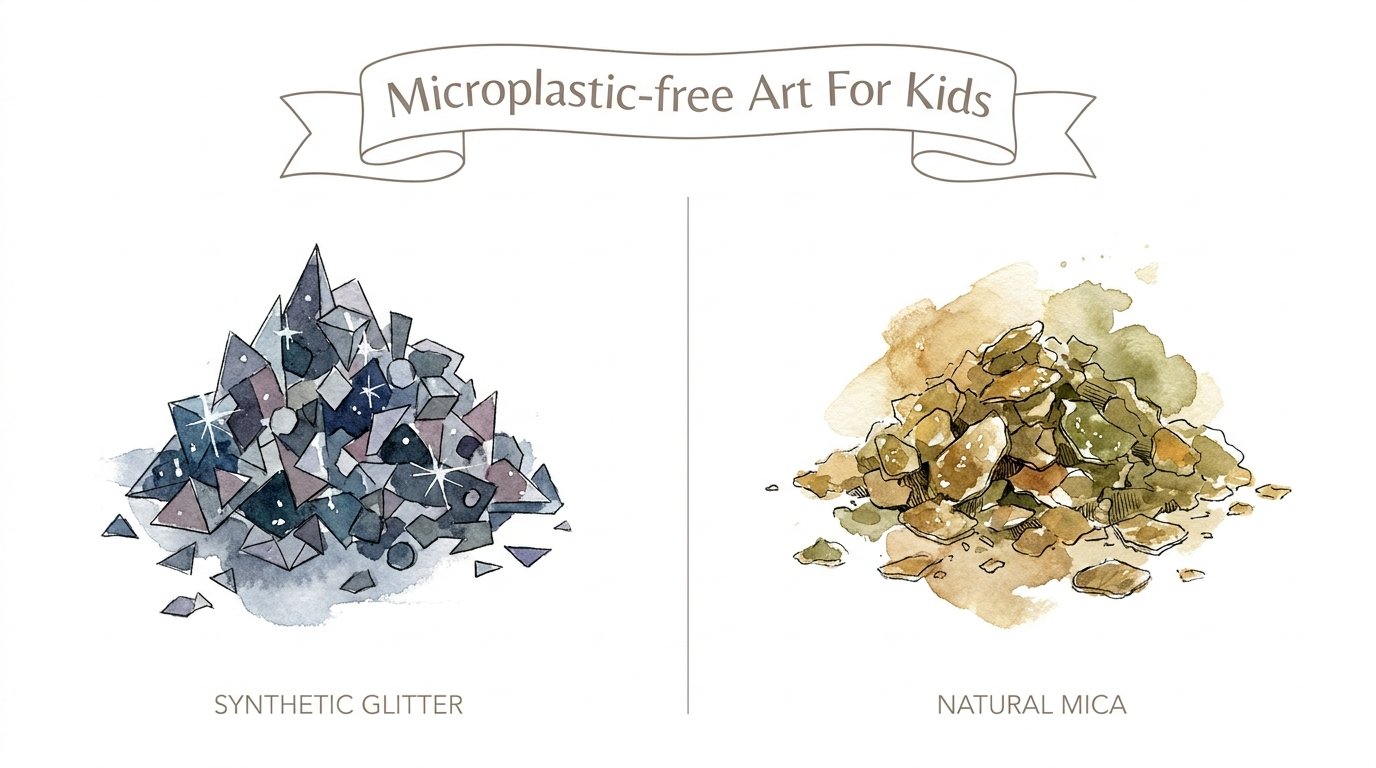
Microplastic-free art refers to creative projects that intentionally exclude synthetic polymer particles smaller than five millimeters. Traditional glitter is the primary offender in the craft world. It is made by bonding plastic film with aluminum and then cutting it into millions of microscopic pieces. Because these pieces are so small and lightweight, they are nearly impossible to contain.
The environmental impact of these particles is staggering. When kids wash their hands or rinse their brushes, these microplastics enter the wastewater system. They are too small for most filtration plants to catch, meaning they flow directly into rivers and oceans. Once there, they are consumed by plankton and fish, moving up the food chain until they reach our dinner plates.
Microplastic-free art replaces these synthetic bits with natural minerals, recycled glass, or plant-based cellulose. Mica, for instance, is a naturally occurring silicate mineral that humans have used for thousands of years to create shimmer. Crushed glass, often recycled from bottles or industrial waste, provides a different kind of brilliance. By choosing these materials, we ensure that the “mess” left behind by craft time is actually part of the earth’s natural cycle rather than a permanent pollutant.
How It Works: Sourcing and Using Alternatives
Transitioning to sustainable sparkle requires understanding how these materials behave differently from plastic. You cannot always swap them one-for-one without adjusting your technique. Here is how to handle the most popular alternatives.
Working with Mica Powder
Mica powder is a fine, dust-like substance. Unlike chunky glitter that sits on top of glue, mica often performs best when mixed into a medium. You can stir it into clear-drying PVA glue, acrylic paint, or even homemade flour paste. Because the particles are so small, they create a “pearlescent” or “metallic” effect rather than individual dots of light.
If you want a traditional glitter look using mica, you should look for “chunky mica” or “mica flakes.” These are larger shards of the mineral that have been dyed with natural pigments. They catch the light in broader strokes and are perfect for “shake and stick” projects.
Utilizing Crushed Glass
Crushed glass, often sold as “glass glitter” or “vase filler,” is exactly what it sounds like. It is made from recycled glass that has been tumbled to remove sharp edges. To use it in kids’ crafts, you need a heavy-duty adhesive. Standard school glue might be too thin to hold the weight of larger glass shards. A thick craft glue or a clear-drying gel medium is usually required.
Safety is the priority here. Always ensure the glass is labeled “tumbled” or “smooth edge.” Even with these labels, adult supervision is mandatory to prevent accidental ingestion or rubbing of the eyes. For younger children, glass beads are a safer entry point into the world of light-reflecting art.
Plant-Based Bio-Glitter
If your child absolutely insists on the look of traditional hexagon-shaped glitter, bio-glitter is the answer. Most high-quality bio-glitters are made from eucalyptus cellulose. They are designed to biodegrade in freshwater environments within weeks. These are used exactly like plastic glitter, making them the easiest “drop-in” replacement for most craft projects.
Benefits of Making the Switch
The shift away from microplastics offers more than just environmental peace of mind. There are practical and aesthetic advantages that often surprise new adopters.
Superior Aesthetic Depth: Plastic glitter has a flat, one-dimensional shine. Mica and glass, however, have varying levels of transparency and refraction. A mica-enhanced painting looks different from every angle, offering a sophisticated, “grown-up” art feel that kids find fascinating.
Safety and Toxicity: Traditional plastic glitter often contains antimony, a heavy metal used in the manufacturing process. Many brands also use synthetic dyes that can irritate sensitive skin. Ethically sourced mica and glass are typically inert and free from these heavy metals, making them safer for sensory play and long-term contact with skin.
Educational Value: Using natural materials provides a teaching moment. You can explain where mica comes from (the earth) and how glass is made (from sand). It turns craft time into a mini-science lesson about geology, recycling, and the circular economy.
Texture and Sensory Development: Crushed glass and chunky mica provide a tactical variety that plastic lacks. This is excellent for sensory-seeking children who benefit from different textures under their fingertips.
Challenges and Common Mistakes
Moving away from the “standard” way of doing things always comes with a learning curve. If you don’t prepare, you might end up with a mess or a frustrated young artist.
The Mica Cloud: Because mica powder is so fine, it can become airborne easily. If a child blows on a pile of mica, it creates a shimmering cloud that is difficult to clean and shouldn’t be inhaled. Always teach kids to “tap” the paper rather than blow on it.
The Adhesion Gap: Glass and mineral flakes are heavier than plastic. If you use a weak glue, the “sparkle” will fall off as soon as the project is moved. You must use a high-tack glue or a thicker layer of adhesive than you are used to.
Ethical Sourcing Concerns: Not all mica is “clean.” In some parts of the world, mica is mined using child labor. To truly be “microplastic-free” and ethical, you must look for brands that specify “ethically sourced” or “synthetic mica” (which is lab-grown and often purer and brighter).
The Cleanup Difference: You cannot simply vacuum up mica powder the way you do glitter. A standard vacuum filter might actually blow the fine powder back out into the air. Use a damp cloth or a “tacky” lint roller to pick up fine mineral dust.
Limitations: When to Be Realistic
While these alternatives are fantastic, they are not a perfect magic wand for every single scenario. Understanding these boundaries will help you plan your projects more effectively.
Vibrancy vs. Natural Tones: If you are looking for neon, “electric” colors, natural mica might disappoint. While synthetic mica can be quite bright, it usually leans toward a metallic or pearlescent finish. You won’t get that “laser-beam” holographic effect of PET plastic without using a plant-based bio-glitter alternative.
Cost Factors: Plastic is incredibly cheap to produce. High-quality, ethically sourced mica or certified bio-glitter can cost two to three times as much per ounce. However, because mica is so pigmented, a little usually goes a long way.
Weight Restrictions: Crushed glass is heavy. If you are working with thin construction paper, the weight of the glass might cause the paper to tear or curl significantly. These materials work best on cardstock, canvas, or wood.
Comparison: Plastic Glitter vs. Sustainable Alternatives
| Feature | Plastic (PET) Glitter | Ethical Mica / Glass |
|---|---|---|
| Biodegradability | None (takes hundreds of years) | High (natural minerals/recycled) |
| Shine Style | Sharp, “flashy” sparkle | Lustrous, pearlescent shimmer |
| Skin Safety | Potential for irritation/scratches | Generally soft and inert |
| Environmental Toxicity | High (microplastic & heavy metals) | Low to Zero |
| Adhesion Difficulty | Low (sticks to almost anything) | Moderate (requires thicker glue) |
Practical Tips for a Microplastic-free Craft Room
Ready to make the jump? Here is how to optimize your setup for the best results.
- Pre-mix your mica: Instead of letting kids shake powder everywhere, mix the mica into small jars of clear glue beforehand. This creates a “glitter glue” that is mess-free and easy to apply with a brush.
- The Tray Method: When using crushed glass or chunky minerals, always work over a deep-sided tray. This allows you to easily pour the excess back into the jar without losing a single shard.
- Use “Synthetic” Mica for Brighter Colors: If you want the safety of a mineral but the brightness of a plastic, look for “Synthetic Fluorphlogopite.” It is lab-created mica that is smoother and more vibrant than what is pulled from the ground.
- Damp Cleanup: Keep a stack of old, damp rags nearby. Swiping a damp cloth over the table will trap mica and glass dust instantly, preventing it from floating around the room.
Advanced Considerations: The Science of the Sparkle
For the serious practitioner or the teacher looking to go deeper, understanding the particle size—measured in microns—is key. Most cosmetic-grade mica is between 10 and 60 microns. The smaller the micron size, the more “satin” or “silk” the finish will be. If you want a “sparkle” that looks like traditional glitter, you need to search for mica or glass with a micron size of 200 or higher.
Another consideration is the refractive index. Plastic glitter reflects light off a flat surface. Mica, being a layered mineral, allows light to penetrate through several layers of the particle. This creates “interference” colors. This is why some mica looks white in the jar but glows blue or green when it hits the light. Teaching kids about light refraction using different mica types is a fantastic way to bridge the gap between art and physics.
Examples: Real-World Eco-Crafts
How does this look in practice? Let’s look at two specific scenarios that replace traditional plastic-heavy projects.
Scenario 1: The “Galaxy in a Jar”
Instead of using plastic glitter in a sensory bottle, use a combination of liquid watercolors, vegetable glycerin, and fine silver mica powder. When the child shakes the bottle, the mica creates a “shimmering nebula” effect that moves slowly through the liquid. Unlike plastic glitter, which eventually settles in a clump at the bottom, mica stays suspended longer and creates a much more realistic space effect.
Scenario 2: The “Magic Nature Wand”
Kids love to find sticks in the backyard and turn them into wands. Instead of coating them in plastic glitter that will eventually fall off in the grass (polluting your own yard), use a mixture of mud or clay and chunky mica flakes. The wand will still sparkle in the sun, but if it gets left outside or buried, the mica simply returns to the soil where it originated.
Final Thoughts
Transitioning to a microplastic-free craft room is one of the most impactful changes you can make as a parent or educator. It shifts the focus from “disposable beauty” to “sustainable creativity.” By choosing materials like mica and crushed glass, you are not just protecting our waterways; you are introducing your children to the rich, varied textures of the natural world.
Art should be a way for children to connect with their environment, not litter it. While the vibrant, neon flash of plastic might be familiar, the deep, pearlescent glow of minerals offers a far more rewarding experience for the developing eye. Experiment with these materials, embrace the slightly different “mess,” and take pride in the fact that your child’s creativity is leaving the world a little brighter, rather than just a little more plastic.
As you move forward, keep an eye on the emerging market for home-compostable glitters and plant-based pigments. The world of sustainable art is expanding rapidly. Every time you choose a mineral over a microplastic, you are voting for a future where sparkle and sustainability go hand in hand. Happy crafting!
Sources
1 youtube.com | 2 lovingitgreen.com | 3 l-i.co.uk | 4 creativehomecrafts.com | 5 eyecandypigments.com | 6 glitterazzi.me | 7 renascentbathbody.com.au