Durable Outdoor Movie Seating
Will your movie night seating end up in a landfill by next summer, or will your grandkids sit in it? Throwing blankets on the grass is fun for five minutes until the dampness sets in. A legacy backyard is built for comfort that lasts. Trade the disposable inflatables for furniture that actually increases your home’s value.
Establishing a permanent outdoor cinema requires more than just a projector and a white sheet. It demands a foundation of seating that can withstand 100-degree heat waves, sudden downpours, and the occasional spilled soda. When you invest in legacy-grade furniture, you are buying a decade of Friday nights rather than a single season of convenience.
Serious homeowners are moving away from the “disposable culture” of cheap plastic chairs. They are opting instead for materials that age gracefully and support the body through three-hour double features. This guide walks you through the selection, layout, and science of creating an outdoor movie lounge that truly lasts a lifetime.
Durable Outdoor Movie Seating
Durable outdoor movie seating refers to high-performance furniture engineered to remain outside year-round while providing the ergonomic support required for long-duration viewing. Unlike standard patio sets designed for quick meals, movie-centric seating prioritizes deep cushions, relaxed recline angles, and weather-resistant frames. These pieces serve as the functional anchor for a backyard theater, transforming a simple lawn into a high-end entertainment destination.
This type of seating exists because standard outdoor furniture often fails during the “long sit.” A movie marathon requires consistent lumbar support and pressure distribution that typical folding chairs or hard benches cannot provide. Legacy seating solves this by using materials like Grade A teak, high-density polyethylene (HDPE), and solution-dyed acrylic fabrics that resist UV degradation and moisture.
You will find these setups in luxury residential backyards, boutique outdoor hotels, and high-end coastal retreats. They are designed to be “set and forget” installations. Once the layout is optimized for sightlines and acoustics, the furniture stays in place, ready for a screening at a moment’s notice without the need for heavy lifting or complex assembly.
Visualizing this concept is easy if you compare it to a high-end indoor cinema. Imagine that same level of plush comfort, but wrapped in a shell that can survive a thunderstorm. It is the difference between sitting on a temporary park bench and sinking into a customized, weather-proofed throne.
How to Select and Build Your Legacy Seating
Choosing the right materials is the first step in building a legacy-grade theater. Hardwoods like Teak and Western Red Cedar are traditional favorites because they contain natural oils that repel insects and moisture. Grade A Teak, in particular, is the gold standard, often lasting 50 years or more if left untreated to develop its signature silver-gray patina.
High-Density Polyethylene (HDPE) represents the modern alternative for those who want zero maintenance. This material is made from recycled plastic jugs and is dyed all the way through, meaning it won’t chip, peel, or fade even in intense sun. HDPE furniture is heavy enough to stay put during high winds, making it ideal for open patios or coastal decks where salt air eats through cheaper metals.
Ergonomics play a vital role in the construction of your theater layout. Research suggests a recline angle of 100 to 110 degrees is optimal for reducing lower-back pressure during extended periods of sitting. When you are building or purchasing chairs, ensure the seat depth is at least 20 to 24 inches to allow for natural leg positioning and the occasional tucking of feet.
Layout and sightlines determine the success of your backyard cinema. Arrange your seating so that every viewer’s eye level is positioned between one-sixth and one-third of the way up from the bottom of the screen. This angle prevents neck strain, allowing the audience to watch the entire film without tilting their heads back at an uncomfortable degree.
Tiered seating can be achieved by utilizing the natural slope of your yard or building a low-profile wooden riser. If you have a flat yard, place low-profile loungers or bean bags in the front row and taller Adirondack chairs or sofas in the back. This stadium-style arrangement ensures that even the shortest guest has an unobstructed view of the action.
Benefits of Investing in Durable Seating
Longevity is the most obvious advantage of choosing legacy timber or high-grade poly-lumber. While a $50 plastic chair might last two seasons before it becomes brittle and cracks, a Teak or HDPE seat can easily span two decades. This longevity reduces the total cost of ownership over time, as you are not constantly replacing broken or faded inventory.
Comfort levels are significantly higher in furniture designed for durability. High-end outdoor sets often feature quick-dry foam cushions and solution-dyed fabrics like Sunbrella. These materials are breathable, preventing the “sweaty back” syndrome often associated with vinyl or cheap polyester covers during humid summer nights.
Property value increases when you create a defined, high-quality outdoor living space. Appraisers and buyers see a permanent, well-furnished backyard theater as an extension of the home’s square footage. It signals that the property has been maintained with a focus on luxury and long-term durability, which can be a deciding factor in a competitive real estate market.
Aesthetics remain consistent over years of exposure. High-quality materials are designed to either resist aging entirely or age in a way that looks intentional and beautiful. Teak turns into a sophisticated silver, and powder-coated aluminum retains its crisp, modern finish without the rust bubbles that plague standard steel furniture.
Common Mistakes to Avoid
Neglecting the “long sit” is a frequent error when homeowners prioritize style over substance. A chair that feels comfortable for a ten-minute showroom trial may become painful after ninety minutes of a film. Always check for lumbar support and ensure the armrests are at a height that doesn’t force your shoulders to shrug upward.
Ignoring the foam quality inside your cushions is another pitfall. Standard foam acts like a sponge, soaking up rainwater and holding it for days, which leads to internal mold and mildew. Seek out open-cell “quick-dry” foam that allows water to pass through freely, coupled with a mesh bottom on the cushion cover to facilitate rapid drainage.
Placing furniture in direct contact with damp soil will accelerate the decay of even the best hardwoods. While Teak is highly resistant, constant moisture at the base of the legs can lead to rot over many years. Use “glides” or small plastic feet to elevate the wood slightly off the ground, or place your seating on a gravel, stone, or wood-deck foundation.
Forgetting about the “sun factor” can ruin your investment in a single season. Fabrics that are not solution-dyed will fade rapidly under UV exposure. Solution-dyeing involves adding the color pigment to the liquid polymer before the fiber is even spun, ensuring the color exists throughout the entire thread rather than just on the surface.
Limitations of Permanent Outdoor Seating
Weight is a significant trade-off when you opt for durable materials. Legacy furniture made from solid wood or HDPE is intentionally heavy so it won’t blow away in a storm. This makes it difficult to rearrange your yard on a whim or move the theater setup to a different location if you decide you want a change of scenery.
Upfront costs can be a barrier for many. A complete set of legacy-grade outdoor theater seating can cost five to ten times more than a temporary set of folding chairs. While the long-term value is higher, the initial investment requires a dedicated budget that may compete with other home improvement projects.
Space requirements are generally larger for durable seating. Because these pieces are designed for maximum comfort, they often have a wider footprint than their portable counterparts. You must have a large enough patio or lawn area to accommodate the furniture without making the space feel cramped or blocking the flow of traffic.
Maintenance is still required, even for “low-maintenance” materials. Teak needs occasional cleaning to remove environmental pollutants, and HDPE may require a pressure wash to stay bright. If you ignore these basic tasks, the furniture may lose its luster, even if it remains structurally sound.
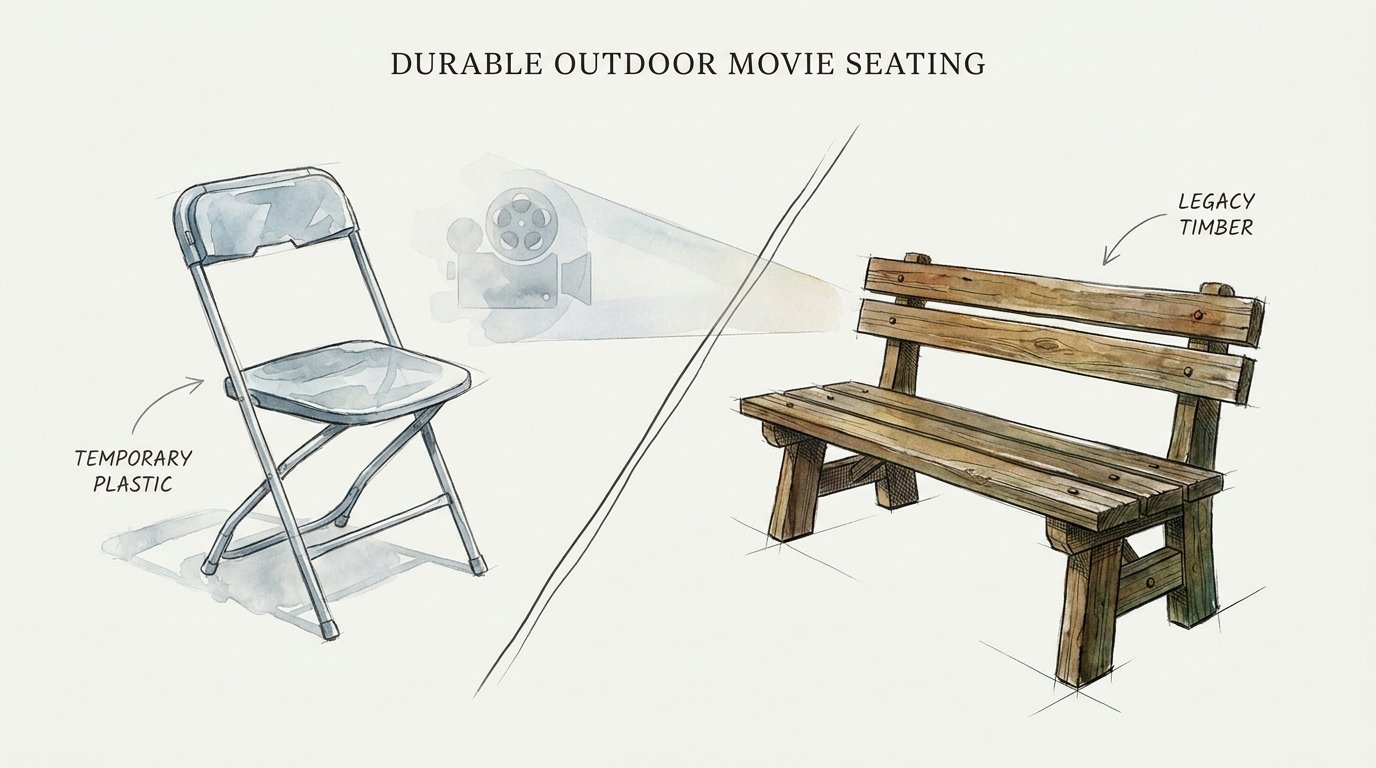
Legacy Timber vs. Temporary Plastic
Comparing these two approaches reveals a stark difference in both cost and environmental impact. Legacy timber refers to hardwoods like Teak or Ipe, while temporary plastic encompasses the thin, molded chairs found at big-box retailers.
| Feature | Legacy Timber / HDPE | Temporary Plastic |
|---|---|---|
| Lifespan | 20–50+ Years | 1–3 Years |
| Maintenance | Low (Seasonal Cleaning) | None (Disposable) |
| Comfort | High (Ergonomic/Cushioned) | Low (Hard/Rigid) |
| Stability | Heavy (Wind Resistant) | Light (Blows Away) |
| Initial Cost | $$$ – High | $ – Low |
Measurement of value should always be done over a decade. The cost per movie night drops significantly with legacy furniture. The environmental cost also decreases, as you are not contributing to the millions of tons of plastic furniture that end up in landfills every year.
Practical Tips for Setup and Maintenance
Use solution-dyed acrylic fabrics for all cushions and pillows. These fabrics are not only fade-resistant but also easy to clean with a simple solution of mild soap and water. For stubborn stains, many of these performance fabrics can even be cleaned with a diluted bleach solution without losing their color.
Store your cushions in a dry, ventilated box during the off-season to extend their life. While the frames can stay outside, the fabric will last even longer if it is protected from the harshest winter elements or heavy pollen seasons. If you leave them out, use high-quality furniture covers that allow for airflow to prevent condensation.
Install low-voltage LED path lighting around your seating area. This ensures that guests can safely find their way to their seats or the snack bar during the movie without creating enough light to wash out the screen. Solar-powered stakes are an easy, wire-free alternative that can be moved as your layout evolves.
Keep a “movie night kit” inside a weatherproof storage bench nearby. This kit should include bug repellent, extra throws for chilly evenings, and a few small side tables for drinks. Having everything in one place makes the transition from “dinner time” to “movie time” seamless and stress-free.
Advanced Considerations for Outdoor Cinema
Acoustics change significantly when you move from a living room to a backyard. Without walls to reflect sound, audio tends to dissipate into the open air. Position your seating within a “sound pocket” created by a fence, a wall of your house, or even a dense row of hedges to help contain the audio and improve dialogue clarity.
Integrated heating technology is becoming a popular addition to high-end outdoor chairs. Some HDPE Adirondack chairs now feature built-in heating elements that can be powered by a weather-sealed cord or a battery pack. This allows you to extend your movie season well into the autumn and early spring without relying on noisy or inefficient propane heaters.
Wireless audio distribution can solve the problem of disturbing neighbors. If you live in a crowded area, consider using a high-quality Bluetooth transmitter that can sync with multiple pairs of wireless headphones. This “silent cinema” approach allows every guest to control their own volume while maintaining total silence in the surrounding neighborhood.
Reflectance is a factor often overlooked in seating color selection. Extremely light-colored furniture placed directly in front of the screen can reflect light back onto the projection surface, slightly washing out the black levels. Opt for mid-tone colors like slate, forest green, or weathered wood to keep the focus entirely on the film.
Real-World Scenario: The 15-Year Backyard Theater
Consider the case of a family in a coastal environment with high humidity and intense afternoon sun. They initially purchased a set of inexpensive wicker-look plastic chairs. Within eighteen months, the UV exposure had caused the “wicker” to become brittle and snap, while the polyester cushions had faded from deep blue to a sickly purple.
Switching to a legacy approach, they invested in four HDPE Adirondack chairs and a matching sofa with Sunbrella cushions. They arranged the seating on a permeable gravel patio, which prevented water from pooling around the furniture. They installed two weather-rated speakers on the fence posts, flanking the screen.
Ten years later, the furniture remains structurally identical to the day it was purchased. The cushions, which they store in a deck box during the winter, show no signs of fading or mold. The family has hosted over 200 movie nights, and the “cost per use” of the furniture has dropped to less than $2.00 per person, far lower than the repeated replacement of the original cheap set.
Final Thoughts
Building a legacy backyard theater is an exercise in long-term thinking. It requires a shift away from the “buy now, replace later” mentality that dominates the modern marketplace. By selecting high-grade materials like Teak or HDPE and prioritizing ergonomic design, you create a space that offers genuine comfort for decades.
The true value of durable seating lies in the consistency of the experience. You never have to worry if a chair will hold up for a guest or if the cushions will be damp from a light rain three days ago. These systems are designed to be ready when you are, allowing you to focus on the film and the company rather than the equipment.
Start your journey by evaluating your climate and your long-term goals for your outdoor space. Whether you choose the natural warmth of timber or the indestructible nature of poly-lumber, the result will be a sanctuary for story-telling and memory-making. Invest in quality once, and let the credits roll for years to come.
Sources
1 bytheyard.net | 2 polywood.com | 3 premiereoutdoormovie.com | 4 wrmth.ca | 5 palmcasual.com | 6 bonpergola.com | 7 patioproductions.com | 8 therockingchaircompany.com | 9 octaneseating.com | 10 parkitect.com | 11 awolvision.com | 12 patiohq.com | 13 triadcushionfactory.com | 14 americanpatiodesigns.com | 15 cushionsource.com