how much is too much screen time
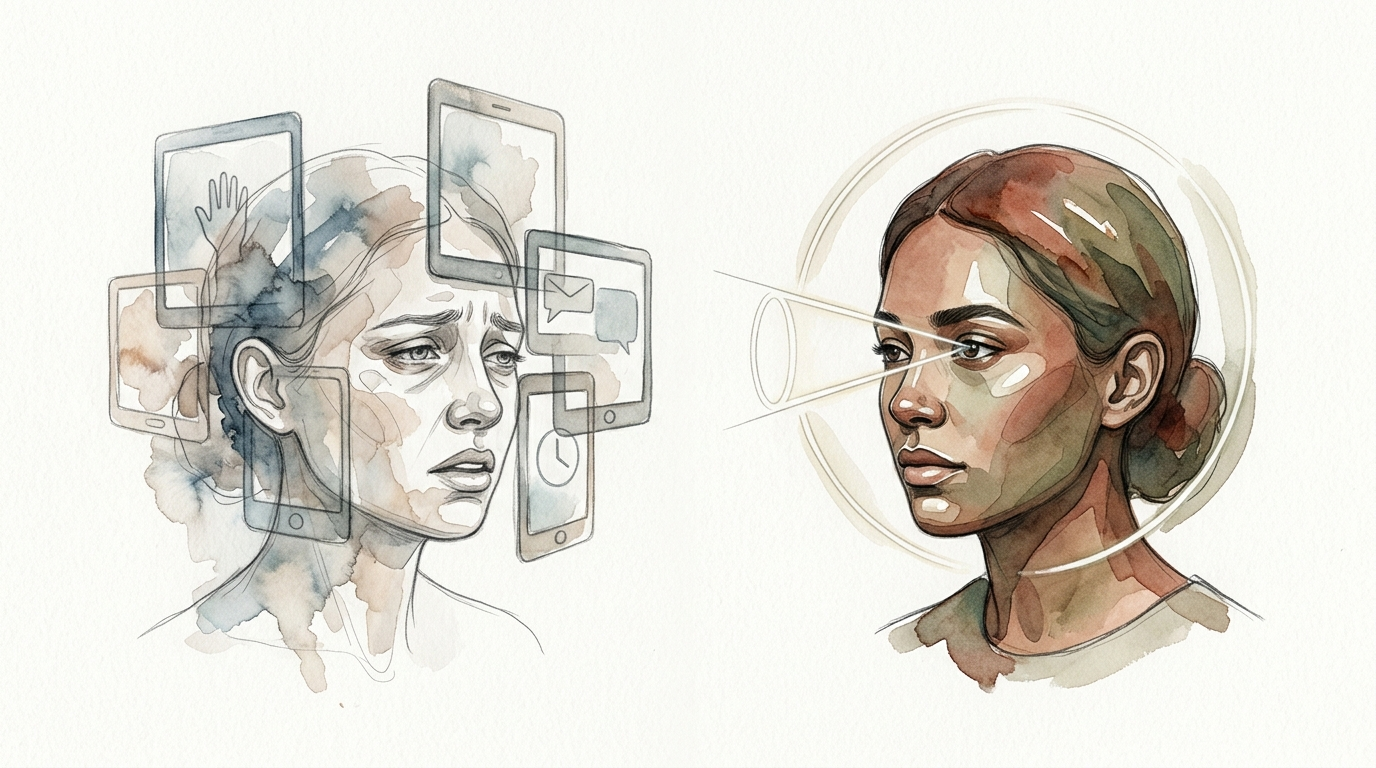
Is your child’s attention span built on a house of cards? The true measure of ‘too much’ isn’t just the minutes on a clock; it’s the fragility of their focus. If they can’t handle a moment of boredom without a digital fix, it’s time to build resilience through slow, screen-free tasks.
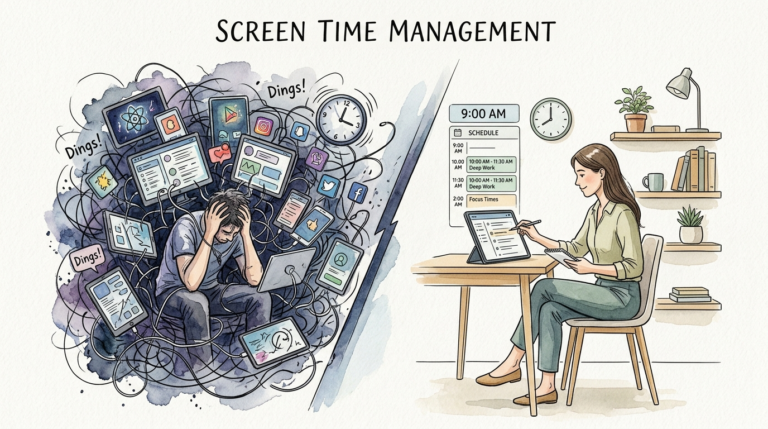
Focus today is a battlefield. Our kids are growing up in a digital ecosystem designed to capture and hold their attention through rapid-fire rewards. This constant stimulation creates a “Fragile Focus,” where a child can only pay attention if the content is loud, fast, and high-stakes. When the screen goes dark, their ability to concentrate often vanishes with it.
Building “Resilient Attention” is the antidote. It involves training the brain to find satisfaction in effortful, slow-paced activities. This isn’t about being “anti-tech”; it’s about neuroplasticity. We are helping their brains develop the prefrontal cortex—the part responsible for impulse control and deep work.
how much is too much screen time
Determining “too much” used to be as simple as looking at a timer. In the past, experts suggested a hard cap of one or two hours. However, current 2025 guidelines from the American Academy of Pediatrics (AAP) have shifted toward a more nuanced approach. The emphasis is now on quality, context, and what the screen time is “crowding out.”
If digital use interferes with sleep, physical activity, or face-to-face social interaction, it has crossed the line into “too much.” The AAP now promotes the “5 C’s” framework to help parents evaluate use: Child, Content, Calm, Crowding Out, and Communication. This recognizes that an hour of creative coding is vastly different from an hour of mindless scrolling through short-form videos.
Real-world “too much” often looks like a child who cannot self-soothe. If a tablet is the only way to get through a meal at a restaurant or a car ride, the digital tool has become a crutch. This dependency creates a “dopamine loop,” where the brain becomes desensitized to normal levels of stimulation. Over time, the child needs more intense digital input just to feel “normal.”
The Mechanics of Attention: Moving from Fragile to Resilient
Understanding how to fix the problem starts with understanding the “Stimulation Loop.” Fast-paced media triggers the brain’s reward system, releasing dopamine every few seconds. This is “bottom-up” attention—it is reactive and effortless. The screen does all the work, and the child’s brain simply responds to the flashes and sounds.
Building resilience requires “top-down” attention. This is a cognitive process where the child must choose to focus on a task, even when it isn’t immediately exciting. Slow tasks like building a complex Lego set, reading a physical book, or gardening require this effort. These activities are “low-dopamine” compared to a video game, but they are high-value for brain development.
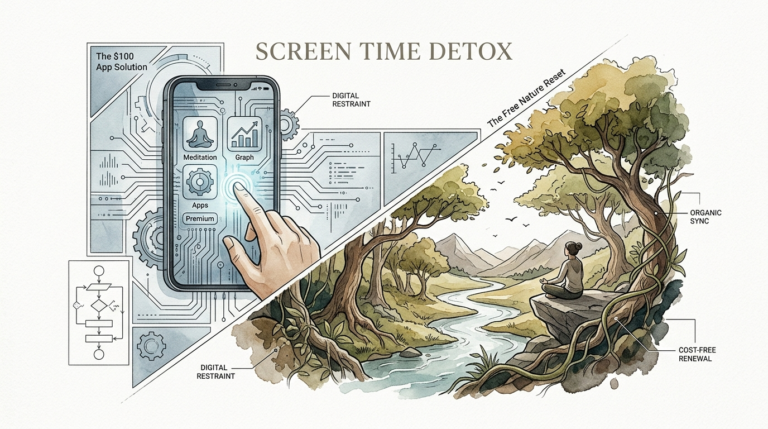
To transition a child from fragile to resilient focus, you must intentionally introduce “slow media” or no media. Start by identifying the high-intensity triggers in their current routine. Are they watching 15-second clips that reset their attention every minute? Replacing these with longer-form, narrative-driven content—or better yet, physical hobbies—begins the process of rewiring the brain’s focus pathways.
The Invisible Benefits of Screen-Free Resilience
The advantages of a resilient attention span extend far beyond the classroom. When a child learns to tolerate boredom, they unlock the door to creativity. Research shows that boredom is the essential “gap” where imagination happens. Without the constant noise of a screen, the mind is forced to wander, leading to original thoughts and problem-solving.
Emotional regulation is another massive win. Children with resilient attention are less likely to experience the “dopamine crash” meltdowns that occur when screens are turned off. Because their brains haven’t been overstimulated for hours, their baseline stress levels remain lower. They can transition between activities more smoothly and handle minor frustrations with greater ease.
Academic success naturally follows. Deep work—the ability to focus on a difficult task without distraction—is a superpower in the modern world. A child who can sit with a math problem for 20 minutes without reaching for a phone will eventually outperform their peers who need a digital “hit” every five minutes. This stamina is a physical trait built through repeated practice of slow tasks.
The Dopamine Crash: Managing Challenges and Mistakes
One of the most common mistakes parents make is “the cold turkey trap.” Removing all screens overnight often leads to intense family conflict and doesn’t actually teach the child how to manage their attention. Instead of a ban, focus on “crowding out” the bad with the good. Fill the schedule with so many engaging physical activities that there is simply less time for the screen.
Another pitfall is using screens as a “pacifier” or “babysitter.” While it is tempting to use an iPad to stop a tantrum, this actually reinforces the behavior. The child learns that a meltdown leads to high-intensity stimulation. This weakens their ability to regulate their own emotions. To avoid this, use “bridge activities”—short, engaging tasks like a quick puzzle or a drawing prompt—to help them transition away from a screen.
Parental modeling is often the invisible challenge. If you are telling your child to put down the tablet while you are scrolling through your own phone, the message is lost. Children are biologically wired to mimic their caregivers. Building a home culture of focus requires the adults to demonstrate what “resilient attention” looks like in practice.
Limitations: When Digital Tools Still Matter
It is important to maintain a balanced perspective. Screens are not inherently “evil.” They are powerful tools that, when used correctly, can enhance learning and connection. For neurodivergent children, such as those with ADHD or autism, certain digital platforms can provide structured environments that help them process information more effectively. Banning these tools entirely could remove a vital support system.
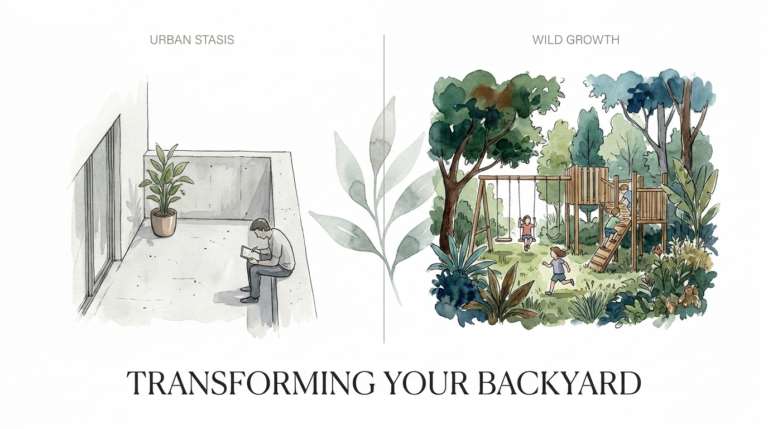
Environmental limitations also play a role. A family living in a high-rise apartment in a city may not have the same access to “slow” outdoor tasks as a family with a large backyard. In these cases, parents must get creative with indoor screen-free tasks like indoor gardening, complex board games, or learning a musical instrument.
Digital literacy is also a necessary life skill. A child who is completely shielded from technology may struggle when they enter a school system or workforce that requires digital fluency. The goal is not total avoidance, but rather “attentional hygiene.” You want your child to be the master of the tool, not the servant of the algorithm.
Fragile Focus vs. Resilient Attention: A Comparison
Understanding the differences between these two states of mind helps in identifying where your child currently stands.
| Feature | Fragile Focus | Resilient Attention |
|---|---|---|
| Source of Motivation | External (flashes, sounds, rewards) | Internal (curiosity, task completion) |
| Boredom Tolerance | Very Low (triggers anxiety/agitation) | High (leads to creative play) |
| Transitions | Difficult (meltdowns, resistance) | Smooth (able to shift gears easily) |
| Complexity Level | Prefers short, easy bursts | Capable of deep, multi-step tasks |
| Brain Activity | Reactive (Bottom-Up) | Executive (Top-Down) |
Practical Tips for Immediate Impact
Transitioning to a high-resilience household doesn’t happen overnight, but you can start today. Use the “3:1 Ratio” as a starting point: for every hour of screen time, ensure your child completes three hours of “slow” activity. This could include outdoor play, reading, or helping with chores.
Implement a “Digital Sunset.” Turn off all screens 60 minutes before bedtime. The blue light from screens suppresses melatonin, but the high-intensity content also keeps the brain in an “alert” state, making deep sleep impossible. Replace this time with “The Boring Hour”—activities so low-key that the brain naturally begins to wind down.
Create “No-Phone Zones” in the house. The dinner table and the bedroom should be sacred spaces for human connection and rest. Keeping devices out of sight removes the constant “cognitive load” of resisting the urge to check them. Research shows that even having a phone visible on a table reduces the quality of conversation and focus.
Advanced Considerations: The Neuroscience of “Slow”
Serious practitioners of attentional health should look into the concept of “Flow State.” This is a psychological state where a person is so immersed in a task that they lose track of time. Screens often mimic flow, but it is a “passive flow.” True “active flow” happens during tasks that are challenging but achievable, like learning a new skill or building a craft.
Neuroplasticity is your greatest ally. The brain’s white matter, which is responsible for communication between different regions, is physically shaped by a child’s environment. High screen use is correlated with changes in white matter that can hinder literacy and language skills. Conversely, deep reading and complex physical play strengthen these neural pathways.
Consider the role of “Delta” and “Theta” brain waves. Slow, repetitive tasks like knitting, wood carving, or even long-distance walking can shift the brain into states associated with deep relaxation and heightened creativity. By exposing your child to these “slow” frequencies, you are essentially providing a gym for their nervous system, making it more robust against the high-frequency chaos of the digital world.
The Saturday Morning Reset: A Real-World Example
Imagine a typical Saturday where the kids usually wake up and immediately reach for a tablet. In the “Resilient Focus” model, this routine is replaced by a “Slow Start.” The morning begins with a 500-piece puzzle spread out on the coffee table. There are no screens allowed until after lunch.
At first, the children might complain. They might wander aimlessly or bicker. This is the “Boredom Gap.” Within thirty minutes, however, something shifts. One child starts sorting the edge pieces. The other begins building a fort out of sofa cushions. Because the digital escape is not an option, their brains are forced to innovate.
By midday, they have spent three hours in deep, imaginative play. When they finally do get an hour of high-quality screen time (perhaps an educational nature documentary), they are not “addicted” to it. They can turn it off when the timer goes off because their day has already been anchored in the real world. Their focus is resilient because it has been tested by the quiet.
Final Thoughts
Building a child’s attention span isn’t about counting minutes; it’s about fostering the mental strength to exist without a constant stream of digital rewards. When we prioritize slow, screen-free tasks, we aren’t just taking away a toy; we are giving them back their ability to think, create, and regulate their own emotions.
The journey from “Fragile Focus” to “Resilient Attention” is a marathon, not a sprint. There will be tantrums, bored afternoons, and moments of parental doubt. But the result—a child who can sit in a quiet room and find a way to engage with the world around them—is the ultimate competitive advantage in the 21st century.
Start small. Choose one slow task today. Put the phone in a drawer. Watch as the house of cards is replaced by a foundation of true, lasting focus. Experiments in boredom often lead to the most brilliant discoveries in a child’s development.
Sources
1 oneeducation.co.uk | 2 jelliesapp.com | 3 peaceathomeparenting.com | 4 thejacobsladdergroup.org | 5 youtube.com | 6 harvard.edu | 7 childrenandscreens.org | 8 bostonneuropsych.com