screen time recommendations by age
Early overexposure creates a fragile attention span. Developmentally appropriate limits build a resilient mind. A 2-year-old and a 10-year-old have vastly different neurological needs. Check the latest age-based recommendations to protect your child’s focus.
Understanding the digital ecosystem is no longer optional for parents. Screens are integrated into education, social lives, and entertainment. Balancing these tools requires a strategy that evolves with your child’s growing brain. You are not just managing minutes; you are guarding the architecture of their attention.
The goal is to move beyond the “screen time” debate and focus on digital wellness. This guide breaks down the latest pediatric guidelines and neurological research to help you navigate this complex landscape.
screen time recommendations by age
Pediatric experts have moved away from one-size-fits-all rules to a more nuanced approach. The American Academy of Pediatrics (AAP) and the World Health Organization (WHO) emphasize that quality and context matter as much as quantity.
Birth to 18 Months: The “No Screens” Rule
At this stage, a child’s brain is doubling in size. They learn best through three-dimensional, real-world interactions. Use screens only for video chatting with family members. This “socially responsive” use helps infants recognize faces and voices without the negative impact of passive viewing.
18 to 24 Months: The Introduction Phase
Introduce high-quality programming if you choose to use screens. Avoid letting children watch alone. Co-viewing is essential here. You should talk about what is happening on the screen to help them make sense of the 2D images.
Ages 2 to 5 Years: The One-Hour Limit
Limit sedentary screen time to one hour per weekday and slightly more on weekends for high-quality, educational content. Content should be slow-paced and prosocial. Think of it like a nutritional “dessert”—enjoyable but not the main course of their day.
Ages 6 to 12 Years: Consistent Limits
There is no “magic number” for this group. Instead, focus on a Family Media Plan. Ensure digital use does not displace eight to twelve hours of sleep, one hour of physical activity, and face-to-face social time. Consistency is more important than the exact minute count.
Ages 13 to 18 Years: Mentorship over Monitoring
Teenagers need guidance on social media literacy, privacy, and digital footprints. Focus on “digital citizenship.” Discuss the impact of algorithms and the “attention economy” to help them develop internal filters and self-regulation skills.
How to Implement a Digital Wellness Strategy
Transitioning from a free-for-all to a structured system requires clear communication. Start by defining your family values regarding technology.
Create Screen-Free Zones
Designate areas of the house where devices are never allowed. The dining table and bedrooms are the most critical zones. Removing screens from the bedroom ensures that blue light does not suppress melatonin, which is vital for deep REM sleep and memory processing.
Use the “5 C’s” Framework
Recent 2026 guidance suggests evaluating media through five lenses:
- Child: Is your specific child reacting well to this content?
- Content: Is the show educational and slow-paced or fast and chaotic?
- Calm: Does the screen use leave the child feeling regulated or agitated?
- Crowding Out: Is the screen replacing physical play or sleep?
- Communication: Are you talking about what they see?
Establish Stopping Points
Collaborate with your child to find natural stopping points in a game or show. Abruptly ending a high-dopamine activity can trigger “digital tantrums.” Providing a five-minute warning allows the brain to prepare for the transition.
The Benefits of Intentional Screen Use
Technology is not inherently harmful. When used with purpose, it offers significant developmental advantages.
High-quality educational apps can support literacy and numeracy skills in older toddlers and preschoolers. Digital tools also allow children to explore interests that might be unavailable in their physical environment, such as learning a rare language or studying marine biology through live-streamed dives.
Social connection is another major benefit. For teens, gaming and social messaging can build community and reduce feelings of isolation. This is particularly true for those with niche interests or those who struggle with traditional social environments.
Interactive media, like coding games or digital art software, encourages active creation over passive consumption. Moving from a “consumer” to a “creator” mindset transforms the screen into a powerful tool for self-expression and skill-building.
Common Mistakes to Avoid
Many parents fall into the “digital sitter” trap without realizing the long-term impact.
Using Screens as Emotional Regulation
Handing a tablet to a child during a tantrum teaches them that technology is the primary tool for managing big feelings. This bypasses the development of internal coping mechanisms. Allow children to feel boredom or frustration; these are the birthplaces of creativity and resilience.
Ignoring Background Television
Even if a child isn’t actively watching, a TV playing in the background disrupts play and language development. It creates “noise” that makes it harder for infants to tune into the voices of their caregivers.
Modeling Poor Habits
Children mimic what they see. If you are constantly scrolling during family time, they will view that as the behavioral standard. Set a “parking station” for adult devices to show that you prioritize human connection over digital notifications.
Limitations of the Age-Based Approach
While guidelines provide a helpful roadmap, they cannot account for every family’s unique situation.
Environmental factors, such as living in a small apartment without safe outdoor space, might make strict time limits harder to enforce. Similarly, a child’s temperament plays a massive role. Some children can turn off a screen with ease, while others experience significant emotional dysregulation.
The guidelines also don’t perfectly address hybrid educational models. If a school requires three hours of tablet-based homework, the “recreational” time must be adjusted accordingly. Practical boundaries must be flexible enough to accommodate life’s realities while still protecting the child’s neurological health.
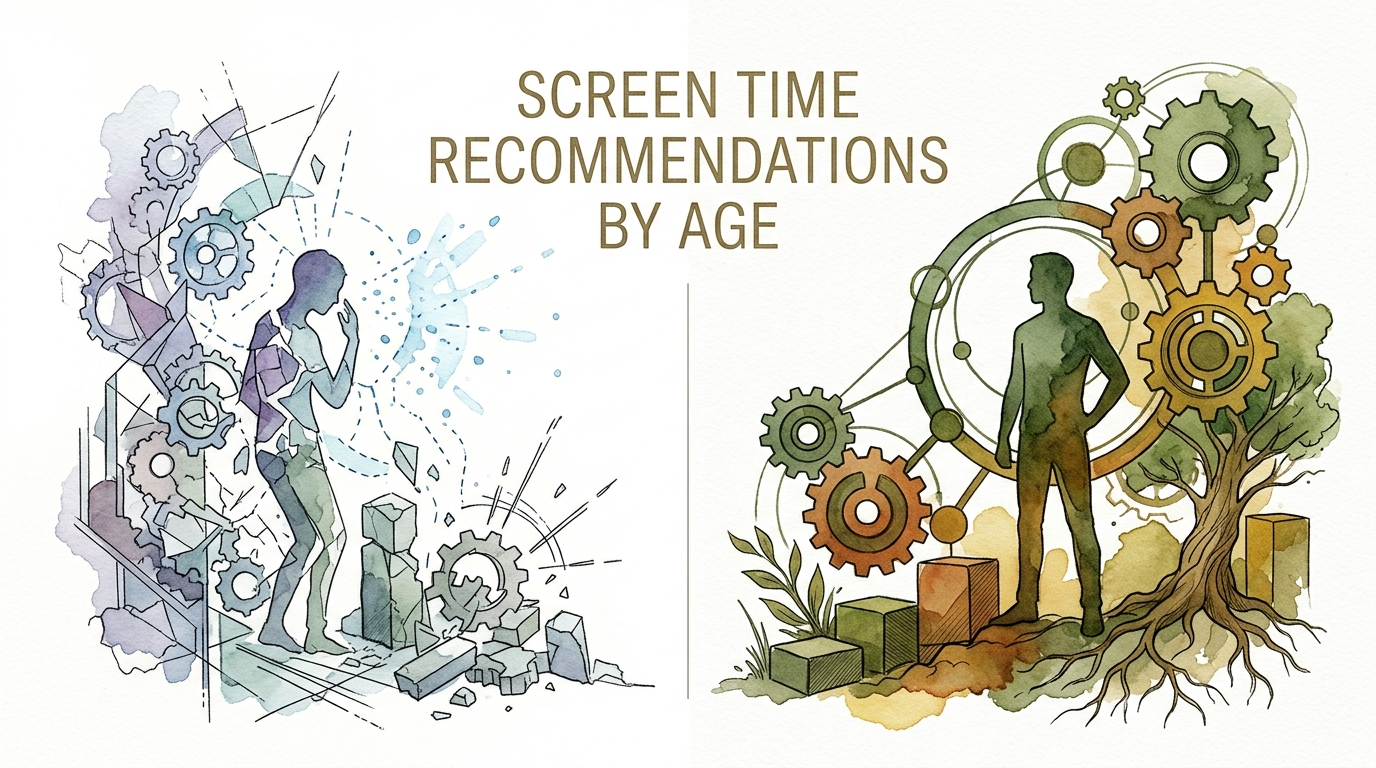
Fragile Focus vs. Resilient Development
Comparing these two paths helps visualize the stakes of digital management.
| Factor | Fragile Focus | Resilient Development |
|---|---|---|
| Attention Type | Fragmented, needs constant stimulation. | Sustained, can handle boredom. |
| Primary Content | Fast-paced, algorithm-driven loops. | High-quality, slow-paced, or creative. |
| Regulation | Relies on screens to calm down. | Developing internal emotional tools. |
| Play Style | Passive consumption. | Active, imaginative, 3D play. |
| Social Impact | Displaces face-to-face interaction. | Supports and enhances relationships. |
Practical Tips for Digital Hygiene
Apply these strategies immediately to improve your family’s relationship with technology.
- The 20-20-20 Rule: To prevent eye strain, look at something 20 feet away for 20 seconds every 20 minutes.
- Curate the Content: Use tools like Common Sense Media to vet shows for age-appropriateness and educational value.
- One Screen at a Time: Discourage “second screening” (e.g., using a phone while watching TV) to prevent attention fragmentation.
- Physical Activity First: Make screen time contingent on finishing outdoor play or physical chores.
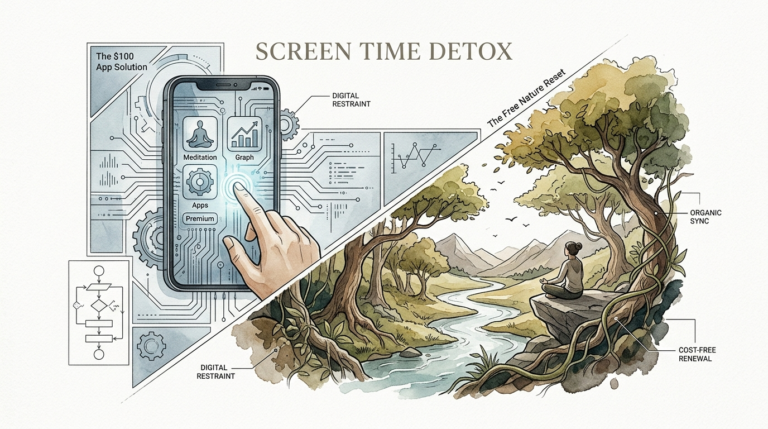
- Digital Detox Weekends: Occasionally designate a full day for screen-free activities to reset the family’s dopamine baseline.
Advanced Considerations for Serious Practitioners
For parents who want to go deeper, understanding the “attention economy” is key. Most apps are designed with “engagement-based design” features like autoplay, infinite scroll, and intermittent rewards. These features are specifically engineered to keep the user engaged for as long as possible.
The developing prefrontal cortex, which handles impulse control, is no match for these persuasive design tactics. Serious practitioners teach their children to recognize these “dark patterns.” Explaining why an app sends a notification or why a video autoplays empowers the child to take back control.
Scaling these habits as children grow into the “metaverse” or AI-integrated tools requires a foundation of critical thinking. Encourage “algorithmic literacy.” Ask your child why they think a certain video was recommended to them. This shifts them from a passive subject of the algorithm to an informed user.
Real-World Scenario: The Saturday Morning Routine
Consider two different approaches to a typical Saturday morning.
In Scenario A, the children wake up and immediately grab their tablets. They spend three hours scrolling through short-form videos. By lunchtime, they are irritable, find it hard to focus on a board game, and struggle to follow simple instructions. Their focus has become “fragile” due to overstimulation.
In Scenario B, the family has a “no screens before noon” rule. The children spend the morning building with blocks, helping with breakfast, and playing outside. At 1:00 PM, they sit down together to watch a high-quality 60-minute documentary or play a cooperative video game for an hour. Because the screen time was intentional and limited, their “resilient development” remains intact.
Final Thoughts
Protecting your child’s focus is a marathon, not a sprint. The digital world is constantly shifting, but the fundamental needs of a developing brain—sleep, movement, and human connection—remain the same. Using age-based recommendations as a guide helps you build a framework that supports long-term mental health.
Empower your children to see technology as a tool for creation and connection rather than just a source of distraction. Small, consistent changes in your daily routine can yield massive benefits for their cognitive and emotional development.
Experiment with these limits and observe the changes in your child’s behavior. You might find that less screen time leads to more imagination, better sleep, and a much more peaceful household. Focus on the quality of the interaction, and the quantity will often take care of itself.
Sources
1 myhspediatrics.com | 2 cacfp.org | 3 cacfp.org | 4 aap.org | 5 aap.org | 6 nih.gov | 7 choc.org | 8 choc.org | 9 aacap.org | 10 jelliesapp.com | 11 forbes.com | 12 huffingtonpost.co.uk | 13 aacap.org | 14 aap.org | 15 nih.gov | 16 nih.gov