parenting screen time
Is their screen time draining them or fueling them? Not all quiet time is created equal. While screens might keep them still, they often drain mental energy. Swap the ‘waste’ for activities that fuel their curiosity and focus. Modern parenting requires a shift from counting minutes to evaluating value. We are no longer in an era where we can simply “turn off the TV.” Digital devices are woven into the fabric of daily life, from classrooms to grocery store checkouts.
Understanding how to navigate this landscape is about more than just setting a timer. It is about recognizing the difference between a child passively absorbing a flashing video and a child actively engaging with a digital tool. When used with intention, technology can become a bridge to new skills and deeper connections. When used as a default pacifier, it can displace the very activities that build a healthy brain. This guide explores the science, the strategies, and the realistic boundaries every parent needs to thrive in a digital world.
parenting screen time
Parenting screen time is the intentional practice of managing a child’s engagement with digital devices to prioritize developmental growth over passive consumption. In the past, “screen time” was a monolithic block—usually an hour of cartoons on a Saturday morning. Today, it encompasses everything from video calls with grandparents and educational apps to social media and interactive gaming.
This concept exists because the digital environment has changed how children process information. Real-world situations, such as a long car ride or a wait at a restaurant, used to be filled with “productive boredom”—the mental space where children learn to observe their surroundings or use their imagination. Now, those gaps are frequently filled with screens.
Think of screen time like food. There is “junk food” content that provides a quick dopamine hit but leaves a child irritable and drained. Then there is “nutritional” content that sparks a question, teaches a new word, or encourages a child to get up and move. Effective parenting in this area means curating the digital “diet” so that technology serves as a tool for exploration rather than a substitute for experience.
How to Manage Screen Time Effectively
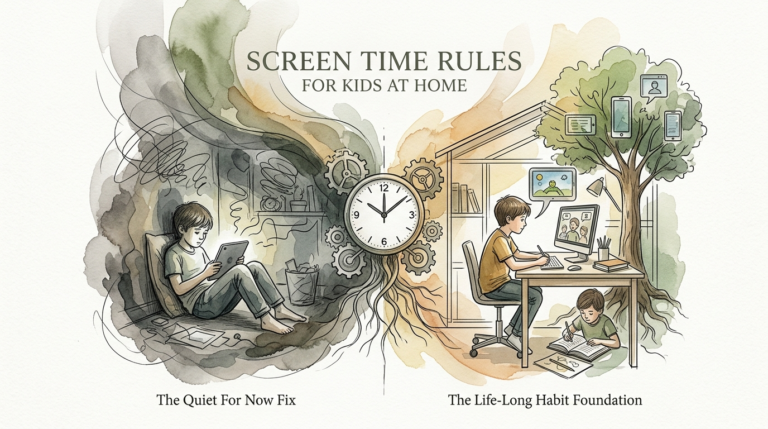
Managing digital habits requires a transition from being a “gatekeeper” to being a “mentor.” The goal is to teach children self-regulation so they eventually make good choices without a parent standing over them.
The first step involves following age-appropriate frameworks. According to updated 2026 guidelines from the American Academy of Pediatrics (AAP), children under 18 months should avoid screens entirely, with the exception of video chatting. For children aged 18 to 24 months, parents should choose high-quality programming and watch it with their children to help them understand what they are seeing. For those aged 2 to 5, screen time should be limited to roughly one hour per day of high-quality content.
A successful system often utilizes the “Three Cs” framework:
- Content: What are they watching? Is it fast-paced and overstimulating, or is it educational and slow-moving?
- Context: How are they watching? Are they alone in a dark room, or are you sitting with them, discussing the plot?
- Conversation: What happens after the screen turns off? Do you talk about what they learned, or does the device just disappear?
Practical implementation also includes setting physical boundaries. Establishing “device-free zones,” such as the dinner table or bedrooms, ensures that technology does not interfere with sleep or family connection. Using visual timers can also help younger children transition away from the screen without a power struggle. When a child can see the “red” on a timer disappearing, they are mentally prepared for the end of the activity, reducing the likelihood of a meltdown.
Benefits of Intentional Screen Use
When parents move away from passive “energy waste” and toward “developmental fuel,” the benefits are observable and measurable. Digital play, when designed well, supports critical life skills like empathy, resilience, and problem-solving.
Interactive apps that require a child to solve a puzzle or build a virtual structure can improve bottom-up and orienting attention. Unlike a cartoon that simply happens to them, an interactive game requires an “if-then” thought process. This active engagement helps bridge the gap between digital theory and real-world application.
Another significant advantage is the opportunity for “co-viewing.” Research shows that when an adult is present and engaged, the same device that might otherwise be linked to poorer cognitive outcomes can actually lead to better ones. The adult provides “scaffolding”—explaining complex ideas or connecting the screen’s content to the child’s real life. This turns a solo activity into a social bonding experience.
Furthermore, technology allows for global connection. High-quality video calls enable infants and toddlers to maintain relationships with distant relatives, which the AAP recognizes as a valid and beneficial use of screens. This helps build a sense of belonging and social continuity that was impossible for previous generations.
Challenges and Common Mistakes
The primary challenge in parenting screen time is the “displacement hypothesis.” This theory suggests that the harm of screens isn’t always the content itself, but what the screen replaces. Every hour spent on a tablet is an hour not spent in physical play, face-to-face conversation, or deep sleep.
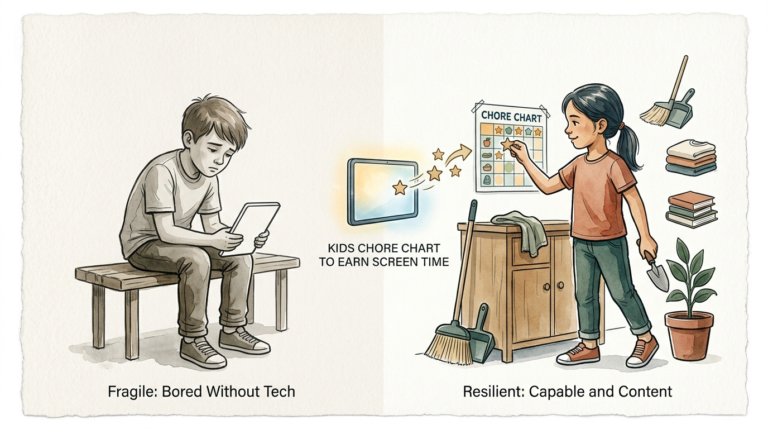
One frequent error is using screens as the primary tool for emotional regulation. If a child is handed a phone every time they are frustrated or bored, they miss the chance to develop their own “internal toolkit” for handling difficult emotions. This can lead to a cycle where the child becomes more dependent on the device to feel calm, leading to more frequent meltdowns when the device is removed.
Another common pitfall is “background media.” Keeping a TV on in the background while a child plays with blocks might seem harmless, but it creates a constant source of distraction. This “noise” can disrupt the child’s “flow state,” making it harder for them to develop the deep, sustained focus required for later academic success.
Parents also often underestimate the power of their own modeling. If a parent is constantly checking their phone during mealtimes or while playing with their child, they are sending a message that the digital world is more important than the physical one. Children are expert observers and will mirror the digital habits they see at home, regardless of the rules you set for them.
Limitations and Realistic Constraints
While the “gold standard” is limited, high-quality screen time, real-world parenting often involves trade-offs. Environmental limitations, such as living in a small apartment during a rainy week or traveling on a 10-hour flight, make strict adherence to “one hour a day” nearly impossible.
In these situations, it is important to focus on “balance over burnout.” One day of high screen use during a family emergency or a long travel day will not cause permanent developmental harm. The danger lies in when the exception becomes the daily rule.
There are also limitations based on a child’s unique neurobiology. For some neurodivergent children, screens can be a powerful tool for communication or a necessary way to decompress from sensory overload. In these cases, a “one-size-fits-all” time limit may not be ideal. The focus should shift toward how the child feels after the screen time. If they are calm and able to transition to other tasks, the usage may be appropriate for their specific needs.
Passive vs. Active Screen Time Comparison
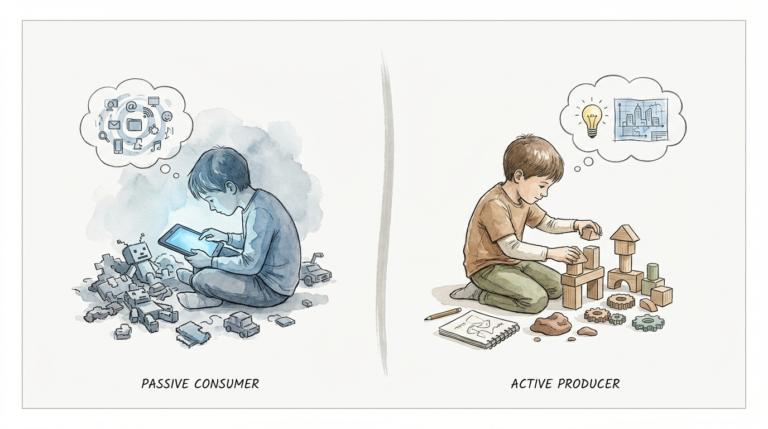
Understanding the measurable differences between “energy waste” and “developmental fuel” is easier when you compare the two primary types of digital engagement.
| Feature | Passive Screen Time | Active Screen Time |
|---|---|---|
| Definition | Solitary watching with no interaction. | Engaged use requiring input or social interaction. |
| Child’s Role | Receiver of information. | Participant or creator. |
| Cognitive Impact | Linked to lower academic performance and attention issues. | Can support problem-solving and empathy. |
| Examples | Autoplay YouTube videos, scrolling social feeds. | Coding games, video calls, educational puzzles. |
| Mental Energy | Drains energy; often leads to “zombie” state. | Fuels curiosity; encourages exploration. |
Practical Tips for a Digital Reset
If you feel your family’s screen habits have spiraled out of control, you can apply these actionable steps immediately to regain balance.
- The “20-Minute Transition” Rule: Give a 10-minute warning, a 5-minute warning, and then sit with the child for the final 2 minutes. Discussing what is happening on the screen during those last two minutes makes the transition to the “real world” feel like a shared journey rather than an abrupt ending.
- Audit the “Autoplay”: Disable autoplay features on all apps. This forces a conscious decision to watch the next video rather than falling into a “loop” of passive consumption.
- Create a “Tech Garage”: Designate a basket or a drawer where all devices “go to sleep” at a specific time every night. This includes parental phones to model the behavior.
- Prioritize “Conversational Turns”: When watching a show together, pause it once or twice to ask a “Why?” or “How?” question. This simple act of dialogue compensates for the lack of interaction typically found in digital media.
- Use “Tool vs. Toy” Language: Teach children that the tablet is a “tool” for learning and creating (like a paintbrush) and the TV is a “toy” for entertainment. This helps them categorize their own usage as they grow.
Advanced Considerations for Long-Term Health
For those looking to go beyond the basics, it is essential to understand the underlying neuroscience of digital habits. A landmark 13-year study out of Singapore revealed that excessive screen time in infancy is linked to changes in the brain’s cortex—specifically a thinning in areas responsible for critical thinking and reasoning.
Furthermore, the “dopamine loop” created by short-form, high-stimulation content (like 30-second viral clips) can rewire a child’s reward system. They may begin to find “slow” activities like reading a book or playing with a puzzle boring because those activities do not provide the same instant chemical hit.
Serious practitioners of digital minimalism suggest focusing on “spaciousness.” Boredom is not something to be avoided; it is the space where creativity and imagination are born. By intentionally leaving gaps in a child’s schedule that are *not* filled by screens, you allow their brain to practice “mind wandering.” This internal reflection is vital for developing a strong sense of self and the ability to think deeply about complex problems.
Examples of Screen Time in Practice
To see how these theories translate into real life, consider the “Restaurant Scenario.”
Scenario A (Energy Waste): A family sits down at a restaurant. Both parents are on their phones, and the child is given a tablet with headphones playing a loud, fast-paced cartoon. The child is silent, but their brain is in a passive “zombie” state. When the food arrives and the tablet is taken away, the child has a massive meltdown because they were ripped out of a dopamine loop.
Scenario B (Developmental Fuel): The family sits down. The parents keep their phones in their pockets. The child is given a coloring book first. When the child becomes restless, the parent brings out a tablet to look at a digital “I-Spy” book *together*. They talk about the objects they find and how they relate to the items on the restaurant table. When the food arrives, the parent says, “Let’s put the book away so we can see what the chef made for us.” The child transitions smoothly because they were engaged with their parents, not just the device.
Another example is the “Rainy Day Documentary.” Instead of letting a child scroll through random YouTube clips, the parent selects a high-quality nature documentary. They watch it together, and afterward, they use a drawing app to “paint” the animals they saw. This turns a passive viewing experience into an active, creative project.
Final Thoughts
The goal of parenting screen time is not to achieve a state of “zero tech.” We live in a digital age, and depriving a child of all digital literacy can be just as limiting as allowing them unlimited access. The real objective is balance—ensuring that for every hour spent on a screen, there are multiple hours spent in movement, social connection, and creative play.
Success is found in the small, consistent choices. It is the choice to keep the phone in your pocket during a walk, the choice to watch a educational show *with* your child rather than from the other room, and the choice to allow your child to be “bored” for twenty minutes. These moments of intentionality add up to a foundation of mental resilience and focused curiosity.
Experiment with these strategies and see how your child’s behavior shifts. You may find that when you swap “energy waste” for “developmental fuel,” you don’t just get a quieter house—you get a more engaged, creative, and focused child. The digital world is a vast resource; your job is simply to be the guide that helps them navigate it safely.
Sources
1 expressable.com | 2 theminimalists.com | 3 structural-learning.com | 4 mayoclinichealthsystem.org | 5 childrenandscreens.org | 6 mayoclinic.org | 7 greenchildmagazine.com | 8 childrenshospital.org | 9 harvard.edu | 10 newcanaanpediatrics.com | 11 ccrcca.org | 12 thevoiceofearlychildhood.com | 13 forbes.com | 14 choc.org | 15 scitechdaily.com | 16 frontiersin.org