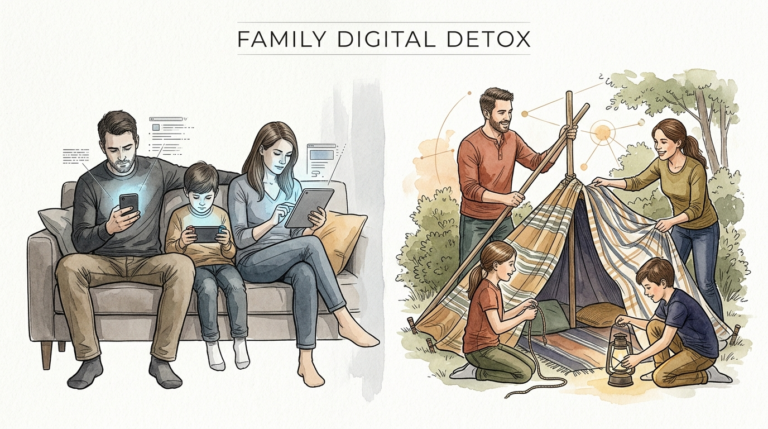
Signs Of Screen Addiction In Play Patterns
When they value their ‘digital skins’ more than their physical tools, the balance has shifted. One of the clearest signs of overuse is when a child identifies more with what they own in a game than what they can create in the garage. We are moving from a generation of makers to a generation of spectators. This shift is not just about the hours spent looking at a glowing rectangle. It is about a fundamental change in how the next generation perceives value, identity, and effort.
In the physical world, a tool is something you use to change your environment. You pick up a hammer to build a birdhouse. You grab a paintbrush to color a canvas. The value lies in the action and the result. In the digital world, however, the “skin”—a purely cosmetic item—has become the ultimate status symbol. Children are increasingly focused on possessing these digital trophies rather than mastering the tools that create them.
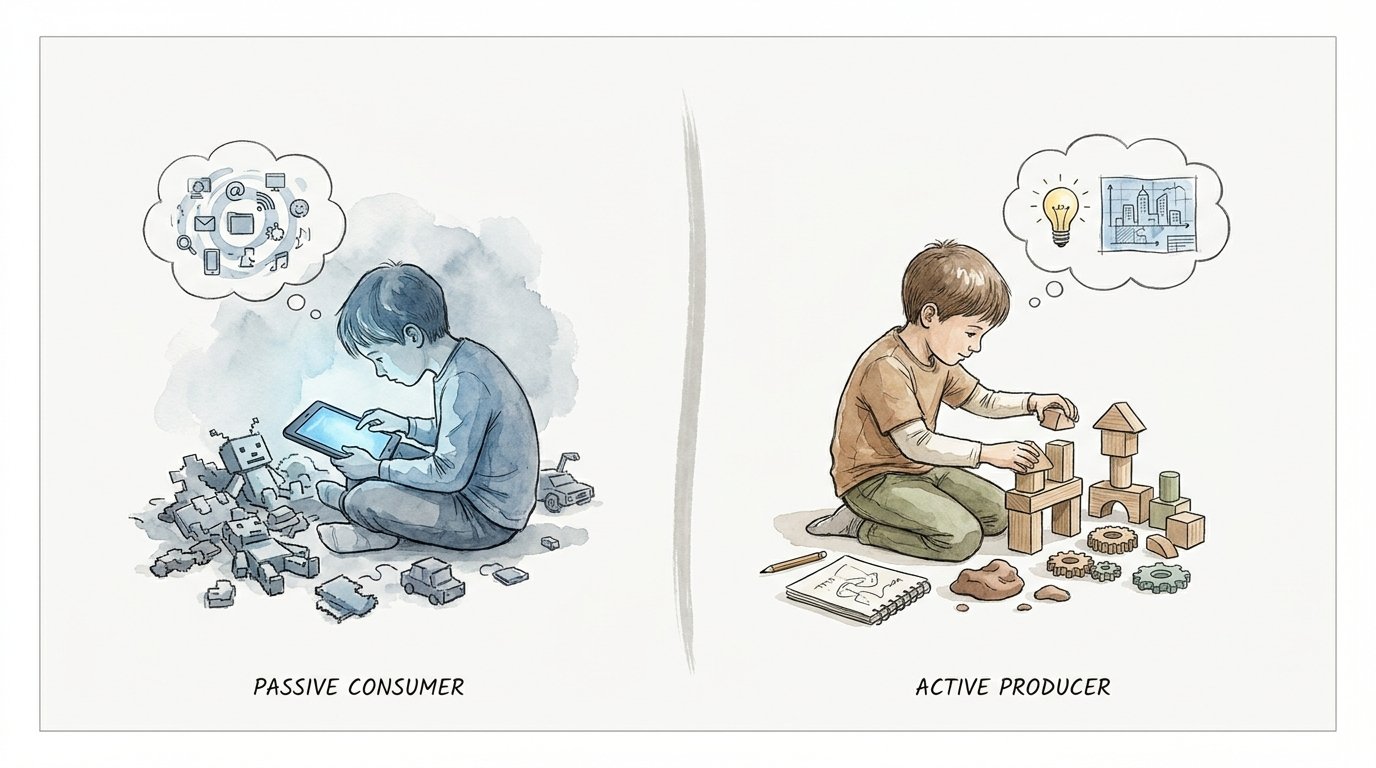
Understanding this divide matters because it dictates the development of a child’s brain. Passive consumption drains focus and fuels anxiety. Active production builds resilience and creative confidence. As parents and mentors, we must guide this transition from being a passive consumer to becoming an active producer. This guide explores how to recognize the shift and how to steer the ship back toward a culture of making.
Signs Of Screen Addiction In Play Patterns
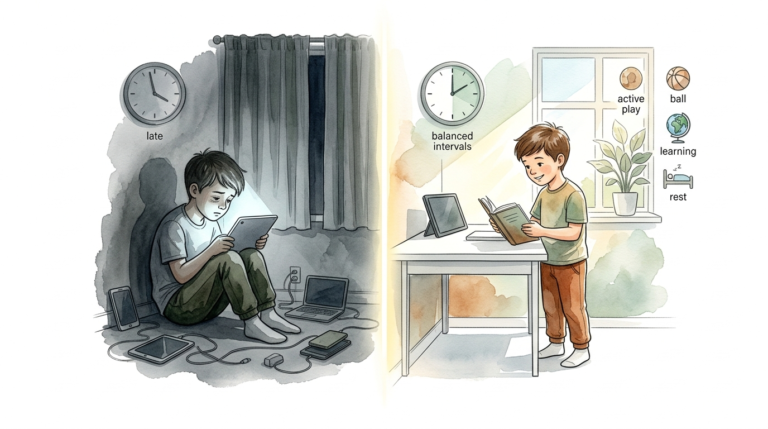
Identifying screen addiction is not always about a timer. It is about the quality of the interaction and the emotional fallout when the device is gone. High-energy engagement can sometimes mask a deeper dependency on the dopamine loops designed by game developers. When a child’s play moves from imaginative exploration to rigid, repetitive consumption, the red flags are flying.
One of the most obvious signs is extreme irritability or aggression when the screen is turned off. If a transition that should take minutes turns into a thirty-minute battle, the brain’s reward system is likely over-reliant on the digital input. At this stage, the screen is no longer a tool for fun; it has become a necessary regulator for their mood.
Another major indicator is the loss of interest in physical play. When a child has a room full of blocks, bikes, and art supplies but claims they have “nothing to do” without an iPad, the creative “muscle” has begun to atrophy. They have become spectators who wait for entertainment to be delivered to them, rather than makers who create it for themselves.
Watch for social withdrawal and a preoccupation with digital status. Research shows that children now experience social exclusion and bullying based on the “skins” their avatars wear. If a child’s primary motivation for playing is to “fit in” by owning a specific digital item, they are no longer playing for the joy of the game. They are participating in a digital arms race that values bank accounts over skill.
Finally, look for physiological changes. Screen-addicted play patterns often disrupt sleep, lead to a sedentary lifestyle, and can even cause “hyperarousal.” This is a state where the nervous system is constantly revved up, leading to difficulties with attention, impulse control, and frustration tolerance in the real world.
How to Transition from Passive Consumer to Active Producer
Breaking the cycle of passive consumption requires a deliberate strategy. You cannot simply take away the screen and expect a child to immediately pick up a woodworking kit. The transition must be handled in stages, moving from “consuming” content to “interacting” with it, and finally “creating” it.
The 80/20 Framework
One of the most effective methods for managing digital life is the 80/20 Framework. Instead of fighting over every minute of screen time, focus on the outcome. The goal is to ensure that 80% of digital time is spent on “Active” pursuits—coding, editing, designing, or learning—while only 20% is reserved for “Passive” consumption like scrolling TikTok or watching YouTube.
Step 1: Identifying Active Tools
Introduce tools that require the user to build something. This shifts the screen from a “television” into a “workbench.” Common active tools include:
- Roblox Studio: Moving from playing games to designing them using Lua code.
- Minecraft (Creative Mode): Using Redstone to build complex logic circuits and architectural marvels.
- Scratch: A block-based coding language developed by MIT that allows kids to animate stories.
- Procreate or Canva: Using a tablet and stylus to learn digital illustration and graphic design.
Step 2: Scaffolding the Process
Do not expect a beginner to build a masterpiece on day one. Start by co-creating. Sit with them and build a small structure in a game or record a 30-second stop-motion video using an app and some LEGO bricks. This models the behavior that the screen is a tool for production.
Step 3: Setting Project-Based Goals
Instead of saying “You have 30 minutes,” say “Your goal is to finish the first level of your game design.” This shifts the focus from the clock to the product. When a child has a goal, they engage their problem-solving skills and develop “narrative intelligence”—the ability to see a project through from beginning to end.
Benefits of the Maker Mindset
Choosing to be an active producer over a passive consumer offers measurable advantages for a child’s development. It prepares them for a future where technical literacy and creative confidence are the primary currencies of the job market.
The most immediate benefit is creative confidence. When a child realizes they can make a game that others can play, their self-perception shifts. They are no longer just a user of technology; they are a creator of it. This builds a sense of self-efficacy that spills over into the physical world, making them more likely to try building things in the garage or the kitchen.
Resilience and problem-solving are naturally baked into the making process. Code breaks. Designs fail. Physical tools require practice to master. By working through these frustrations, children learn that “failure” is just data. They develop the “grit” necessary to iterate on an idea until it works, a skill that passive consumption can never teach.
Finally, there is the advantage of AI and digital literacy. In 2024 and beyond, understanding how digital systems work is a core life skill. Makers learn how algorithms function, how assets are created, and how to use AI as a creative partner rather than a replacement for thought. This deep understanding protects them from the manipulative “dark patterns” used by predatory game designs.
Challenges and Social Pressures of the Digital Skin
The transition to a maker mindset is not without its hurdles. The most significant challenge is the social pressure of digital goods. For many children, their digital appearance is a direct reflection of their social standing at school.
In-game cosmetics like “skins” have become high-stakes identity markers. Research indicates that children who lack premium skins may face social exclusion or be labeled as “poor” by their peers. This creates a psychological barrier; a child might feel more “productive” buying a skin to secure their social spot than they do learning to code a game that no one has seen yet.
Another challenge is manipulative game design. Many popular platforms use “dark patterns”—psychological tricks like limited-time offers, loot boxes, and “fear of missing out” (FOMO)—to keep users in a state of passive consumption. These systems are specifically engineered to bypass the prefrontal cortex, making it difficult for even adults to resist the urge to buy or scroll.
Limitations of the Active Producer Approach
While the shift toward “active” screen time is beneficial, it is not a cure-all. There are realistic constraints that parents and educators must acknowledge to remain credible and effective.
First, digital creation is still sedentary. Even if a child is coding the most complex game in the world, they are still sitting in a chair staring at a screen. It does not replace the need for physical movement, sunshine, and manual dexterity. High-quality digital production should still be balanced with “analog” making, such as woodworking, gardening, or sports.
Second, the learning curve can be steep. Moving from watching a video to editing one requires a level of “digital stamina” that many children don’t have yet. If the tools are too complex, the child may become frustrated and retreat back into the safety of passive consumption. Finding the right “entry-level” tool is critical.
Finally, there is the cost of equipment. While many coding tools are free, the hardware required for high-end digital art or video editing can be expensive. Not every family has access to the high-speed internet or the powerful computers needed for professional-level creation, which can create a new kind of “maker divide.”
Passive Consumer vs Active Producer
| Feature | Passive Consumer | Active Producer |
|---|---|---|
| Primary Activity | Scrolling, watching, “buying” status. | Coding, designing, building tools. |
| Brain State | Dopamine seeking, low focus. | “Flow” state, high problem-solving. |
| Social Value | Derived from “skins” and cosmetics. | Derived from skill and creation. |
| Long-term Skill | None (Media dependency). | Technical literacy, resilience. |
| Emotional Outcome | FOMO, anxiety, irritability. | Pride, accomplishment, confidence. |
Practical Tips for Parents and Mentors
Shifting the family culture from spectators to makers doesn’t happen overnight. It requires small, consistent adjustments to the environment and the daily routine.
- Create a “Maker Station”: Set up a dedicated physical space where tools are always accessible. Whether it’s a bin of electronics components or a tablet with a stylus, the “ease of start” determines whether a child chooses to create or consume.
- Focus on the “Three Ps”: Look for activities that have a Project (a clear goal), a Process (steps to get there), and a Product (something tangible to show at the end).
- Ask for a “Digital Tour”: Instead of asking “How much longer?”, ask “Can you show me what you built today?” This reinforces the idea that the value of their time is in the creation, not just the duration.
- Rotate Materials: Keep interest high by rotating different maker kits—move from 3D printing to stop-motion animation to gardening. Novelty fuels the drive to explore.
Advanced Considerations: The Psychology of Identity
As we go deeper into the digital age, we must understand that for the “Digital Native” generation, there is no sharp distinction between their online and offline worlds. Their digital avatar isn’t just a character; it is a primary marker of their identity.
When we dismiss “digital skins” as “just a game,” we miss the social weight they carry. A better approach is to bridge the gap. If a child is obsessed with a specific Fortnite skin, challenge them to recreate that character’s outfit in the physical world or design a 3D model of a new skin using professional software like Blender.
By validating the digital interest but redirecting the energy toward creation, we help the child integrate their digital identity with real-world competence. This prevents the “identity merge” from becoming a source of anxiety and turns it into a platform for artistic and technical expression.
Scenario: From Gamer to Game Designer
Consider “Leo,” a ten-year-old who spends four hours a day playing competitive shooters. He is frustrated because he doesn’t have the latest “legendary” weapon skin and feels “boring” compared to his friends.
In a Passive Consumer household, the parents might simply ban the game or give in and buy the skin to stop the complaining. Both options leave the underlying problem—Leo’s lack of agency—unaddressed.
In an Active Producer household, the parent might say: “That skin looks incredible. How do you think they designed the glow effect on the wings? Let’s download a game engine and see if we can make a character that looks even better.”
Six months later, Leo is still on the computer for those same hours, but he isn’t “playing” anymore. He is using Roblox Studio to build a parkour map. He is learning about “hitboxes,” “velocity variables,” and “3D meshes.” He still cares about digital skins, but now he cares about the ones he created. He has moved from a spectator waiting for a drop to a maker defining the world.
Final Thoughts
The shift from a generation of makers to a generation of spectators is a quiet crisis, but it is one we can solve with intentionality. When we value digital skins over physical tools, we trade a child’s future competence for a moment of digital status. By reclaiming the screen as a workbench, we restore the balance.
The goal is not to eliminate digital life but to master it. We want a generation that can look at any technology and ask, “How was this made, and how can I make it better?” This mindset is the ultimate defense against the addictive loops of the modern world.
Start small. Find one “active” tool that aligns with your child’s current interests. Sit with them, build with them, and celebrate the messy, imperfect products of their imagination. When they start to take more pride in what they build than what they buy, you’ll know the balance has finally shifted back.
Sources
1 future-youth-media.com | 2 instituteofchildpsychology.com | 3 childrenandscreens.org | 4 screenwiseapp.com | 5 jewelautismcentre.com | 6 nyp.org | 7 uga.edu | 8 c4l.net | 9 bitdefender.com | 10 videogameschronicle.com | 11 psu.com | 12 mayoclinichealthsystem.org | 13 oslomet.no | 14 apa.org