family game night ideas
The best family memories don’t have a price tag. You don’t need the latest $60 hobbyist game to have a legendary family night. Some of the best games ever invented require nothing but your family and a little creativity.
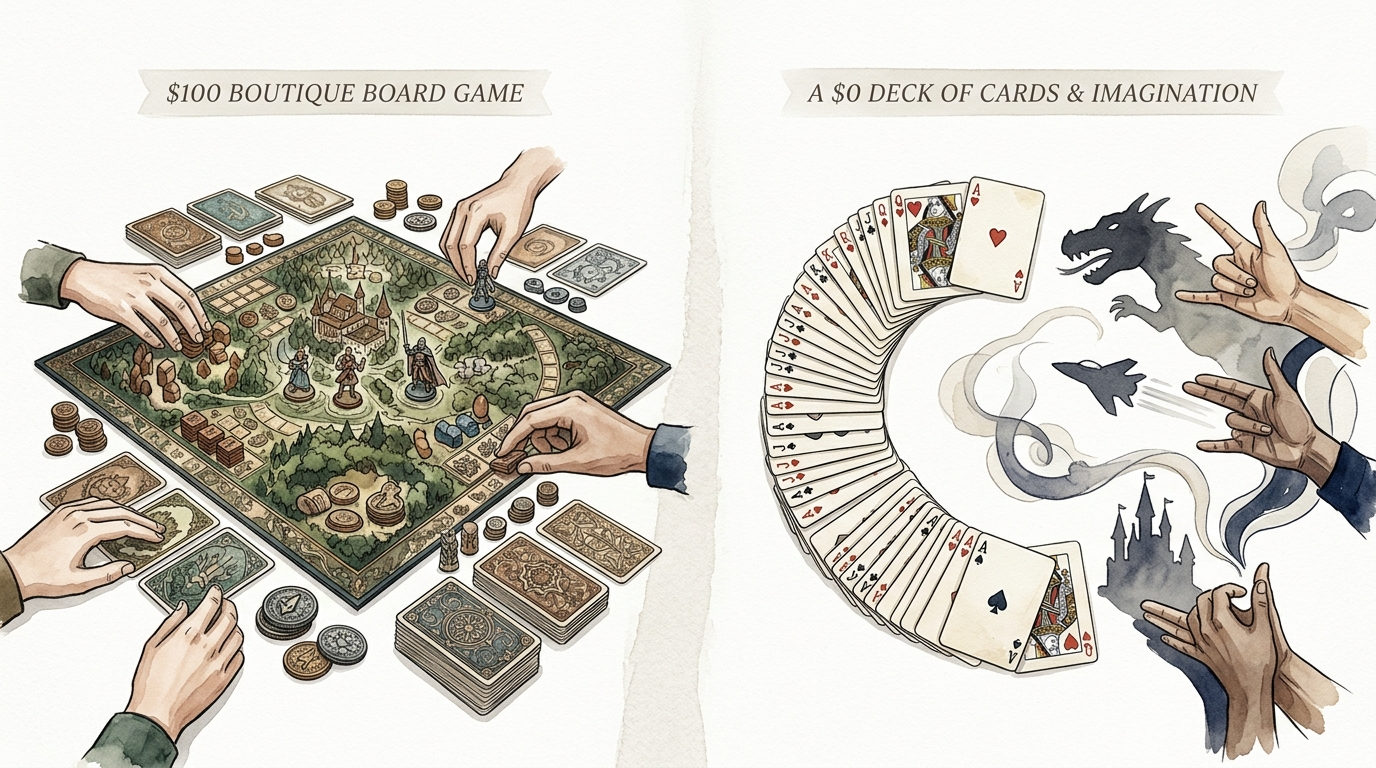
In a world dominated by high-definition screens and $100 boutique board games, we often forget that play is a human instinct, not a consumer product. You can spend a fortune on plastic miniatures and complex rulebooks, but the real magic happens in the laughter between turns.
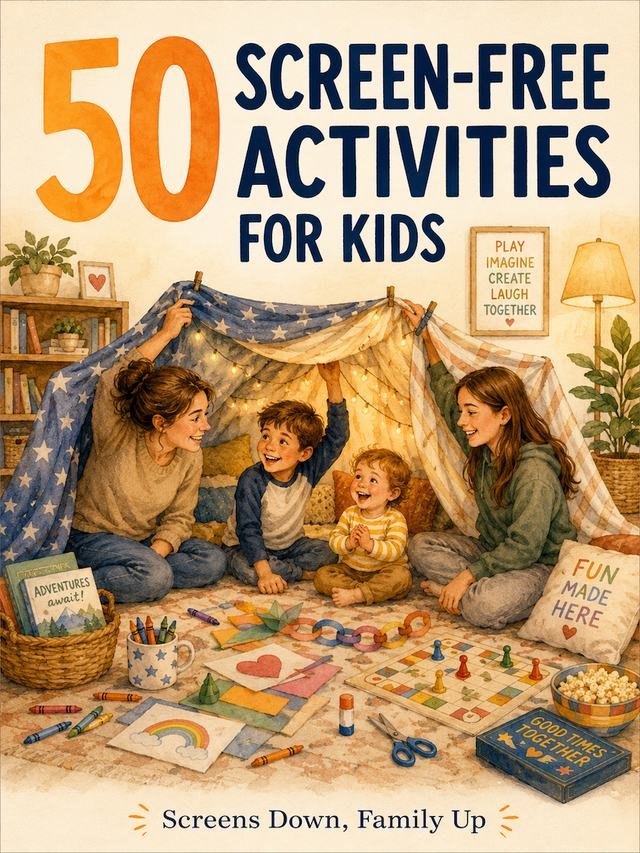
This guide is your roadmap to reclaiming the living room. We are diving deep into high-energy, low-cost activities that bridge the gap between toddlers and grandparents. Whether you have a dusty deck of cards or just your own “goofy brains,” you have everything you need for a five-star evening.
family game night ideas
Family game night ideas are more than just a list of activities; they are a structured ritual designed to foster human connection. At its core, a game night is a dedicated block of time where competition serves as a bridge for communication. It is a space where the usual power dynamics of “parent vs. child” melt away into “teammate vs. teammate.”
These ideas exist because play is the primary language of childhood and the ultimate stress-relief for adulthood. In real-world situations, these games serve as “social glue.” They turn a boring rainy Tuesday or a tense holiday gathering into an environment of shared joy.
Think of a game night like a campfire. The game itself is just the fuel, but the warmth comes from everyone gathered around it. You don’t need a professional setup to make it work. Often, a simple paper-and-pen challenge or a classic parlor game creates more lasting memories than the most expensive digital entertainment.
How to Host a Successful Game Night
Hosting doesn’t mean you need to be a professional event planner. It means setting the stage for fun to happen naturally. Follow these steps to ensure your night is a hit rather than a headache.
Choose the Right Space
Your environment dictates the energy. For high-energy movement games, clear the coffee table and use the living room floor. For strategic card games, the kitchen table provides the focus needed for “serious” competition. Ensure there are no screens in sight to keep the focus on each other.
Master the “House Rules”
One of the biggest pitfalls of game night is a rule dispute. Before you start, clearly state the house rules. Are “stolen” cards allowed in Spoons? Is there a time limit for Charades? Setting these boundaries early prevents arguments later.
Match the Energy to the Audience
If the kids are bouncing off the walls, start with active games like “The Floor is Lava” or “Freeze Dance.” If it’s late and everyone is tired, pivot to “couch games” like 20 Questions or Fortunately/Unfortunately.
The Snack Strategy
Never underestimate the power of “game night only” snacks. Small bowls of popcorn, pretzels, or a special DIY sundae bar make the evening feel like a true event. High-energy play requires fuel, and snacks keep the “hangry” outbursts at bay.
Benefits of Regular Family Play
The advantages of regular family game nights go far beyond simple entertainment. Scientific research consistently shows that play is a powerhouse for development and mental health.
- Cognitive Growth: Research from the University of Wisconsin-Madison suggests that organized games help children improve executive functions like planning and problem-solving.
- Academic Success: Studies from Carnegie Mellon University indicate that even a small amount of practice with academic-style games can lead to improved math and vocabulary scores in the classroom.
- Motor Skills: Every time a child shuffles a deck of cards or moves a piece, they are refining fine motor skills and hand-eye coordination.
- Emotional Resilience: Playing together teaches children how to win with grace and, more importantly, how to lose without a meltdown. It provides a safe environment to practice persistence through setbacks.
- Bonding: According to a Hasbro study, 91% of families report that playing games together significantly boosts their collective mood. It creates a “memory bank” that children draw from for years.
Challenges and Common Mistakes
Even the best-intentioned game nights can occasionally end in tears or boredom. Recognizing these common pitfalls is the first step to avoiding them.
The Age Gap Struggle
Trying to play a complex strategy game with a 5-year-old and a 15-year-old is a recipe for disaster. The younger child will get frustrated, and the older one will get bored.
Solution: Choose games with “adjustable” difficulty, like Charades or Pictionary, where you can give easier prompts to younger players.
The “Sore Loser” Syndrome
Competition can get heated. When a child (or adult!) takes a loss too personally, it kills the vibe for everyone.
Solution: Incorporate cooperative games where the whole family works against a “timer” or a common goal. This shifts the focus from “me vs. you” to “us vs. the game.”
Rule Overload
Spending 45 minutes explaining rules for a 20-minute game is a common mistake.
Solution: Stick to games that can be explained in under three minutes. If you are introducing a new game, watch a quick tutorial video together first.
Limitations: When to Pivot
While game nights are versatile, they aren’t a universal fix for every situation. There are times when a traditional setup won’t work.
Space Constraints
If you are in a small apartment or a hotel room, high-movement games like “Sardines” are impossible. In these cases, focus on “Parlor Games” that only require chairs and conversation.
The Energy “Wall”
Sometimes parents are too exhausted to lead an energetic round of “Simon Says.” It is okay to admit this. Credibility with your kids comes from being honest. On low-energy nights, choose “No-Energy Games” where you can literally play while sitting on the couch, such as “Stinky Pinkies” or “20 Questions.”
Small Groups
Some of the best “party” style games require at least five or six people to really get moving. If it’s just you and one child, look for “1v1” challenges like Speed or Rummy.
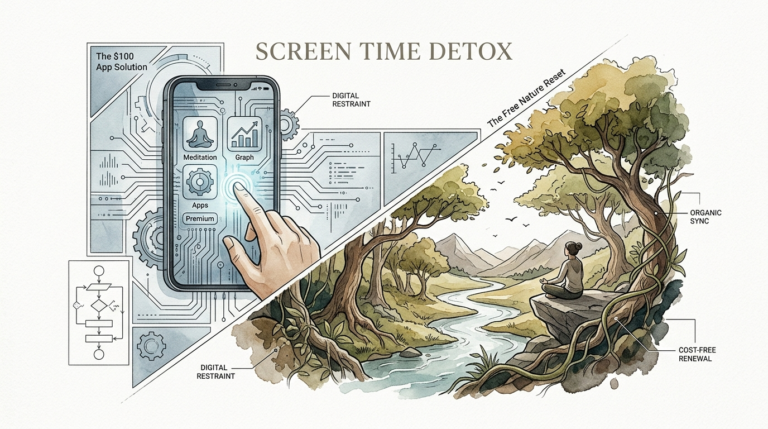
$100 Boutique Game vs. $0 Imagination
It is tempting to think that the quality of your fun is tied to the price of the box. Let’s compare the two approaches.
| Feature | Boutique Board Game ($60-$100) | Imagination & Cards ($0) |
|---|---|---|
| Setup Time | 15–30 minutes (reading rules, punching out cardboard) | Instant |
| Replayability | Limited by the fixed mechanics in the box | Infinite variations and house rules |
| Portability | Bulky boxes that take up shelf space | Fits in a pocket or requires nothing at all |
| Age Range | Often strictly limited (e.g., Ages 12+) | Easily adapted for toddlers to seniors |
While expensive games have their place for serious hobbyists, they often create a barrier to entry. A simple deck of cards can be used for over 1,000 different games, and your imagination has no “end of game” screen.
Practical Tips and Best Practices
If you want to turn a one-time game night into a weekly tradition, use these professional-level tips to keep the momentum going.
- The Rotational Leader: Let a different family member choose the game each week. This gives children a sense of agency and ensures variety.
- Timer Power: Use a kitchen timer for games like “Categories” or “Charades.” It adds a sense of urgency and prevents turns from dragging on.
- Capture the Memories: Take one “action shot” or a quick selfie of the winning team each night. Keep these in a digital album titled “The Arena.”
- Don’t Be Afraid to Quit: If a game isn’t clicking after ten minutes, abandon it. Life is too short to play a game that feels like homework.
- Incentivize with “Non-Monetary” Prizes: The winner doesn’t need a toy. The winner gets to pick the movie for the next night, or they get a “Get Out of Chores Free” card.
Advanced Considerations for Serious Play
For families who have mastered the basics, it’s time to level up. You can evolve your game night into a full-blown “Game League.”
Tournament Brackets
Create a monthly tournament for a specific game, like “Speed” or “Tic-Tac-Toe.” Use a poster board to track wins and losses. This adds a layer of long-term excitement to even the simplest games.
Thematic Nights
Pick a theme, like “Pirates” or “Outer Space,” and adapt your games to fit. “Charades” becomes “Pirate Charades,” and your snacks become “hard tack and grog” (root beer).
DIY Game Design
Challenge the kids to invent their own game using household items. Give them a “mystery box” with a spoon, a rubber band, three dice, and a piece of paper. The goal is to create a game with rules that they must then “sell” to the parents.
Example Scenarios
Scenario A: The Rainy Saturday (High Energy)
The kids have been stuck inside all day and are restless. You start with “The Floor is Lava,” using cushions as safe zones. Once they’ve burned some energy, you transition to “Spoons.” This fast-paced card game keeps the adrenaline high but brings everyone to the table. You finish with “Freeze Dance” to exhaust the last of their energy before dinner.
Scenario B: The Multi-Generational Holiday (Social)
Grandparents are over, and the age range is 6 to 70. You start with “Stinky Pinkies,” a rhyming riddle game that rewards wordplay. It’s low-impact but highly engaging. Next, you play “Mafia,” a social deduction game where everyone tries to guess who the “villains” are. It’s a great way to get quiet teenagers talking and laughing with their elders.
Final Thoughts
Family game night is not about the games; it’s about the people. Whether you are acting out a ridiculous prompt in Charades or racing to grab a spoon from the center of the table, you are building a foundation of trust and joy. These moments of unstructured play are where your children learn who you are as a person, not just as a parent.
Don’t wait for the “perfect” expensive board game to arrive in the mail. Grab a pen, find a scrap of paper, or just sit down and start a story chain. The investment of your time and attention will always yield a higher return than any luxury hobbyist box.
Start tonight. Turn off the TV, put the phones in a basket, and let the games begin. You might be surprised at how much fun you can have with absolutely nothing but your family and a little bit of imagination.
Sources
1 globelifeinsurance.com | 2 allintherapyclinic.com | 3 habausa.com | 4 meminio.com | 5 lost-boy-entertainment.com | 6 childrenofwanderlust.com | 7 familyfuntwincities.com | 8 escaperoomgeeks.com | 9 kristinagraffphotography.com | 10 fitnessbythesea.com | 11 foxinaboxchicago.com | 12 kristinagraffphotography.com | 13 sbm.org | 14 teachingyourtoddler.com | 15 duesouth.media | 16 simchafisher.com | 17 sog.gg