screen time rules kids
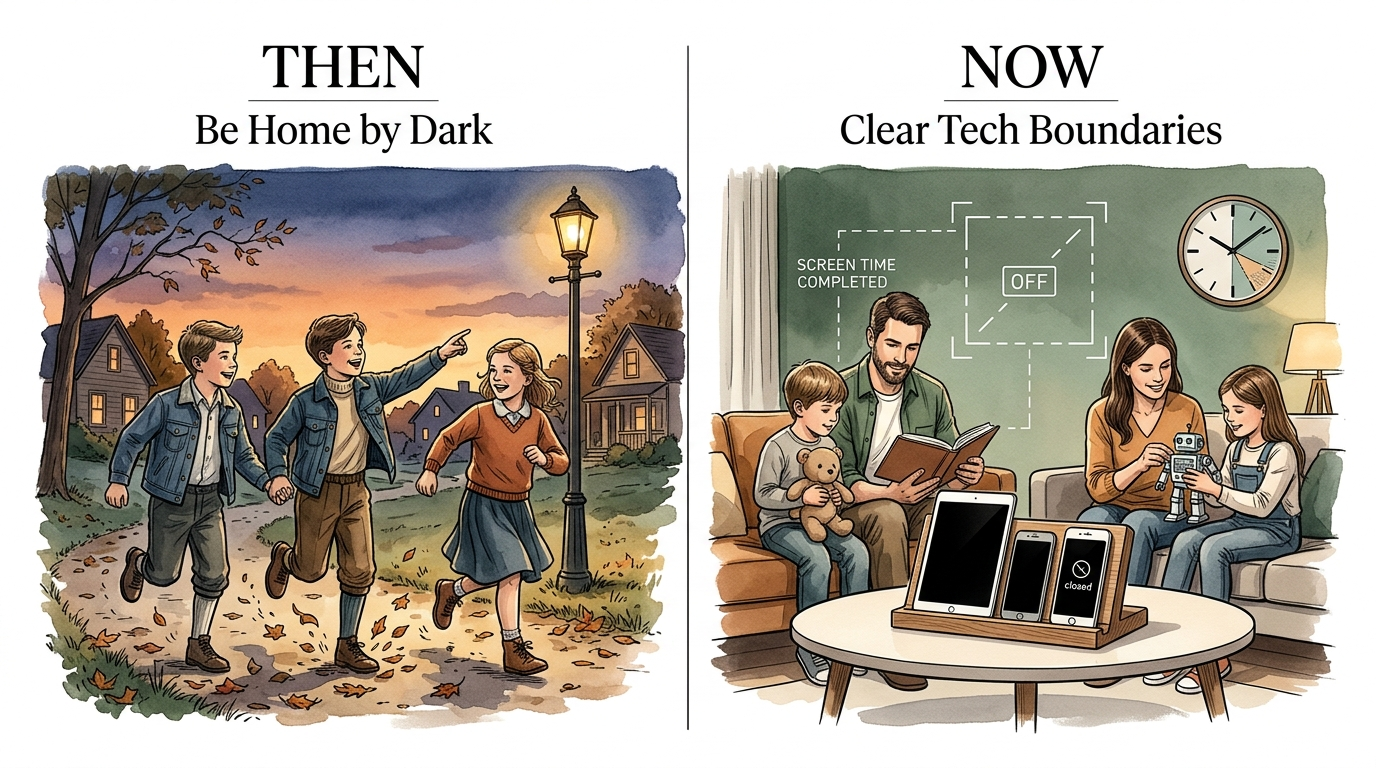
Parenting has changed, and our rules need to keep up with the digital reality our kids live in. In the past, ‘be home by dark’ was the only rule we needed. Today, we have to navigate a digital world that’s always in their pocket. Here’s how to set boundaries that actually stick in 2024.
screen time rules kids
Screen time rules are the digital equivalent of a curfew. They are the guardrails we put in place to ensure technology serves our children rather than enslaving them. In the simplest terms, these rules define when, where, and how children interact with digital devices. This includes everything from tablets and smartphones to gaming consoles and smart TVs.
In 2024, the definition of screen time has evolved. It is no longer just about the number of minutes spent staring at a glowing rectangle. It is now about the quality of the content and the context of the usage. For example, a child using a tablet to learn coding is having a vastly different experience than a child mindlessly scrolling through short-form video clips.
These rules exist because children’s brains are still under construction. The prefrontal cortex, which handles impulse control and long-term planning, is not fully developed until the mid-twenties. Without external boundaries, the dopamine-driven design of modern apps can easily override a child’s internal “stop” button.
Think of screen time like nutrition. Just as we wouldn’t let a child eat only dessert for every meal, we cannot let them consume only “empty calorie” digital content. A balanced digital diet includes educational material, social connection, and creative outlets, all within reasonable limits.
How to Set Digital Boundaries Step by Step
Setting boundaries is a process, not a one-time event. You cannot simply hand over a device and hope for the best. You need a system that grows with your child.
Start with the “Family Media Plan.” This is a written agreement that outlines expectations for everyone in the house, including parents. Children are much more likely to follow rules they helped create. Sit down together and discuss which hours of the day are tech-free.
Create physical “No-Tech Zones.” The dining table and bedrooms are the most important areas to keep screen-free. Keeping devices out of the bedroom ensures that sleep remains a priority. Use a central charging station in a common area where all devices go to “sleep” at a specific time each night.
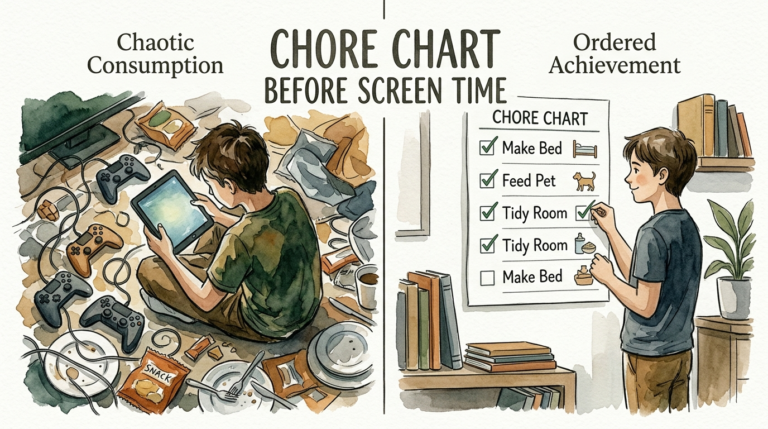
Use the “First-Then” principle for younger children. First, they complete their chores or homework, then they get their allotted screen time. This teaches them that digital entertainment is a privilege earned after responsibilities are met.
Implement age-appropriate tiers. A five-year-old needs a completely different set of rules than a fifteen-year-old. For toddlers, the focus is on high-quality, educational content with a parent present. For teenagers, the focus shifts toward digital citizenship and self-regulation.
Leverage technical tools. Modern operating systems have built-in parental controls like Apple’s Screen Time or Google’s Family Link. These tools allow you to set hard stops for specific apps and monitor what your child is viewing. However, remember that these tools are a supplement to parenting, not a replacement for it.
The Measurable Benefits of Clear Boundaries
Establishing firm screen time rules leads to observable improvements in a child’s daily life. One of the most immediate benefits is better sleep. Exposure to blue light from screens suppresses melatonin, the hormone that tells our bodies it is time to sleep. When kids put the screens away an hour before bed, they fall asleep faster and reach deeper stages of restorative sleep.
Academic performance often sees a boost when tech boundaries are in place. Studies have shown that frequent social media use can lead to lags in reading and vocabulary development. By limiting mindless scrolling, kids have more time for deep work and focused reading, which are critical for cognitive growth.
Social skills also benefit from limited screen time. Face-to-face interaction requires reading body language and navigating real-time emotional cues. Children who spend more time interacting in person develop higher levels of empathy and better communication skills than those who primarily connect through text or emojis.
Physical health is a major factor. Screen time is inherently sedentary. Clear rules encourage kids to get up and move. This reduces the risk of childhood obesity and helps develop motor skills through physical play.
Mental health stability is perhaps the most significant benefit. Research suggests that “addictive use”—meaning tech that interferes with daily responsibilities—is a primary driver of anxiety and depression in adolescents. Setting boundaries prevents this interference, keeping the digital world in its proper place.
Challenges and Common Pitfalls to Avoid
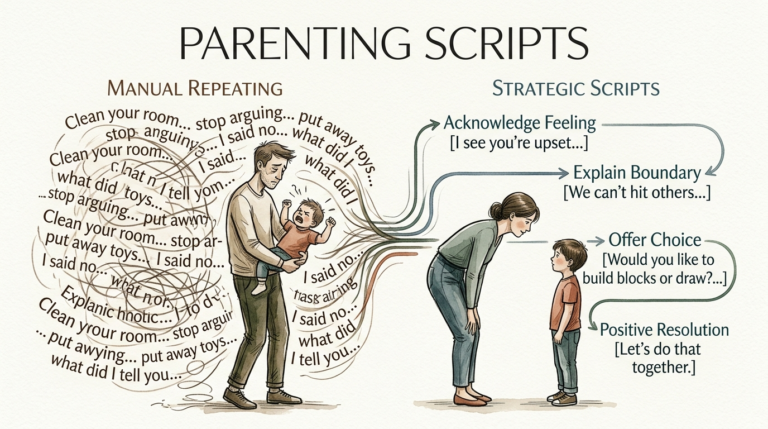
The biggest challenge parents face is the “nagging cycle.” This happens when rules are vague or inconsistently enforced. If you tell a child they have “a little bit” of time left, they will naturally push for more. Be specific. Use timers that give a clear, neutral signal when time is up.
Avoid using screens as a “digital pacifier” for big emotions. If a child learns that a tablet is the only way to calm down during a tantrum, they miss out on learning how to regulate their emotions internally. Let them be bored or frustrated occasionally; these are the moments where creativity and resilience are born.
Consistency is a frequent sticking point. If you allow a device at the table on Tuesday but ban it on Wednesday, your child will learn to negotiate every single time. Establish a “non-negotiable” baseline that remains the same regardless of how tired or busy you are.
Parents often forget to model the behavior they want to see. If you are constantly checking your phone during dinner, your children will view your screen time rules as hypocritical. Your kids are watching you more than they are listening to you. Set your own boundaries to show them that a balanced life is possible.
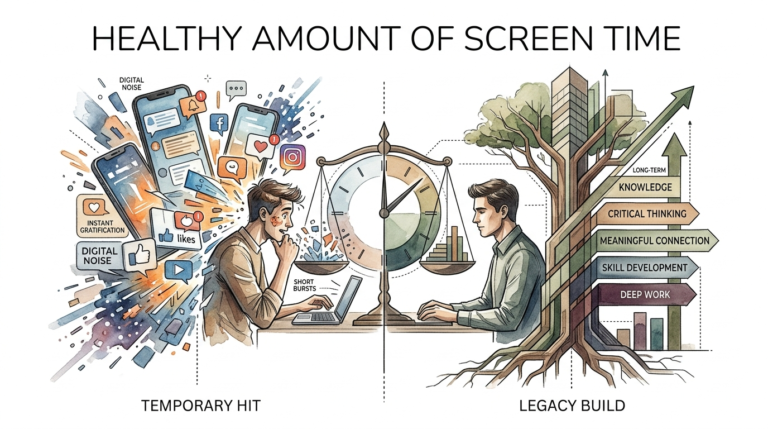
Another mistake is focusing solely on the “time” rather than the “type.” Not all screen time is created equal. Watching a documentary on history is not the same as watching “unboxing” videos on YouTube for three hours. Focus on the quality of the engagement rather than just the clock.
Limitations and Realistic Constraints
Boundaries have their limits in a world that is increasingly digital by default. Many schools now require the use of tablets or laptops for homework and communication. This makes “zero screen time” impossible and even counterproductive. You must distinguish between “school screens” and “play screens.”
Environmental factors can also make boundary-setting difficult. If your child’s entire social circle communicates through a specific app or game, cutting them off completely can lead to social isolation. In these cases, the goal should be “informed engagement” rather than total restriction.
The “one size fits all” approach rarely works. Every child is different. Some kids can handle two hours of gaming and walk away without a second thought. Others become irritable and aggressive after just thirty minutes. You have to adjust your rules based on your child’s unique temperament and how tech affects their behavior.
Economic trade-offs are a reality. Many parents use screens as a childcare tool because they are working multiple jobs or lack a support system. In these situations, the focus should be on “harm reduction”—finding the highest quality content possible—rather than feeling guilty about the total time spent.
Then: ‘Be Home by Dark’ vs Now: Clear Tech Boundaries
Parenting in 2024 requires a different set of survival skills than the ones our parents used. In the past, the physical world was the primary concern. Today, the digital world is just as real to our children.
| Metric | The “Be Home by Dark” Era | The “Digital Boundary” Era |
|---|---|---|
| Primary Risk | Physical safety and environment | Psychological safety and algorithms |
| Role of Parent | Supervisor of physical space | Mentor for digital citizenship |
| Social Circle | Limited to neighborhood/school | Global and 24/7 access |
| Information Access | Controlled by books/TV/Parents | Infinite and unregulated |
This comparison shows that modern parenting is more complex. You cannot just lock the door and feel safe. You have to teach your child how to navigate a world where the “outside” is always inside their pocket.
Practical Tips for 2024 Digital Success
Establish a “tech basket” at the front door. Everyone, including guests and parents, drops their devices in the basket during family gatherings or dinner. This creates a physical ritual that signals the importance of presence.
Use the “20-20-20 Rule” to protect your child’s eye health. Every 20 minutes, they should look at something 20 feet away for at least 20 seconds. This simple habit reduces eye strain and helps prevent the development of nearsightedness.
Review apps together before downloading. Instead of just saying “no,” look at the app’s privacy policy and age rating with your child. Explain *why* certain apps are off-limits. This builds digital literacy and trust.
Switch to “grayscale” mode on devices during the evening. The bright, vibrant colors of modern interfaces are designed to be addictive. Removing the color makes the screen significantly less stimulating and easier to put down.
Encourage “active” over “passive” use. If your child wants screen time, suggest they learn a new skill like video editing, digital drawing, or music production. This shifts the experience from consumption to creation.
Advanced Considerations for Long-Term Digital Health
For those looking to go deeper, understand the role of algorithms. Many platforms use “engagement-based design” to keep users on the site for as long as possible. Features like autoplay and infinite scroll are intentionally designed to exploit human psychology. Teach your children how these systems work so they can recognize when they are being manipulated.
Data privacy is another advanced concern. Every interaction your child has online creates a data trail. In 2024, it is vital to teach children about their “digital footprint.” Remind them that what they post today can follow them into their college applications and future careers.
Brain development research is constantly evolving. Recent studies have looked at the “thinning” of the prefrontal cortex in children who engage in heavy gaming. While this can lead to faster problem-solving skills, it may also impact emotional regulation. Understanding these trade-offs helps you make more informed decisions about which types of media to prioritize.
Consider the “well-being score” of your child’s tech use. Instead of just tracking hours, track their mood. Do they seem energized after playing a game with friends, or are they angry and withdrawn? Use these observations to tune your family’s screen time rules.
Real-World Scenarios and Examples
Imagine a typical school night for a ten-year-old named Sam. Under a clear set of rules, Sam knows that screens are for homework only until 5:00 PM. After his chores are finished, he has 45 minutes of “free choice” screen time.
During this time, Sam chooses to play an online game with his cousins. At 5:45 PM, a timer goes off. Because the rule is consistent, Sam saves his game and puts the tablet in the central charging station without a fight. The rest of the evening is spent on dinner, reading, and a screen-free bedtime routine.
Now, consider a weekend scenario. The family agrees that Saturday mornings are “tech-free” until noon to encourage outdoor play. In the afternoon, the family watches a movie together. This is “co-viewing,” where parents talk about the plot and characters with the children. This turns screen time into a bonding experience rather than an isolating one.
In both examples, the rules provide a predictable structure. This reduces anxiety for the child because they know exactly when they will have access to their favorite digital activities and when those activities will end.
Final Thoughts
The goal of setting screen time rules is not to ban technology but to master it. We want our children to grow up as tech-savvy individuals who can use these powerful tools to enhance their lives without being consumed by them. By establishing clear, consistent boundaries, you are giving your child the gift of a balanced life.
Remember that you are your child’s first and most important mentor in the digital world. The rules you set today are the foundation for the habits they will carry for the rest of their lives. Start small, be consistent, and keep the lines of communication open.
Technology will continue to change, but the core needs of a developing child remain the same. They need sleep, movement, connection, and a sense of belonging. As long as your digital boundaries protect those needs, you are doing a great job navigating this new frontier of parenting. Stay curious, stay engaged, and don’t be afraid to adjust your rules as your family grows.
Sources
1 captechu.edu | 2 thementalhealthcoalition.org | 3 aacap.org | 4 trustcarehealth.com | 5 choc.org | 6 peps.org | 7 lindnercenterofhope.org | 8 commonwealthpeds.com | 9 commonwealthpeds.com | 10 childrenandscreens.org | 11 medium.com | 12 harvard.edu | 13 uga.edu | 14 thebump.com | 15 pewresearch.org | 16 youtube.com | 17 edsurge.com | 18 ckfamilyservices.org | 19 pcmag.com | 20 aap.org