30 day screen-smart kids plan
Swap the blue light for sunlight with this 30-day roadmap. Is your child’s world shrinking to the size of a smartphone? Our 30-day Screen-Smart Plan helps you transition from urban digital dependency to wild, outdoor exploration.
Modern childhood has moved indoors. Research shows that 81% of children under 13 now own their own personal device. This shift has created a silent crisis of sedentary living and digital fatigue. Most parents feel the weight of this change every day. You see it in the irritability when the tablet is taken away. You see it in the glassy-eyed stare after an hour of scrolling. It feels like a cage, but there is a way out.
Screens provide a convenient escape, but they often steal the raw, tactile experiences kids need to thrive. Your child was built for the textures of the forest and the unpredictability of the wind. They were not designed for the predictable dopamine loops of a social media feed. This guide is your map back to the wild. We are going to reclaim their attention, one day at a time.
Every step of this journey is backed by developmental science. We aren’t just taking things away; we are adding life back into the schedule. Transitioning from high-intensity digital stimulation to low-intensity natural exploration requires patience. This roadmap is designed to make that transition smooth, sustainable, and surprisingly fun for the whole family.
30 day screen-smart kids plan
The 30 day screen-smart kids plan is a structured reset for the modern family. It is a four-week progression designed to break digital dependency and rebuild a connection with the physical world. Instead of a “cold turkey” ban that leads to family burnout, this plan uses a graduated approach. It focuses on “replacement” rather than just “removal.”
Digital dependency happens because screens trigger a constant “stimulation loop.” This loop provides high levels of dopamine with almost zero effort. Over time, the brain becomes accustomed to this high-intensity input. Real-world activities like reading a book or building a fort start to feel “boring” by comparison. The 30-day plan works by slowly recalibrating the brain’s reward system through consistent nature exposure.
Urban digital dependency is a specific modern phenomenon. It occurs when a child’s entire social and recreational life exists within a screen because outdoor spaces feel inaccessible or boring. This plan bridges that gap. It works in tiny apartments, suburban backyards, and urban centers alike. It provides a framework to turn “green time” into the new “screen time.”
Parents often use screens as a “digital babysitter” because they are exhausted. This plan acknowledges that reality. It provides low-effort outdoor alternatives that eventually lead to high-independence play. The goal is a child who can entertain themselves in the backyard for an hour without asking for an iPad. That is true freedom for both the parent and the child.
How to Implement the 30-Day Roadmap
Success requires a phased approach. You cannot expect a child who watches four hours of YouTube daily to suddenly enjoy a three-hour hike. The brain needs time to adjust. We break these 30 days into four distinct phases, each with a specific neurological and behavioral goal.
Phase 1: The Awareness Audit (Days 1–7)
The first week focuses on data and boundaries rather than drastic cuts. You cannot change what you do not measure. Use the built-in screen time trackers on your devices to see the honest baseline. Share these numbers at a family meeting without judgment. Understanding the “why” behind the change helps children feel like partners rather than prisoners.
Establishing “Tech-Free Zones” is the core task of Week 1. Start with the dining table and the bedrooms. Moving chargers into a central hallway or kitchen area creates a physical barrier to “mindless scrolling.” These small environment shifts reduce the friction of saying “no.” You are making the right choice the easiest choice.
Focus on “Screen-Free Mornings” during these first seven days. Commit to zero device use for the first hour after waking up. Use this time for sensory-rich activities like a quick walk outside or even just sitting on the porch with breakfast. This prevents the brain from starting the day in a reactive, dopamine-seeking state.
Phase 2: The Substitution Shift (Days 8–14)
Week 2 is about “Replacement Play.” You must fill the void left by the screen with high-engagement physical activities. This is the hardest week because “boredom” will set in. Boredom is actually the precursor to creativity, but it feels like a crisis to a child. Your job is to provide the raw materials for exploration.
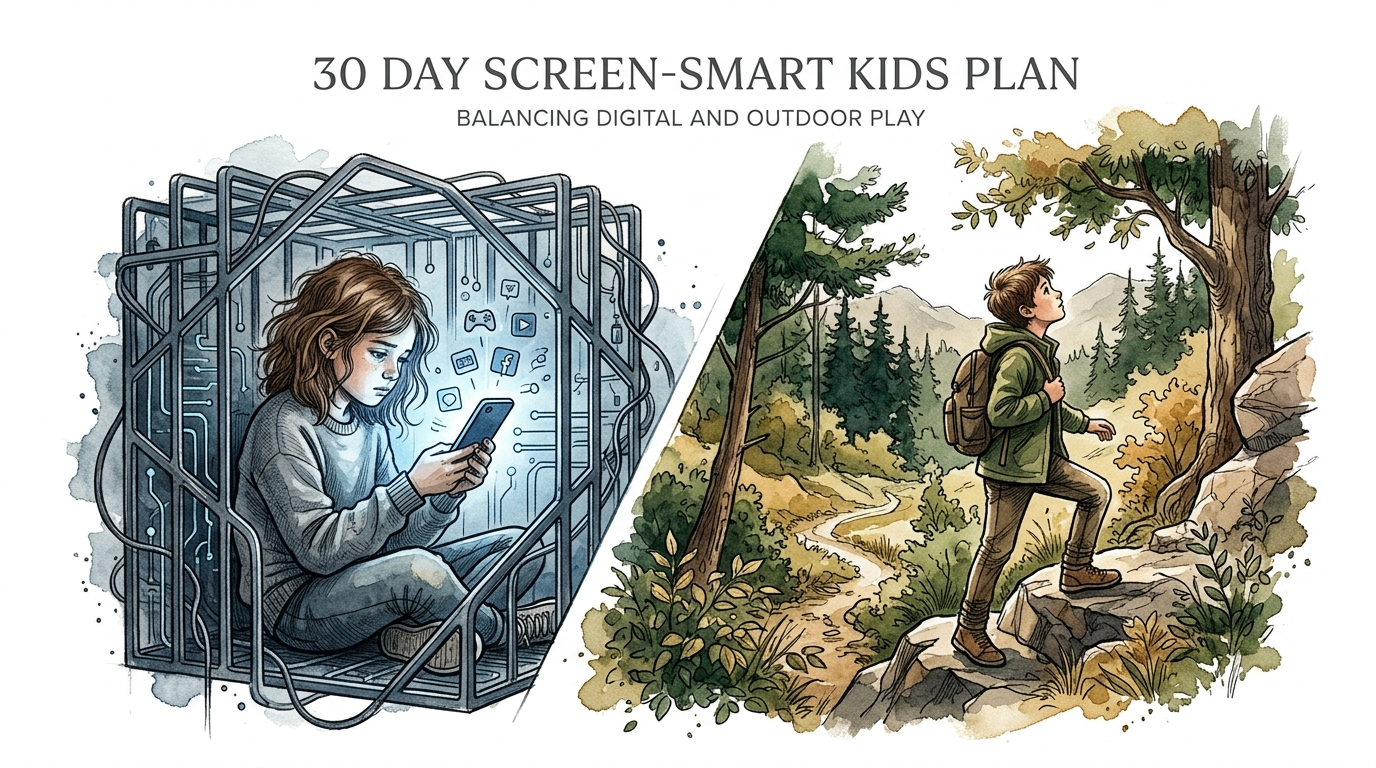
Introduce “Micro-Adventures” every afternoon. These are 20-minute bursts of outdoor activity that require zero travel. It could be a “bug hunt” with a magnifying glass or a “cloud-watching” session. The goal is to prove that the “Wild Freedom” outside is more interesting than the “Digital Cage” inside. Keep these sessions short and high-energy.
Start a “Nature Collection” during this phase. Encourage your child to find three unique items outside every day—a textured rock, a specific leaf, or a bird feather. Bringing the outdoors inside helps bridge the psychological gap. It turns the natural world into a game that rewards observation and curiosity.
Phase 3: Deepening the Wild Connection (Days 15–21)
By the third week, the “Withdrawal Meltdowns” usually subside. The brain is beginning to recalibrate. Now you can introduce longer periods of “Unstructured Play.” This is where the real magic happens. Take your child to a local park or forest and let them lead the way. Do not provide a schedule. Let them climb, dig, and get dirty.
Dirt is a powerful sensory tool. Studies suggest that exposure to certain soil bacteria can actually boost mood and reduce anxiety. Week 3 is about “Getting Messy.” Encourage activities that involve water, mud, or sand. These tactile experiences provide the “deep pressure” and sensory input that screens lack, helping to ground a hyper-stimulated nervous system.
Introduce “Nature Journaling” or “Wild Drawing” during this phase. Instead of taking a photo of a cool tree, ask your child to draw it. This forces the brain to slow down and notice details. It develops the “bottom-up” processing skills that are often neglected during rapid-fire screen use. They are learning to focus their attention voluntarily.
Phase 4: The Sustainable Rhythm (Days 22–30)
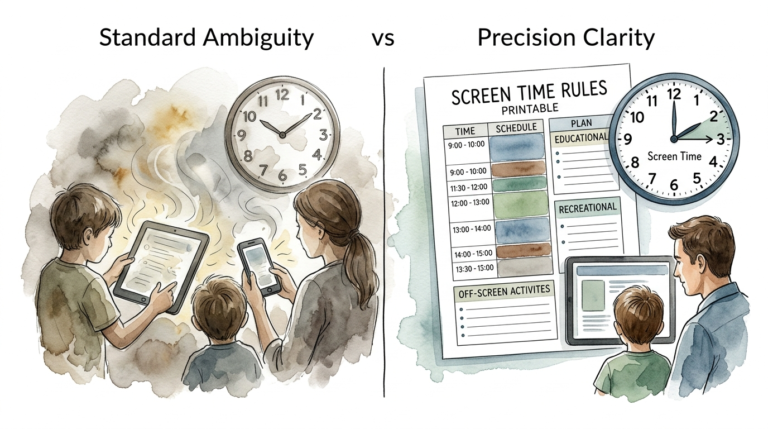
The final week focuses on long-term habit formation. You are shifting the family identity from “tech-dependent” to “nature-integrated.” Create a “Family Media Plan” that outlasts the 30 days. This plan should prioritize “Active Screens” (like video calling grandma) over “Passive Screens” (like binge-watching cartoons).
Celebrate the gains your child has made. Point out their improved sleep, better mood, or the cool things they discovered in the backyard. Positive reinforcement cements the new behavior. They need to see that they are capable of being happy, entertained, and social without a glowing rectangle in their pocket.
Establish a “Weekly Wild Tradition.” This could be a Friday evening campfire or a Sunday morning hike. Having a non-negotiable outdoor appointment ensures that the screen-smart lifestyle sticks. You are no longer “doing a detox”; you are simply living a balanced, outdoor-focused life. The digital cage has been replaced by wild freedom.
Benefits of the Screen-Smart Shift
Transitioning to a screen-smart lifestyle offers measurable improvements in a child’s physical and mental health. The most immediate change is often in sleep quality. Blue light from screens suppresses the production of melatonin, the hormone responsible for sleep-wake cycles. Swapping evening iPad time for outdoor play or reading allows the body to wind down naturally.
Physical health sees a massive boost as well. Outdoor play encourages gross motor skills, coordination, and strength. Running on uneven ground and climbing trees builds “proprioception”—the body’s ability to sense its own position. Screens, by contrast, promote a sedentary lifestyle that is directly linked to rising childhood obesity rates and “tech neck” posture issues.
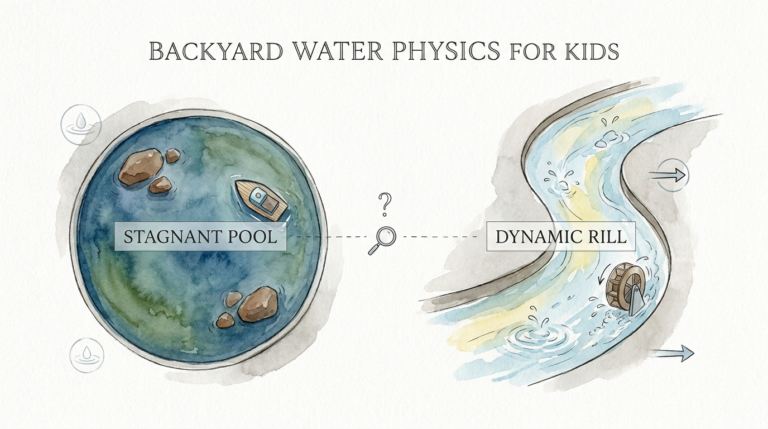
Cognitive development thrives in the “Wild Freedom.” While some apps claim to be educational, they often provide “impoverished” stimulation. Nature provides a “high-definition” sensory environment that requires problem-solving and critical thinking. When a child builds a dam in a creek, they are learning physics, engineering, and persistence in real-time.
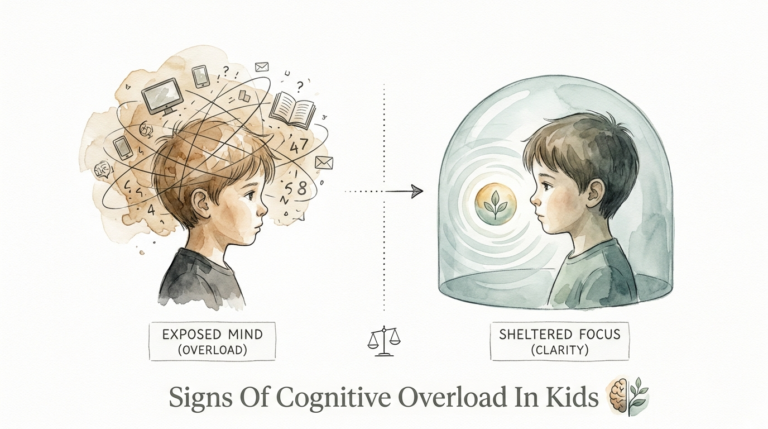
Emotional regulation is perhaps the most significant benefit. Excessive screen time is linked to increased anxiety, irritability, and attention difficulties. Time in nature acts as a “reset button” for the nervous system. The “Attention Restoration Theory” suggests that natural environments allow the brain to recover from the “directed attention fatigue” caused by screens and schoolwork.
Challenges and Common Mistakes
Boredom is the most frequent obstacle parents face. When you remove the high-octane stimulation of a video game, the real world feels “slow” at first. Most parents make the mistake of trying to entertain their child every second. You must allow them to be bored. Boredom is the “creative vacuum” that forces a child to eventually pick up a stick and turn it into a sword.
Tantrums are a form of digital withdrawal. Many apps are designed using “persuasive technology” to keep users hooked. When the screen is removed, the brain experiences a sudden drop in dopamine. This manifests as anger or emotional collapse. Treating these moments with empathy rather than punishment is key. Acknowledge that the transition is hard, but stay firm on the boundary.
Parental consistency is the “Achilles heel” of any screen-smart plan. If you tell your child to go outside while you stay on your phone, they will sense the hypocrisy. Leading by example is non-negotiable. Children mimic what they see. If they see you finding joy in a garden or a sunset, they will eventually find joy in it too.
Using screens to “stop a meltdown” in public is a common convenience trap. While it works in the short term, it teaches the child that a tantrum results in a digital reward. This reinforces the dependency. Having a “nature kit” in your car—full of rocks, magnifying glasses, and simple toys—can provide a tactile distraction that doesn’t involve a screen.
Limitations and Realistic Constraints
Modern life requires some level of digital engagement. School assignments, staying in touch with distant relatives, and basic digital literacy are all essential. The 30-day plan is not about living in a cave; it is about reclaiming balance. Total bans are rarely sustainable and can lead to “closet scrolling” or social isolation for older children.
Weather and environment play a huge role in how you implement this roadmap. Not everyone has a forest in their backyard. Families in extreme climates or dense urban areas must be more creative. Indoor “nature play” with sand tables, plants, and natural light can serve as a substitute when the outdoors is physically inaccessible.
Neurodivergent children may have a different relationship with screens. For some, digital environments provide a predictable, safe space that reduces sensory overwhelm. In these cases, the 30-day plan should be adapted with a specialist. The goal remains balance, but the transition might be slower and more focused on specific sensory-friendly outdoor activities.
Safety concerns in modern neighborhoods often limit “unstructured” outdoor play. If your child cannot play outside alone, this plan requires more “active parenting” time. This can be a significant trade-off for busy parents. Scheduling communal “play dates” at a park can help share the supervision load while still giving the kids the freedom they need.
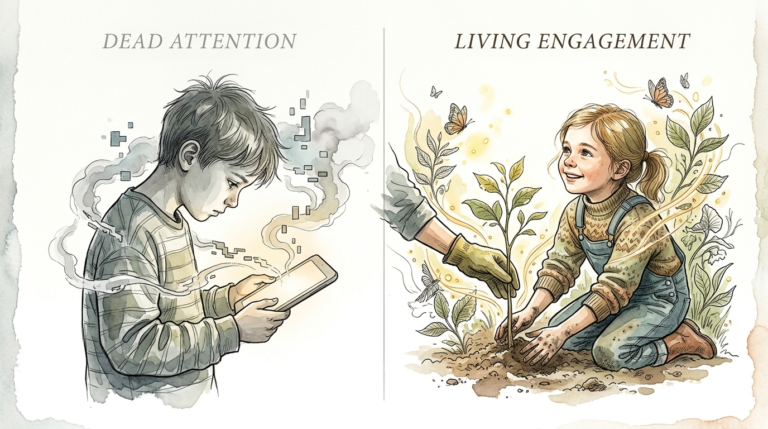
Digital Cage vs. Wild Freedom
Understanding the difference between these two environments helps maintain motivation. Use the table below to compare how each environment impacts a child’s development.
| Factor | The Digital Cage (Screens) | Wild Freedom (Nature) |
|---|---|---|
| Attention Type | Directed/Forced (High fatigue) | Fascinated/Soft (Restorative) |
| Sensory Input | 2D (Visual/Auditory only) | 3D/Multi-sensory (Full body) |
| Dopamine Level | Spiky/Artificial (Addictive) | Steady/Natural (Satiating) |
| Creativity | Reactive (Following a path) | Active (Creating a path) |
| Physical State | Sedentary/Restricted | Dynamic/Mobile |
Practical Tips for Immediate Success
Starting today makes a world of difference. You do not need expensive gear or a national park to begin. Small, tactical shifts in your daily routine will build the momentum needed for the full 30-day reset. Focus on making the physical world more accessible and interesting than the digital one.
- The 20-20-20 Rule: Every 20 minutes of screen use, have your child look at something 20 feet away for 20 seconds. This simple habit preserves vision and breaks the “screen trance.”
- Outdoor “Yes” Spaces: Create an area in your yard or porch where “getting dirty” is allowed. Knowing they won’t get in trouble for a mud pie makes nature play much more inviting.
- Gear Up for Success: Invest in high-quality rain boots and waterproof pants. “There is no such thing as bad weather, only bad clothing.” Being warm and dry makes outdoor exploration much more enjoyable.
- Digital Sunset: Turn off all screens two hours before bedtime. This allows the brain’s natural melatonin to kick in, leading to easier bedtimes and deeper sleep.
- Nature Hacking: Use technology to deepen the connection. Apps that identify stars, birds, or plants can turn a walk into a high-tech scavenger hunt. This is “active” tech use that encourages outdoor movement.
Advanced Considerations for Serious Practitioners
Sustaining this lifestyle requires shifting the social landscape of your child’s life. If all their friends are online, the pull of the screen will always be strong. Building a “Nature Cohort”—a group of like-minded families who value outdoor play—creates a social circle where “being outside” is the norm rather than the exception.
Long-term brain health is the ultimate prize. Emerging research suggests that excessive screen time in early childhood can lead to structural changes in the brain, including a thinning of the cortex in areas related to reasoning and language. Regular exposure to complex natural environments promotes “neuroplasticity”—the brain’s ability to forge new, healthy neural pathways through diverse experiences.
Scaling these principles into adolescence is the next challenge. As children grow, their digital needs change. The goal shift from “limitation” to “self-regulation.” A child who spent their primary years in the “Wild Freedom” is better equipped to recognize the signs of digital burnout in themselves. They have a “home base” in nature to return to when the digital world becomes too loud.
The Forest “Fort” Example
Imagine a 7-year-old child who usually spends Saturday mornings on a tablet. On Day 15 of the plan, the parent takes them to a wooded area and says, “We need to build a shelter that can hold three people.” Initially, the child might complain or seem lost. Without the “Digital Cage” to guide them, they have to use their own mind.
First, they have to find sturdy branches. This requires assessing strength and weight. Then, they must figure out how to lean them against a tree so they don’t fall. This is a lesson in structural engineering. They might spend three hours dragging sticks, getting scratched, and debating with a sibling about where the “door” should be. By the end of the day, they are exhausted, filthy, and incredibly proud.
Compare this to three hours of watching “Fort Building” videos on YouTube. The digital version provides the visual result without the physical effort or the cognitive struggle. The real-world version builds “grit” and “spatial intelligence.” The child goes to sleep that night with a brain that has been truly “fed” by the wild.
Final Thoughts
Reclaiming your child’s attention is the most important project you will ever undertake. The 30-day Screen-Smart Plan is not about perfection; it is about direction. Every minute spent looking at a beetle or climbing a rock is a minute their brain is developing in the way it was meant to. You are trading a fleeting digital distraction for a lifelong connection to the world.
Be patient with the process and with yourself. There will be days when the weather is terrible or your patience is thin, and the screen feels like the only option. Give yourself grace, then head back outside. The “Wild Freedom” is always waiting, and its benefits are cumulative. The more you explore, the more your child’s world expands far beyond the edges of a smartphone.
Start today by taking a five-minute walk together. Don’t take your phone. Just look, listen, and breathe. This is the first step toward a healthier, happier, and more connected family life. Your 30-day journey starts now.
Sources
1 luriechildrens.org | 2 social-media-addict.com | 3 regis.edu | 4 raisekidswhothink.com | 5 westgateresorts.com | 6 mayoclinichealthsystem.org | 7 afterbabel.com | 8 parentingplace.nz | 9 titantoys.co.uk | 10 compasschildcare.com | 11 youtube.com | 12 beaconservices.org.uk | 13 strong4life.com | 14 oasispediatrictherapy.com | 15 nyp.org | 16 aap.org | 17 hellopediatrics.com | 18 parents-together.org | 19 cbwchc.org | 20 mayoclinic.org | 21 nih.gov | 22 nih.gov