screen time rules printable
Arguments end where clear expectations begin. Vague rules lead to constant power struggles. Precision creates peace. Download our screen time printable to set clear boundaries that even a toddler can understand.
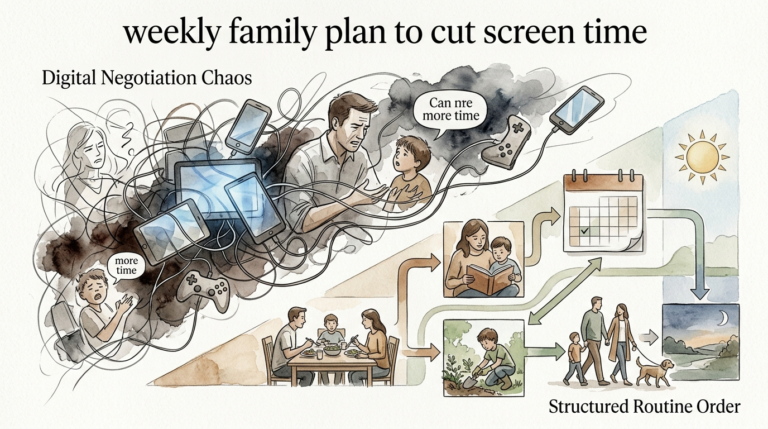
Stop the shouting matches. End the “just five more minutes” negotiations. When rules live in your head, they are open for debate. When rules live on a printed page, they become the law of the house. You are no longer the “mean parent” taking away the tablet. You are simply the facilitator of the agreement.
Managing digital consumption in a world designed to keep us scrolling is a massive challenge. Children lack the prefrontal cortex development to self-regulate. They need your structure to thrive. This guide provides a roadmap for using a screen time rules printable to reclaim your family time and protect your child’s developing brain.
screen time rules printable
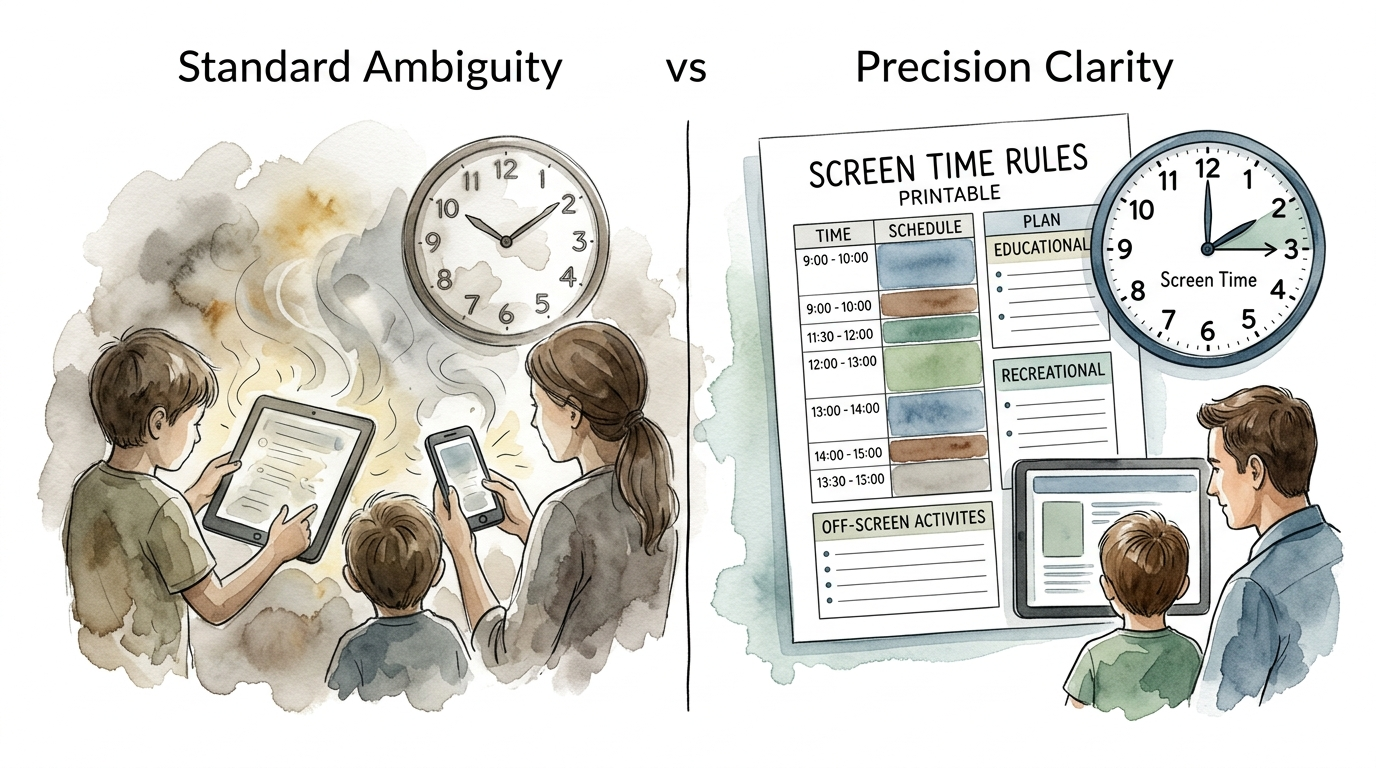
A screen time rules printable is a visual contract between you and your child. It serves as a physical reminder of the boundaries governing digital device use. This tool takes the “Standard Ambiguity” of a parent’s mood and replaces it with “Precision Clarity.” It clearly outlines when screens are allowed, what tasks must be completed first, and the consequences for breaking the rules.
In the real world, these printables appear as checklists, reward charts, or formal “Technology Agreements.” Families use them to manage iPads, gaming consoles, and smartphones. Instead of asking “Can I play?” fifty times a day, a child looks at the printable. If their bed isn’t made or their reading hasn’t been done, the answer is already visible.
Visual aids are powerful because they reduce “decision fatigue” for both parents and kids. Research shows that children as young as 18 months can begin to understand basic routines when supported by visual cues. By moving the rules from a verbal command to a static document, you remove the emotional heat from the transition.
How to Implement a Precision Screen Time System
Setting up a printable system requires a strategy that goes beyond just hanging a piece of paper on the fridge. You must build a framework that fits your family’s unique lifestyle.
Step one involves choosing your system type. The “Earned Time” model treats screens as a currency. Kids complete chores or academic tasks to buy minutes. The “Daily Allotment” model provides a fixed window—for example, one hour after homework—which disappears if not used correctly.
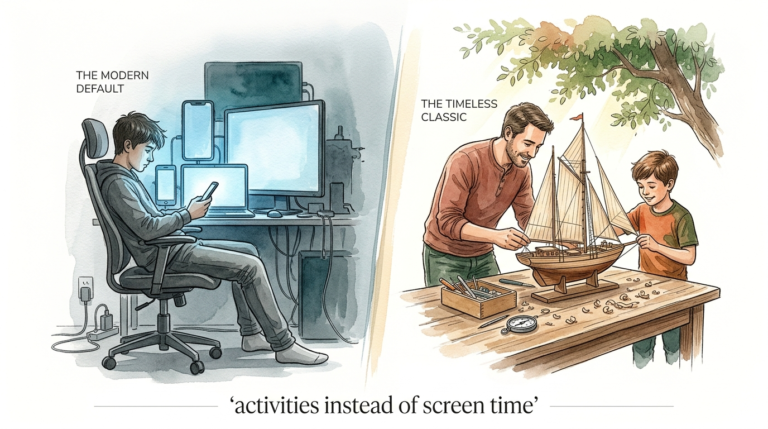
Step two is defining the “Non-Negotiables.” These are the tasks that must happen before any screen turns on. Common requirements include a tidy room, 30 minutes of physical play, and completed schoolwork. Experts suggest that “green time” (outdoor play) should always balance “screen time” to support sensory regulation.
Step three is the “Transition Plan.” The hardest part of screen time is the ending. Your printable should include a protocol for the “Five-Minute Warning.” Use a physical timer that kids can see. This shifts the “deadline” from your voice to an external object, which significantly reduces meltdowns.
The Measurable Benefits of Clear Boundaries
Clarity is a gift to your child’s nervous system. When kids know exactly what to expect, their anxiety levels drop. They no longer feel the need to “hunt” for screen time opportunities because the schedule is predictable.
Physical health sees immediate improvements. Clear rules prevent the “sedentary slide,” where a child sits for four hours straight without moving. By requiring physical activity first, you ensure they hit their daily movement goals. Better sleep is another massive win. Implementing a “no screens 60 minutes before bed” rule allows melatonin production to function correctly, helping kids fall asleep faster and stay asleep longer.
Executive function also gets a boost. When children manage their own “screen tokens” or check off their own lists, they are practicing planning and prioritization. They learn that leisure is a reward for responsibility, a lesson that translates directly to academic and career success later in life.
Challenges and Common Mistakes to Avoid
The most frequent error is “The Consistency Gap.” If you enforce the printable on Monday but ignore it on Friday because you’re tired, the system collapses. Children are expert negotiators; they will exploit any inconsistency. The printable only works if the rules remain the same regardless of your energy level.
Another pitfall is using screens as a “pacifier” during emotional outbursts. If a child is throwing a tantrum and you hand them a phone to quiet them down, you are rewarding the behavior. The printable should stay firm even during high-stress moments. Screens should be a planned part of the day, not an emergency escape hatch.
Avoid the “Set It and Forget It” trap. Your child’s needs change as they grow. A printable designed for a five-year-old will be useless for a ten-year-old. You must revisit and update the agreement every few months to ensure it remains relevant and challenging.
Limitations and Realistic Constraints
No system is perfect, and there are times when the printable may need to take a backseat. During long-haul travel or periods of illness, strict limits can be counterproductive. If a child is stuck in a car for eight hours, “one hour of screen time” might be unrealistic. In these cases, focus on content quality rather than duration.
Neurodivergent children may also require a different approach. A child with ADHD might struggle more with the “stop” signal than a neurotypical peer. For these children, a printable should be paired with more intense sensory transitions, like a heavy-work task or a snack, to help their brain shift gears.
Environmental factors like school requirements can also blur the lines. If a child needs a laptop for three hours of homework, that shouldn’t necessarily count against their “recreational” screen time. You must distinguish between “Active Digital Learning” and “Passive Consumption.”
Standard Ambiguity vs. Precision Clarity
The difference between a failing system and a thriving one often comes down to how specific the rules are.
| Factor | Standard Ambiguity | Precision Clarity |
|---|---|---|
| Rule Definition | “Don’t stay on too long.” | “60 minutes total per day.” |
| Transition | “Put it away now!” | “Timer goes off; device goes in the dock.” |
| Prerequisites | “Did you do your chores?” | “Checklist on the fridge is signed off.” |
| Enforcement | Based on parental mood. | Based on the written agreement. |
Standard Ambiguity breeds resentment because the child feels the rules are “unfair” or “random.” Precision Clarity creates a sense of justice. The child knows exactly how to succeed, which fosters a much healthier relationship with technology.
Practical Tips for Immediate Success
Start small. Don’t create a 20-point checklist on day one. Pick the three most important things—perhaps homework, a tidy room, and 20 minutes of reading—and make those the “Gatekeepers” for screen access.
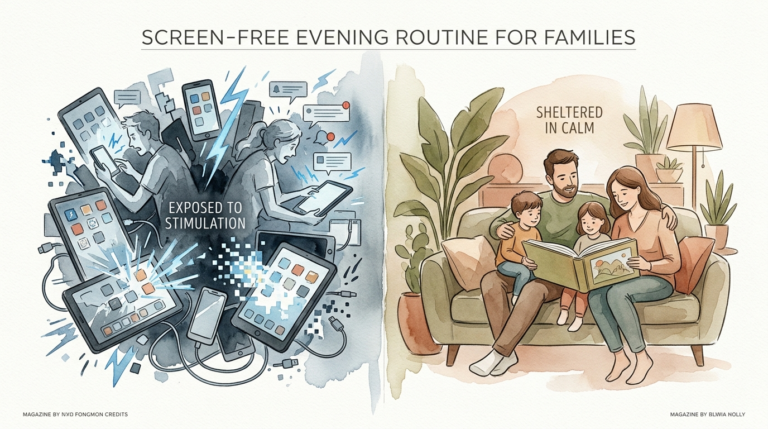
Create “Screen-Free Zones” in the house. The dinner table and bedrooms should be strictly off-limits for devices. Your printable should explicitly list these zones. This prevents the “sneaky” use of devices under the covers at night, which is one of the primary causes of childhood sleep deprivation.
Be the role model. If your printable says “no screens at dinner,” but you are checking emails at the table, the system is dead on arrival. Kids follow what you do, not what you say. Consider creating a “Grown-Up Screen Rule” on the same sheet to show that the whole family is committed to digital health.
Advanced Considerations for Digital Literacy
As kids get older, the conversation must shift from “how many minutes” to “what is the content.” High-quality, interactive screen time—like coding a game or editing a video—is cognitively superior to mindlessly scrolling short-form video apps.
Teach your children about the “Attention Economy.” Explain that apps are designed to be addictive and that the “infinite scroll” is a trick. When they understand *why* it’s hard to stop, they feel more empowered to stick to the printable. This builds long-term digital resilience.
Consider the “Social Component.” For teens, screens are often their primary social outlet. A rigid “one-hour” rule might isolate them from their peers. In the advanced stages, your printable should focus on “Digital Etiquette” and “Safety” rather than just a clock. Use the printable to define what “Kindness Online” looks like.
Example Scenario: The Weekend Routine
Imagine a Saturday morning. In an ambiguous house, the child wakes up, grabs the tablet, and stays on it until the parent gets frustrated and starts yelling at 10:00 AM. A power struggle ensues, and the day starts with anger.
In a Precision Clarity house, the child wakes up and looks at the printable on the fridge. It says: “No screens until: 1. Dressed 2. Breakfast eaten 3. 30 minutes outside.” The child completes the tasks. At 9:30 AM, they show the parent the completed list. The parent sets a timer for 60 minutes. When the timer dings, the child puts the tablet in the charging dock because that was the “Pre-Set Agreement.” No yelling. No stress.
This system works because the “fight” happened during the creation of the printable, not during the heat of the moment. You have outsourced the discipline to the paper.
Final Thoughts
Implementing a screen time rules printable is one of the most effective ways to lower the temperature in your home. It replaces vague expectations with a clear, visual roadmap that empowers your child to succeed. By defining the “what,” “when,” and “how” of digital use, you protect your child’s brain development and your own sanity.
Success doesn’t happen overnight. There will be days when the system falters, and that is okay. The goal is a long-term shift toward intentionality rather than mindless consumption. When you treat technology as a tool to be managed rather than a default state of being, you open up space for the things that matter most: connection, creativity, and play.
Take the first step today. Sit down with your kids, discuss your family values, and put those rules in writing. Precision creates peace, and your family deserves a peaceful home.
Sources
1 mindfulkidsandfamilies.com | 2 heartworkorg.com | 3 nurtureandthriveblog.com | 4 brightpinepsychology.com | 5 bklynlibrary.org | 6 alabamapartnershipforchildren.org | 7 thezoofamily.com | 8 healthunit.org | 9 henryford.com | 10 mayoclinic.org | 11 mayoclinic.org | 12 thepragmaticparent.com