reduce screen time kids
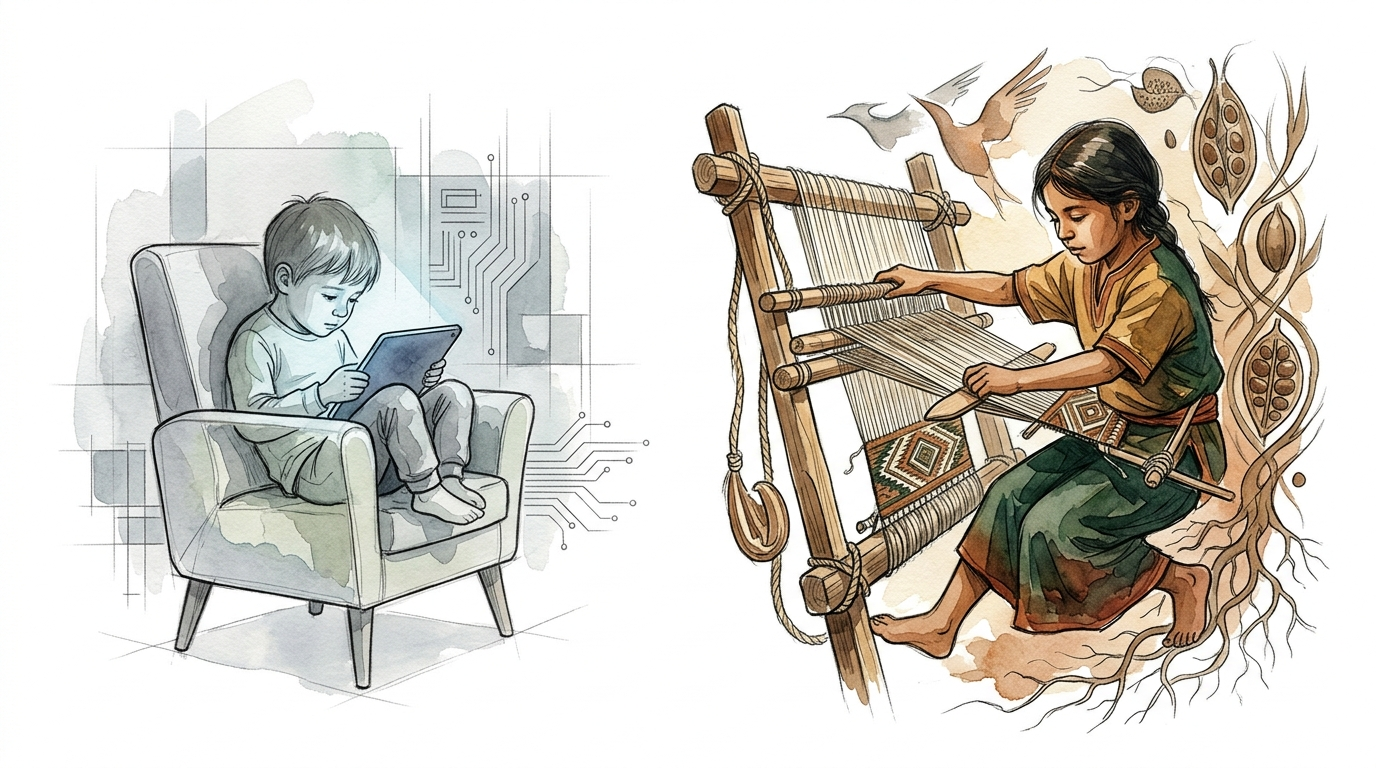
Before screens, kids were apprentices to life. Bring back the ancestral art of helping. Modern screens isolate; ancestral activities integrate. Turn screen time into ‘contribution time’ by involving them in the home.
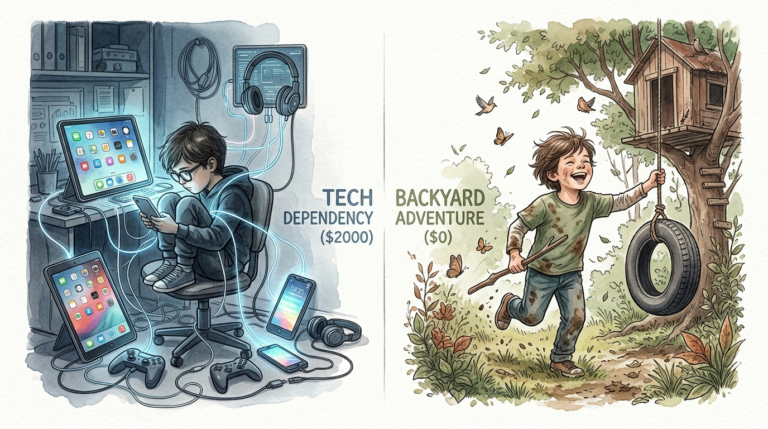
The digital age has fundamentally shifted how children spend their formative years. Instead of watching parents knead bread or fix tools, many children now spend hours observing pixels on a flickering glass rectangle. This shift has created a vacuum of purpose. When children are excluded from the daily rhythms of the household, they seek stimulation elsewhere, usually in the highly addictive loops of digital media.
Reclaiming your child’s attention is not about a constant battle of “no.” It is about inviting them into a more compelling “yes.” This process involves re-establishing the home as a place of mastery rather than just a place of consumption. By treating children as apprentices in the art of living, we provide the stimulation their developing brains crave while reducing the pull of the screen.
reduce screen time kids
Reducing screen time for kids is the practice of replacing passive digital consumption with active physical and social engagement within the home. It is not a simple ban on technology. Instead, it is a deliberate environmental shift that prioritizes real-world contribution over virtual entertainment.
In the modern world, screens often act as a “default babysitter” because they are convenient and effective at keeping children quiet. Recent reports show that nearly 49% of parents rely on screens daily to help manage parenting responsibilities. However, this convenience comes with a trade-off. Children who spend excessive time on devices often miss out on the rich, multi-sensory experiences required for healthy brain development.
The concept of “contribution time” flips the script. Instead of viewing a child’s presence as a distraction to be managed with an iPad, parents view the child as a junior partner in the household. Whether it is sorting laundry, washing vegetables, or organizing a bookshelf, these tasks provide the “heavy work” and cognitive challenges that screens cannot replicate. This approach is used in Montessori education and ancestral cultures worldwide to foster independence and a sense of belonging.
How to Transition from Screens to Contribution
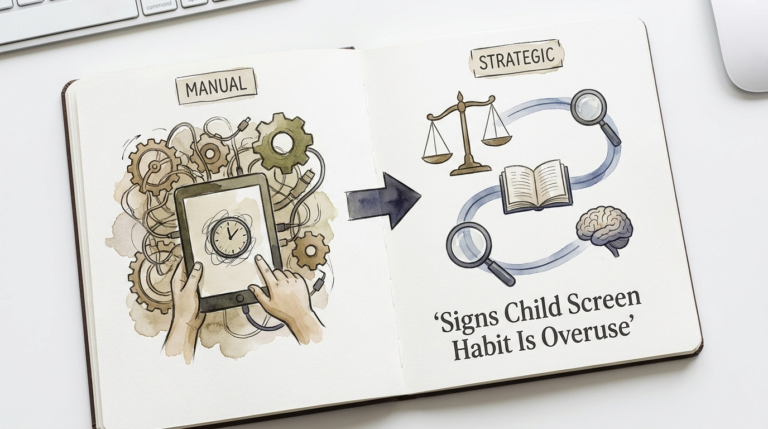
Moving a child from the high-dopamine environment of a screen to the slower pace of household work requires a strategic approach. You cannot simply pull the plug and expect a toddler to start happily scrubbing floors.
First, establish clear “Screen-Free Zones” and times. The dinner table and the hour before bed are non-negotiable areas for digital detox. This creates a predictable rhythm where the child knows screens are not an option.
Second, use the “Model, Mentor, Monitor” system. Start by performing the task yourself while the child watches (Modeling). Then, invite them to help with a small part of it (Mentoring). Finally, allow them to handle the task while you provide light supervision (Monitoring). This progression builds confidence and prevents the frustration that leads back to screen-seeking behavior.
Third, use “Clean Cut” transitions. Transitioning from a tablet to a chore is difficult because the brain is still seeking the digital hit. Break the visual connection with a song or a physical movement before asking them to help. For example, have a “five-minute stretch” after the screen turns off before starting a task.
Fourth, make tools accessible. If a child needs to ask for a cloth every time they want to help, the barrier to entry is too high. Keep child-sized brooms, spray bottles with water, and stools in easy-to-reach places. This “Yes” environment encourages spontaneous contribution.
The Benefits of Household Mastery
The advantages of involving children in the home extend far beyond a cleaner house. Research consistently shows that chores are one of the best predictors of future success.
Cognitive development is a primary benefit. Tasks like setting a table or following a recipe require executive functioning skills, including planning, working memory, and inhibitory control. A study in the Australian Occupational Therapy Journal found that children who participated in family-care chores showed significantly better working memory and mental flexibility. These are the same skills needed for academic success in subjects like math and reading.
Emotional resilience is another measurable win. When a child successfully completes a task, they earn a sense of “mastery.” This is a deep, internal satisfaction that cannot be mimicked by “leveling up” in a video game. It builds a foundation of self-efficacy—the belief that they can handle challenges and contribute value to their community.
Furthermore, chores build empathy. When a child understands the effort required to maintain a home, they become more aware of the labor others perform for them. This shifts their perspective from a self-centered consumer to a community-minded contributor. Data indicates that kids who do chores from a young age (around 3 or 4) are more likely to have better relationships with family and friends in their 20s.
Challenges and Common Mistakes
The biggest challenge in this transition is the “Mess Factor.” Involving a preschooler in baking or gardening will inevitably take longer and create more cleanup for the parent. Many parents give up and hand over the tablet because it is faster to do the work alone. This is a short-term gain that leads to long-term screen dependency.
Avoid the mistake of using chores as a punishment. If “doing the dishes” is the penalty for bad behavior, the child will associate contribution with negativity. The goal is to make the work feel like a privilege—an invitation into the “adult” world.
Another common pitfall is demanding perfection. A four-year-old will not fold towels perfectly. If you immediately refold them in front of the child, you signal that their contribution wasn’t good enough. This kills intrinsic motivation. Accept the “toddler standard” and focus on the effort and the process rather than the result.
Finally, do not expect immediate enthusiasm. Screens are engineered to be more exciting than real life. There will be resistance. Stay consistent. The goal is to rewire the brain’s reward system to appreciate slower, more meaningful achievements.
Limitations and Practical Boundaries
This method requires a balance of safety and age-appropriateness. Not every ancestral activity is safe for a modern child. Tasks involving sharp knives, high heat, or heavy machinery must be strictly supervised and introduced only when the child has the motor skills and maturity to handle them.
Environmental limitations also play a role. A family living in a small city apartment has different contribution opportunities than a family on a farm. You must adapt the “ancestral” concept to your specific setting. In a small space, contribution might look like organizing a digital photo album or watering windowsill herbs.
Finally, recognize that screens are not the enemy; they are a tool. There are times when a screen is a valid resource—for education, long-distance family calls, or specific entertainment. The goal is not a total ban but an “integrated” approach where screens do not displace the essential work of growing up.
Comparing the Digital Consumer to the Life Apprentice
| Feature | Modern Digital Isolation | Ancestral Household Mastery |
|---|---|---|
| Core Activity | Passive consumption of curated content. | Active participation in essential life tasks. |
| Brain Impact | Potential thinning of the frontal cortex and lower cognitive scores. | Strengthened white matter and improved executive function. |
| Social Dynamic | Isolated; child is “occupied” so parents can work. | Integrated; child and parent work side-by-side. |
| Dopamine Source | Instant gratification from loops and likes. | Delayed gratification from completing real-world tasks. |
| Long-term Skill | Digital literacy (often limited to app usage). | Self-reliance, work ethic, and household management. |
Practical Tips for Immediate Application
Start small to build momentum. Pick one task that happens daily—like unloading the dishwasher or feeding a pet—and make it “their” job. Provide the necessary support but let them own the outcome.
Use the “Ten-Minute Transition” rule. If you see your child is deep in a screen, do not yell from the other room. Walk over, sit with them for a minute, and then announce that in ten minutes, the family is starting a “work block.” This reduces the shock to the nervous system.
Gamify the boring parts. Turn laundry sorting into a race or a matching game. Use music to signal “Contribution Time.” A specific upbeat playlist can anchor the habit and make the work feel less like a burden.
Include your child in the “planning” phase. Ask them which chores they would like to take on this week. Giving them a choice increases their sense of autonomy and makes them more likely to follow through without nagging.
Advanced Considerations for the Serious Practitioner
For those looking to deepen this practice, focus on the “Apprentice Mindset.” This involves teaching the “why” behind the “how.” When you are cooking, do not just ask for an onion; explain why the onion needs to be diced finely for this specific sauce. This turns a chore into a lesson in chemistry, logic, and culture.
Consider the “Analog Childhood Movement” principles. This movement advocates for stocking the environment with high-quality, open-ended materials. Instead of battery-operated toys that “do” things for the child, provide wood, clay, fabric, and real tools. When the environment is rich with possibilities for creation, the lure of the screen naturally fades.
Monitor your own screen usage. Children are highly attuned to parental behavior. If you are constantly on your phone while asking them to help with chores, the message is inconsistent. Modeling a “presence-first” lifestyle is the most powerful way to reduce screen time for kids.
Real-World Examples of Household Integration
Take the scenario of a five-year-old child and Sunday meal prep. Instead of putting them in front of a movie so you can cook, give them a dull nylon knife and a pile of mushrooms or strawberries. They spend 30 minutes focused on the task, practicing fine motor skills and hand-eye coordination. They feel proud of the “salad” they helped create. The movie is forgotten.
In another example, a ten-year-old might be responsible for their own laundry. This involves sorting, washing, drying, and folding. While it seems like a chore, it is actually a lesson in systems management and personal accountability. They learn that if they don’t do the work, they don’t have clean clothes. This natural consequence is a far more effective teacher than any screen-based educational game.
Finally, consider the “Garden Project.” Even a few pots on a balcony require watering, pruning, and harvesting. A child who is responsible for the life of a plant develops a connection to the natural world. They begin to notice the changing seasons and the slow pace of growth, which serves as a powerful antidote to the “instant” nature of digital life.
Final Thoughts
Reducing screen time is not just about taking something away; it is about giving something back. It is about returning the child to their rightful place as a vital, contributing member of the family unit. This shift from isolation to integration requires patience and a willingness to embrace the messiness of real life.
The rewards are profound. By choosing contribution over consumption, you are building a child’s brain, character, and future success. You are replacing the empty calories of digital entertainment with the nourishing work of life mastery.
Encourage your children to experiment with new skills. Let them fail, let them make a mess, and then let them help clean it up. In doing so, you are not just managing their screen time; you are raising an adult who is capable, confident, and deeply connected to the world around them.
Sources
1 ifstudies.org | 2 villagemontessori.org | 3 brainbalancecenters.com | 4 uhhospitals.org | 5 godforkidsapp.com | 6 ladderofsuccessaba.com | 7 neatlings.com | 8 screenstrong.org | 9 starkravingdadblog.com | 10 junomagazine.com | 11 luriechildrens.org | 12 harvard.edu | 13 naitreetgrandir.com | 14 raisingsmiles.co.uk | 15 connectedparenting.com.au | 16 cornell.edu | 17 psychologytoday.com | 18 raisingchildren.net.au | 19 parentingnow.ca | 20 nd.edu | 21 letgrow.org | 22 nih.gov | 23 modernparentingsolutions.org | 24 cincinnatichildrens.org