educational activities for kids easy
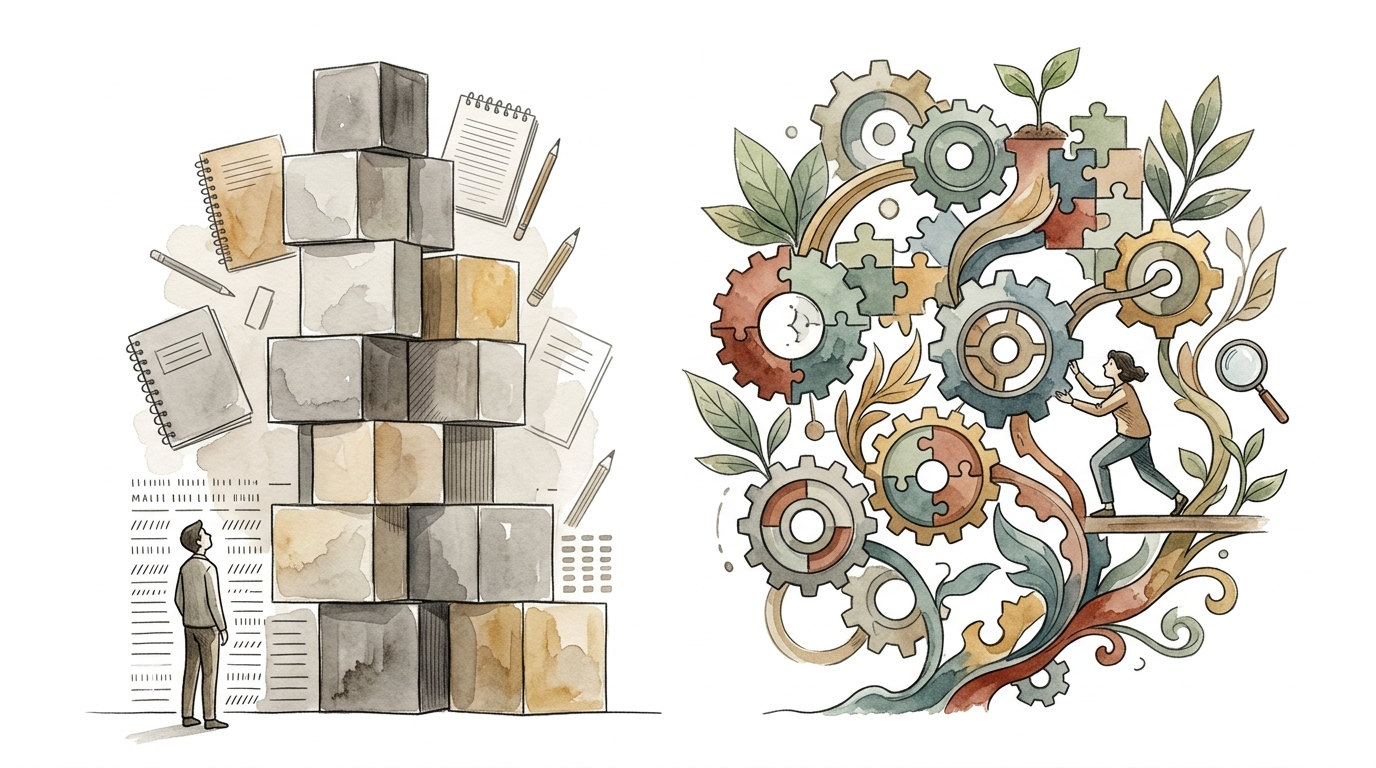
Working harder doesn’t mean learning more. Work smarter by making the lesson the game. Education shouldn’t feel like a chore list. These strategic activities turn your kitchen and backyard into a lab where learning happens by accident.
Traditional classrooms often rely on memorizing facts. While that has its place, true understanding comes from seeing how the world actually functions. Hands-on exploration creates mental anchors that last a lifetime. You don’t just tell a child about chemical reactions; you let them see the fizz and feel the cold of an endothermic process.
This approach transforms parents into facilitators and kids into explorers. It removes the pressure of the “right answer” and replaces it with the thrill of discovery. When learning is incidental to fun, children develop a natural curiosity that fuels academic success without the burnout of traditional homework drills.
educational activities for kids easy
Educational activities for kids easy are low-prep, high-engagement experiences designed to teach core concepts through play. These activities focus on using common household items to demonstrate complex ideas in science, technology, engineering, and math (STEM). Instead of requiring expensive kits or specialized knowledge, they rely on everyday items like baking soda, vinegar, leaves, and water.
These activities exist to bridge the gap between abstract theory and physical reality. In the real world, engineers use these same principles to build bridges and chemists use them to develop medicines. By starting small in a kitchen or backyard, children build a foundational intuition for how the physical world operates. They learn that science isn’t a book; it is a process of asking “why” and “how.”
Common examples include making homemade butter to understand physical changes or building a “bug hotel” to study local ecosystems. These projects are used in homeschooling environments, after-school enrichment, and simply as a way to keep curious minds active during the summer. The goal is always the same: make the complex simple through direct interaction.
How to Transform Your Home into a Lab
Setting up a home learning environment requires more mindset than equipment. Start by identifying the learning potential in your daily routine. Every time you boil water, bake a cake, or prune a bush, a lesson is waiting to happen. The key is to slow down and invite the child into the process as a co-investigator.
Begin with simple kitchen chemistry. One of the most effective ways to teach chemical reactions is the classic baking soda and vinegar experiment. To level this up, use a plastic bottle and a balloon. Pour vinegar into the bottle and put baking soda inside the balloon. When you tip the balloon up, the resulting carbon dioxide gas inflates the balloon, providing a visual representation of gas expansion.
Outdoor exploration offers a different set of lessons focused on biology and physics. A shadow tracking station is a perfect example. Place a stick in the ground on a sunny day and have the child mark the end of the shadow every hour. This simple setup teaches the Earth’s rotation and the concept of time without a single worksheet. It turns a stationary object into a dynamic clock.
Engineering challenges can happen right on the living room floor. Give a child a stack of index cards and some masking tape. Challenge them to build a tower that can support a stuffed animal. This introduces structural integrity, load distribution, and the trial-and-error nature of engineering. If it falls, they haven’t failed; they’ve gathered data for the next build.
Benefits of Strategic Experiential Learning
Direct engagement with materials improves long-term retention. When a child physically manipulates objects to solve a problem, multiple areas of the brain activate simultaneously. This creates a “richer” memory compared to simply hearing a lecture or reading a paragraph. The tactile experience of kneading dough, for instance, reinforces the concept of gluten development and chemical leavening far better than a textbook diagram.
Experiential learning also fosters critical thinking and resilience. Many of these activities are designed to have unexpected outcomes. If a paper boat sinks, the child must analyze why—was it the weight, the material, or the shape? This analytical process is the core of the scientific method. It teaches children that “mistakes” are actually vital pieces of information.
Communication and social skills also see a significant boost. When parents and children work together on a project, they must negotiate roles and explain their reasoning. This collaborative environment mimics real-world professional settings. It encourages children to articulate their thoughts clearly and listen to alternative viewpoints to reach a common goal.
Challenges and Common Mistakes
The most frequent pitfall is over-complicating the activity. Many parents feel they need to buy expensive STEM kits to provide a “real” education. In reality, the best lessons often come from the simplest materials. A complex kit with too many instructions can actually stifle a child’s natural urge to experiment and diverge from the plan.
Managing the “mess factor” is another significant hurdle. Educational activities for kids easy can get dirty. Fear of a messy kitchen or a muddy backyard often leads parents to hover or over-regulate the play. This anxiety can transfer to the child, making them hesitant to explore. Setting clear boundaries—like using a tray or moving the experiment outside—is a better strategy than constant intervention.
Another mistake is focusing too much on the “right” result. If a kid wants to see what happens when they add pepper to their baking soda volcano, let them. The goal is the process of inquiry, not a picture-perfect replica of a Pinterest project. When you insist on a specific outcome, you turn a discovery session back into a chore list.
Limitations and Realistic Constraints
Experiential learning is powerful, but it has boundaries. Some abstract concepts, like historical timelines or advanced theoretical mathematics, are difficult to teach through physical activity alone. At a certain point, children do need to engage with symbolic language and abstract thought to progress. These activities should be viewed as a supplement to, not a total replacement for, traditional study.
Space and resources can also be a constraint. Not every family has access to a backyard or a large kitchen. However, many activities can be scaled down. A “nature walk” can happen on a city sidewalk looking at cracks in the pavement, and a “chemistry lab” can fit inside a single plastic bin. Recognizing these environmental limits allows for more creative adaptations of the lessons.
Safety is the ultimate boundary. Activities involving heat, sharp tools, or certain chemicals require constant adult supervision. It is vital to match the activity to the child’s developmental stage. A preschooler might explore water density with grapes and salt, while an older child might tackle a more complex project involving a magnifying glass and solar heat.
Rote Learning vs. Strategic Experiential Learning
Understanding the difference between these two approaches helps parents balance their child’s education. Rote learning focuses on speed and accuracy of recall. Strategic experiential learning focuses on depth of understanding and the ability to apply knowledge in new situations. Both have value, but they serve different purposes in the developmental journey.
| Feature | Manual Rote Learning | Strategic Experiential Learning |
|---|---|---|
| Primary Goal | Memorization and fast recall of facts. | Deep understanding and practical application. |
| Student Role | Passive receiver of information. | Active investigator and problem solver. |
| Retention | Short-term; often forgotten after testing. | Long-term; built on neural “hooks.” |
| Feedback | Right or wrong answers based on a key. | Natural consequences and observable data. |
| Cost | Low (Books, worksheets, flashcards). | Low to Moderate (Household items, nature). |
Practical Tips for Success
- Ask Open-Ended Questions: Instead of asking “What color is this?” ask “What do you think will happen if we mix these?” This encourages the child to form a hypothesis.
- Follow Their Lead: If they get distracted by a beetle during a leaf hunt, pivot the lesson to entomology. The most effective learning happens when a child is already curious.
- Keep a “Lab Notebook”: Encourage kids to draw what they see. This introduces the habit of documentation and observation without the pressure of formal writing.
- Prepare for the Mess: Use old towels, plastic trays, or simply head to the backyard. Knowing that cleanup is handled allows you to relax and enjoy the process.
- Narrate the Action: Use descriptive words like “viscous,” “opaque,” or “reaction.” This builds their vocabulary in a meaningful context.
Advanced Considerations for Serious Practitioners
For those looking to deepen the experience, start introducing the formal Scientific Method. This involves more than just “doing” the experiment; it involves controlling variables. If you are growing crystals with sugar and water, ask the child what happens if we use hot water versus cold water. By changing only one factor at a time, you teach the fundamental logic of modern science.
Scaling these activities for older children often involves adding an engineering or mathematical component. A younger child might enjoy making “oobleck” (cornstarch and water), but an older child can be tasked with calculating the exact ratio needed to create a substance that they can run across without sinking. This transition from “play” to “precision” marks the growth of a serious student.
Environmental variables also become more important at advanced levels. This might involve tracking the weather and soil quality for a backyard garden or using a digital thermometer to map “hot spots” in a kitchen. These small adjustments move the activity from a simple distraction to a rigorous data-gathering exercise that mimics professional field work.
Examples in Action
Scenario 1: The Kitchen Emulsion. A child is struggling to understand how soap works. Instead of explaining it, have them fill a jar with water and add a layer of oil. They will see the two don’t mix. Then, add a drop of dish soap and shake it. The soap breaks the oil into tiny droplets that mix with the water. You have just demonstrated an emulsion and the molecular properties of surfactants using items from the pantry.
Scenario 2: The Backyard Solar Oven. To teach heat transfer and renewable energy, use a pizza box, aluminum foil, and plastic wrap. Line the box with foil to reflect sunlight and seal the top with plastic to trap heat. Placing a marshmallow inside on a hot day will show how solar energy can be concentrated to do work. This provides a tangible example of radiation and the greenhouse effect.
Scenario 3: The Index Card Bridge. Challenge a child to build a bridge between two chairs using only paper. Initially, a flat sheet will collapse. However, if they fold the paper into an accordion shape (corrugation), it becomes significantly stronger. This lesson in structural geometry explains why cardboard is made the way it is and how simple shapes can carry massive loads.
Final Thoughts
Educational activities for kids easy aren’t just about filling time or keeping children busy. They are about building a mindset of curiosity and confidence. By turning your home into a laboratory, you provide a space where “I don’t know” is the beginning of an adventure rather than a dead end. This method of learning sticks because it is lived, not just read.
The beauty of this approach is its accessibility. You don’t need a degree in physics or a closet full of equipment. You just need a willingness to explore alongside your child and the patience to let them lead. These small moments of discovery build the foundation for a lifetime of independent thinking and problem-solving.
As you move forward, look for opportunities to link these activities to the wider world. A kitchen experiment with yeast can lead to a discussion about biology and fermentation in the food industry. A backyard shadow clock can spark an interest in astronomy or ancient history. The world is full of lessons waiting to be unlocked—all you have to do is make the first move.
Sources
1 sandiego.edu | 2 reddit.com | 3 jbcnschool.edu.in | 4 simplek12.com | 5 sciencekiddo.com | 6 ucmas-usa.com | 7 chitti.app | 8 organicvalley.coop | 9 familius.com | 10 baketivity.com