Best Open Ended Toys For Ipad Reset
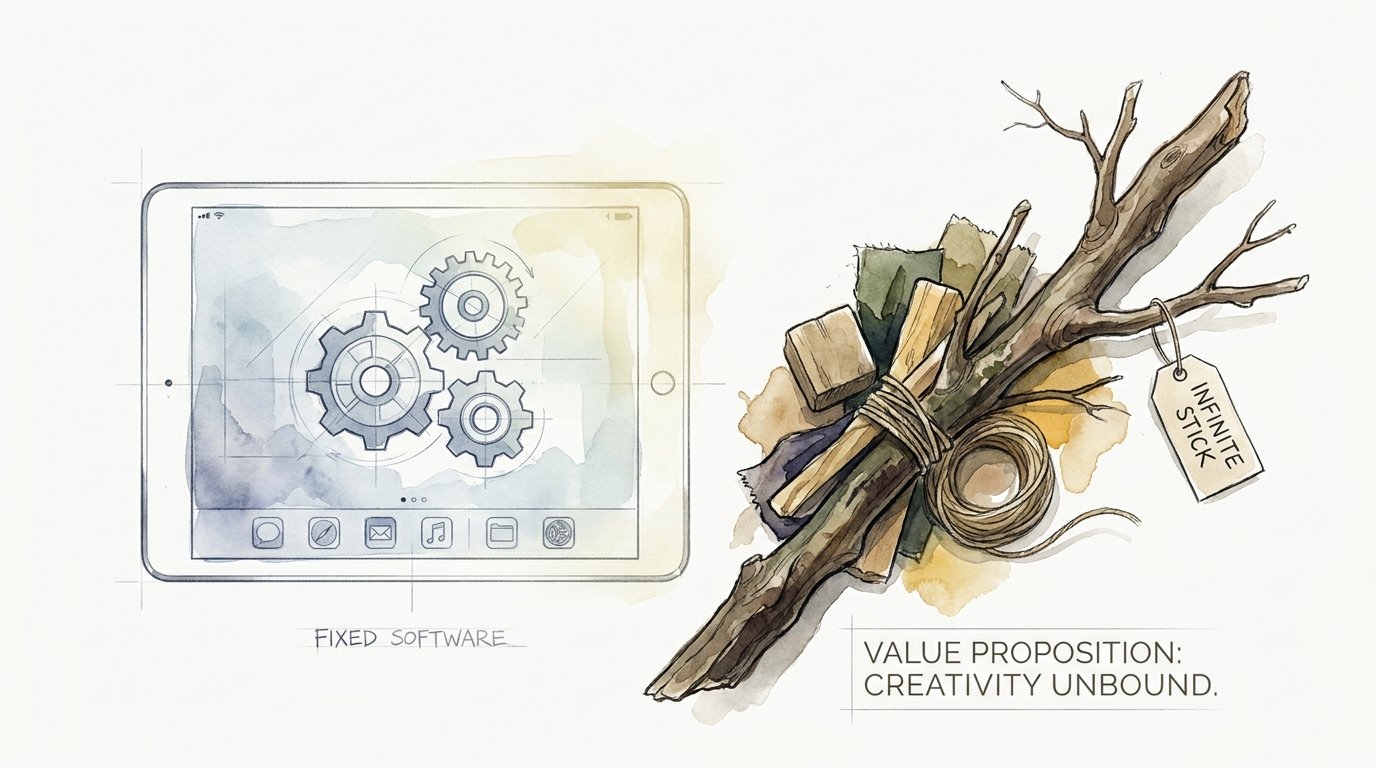
The app promised a million features but only one outcome; the stick has zero features and a thousand possibilities. Apps are ‘closed’ systems—the outcome is already decided by a programmer. But the 7-day reset reminds us that the best toys are ‘open.’ We traded the $800 tablet for a $0 cardboard box and a stick, and watched our child’s imagination finally come back to life.

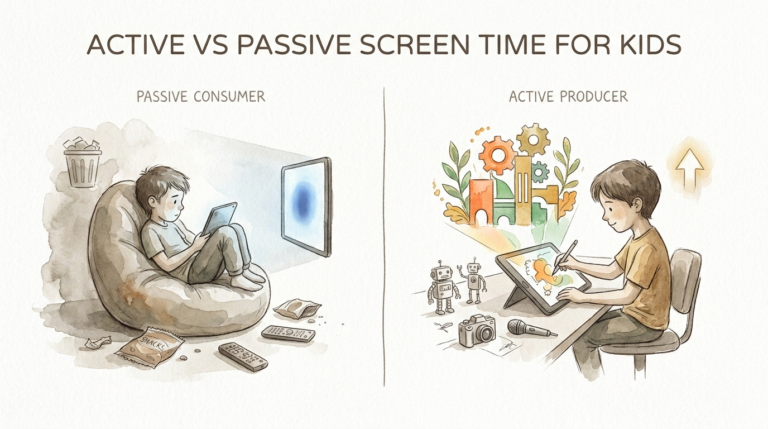
If you have ever watched your child’s face go slack in the blue light of a tablet, you know that hollow feeling. It is the realization that the device is doing the “work” of play while the child merely consumes. We call it an iPad reset not because the technology is broken, but because the child’s natural curiosity needs a reboot.
By moving away from pre-programmed digital loops, we give children back the gift of boredom. It is in that quiet space that they discover they are the architects of their own fun. This guide is about reclaiming that space through the power of open-ended play.
Best Open Ended Toys For Ipad Reset
Open-ended toys are objects that do not have a single “right” way to be used. They are the antithesis of an app where you click a button to see a specific animation. Instead, these toys require the child to supply the power, the sound effects, and the narrative.
Think of a set of plain wooden blocks. One day they are a castle, the next they are a racetrack, and the day after that they are a farm for plastic cows. This is the essence of “loose parts” play. It is where a child uses materials to tinker, experiment, and build.
In a world dominated by “Fixed Software,” these toys represent the “Infinite Stick.” They exist in every culture and every era because they tap into the fundamental human need to create. When you introduce these during a screen reset, you are giving your child the tools to build their own entertainment.
Common examples of open-ended toys include:
- Magnetic Tiles: These allow for 3D construction that defies gravity, helping kids understand balance and geometry.
- Play Silks: A piece of blue fabric is a river, a cape, a veil, or a roof for a fort.
- Wooden Animals: Unlike digital characters with set voices, these animals sound exactly how the child imagines.
- Loose Parts: Acorns, stones, bottle caps, and buttons that can be sorted, counted, or used as “food” in a pretend kitchen.
These toys matter because they grow with the child. A toddler might just stack blocks, but a seven-year-old will build a complex engineering marvel. They never become obsolete because their “software” is the child’s own mind.
How the 7-Day Screen Reset Works
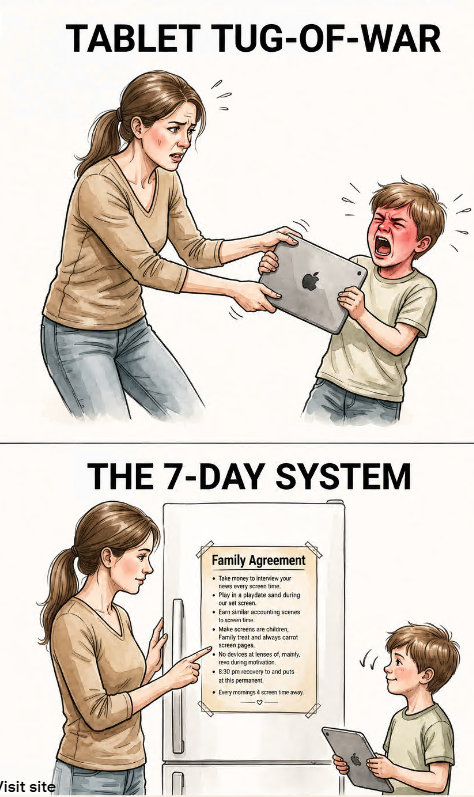
A screen reset is a structured period, usually one week, where digital devices are removed to allow the brain’s dopamine receptors to recalibrate. It is not a punishment, but a restorative process.
Day 1: Awareness and Preparation.
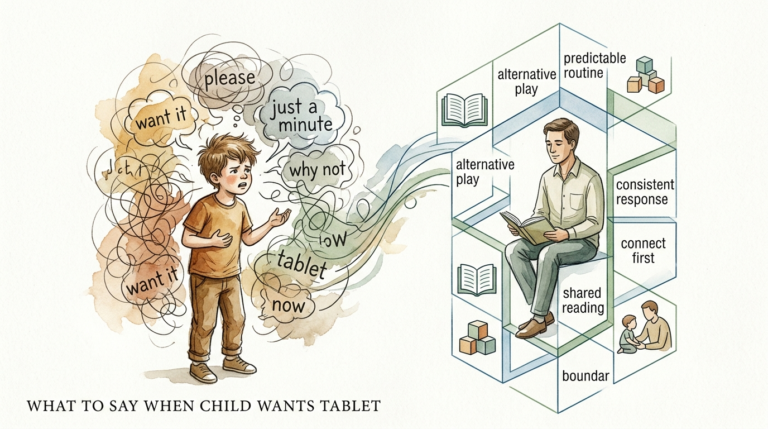
Start with a family meeting. Explain that the “brain needs a vacation from screens.” Remove the tablets, hide the remotes, and move chargers out of sight. This removes the visual trigger that causes kids to ask for devices.
Day 2 and 3: The “Whining Wall.”
These are the hardest days. Your child will claim they are “bored” or “have nothing to do.” This is actually a sign the reset is working. Boredom is the precursor to creativity. Resist the urge to entertain them; let them sit with the discomfort until they eventually look toward their toy bin.
Day 4: The Pivot to Open Play.
By day four, the initial irritability usually fades. This is when you introduce a “hero” open-ended toy like a large cardboard box or a sensory bin filled with rice and hidden treasures. You will notice them playing for longer stretches without asking for help.
Day 5 and 6: Deep Focus.
You may see “flow state” play. This is when a child becomes so engrossed in their building or role-playing that they lose track of time. This type of focus is rarely achieved on a screen, where rapid-fire scene changes prevent deep immersion.
Day 7: New Boundaries.
On the final day, you decide how to reintroduce technology. Many families find they don’t want to go back to the old ways. They set “No-Screen Zones” (like bedrooms and the dinner table) and prioritize “Infinite Stick” play over “Fixed Software” consumption.
Benefits of the Infinite Stick Approach
The move to open-ended play offers measurable improvements in a child’s development. Because the child is the one making the decisions, their brain is firing in ways that passive consumption cannot replicate.
Executive Function Development.
When a child builds a tower with magnetic tiles and it collapses, they have to problem-solve. They have to regulate their frustration, plan a new strategy, and try again. This strengthens the prefrontal cortex, the part of the brain responsible for impulse control and planning.
Spatial Reasoning and Physics.
Handling physical objects teaches kids about gravity, weight, and friction. They learn that a heavy block can’t sit on a flimsy paper base. These are the foundations of STEM education, learned through the hands rather than a screen.
Emotional Regulation.
Screens provide instant gratification. If a game is too hard, a child can just close it and open another. Physical play requires persistence. Overcoming a “building” challenge provides a sense of mastery and self-confidence that a digital high score cannot match.
Language and Storytelling.
In open-ended play, the child provides the dialogue. This leads to a much richer vocabulary than simply repeating catchphrases from a cartoon. They are learning to structure a narrative, assign roles, and negotiate with playmates.
Challenges and Common Mistakes
The transition from high-stimulation screens to low-stimulation toys is not always smooth. Parents often make mistakes that can derail the reset.
Mistake 1: Being the “Entertainment Director.”
Parents often feel guilty when their kids are bored, so they try to organize every minute of the day. This defeats the purpose. The goal is for the child to find their own path. If you provide the ideas, they are still “consuming” your creativity instead of their own.
Mistake 2: Keeping the Mess Too Tidy.
Open-ended play is messy. It involves “loose parts” scattered across the floor and half-finished forts in the living room. If you insist on immediate cleanup, you interrupt the “work” of play. Try to leave their creations up for a few days to encourage ongoing story arcs.
Mistake 3: Buying Too Many Toys.
The “Infinite Stick” philosophy doesn’t mean you need a mountain of wooden toys. In fact, too many choices can lead to “decision paralysis.” A few high-quality, versatile items are much better than a toy box overflowing with plastic gadgets that only do one thing.
Mistake 4: Not Modeling the Behavior.
If you tell your child to play with blocks while you scroll on your phone, they will feel the injustice. A successful reset requires the adults to put their phones away too. Show them that you can enjoy a book or a craft without a digital crutch.
Limitations and Trade-offs
While open-ended play is the gold standard for development, it isn’t a magical cure for every behavioral issue. There are practical boundaries to consider.
Environmental Safety.
Loose parts play often involves small items. For toddlers who still put things in their mouths, “open-ended” might mean large wooden rings or scarves rather than marbles or small stones. Supervision is always necessary during the “tinkering” phase.
Parental Fatigue.
Let’s be honest: screens are a convenient babysitter. Taking them away means you will be more involved, especially in the first few days of the reset. It requires a significant upfront investment of energy before the child reaches the stage of independent play.
Space Constraints.
Open play takes up physical space. If you live in a small apartment, building a giant cardboard castle might not be feasible. In these cases, you have to be more creative with “vertical” play or outdoor excursions to parks where “Infinite Sticks” are found in nature.
Comparison: Fixed Software vs. Infinite Stick
To understand why the reset works, it helps to look at how these two systems interact with the child’s brain.
| Feature | Fixed Software (Apps/Games) | Infinite Stick (Open-Ended Play) |
|---|---|---|
| Outcome | Predetermined by a developer. | Determined by the child’s imagination. |
| Pace | Fast, high-stimulation, dopamine-driven. | Self-paced, calm, satisfaction-driven. |
| Skill Level | Usually fixed to a specific age/level. | Adapts to any age or developmental stage. |
| Attention | Captures and drains attention. | Builds and strengthens focus. |
| Longevity | Becomes boring once “beaten.” | Can be used for years in new ways. |
Focusing on the “Infinite Stick” side of this table is what allows the brain to rebuild its capacity for sustained attention and creative thinking.
Practical Tips for a Successful Reset
If you are ready to start your own iPad reset, follow these best practices to ensure the new habits stick.
- Implement Toy Rotation: Don’t leave every toy out at once. Keep 75% of them in a closet and swap them out every two weeks. This makes “old” toys feel new again.
- Create a “Yes Space”: Designate a corner of the house where the child can be as messy and creative as they want without hearing “no.”
- Provide “Invitations to Play”: Instead of telling them to play, set out a few items in an interesting way—like a row of blocks and a few toy cars—and walk away.
- Use Visual Timers: If you do decide to allow limited screen time after the reset, use a physical timer so the child can see exactly how much time is left. This reduces the “transition shock” when the screen goes off.
- Focus on Raw Materials: Sometimes the best toys aren’t toys at all. Masking tape, cardboard, and old clothes for dress-up are more engaging than anything bought at a big-box store.
Advanced Considerations: Loose Parts Theory
For those looking to take their play environment to the next level, understanding “Loose Parts Theory” is essential. Developed by architect Simon Nicholson in the 1970s, it suggests that the richness of an environment is directly proportional to the number of variables in it.
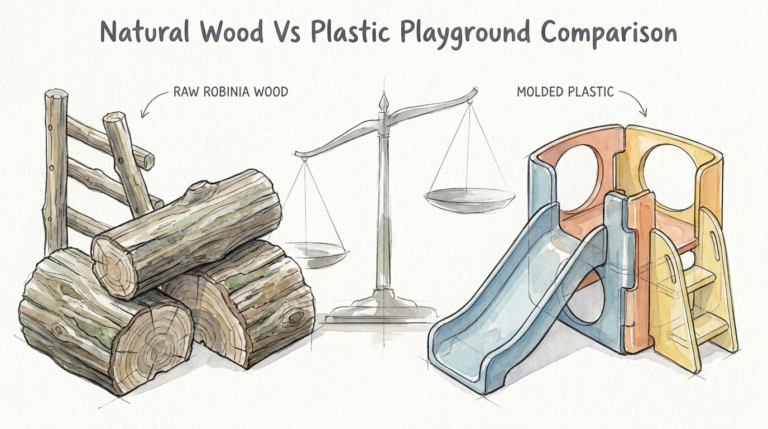
A playground with a fixed slide has one variable: the slide. A forest floor has a million variables: sticks, leaves, mud, stones, and bugs. In an indoor setting, you can replicate this by providing “unit blocks” and “loose parts” like glass gems or wooden spools.
Serious practitioners of this method observe that children don’t just “play”—they “work.” They are testing hypotheses about how the world functions. By providing materials that have no specific function, you allow them to explore the properties of the physical world without the “correct” answers found in educational software.
Example Scenarios: The Power of the Box
Consider the classic example of a child receiving a large appliance box. Initially, the parent sees trash. The child, however, sees a submarine.
Scenario A: The Digital Submarine.
The child plays a submarine game on a tablet. They tap a button to fire a torpedo. The animation plays. They are “learning” how to follow instructions and react to visual cues. The experience ends when the battery dies or the level is finished.
Scenario B: The Cardboard Submarine.
The child gets inside the box. They use a marker to draw buttons on the wall. They find a stick to use as a periscope. They have to imagine the sound of the engine and the sight of the fish outside. They involve a sibling to be the co-captain.
In Scenario B, the child is practicing executive function, social negotiation, artistic expression, and motor skills. This is the “thousand possibilities” of the stick in action.
Final Thoughts
The transition away from screens is a journey of rediscovering what childhood used to be. It is about moving from being a “user” to being a “maker.” The iPad reset isn’t just about taking away a device; it’s about giving back the world.
By prioritizing open-ended toys, you are investing in your child’s long-term cognitive and emotional health. You are teaching them that they don’t need a programmer to tell them how to have fun. They just need a few simple tools and the freedom to explore.
Start small. Find a stick, find a box, and see what happens. You might be surprised to find that when the screens go dark, your child’s world finally gets bright.
Sources
1 mmguardian.com | 2 thinkdifferentlyaboutkids.com | 3 kidsusamontessori.org | 4 substack.com | 5 basicfun.com | 6 harvard.edu | 7 chalkacademy.com | 8 lindseycassidymd.com | 9 rockwoodprep.com | 10 cirkledin.com | 11 replit.app