Raw Clay Vs. Store-bought Dough For Toddlers
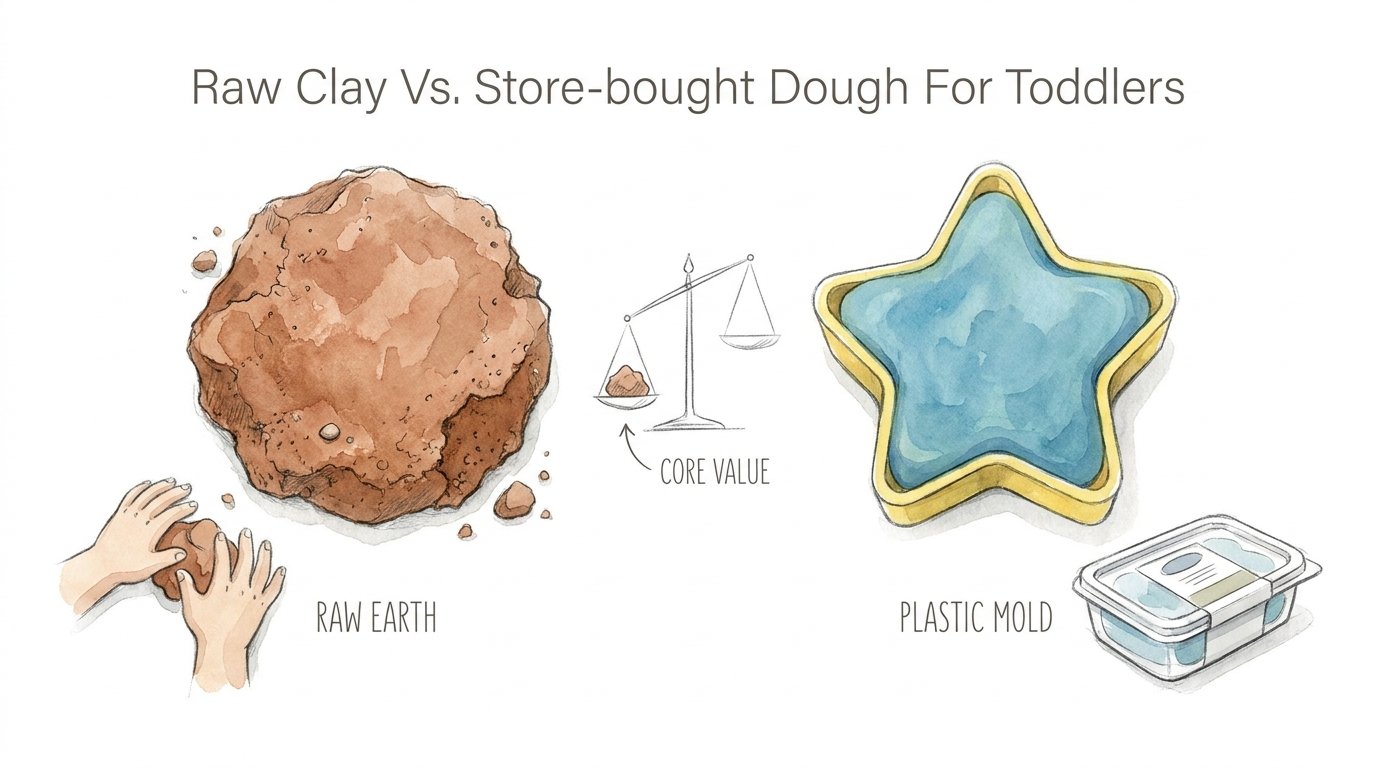
When a tool only does one thing, the imagination stops; when a material does everything, the genius wakes up. A plastic star mold teaches a child one thing: how to make a star. But a block of raw earth teaches them how to be an engineer, a sculptor, and an architect. Which one is your toddler’s brain currently doing?
Most parents reach for the bright, scented tub of store-bought dough without a second thought. It is the easy choice. It is the clean choice. But is it the best choice for a brain that is growing faster than it ever will again?
Toddlers are tiny scientists. They are constantly testing the limits of the physical world. Every time they squish a material, they are gathering data about weight, resistance, and gravity. The tools we put in their hands determine the quality of that data.
We are going to dive deep into the world of sensory play. We will explore why the choice between a natural block of clay and a synthetic tub of dough matters more than you might think. This is about more than just art. This is about building the foundation for fine motor skills, emotional regulation, and creative problem-solving.
Raw Clay Vs. Store-bought Dough For Toddlers
Raw clay is a natural substance pulled directly from the earth. It is made of minerals, water, and time. It exists in various forms, from the deep red of terracotta to the cool grey of stoneware. Artists have used it for millennia to build civilizations and tell stories.
Store-bought dough is a modern invention. It is typically a mixture of wheat flour, water, salt, and chemical preservatives. It is engineered to be soft, colorful, and consistently squishy. You find it in every preschool and toy store on the planet.
These two materials serve different purposes. Store-bought dough is a “static” material. It feels the same today as it will tomorrow. It is designed for ease of use. It is perfect for children who are just starting to explore their grip.
Raw clay is a “dynamic” material. It changes as you work with it. It starts cold and firms up as your hands warm it. Add a drop of water and it becomes slick and slimy. Leave it in the sun and it becomes hard and brittle. This unpredictability is its greatest teaching tool.
In the real world, engineers deal with materials that change under stress. Architects deal with the weight of the earth. When a toddler handles raw clay, they are getting a masterclass in the laws of physics. They are learning that their actions have immediate, physical consequences on the world around them.
How It Works: The Stages of Sensory Engagement
Introducing these materials follows a logical progression. You do not just hand a two-year-old a block of clay and expect a statue. They need to move through specific developmental stages.
The Exploration Stage
This stage happens around age two. The child is not “making” anything. They are purely interested in the sensory experience. They will poke the material. They will pound it with their fists. They might even try to taste it.
Raw clay offers a much richer experience here. It provides significant resistance. This resistance forces the child to use their whole arm and torso, not just their fingers. This is called “heavy work,” and it is essential for developing a sense of body awareness.
The Control Stage
Around age three, children start to be more deliberate. They realize they can change the shape of the material on purpose. They begin to roll “snakes” or flatten “pancakes.”
Store-bought dough is excellent for this because it is so soft. However, clay teaches the concept of “joining.” To stick two pieces of clay together, the child must learn to “score and slip”—scratching the surface and adding a bit of water. This is an early lesson in structural integrity.
The Symbolic Stage
At four or five years old, the child names their creation. A lumpy ball becomes a “mouse” or a “planet.” They are now using the material to represent their inner world.
Clay allows for more permanent symbols. While dough usually crumbles or remains soft, clay can be air-dried or fired in a kiln. Turning a soft lump of mud into a permanent stone object is a magical experience for a young mind. It builds a sense of agency and accomplishment.
Benefits of Choosing Raw Materials
The practical benefits of raw clay go far beyond the kitchen table. It impacts the child’s physical and neurological development in measurable ways.
Increased Proprioceptive Input:
Proprioception is the “sixth sense” that tells your brain where your body is in space. Clay is dense. It requires force to move. Pushing and pulling against that density sends strong signals to the brain, helping children feel more grounded and focused.
Fine Motor Strength:
The muscles required to write with a pencil are the same muscles used to pinch a piece of clay. Because clay is firmer than store-bought dough, it provides a better “workout” for the small muscles in the hands and fingers.
Thermal and Tactile Diversity:
Natural clay starts cold. As the child works it, it absorbs their body heat. It transitions from wet to dry, smooth to rough, and soft to hard. Store-bought dough is largely one-note. The sensory “vocabulary” of clay is much larger.
Open-Ended Problem Solving:
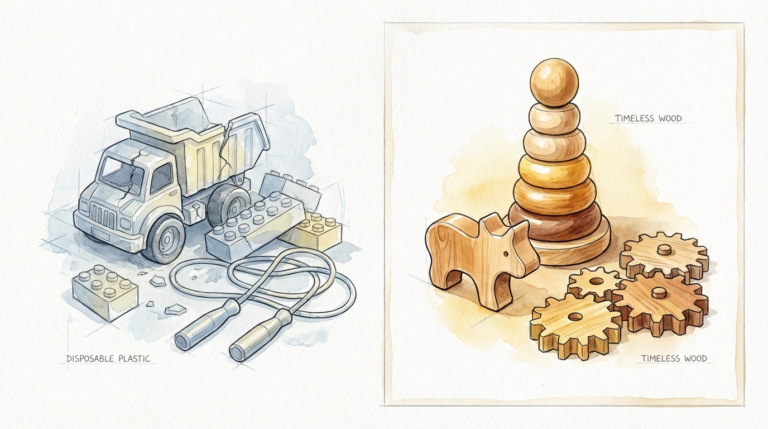
A plastic mold tells a child when they are “done.” They make the star, and the task is finished. With a block of raw clay, the task is never finished. They must decide what to make, how to make it stand up, and what to do when it falls over.
Challenges and Common Mistakes
Working with raw materials is not without its hurdles. Many parents give up on clay because of a few common pitfalls.
One major mistake is treating clay like playdough. If you leave clay out on a plastic table without any moisture, it will dry out and become a dusty mess. Clay needs a “home.” You must store it in an airtight container with a damp cloth to keep it “alive.”
Another challenge is the “cleanliness trap.” Store-bought dough is designed to be easily brushed off. Clay is mud. It will get under fingernails and on clothes. Parents who are overly worried about the mess often unintentionally stifle the child’s exploration.
Avoid giving too many tools too soon. A child with a rolling pin, ten cookie cutters, and a plastic knife will focus on the tools rather than the material. Start with just the hands. Let the child discover what their fingers can do before you introduce a single plastic accessory.
Limitations: When to Stick with Dough
Raw clay is a superior developmental tool, but it is not always the right choice. There are specific situations where store-bought dough is the safer or more practical option.
Extreme Sensory Sensitivity:
Some children have a strong aversion to the “slimy” or “sticky” feel of wet clay. If the goal is to build confidence and reduce anxiety, the dry, predictable texture of store-bought dough is a better starting point.
Limited Cleanup Time:
If you only have fifteen minutes for an activity, do not pull out the clay. The setup and cleanup for clay play require a dedicated block of time. Use dough for those quick “distraction” moments when you need to cook dinner.
Allergy Concerns:
Natural clay is generally safe, but some children may have reactions to specific minerals or the dust from dried clay. Conversely, most store-bought doughs contain wheat (gluten). If your child has a severe gluten allergy, you must check labels carefully or make your own gluten-free dough at home.
The Comparison: Clay vs. Dough
To help you decide which material to use for today’s session, look at how they stack up across the board.
| Feature | Store-bought Dough | Raw Earth Clay |
|---|---|---|
| Resistance | Low – Easy to squish | High – Builds hand strength |
| Sensory Range | Static – Always soft | Dynamic – Wet, dry, cold, warm |
| Cleanup | Easy – Brushes off | Moderate – Needs water |
| Permanence | Temporary – Crumbles | Permanent – Can be hardened |
| Cost | Cheap to Moderate | Low (if bought in bulk) |
Practical Tips for a Successful Session
Managing clay at home does not have to be a nightmare. These best practices will keep the focus on the learning and minimize the stress for you.
- Use Burlap or Canvas: Clay sticks to smooth plastic tables. Cover your workspace with a piece of burlap or heavy canvas. It keeps the clay from sticking and provides a beautiful, natural texture for the child to explore.
- The Damp Towel Method: Keep a damp hand towel on the table. Show the child how to wipe their hands if they feel “too sticky.” This prevents them from running to the sink every two minutes and spreading mud through the house.
- Introduce “Loose Parts”: Instead of plastic molds, provide a bowl of stones, twigs, and shells. These “loose parts” encourage the child to build worlds and tell stories without being told what to create.
- Manage the Dust: Never sweep up dried clay. Sweeping kicks up fine dust that can irritate the lungs. Always use a wet sponge or cloth to wipe down surfaces after a session.
Advanced Considerations for Early Educators
If you are a serious practitioner or an educator, you want to push the boundaries of what this material can do. Consider the “language of clay.”
Clay is a responsive material. It “remembers” every touch. If a child hits it, there is a dent. If they stroke it, it becomes smooth. This creates a feedback loop that is vital for emotional regulation. Children who struggle with impulse control often find clay play deeply therapeutic. They can express their frustration by pounding the material, and the material absorbs that energy without breaking.
Think about “slip” and “slurry.” Slip is just clay watered down until it is like thick cream. Giving a child a small pot of slip and a paintbrush adds a whole new dimension to their work. They can use it as “glue” or as “paint” on their sculptures. This introduces them to the concept of viscosity and change of state.
A Realistic Scenario: The Rainy Afternoon
Imagine it is a Tuesday. It is raining outside. Your toddler is restless. You have two options.
Option A: You pull out the bright yellow plastic tubs of dough. You hand them the star mold and the heart cutter. The child makes five stars and three hearts. After ten minutes, they are bored. They start throwing the dough at the wall. The task is “complete,” and their brain is looking for the next hit of dopamine.
Option B: You pull out a five-pound block of grey earthenware clay. You place it on a piece of canvas. You don’t give them any tools. You just say, “I wonder what this feels like?”
The child spent the first five minutes just pushing their thumbs into the cold surface. They realize they can make deep holes. They ask for water. You give them a small spray bottle. Now they are fascinated by how the water turns the grey mud into a slick, shiny surface. They spend forty-five minutes building a “mountain” and “planting” twigs they found in the yard yesterday.
In Option B, the child practiced focus. They practiced hand strength. They experimented with physics. They entered a “flow state” where time disappeared. That is the power of a raw material.
Final Thoughts
The choice between raw clay and store-bought dough is a choice between a “closed” and an “open” experience. Store-bought dough has its place in a busy home. It is a wonderful introductory tool for the very young. But it should not be the end of the journey.
Raw earth clay connects a child to the world in a way that plastic and neon dyes never can. It challenges them. It asks them to be strong, to be patient, and to be creative. It turns the “play” session into a deep learning experience that builds the brain from the inside out.
Try a block of clay this week. Forget about the mess for an hour. Watch your child’s hands. Watch their focus. You might find that when the plastic molds go away, their genius finally has the room it needs to wake up. Experiment with adding different natural elements and see where their imagination takes them.
You are not just making mud pies. You are molding a future architect. Apply these principles, and you will see the difference in their dexterity and their confidence almost immediately.
Sources
1 tecribresearch.blog | 2 communityplaythings.com | 3 thechildrenslab.com | 4 adriartltd.com | 5 childcareed.com | 6 quora.com | 7 medium.com | 8 best-start.org | 9 pinnacleblooms.org | 10 inspiredec.com | 11 blogspot.com | 12 stanford.edu | 13 thechildrenslab.com | 14 preciousmemoriespreschoolofsandyhollow.com | 15 thechildrenslab.com | 16 artworldschool.com