Preschool Science Observation Sheets
Is your child learning about life from a 2D drawing or from the living source? A sterile worksheet is a dead end for curiosity. A ‘Living Log’ invites the mess, the dirt, and the genuine discovery that makes science stick in a young mind. We traded ‘coloring inside the lines’ for documenting the lines of nature.
Science in the early years shouldn’t feel like a chore. It should feel like an adventure. When a child holds a magnifying glass over a beetle, they aren’t just looking; they are investigating. They are becoming scientists in real-time. This guide will show you how to move past the paper and into the world.
Preschool Science Observation Sheets
Preschool science observation sheets are simplified tools designed to help young learners record what they see, hear, and feel during an experiment or nature walk. Unlike traditional worksheets that ask a child to circle a “correct” answer, these sheets are open-ended. They serve as a bridge between a child’s raw curiosity and the formal scientific method.
In the real world, scientists use field journals to document phenomena that cannot be captured in a lab. In a preschool setting, these sheets function as a “Living Log.” They give a child a place to put their thoughts before they have the vocabulary to explain complex biology or physics. Educators use them to track a child’s developing ability to notice detail, such as the number of legs on an insect or the changing colors of a leaf.
Think of these sheets as a translator for wonder. A child sees a seed sprout and draws a tiny green line. That line represents their first understanding of life cycles. By using these tools, we teach children that their observations have value and that science is a process of looking closely at the world.
How to Implement a Living Log System
Creating a Living Log system is about preparation, not perfection. You want to provide a framework that supports exploration without stifling it. Start by gathering basic materials: a sturdy clipboard, unlined paper, and high-quality drawing tools like beeswax crayons or thick colored pencils.
First, choose a “Study Site.” This could be a literal log in the backyard, a window garden, or even a sidewalk crack where ants congregate. Consistency is key here. Returning to the same spot allows a child to notice changes over time, which is the foundation of longitudinal observation.
Next, model the behavior. Sit with the child and say, “I notice the dirt is damp today.” Draw a simple brown smudge on your own sheet. This gives them permission to be messy and authentic. Avoid telling them what to draw; instead, ask open-ended questions like, “What does the bark feel like?” or “Does the flower have a smell?”
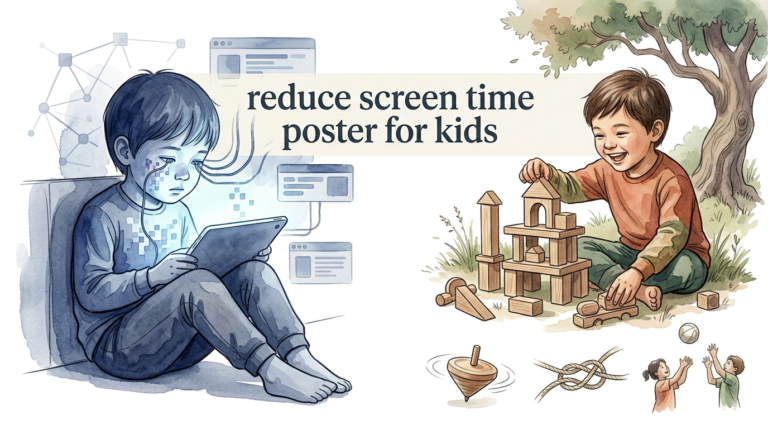
Finally, date the entries. Even if the child can’t read yet, seeing a collection of pages grow creates a sense of history. They begin to see themselves as someone who “does” science, not just someone who watches it on a screen.
The Benefits of Observation-Based Learning
Active observation engages the whole brain. Research shows that when children use their hands and senses to explore, multiple neural pathways light up simultaneously. This makes the information more “sticky” than passive learning.
Cognitive Development
Observation requires focus. In a world of fast-paced media, sitting still to watch a snail move across a leaf is a radical act of attention. This builds “executive function,” the part of the brain responsible for planning and staying on task. Children learn to categorize information naturally—sorting rocks by size or leaves by shape without being prompted by a textbook.
Fine Motor Skills
Holding a pencil to record an observation is a practical application of fine motor control. It is much more engaging than tracing a dashed line. A child trying to capture the curve of a petal is refining the small muscles in their hand that will later be used for writing and complex tasks.
Emotional Resilience
Science involves failure. Sometimes a seed doesn’t grow. Sometimes the rain washes away the ant hill. Documenting these “misses” in a Living Log teaches children that data is just information, not a personal failure. This builds a growth mindset from a very young age.
Challenges and Common Mistakes
The biggest mistake adults make is seeking a “pretty” result. A preschooler’s observation sheet should look like a preschooler’s brain: energetic, non-linear, and perhaps a bit dirty. If you focus on making the sheet look like a finished piece of art, the child will stop observing and start performing.
Another pitfall is over-explaining. It is tempting to tell a child *why* a leaf is green or *how* a worm breathes. Resist the urge. Your job is to be the lab assistant, not the lecturer. If you provide all the answers, the child has no reason to keep looking. Let them sit with the “I wonder” for as long as possible.
Avoid “correcting” their drawings. If a child draws a purple sun or a five-legged ladybug, let it be. They are recording their internal experience of the moment. Over time, as their observation skills sharpen, their drawings will naturally become more accurate. Forcing accuracy too early can kill the joy of discovery.
Limitations of This Approach
Observation-based science is highly dependent on environment and weather. In urban settings, access to “wild” nature might be limited to a small park or a container garden. While you can still observe science in a city (physics with playground slides, for example), it requires more intentionality from the adult.
Time is another constraint. A “Living Log” approach cannot be rushed. It doesn’t fit well into a rigid 20-minute curriculum block. If the child becomes fascinated by a puddle, you have to be willing to let the schedule slide. This flexibility is often difficult in traditional school settings.
Lastly, this method requires a high level of adult engagement. You can’t just hand a child a Living Log and walk away. It requires active listening and presence. For busy parents or teachers with large classes, this can be a significant drain on energy and resources.
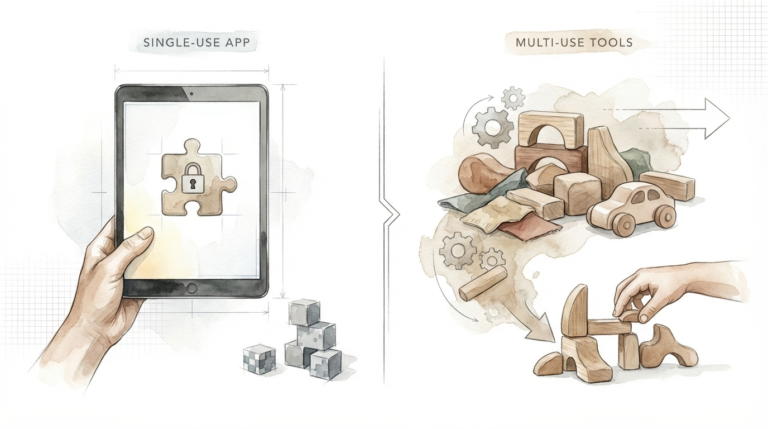
Traditional Worksheets vs. Living Logs
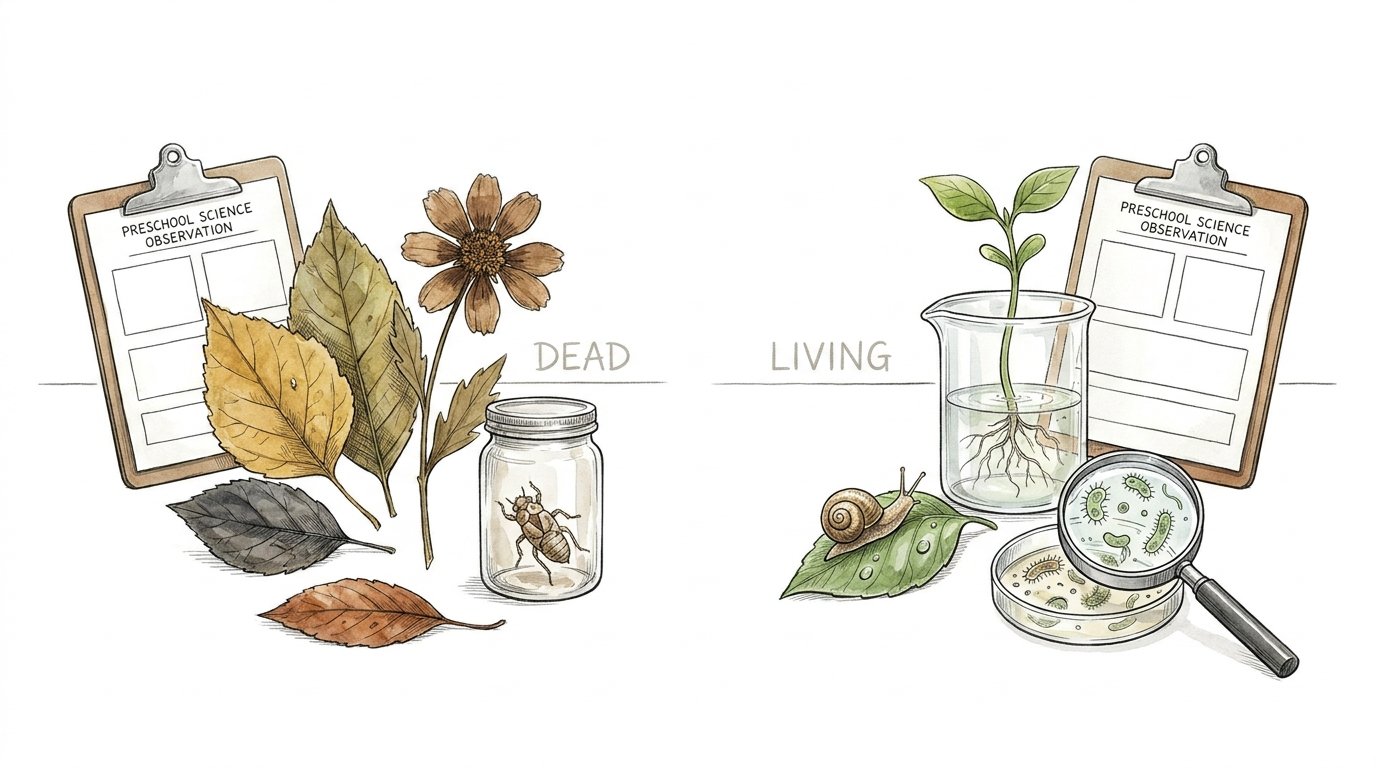
Understanding the difference between “dead” and “living” assignments is crucial for SEO-optimized learning environments.
| Feature | Traditional Worksheet (Dead) | Living Log (Living) |
|---|---|---|
| Source of Truth | The printed page | The physical object/nature |
| Goal | Finding the right answer | Documenting the experience |
| Engagement | Passive (sitting at a desk) | Active (moving, touching, smelling) |
| Retention | Low (memorization-based) | High (experience-based) |
| Difficulty | Standardized for all | Scales to the child’s ability |
Practical Tips for Success
Start small. You don’t need a forest; a single houseplant will do. The goal is to build the habit of looking. Here are a few ways to optimize your science sessions:
- Use “Sensory Prompts”: Ask the child what they hear before they start drawing. This grounds them in the moment.
- Carry a “Discovery Kit”: Keep a magnifying glass, a small ruler, and a clear jar in a backpack. Being prepared makes spontaneous science easier.
- Embrace the “I Don’t Know”: When a child asks a hard question, answer with “Let’s watch and find out.” This is the highest form of scientific respect.
- Incorporate Math: Ask the child to count the spots on a bug or measure the length of a shadow. This integrates STEM naturally.
Advanced Considerations for Practitioners
As children move toward kindergarten, you can introduce more structure to their observation sheets. Start adding sections for “Predictions” and “Results.” This mirrors the formal scientific method. For example, before dropping a rock into a bucket of water, have them mark a box for “Sink” or “Float.”
Scaling this for a classroom involves creating “Observation Stations.” Instead of everyone doing the same thing, set up different living sources—a worm bin, a light table with prisms, and a bowl of melting ice. Rotate the children through these stations with their Living Logs, allowing them to choose which data they want to record first. This autonomy increases engagement and reduces behavioral issues.
Real-World Science Scenarios
To see how this works in practice, let’s look at two common preschool science setups.
The Ant Trail Discovery
A group of children finds a line of ants on the playground. Instead of just watching, the teacher hands out observation sheets. One child notices the ants are carrying crumbs and draws “tiny dots.” Another child notices two ants “talking” with their antennae. They record this by drawing two circles touching. They return the next day and find the trail has moved because the sun is hotter. They have just learned about animal behavior and environmental factors without a single textbook.
The Window Bean Experiment
Each child tapes a bean seed inside a clear plastic bag with a damp paper towel. Every morning, they take out their Living Log. On day three, one child sees a “white tail” (the root). They document it. On day seven, the “tail” has hairs. They document those. By the end of the month, they have a flip-book of growth. They didn’t just learn that plants need water; they witnessed the struggle and triumph of a living thing.
Final Thoughts
Preschool science observation sheets are more than just paper; they are a manifesto for a different kind of education. By moving away from sterile, pre-determined worksheets, we give children the tools to interact with the world as it actually is—messy, beautiful, and endlessly fascinating. The Living Log isn’t just about science; it’s about teaching a child how to be present.
When you trade a 2D drawing for a living source, you are investing in a child’s long-term intellectual curiosity. These early experiences form the bedrock of critical thinking and problem-solving. A child who learns to look closely at a ladybug today is the adult who will look closely at complex global problems tomorrow.
Encourage your young scientist to get their hands dirty. Let the observation sheets get grass stains and water spots. Those marks are the evidence of a mind at work. Start your Living Log today and watch how the world opens up through the eyes of your child.
Sources
1 johnmuirlaws.com | 2 libretexts.org | 3 circuitmess.com | 4 childrensland.com | 5 kidsusamontessori.org | 6 weareteachers.com | 7 childcareed.com | 8 wi.gov | 9 scienceexplorers.com | 10 ala.org | 11 littlebinsforlittlehands.com | 12 wonderschool.com | 13 hanoveracademy.org | 14 steinerschool.org