Screen Time Dopamine Vs Real Life Play
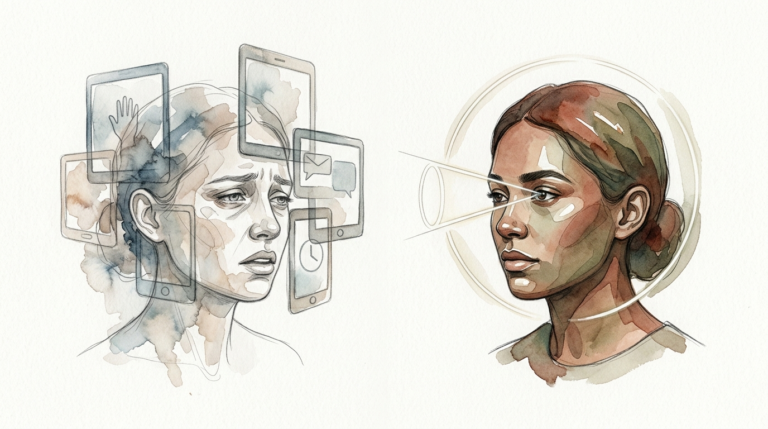
Digital rewards are instant and addictive; physical rewards are slow and transformative. The 7-day reset isn’t a punishment; it’s a detox from synthetic dopamine. We moved from the high-speed ‘Ding!’ of an app to the slow-burn satisfaction of real-world discovery. The difference in their eyes by Day 7 says it all.

Most of us are trapped in a loop we didn’t sign up for. Our pockets contain slot machines disguised as smartphones. Every notification is a pull of the lever. Every scroll is a gamble for the next hit of novelty. This isn’t just about being “distracted.” It is about the fundamental rewiring of our reward systems.

Your brain is a precision instrument designed to help you survive. It uses dopamine to say, “This is good, do it again.” In the wild, that meant finding food or shelter. Today, it means watching another 15-second video. The result? We are overstimulated but under-fulfilled. We feel restless when we aren’t “connected” but drained when we are.
The 7-day reset is a circuit breaker. It is a deliberate pause to let your receptors breathe. This guide walks you through the transition from the high-speed synthetic loop to the sustainable satisfaction of a natural win. It is time to reclaim your focus.
Screen Time Dopamine Vs Real Life Play
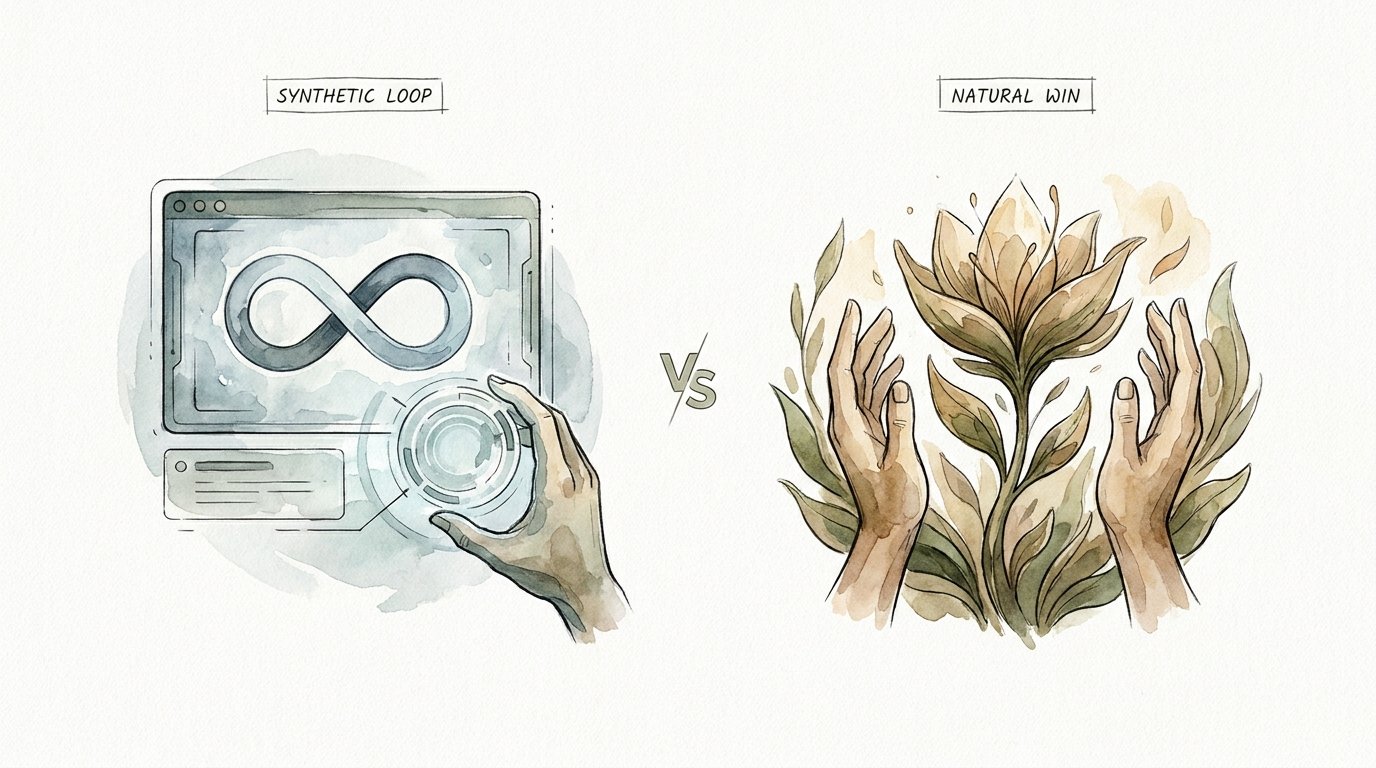
Dopamine is the brain’s “motivation molecule.” It doesn’t just give you pleasure; it drives the anticipation of pleasure. When you play a video game or scroll through a social feed, your brain releases a flood of “synthetic dopamine.” This is often called a Synthetic Loop because the reward requires zero effort and provides no lasting value.
Real-life play works differently. Think about building a LEGO set, learning a guitar riff, or hiking a trail. These activities offer Natural Wins. They require effort, patience, and concentration. The dopamine release is slower and more stable. Instead of a sharp spike that crashes into irritability, you get a “slow-burn” sense of accomplishment.
In the real world, children and adults alike need this slow-burn satisfaction to develop executive function. The prefrontal cortex—the part of the brain responsible for impulse control and planning—does not fully mature until the mid-20s. Overloading it with instant digital rewards can lead to “brain rot,” characterized by shortened attention spans and a low tolerance for boredom.
Excessive screen time also desensitizes our reward receptors. When the brain is flooded with high-intensity digital signals, it “downregulates.” It shuts off some receptors to protect itself. This makes ordinary life feel dull. A 7-day reset allows these receptors to become sensitive again, making simple things feel exciting once more.
How to Execute the 7-Day Reset
Success requires a plan. You cannot simply “try to use your phone less.” Willpower is a finite resource that fails under pressure. You need a system that removes the friction of staying offline and adds friction to getting back on. Follow these steps to build your 7-day protocol.
Step 1: The Tactical Shutdown
Before Day 1, perform a digital audit. Turn off all non-essential push notifications. If it isn’t a text from a human or a calendar alert, you don’t need a “Ding!” Delete the apps that cause the most “infinite scrolling.” This usually includes TikTok, Instagram, and mobile games with daily login rewards.
Step 2: Define Your Boundaries
Total abstinence is rarely practical for adults with jobs. Define what is “utility” and what is “entertainment.” Utility includes maps, banking, and essential work emails. Entertainment includes YouTube, Netflix, and social feeds. The 7-day reset is a fast from entertainment dopamine, not essential tools.
Step 3: The Daily Protocol
- Mornings: No screens for the first 60 minutes. Use this time for sunlight, movement, or a real breakfast.
- Days: Use the “20-20-20 rule.” Every 20 minutes, look at something 20 feet away for 20 seconds to reduce eye strain.
- Evenings: No screens 90 minutes before bed. This allows your natural melatonin to rise, improving sleep quality.
- The Analog Alternative: Keep a book, a journal, or a physical hobby (like a puzzle) in the spot where you usually keep your phone.
Common Pitfalls to Avoid
The “transfer addiction” is the most common error. People stop scrolling but start binge-watching TV. Others stop gaming but start obsessive online shopping. You must replace the high-dopamine digital activity with low-dopamine physical activity. Walking, cleaning, or even just sitting in silence is better than swapping one screen for another.
Benefits of the Reset
The changes you experience during a reset are measurable and often immediate. Most participants report a shift in their internal “rhythm” by Day 3. You move from a state of reactive stress to proactive engagement.
Improved Cognitive Focus: Without constant interruptions, your brain regains the ability to enter “Deep Work” states. Tasks that used to take three hours might only take 90 minutes when you aren’t checking your phone every 10 minutes.
Emotional Stability: Digital platforms are designed to trigger “Variable Rewards,” much like a slot machine. This creates a rollercoaster of moods. Stabilizing your dopamine levels reduces irritability and the “phantom vibration” syndrome where you feel your phone buzzing even when it isn’t.
Restorative Sleep: Screens emit blue light that mimics midday sun. This suppresses melatonin, the hormone that tells your body to sleep. By removing screens before bed, you fall asleep faster and reach deeper stages of REM sleep, which is essential for brain healing.
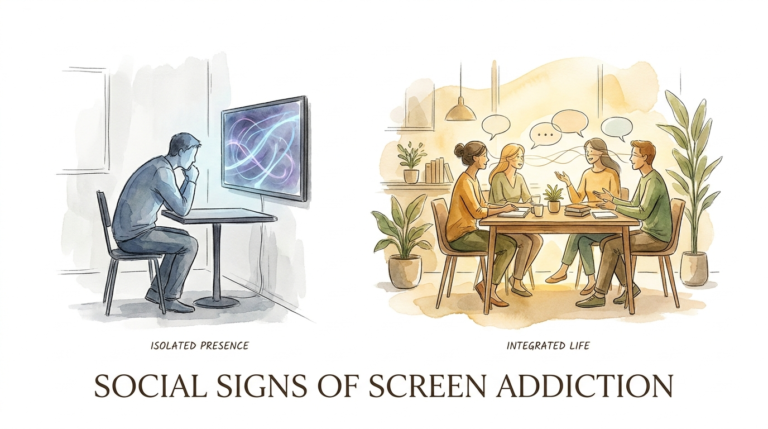
Enhanced Social Connection: When you aren’t distracted by a screen, you become a better listener. Eye contact becomes easier, and you pick up on subtle social cues that are lost in the digital void. This strengthens real-world relationships.
Challenges and Common Mistakes
Boredom is the greatest challenge. We have been conditioned to see boredom as a problem to be solved with a swipe. In reality, boredom is the prelude to creativity. When you feel that “itch” to check your device, recognize it as your brain’s craving for an easy hit. Sit with the itch. It will pass.
Another mistake is the “All or Nothing” mindset. If you accidentally scroll for 10 minutes on Day 4, don’t throw away the whole week. Acknowledge the slip, put the phone in another room, and continue. The goal is habitual awareness, not perfect performance.
Social isolation can also be a hurdle. We often use screens to feel “connected.” During the reset, you might feel like you’re missing out (FOMO). Counteract this by scheduling a coffee date or a phone call (voice only). Human connection provides a natural dopamine release that is far more satisfying than a “like” on a post.
Limitations: When This May Not Be Ideal
A 7-day reset is a powerful tool, but it is not a cure-all. People in high-stakes roles like emergency dispatchers, on-call doctors, or caregivers cannot simply turn off their devices. In these cases, the reset must be modified. You might limit the types of content rather than the device itself.
Those struggling with clinical depression or severe anxiety should approach a dopamine fast with professional guidance. Sometimes, the sudden removal of all “distractions” can force a confrontation with underlying emotional issues that require support to process safely. The reset is about health, not suffering.
Finally, environmental constraints matter. If you live in a small apartment during a winter storm, “going for a nature walk” might not be an option. You must tailor your replacement activities to your reality. If you can’t go outside, focus on indoor crafts, reading, or deep cleaning.
Synthetic Loop vs Natural Win
Understanding the difference between these two reward structures is the key to long-term success. Use the table below to identify which loop you are currently in.
| Feature | Synthetic Loop (Digital) | Natural Win (Physical) |
|---|---|---|
| Effort Required | Low / Instant | Medium to High |
| Dopamine Spike | Sharp and Short | Steady and Sustained |
| Skill Level | None / Passive | Progressive Mastery |
| Long-term Value | Zero / Depleting | High / Building |
| Post-Activity Feel | Restless / Drained | Accomplished / Calm |
Practical Tips for Immediate Application
Don’t wait for a “perfect” Monday to start. You can begin the transition today with these three optimization techniques.
1. Use Grayscale Mode: Most modern smartphones have an accessibility setting that turns the screen black and white. This removes the “visual candy” aspect of apps. Instagram looks a lot less appetizing when it’s just shades of grey.
2. The Phone Bed: Create a physical “home” for your phone that is not your pocket or nightstand. When you walk through the door, put your phone in a drawer or a charging station in the kitchen. If you need to use it, you must go to the phone, rather than the phone following you everywhere.
3. Batch Your Communication: Instead of replying to every text as it arrives, check your messages only three times a day (morning, lunch, evening). This prevents the “ping-pong” effect of constant micro-interruptions.
Advanced Considerations for Serious Practitioners
Once you complete a 7-day reset, the challenge is maintaining the baseline. Serious practitioners move from “detox” to “digital hygiene.” This involves a permanent shift in how you view your attention as a resource.
Neuroplasticity and Habit Stacking: Your brain is plastic. It takes about 21 to 66 days to form a new habit. Use the post-reset period to “stack” healthy habits onto your new free time. If you used to scroll at 8:00 PM, now use that 8:00 PM slot for a specific, rewarding physical activity.
Environmental Design: Your environment should dictate your behavior. If you want to read more, put a book on your pillow every morning. If you want to use your phone less, buy a physical alarm clock so your phone doesn’t have to be the first thing you touch in the morning.
Intentional Consumption: Move from “scrolling” to “searching.” If you need to watch a tutorial on YouTube, search for it specifically, watch it, and then close the app. Do not let the “Recommended” sidebar pull you back into the Synthetic Loop.
Scenario: The Sunday Morning Shift
Imagine a typical Sunday morning before the reset. You wake up, reach for your phone, and spend 45 minutes scrolling through news and social media. You haven’t even gotten out of bed, but your brain is already fatigued. You feel “behind” on the world’s problems and your friends’ lives. Your first real-world task—making coffee—feels like a chore.
Now, imagine Day 7 of the reset. You wake up and your phone is in another room. You spend 10 minutes stretching or looking out the window. You make coffee and actually smell the beans. You sit and think without an external input. By 10:00 AM, you’ve read thirty pages of a book and started a small house project. You feel energized because your dopamine was earned through action, not stolen through a screen.
The difference isn’t just in what you did; it’s in how your brain perceived the morning. The absence of the synthetic spike allowed the natural win to feel significant.
Final Thoughts
The 7-day reset is more than a break from technology; it is a reclamation of your humanity. We were not designed to process the infinite novelty of the internet every waking second. We were designed for the struggle and satisfaction of the physical world. Taking a week to step back allows your nervous system to recalibrate and your focus to return.
Start small if you must, but start. The transition from “Ding!” to “Discovery” is the most important journey you can take in the digital age. You will likely find that the things you were so afraid of “missing” on social media weren’t worth seeing in the first place.
After your seven days are up, don’t just rush back to your old habits. Take a moment to reflect on the clarity and peace you found. Build a “new normal” where technology is a tool you use, not a master you serve. Experiment with one screen-free day a week or a permanent “no phones at the table” rule. Your brain will thank you for it.
Sources
1 lamsquare.net | 2 healthywithin.com | 3 simplypsychology.org | 4 medium.com | 5 alandalton.ie | 6 premierhealth.com | 7 thejacobsladdergroup.org | 8 medium.com | 9 connecticutchildrens.org | 10 therapycenterofny.com | 11 potsdam.edu | 12 strong4life.com | 13 mmguardian.com | 14 childrenshospital.org | 15 brainbalancecenters.com | 16 cirkledin.com | 17 scribd.com | 18 reddit.com | 19 revivecounselingwellness.com | 20 cedaroakswellness.com | 21 3arrowsmentalhealth.com | 22 netpsychology.org