Screen Free Home Design For Kids
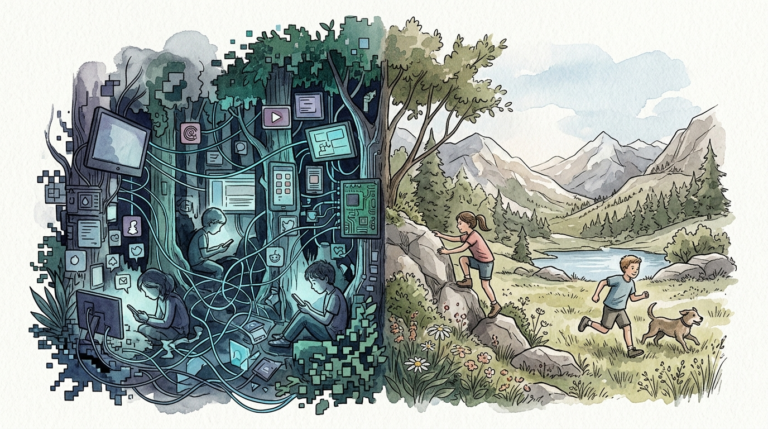
If their first instinct upon entering a room is to scan for a screen, the environment is winning the battle for their brain. We blame the child for their addiction, but we’ve designed our homes to be digital casinos. A sign of overuse is ‘Visual Scavenging’—the reflexive eye-sweep for a tablet the moment they walk through the door.

This behavior isn’t a character flaw. It is a biological response to an environment that prioritizes the “glow” over the “grow.” If the iPad is the first thing they see, it is the first thing they want. Their brains are wired to seek the path of least resistance for a dopamine hit.

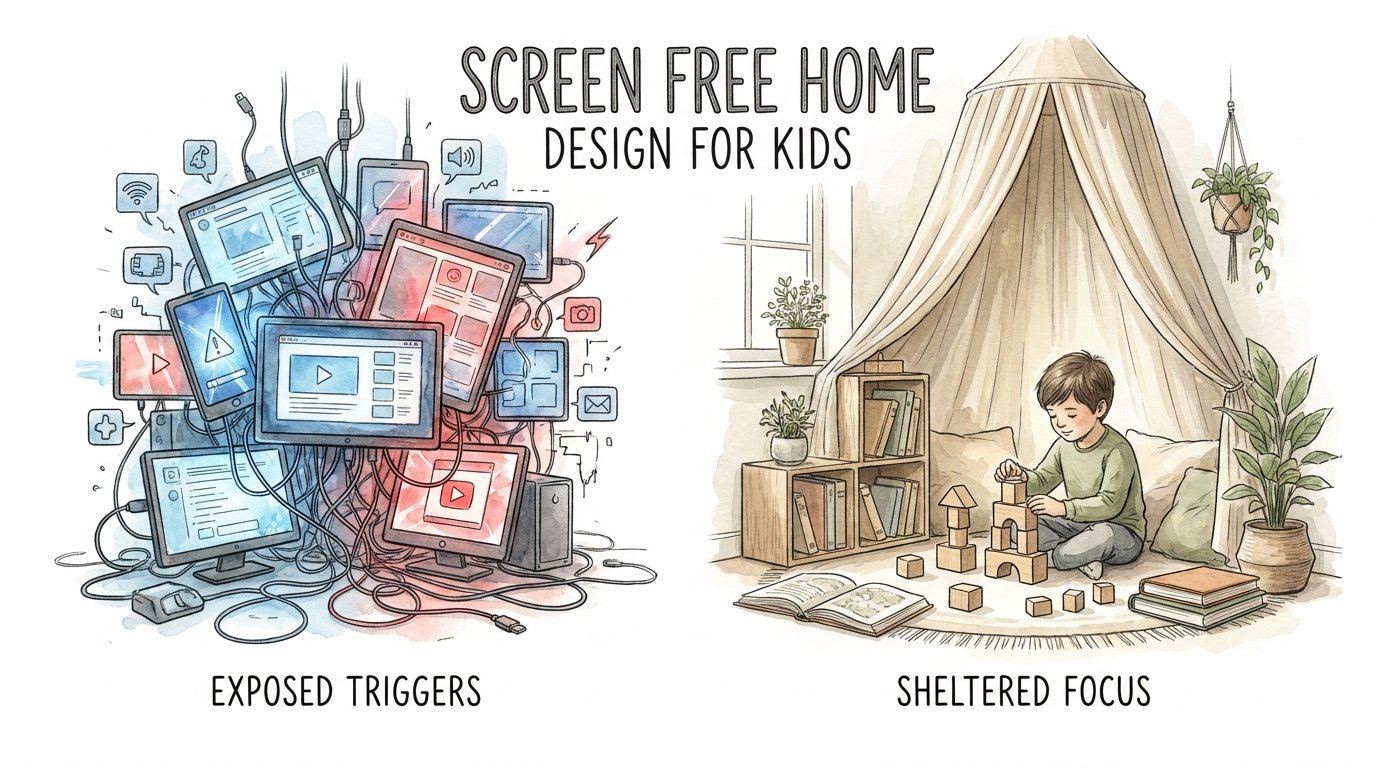
Screen-free home design is the art of reclaiming that attention. It isn’t about banning technology or living in a cave. It is about environmental architecture. We are moving from a home of “Exposed Triggers” to one of “Sheltered Focus.”
When we change the layout, we change the habit. We can make curiosity the default setting by simply moving the television. We can spark creativity by replacing a charging station with a craft table. Let’s look at how to rebuild your home for their developing minds.
Screen Free Home Design For Kids
Screen-free home design is the intentional arrangement of living spaces to reduce the visibility and accessibility of digital devices. It treats the home as a “nudge” system. Instead of constant verbal reminders to “get off the phone,” the house itself suggests alternative activities.
This design philosophy works because it targets the prefrontal cortex—the part of the brain responsible for impulse control. Children have under-developed prefrontal cortexes. Expecting them to ignore a bright, shiny remote on the coffee table is like expecting a hungry person to ignore a fresh donut in front of them.
In the real world, this looks like living rooms centered around conversation instead of a 65-inch black rectangle. It involves creating “zones” where the architecture dictates the behavior. A reading nook says “focus.” A makerspace says “create.” A hidden TV cabinet says “not right now.”
By reducing visual cues for screens, we stop the “Visual Scavenging” cycle. If they don’t see the trigger, the dopamine craving never ignites. The result is a child who walks into a room and looks for a book, a toy, or a window—not a screen.
How to Implement Screen-Free Design Step-by-Step
Creating a low-tech sanctuary requires a shift from passive consumption to active engagement. You are essentially increasing the “friction” required to use a screen while decreasing the friction required for play.
Identify the High-Traffic Triggers
Start by walking through your front door as if you were your child. What is the first thing you see? If it is the TV or the charging bin, you’ve identified an exposed trigger. These items should be relocated or obscured.
Increase Friction for Technology
Screens are addictive because they are easy. To break the habit, make them harder to use. Put the TV inside a dedicated armoire with doors. Store tablets in a high cabinet that requires adult assistance. Even small hurdles can stop the impulsive “eye-sweep” from turning into an hour of scrolling.
Decrease Friction for Creativity
If you want your child to draw, the paper and pencils must be more visible than the remote. Use open shelving for books and art supplies. Set up a “Makerspace” in a high-traffic area. When a child sees a pile of cardboard and a roll of tape, their brain shifts into “build mode” automatically.
Design Around the “Anchor”
Every room has an anchor. In many modern homes, the TV is the altar. Flip the layout. Position the sofa to face a large window, a fireplace, or a bookshelf. Use a “Frame TV” that displays art when off, or better yet, use a projector that stays tucked away until movie night.
Create a Tech-Free Transition Zone
The entryway is the most important zone. Install a “Docking Station” or a wooden box where all devices—including yours—live from the moment you walk in. This sets a psychological boundary between the outside digital world and the inside physical world.
Benefits of an Environment-First Approach
The impact of a screen-free home goes far beyond simply reducing minutes spent on YouTube. It fundamentally alters the way a child’s brain processes information and interacts with others.
Restored Attention Spans
Continuous digital input trains the brain to expect fast, digestible bursts of information. Screen-free environments force the brain to slow down. Whether they are building with blocks or reading a long-form story, they are practicing “Deep Focus.” This is a superpower in the modern economy.
Improved Social-Emotional Intelligence
Face-to-face interaction is the primary way children learn to read facial expressions and tone of voice. When the home design prioritizes conversation over screens, kids get thousands of more hours of “human data.” This builds empathy and reduces social anxiety.
Better Circadian Rhythms
Blue light from screens suppresses melatonin, the hormone that tells the body it’s time to sleep. By removing screens from bedrooms and using warm-spectrum lighting, you protect their sleep-wake cycles. A well-rested child is a regulated child.
Enhanced Problem-Solving Skills
Boredom is the birth of innovation. When a child can’t simply “swipe” away their boredom, they have to invent. They build forts. They write plays. They take apart old toys. These activities develop the frontal lobe in ways a tablet never could.
Challenges and Common Mistakes to Avoid
Transforming a home is a marathon, not a sprint. Many parents fall into traps that make the transition harder than it needs to be.
The “Abrupt Vacuum” Mistake
If you take away the screens but don’t provide an “Engaging Alternative,” you create a vacuum of boredom that leads to meltdowns. You must replace the digital casino with a physical playground. If the tablet goes away, the LEGOs or the art kit must come out.
Ignoring Parental Modeling
You cannot design a screen-free home for your kids while you are glued to your smartphone. Your behavior is part of the environment. If you want them to stop scavenging for screens, you have to stop “Visual Scavenging” for your own notifications.
The “Open Floor Plan” Trap
Open floor plans make it hard to hide screens. If the kitchen, dining, and living rooms are one big space, the TV is always visible. Use room dividers, rugs, or strategically placed furniture to create “Silos of Focus” within the open space.
Choosing Style Over Function
Minimalist design is great, but don’t make the home so “precious” that kids can’t be messy. A screen-free home needs to be durable. If they are afraid to touch the white sofa, they will retreat to the bedroom with a phone. Use stain-resistant fabrics and washable rugs to encourage active play.
Limitations and Realistic Constraints
While the goal is a screen-free sanctuary, we have to live in the 21st century. Total elimination is rarely practical or even desirable.
School and Homework Requirements
Most modern schools require digital portals for assignments. You can’t just throw out the computer. The solution is to create a “Work Station” that is separate from the “Play Zone.” Keep the laptop in a shared space like the kitchen island or a dedicated desk—never in the bedroom.
Small Living Spaces
In a studio or a one-bedroom apartment, “Zoning” is difficult. You might not have space for a separate makerspace. In these cases, use “Vertical Design.” Use high shelves for tech and low, accessible bins for toys. Use a simple fabric cover to hide the TV when it’s not in use.
Older Children and Teens
Designing for a toddler is about physical barriers. Designing for a teen is about social contracts. You cannot “hide” a 16-year-old’s phone. At this stage, the design focus shifts to “Acoustic Privacy” and “Focus Nooks” where they can do deep work without their devices.
Exposed Triggers vs. Sheltered Focus
The difference between a “Digital Casino” home and a “Sanctuary” home comes down to what the eye sees first. This table compares the two philosophies.
| Feature | Exposed Triggers (Default) | Sheltered Focus (Intentional) |
|---|---|---|
| TV Placement | The focal point of the main living room. | Hidden in a cabinet or in a secondary room. |
| Charging Hub | Scattered outlets or kitchen counters. | A single “Docking Station” near the door. |
| Toy Access | Stored in closed bins or closets. | Visible on open shelving or in play nooks. |
| Furniture Layout | All seating faces the screen. | Seating faces inward for conversation. |
| Lighting | High-energy LED/Blue light. | Warm tones and natural sunlight. |
Practical Tips for Immediate Impact
You don’t need a full renovation to start seeing results. Use these quick wins to reclaim your home’s focus today.
- Hide the Cords: Tangled black wires are a visual cue for “Power” and “Screens.” Use cable management boxes to hide them. If they can’t see the wires, the tech feels less “present.”
- The 1:1 Swap: For every screen in the room, add one “Analog Trigger.” Place a book on the coffee table. Put a basket of puzzles by the couch.
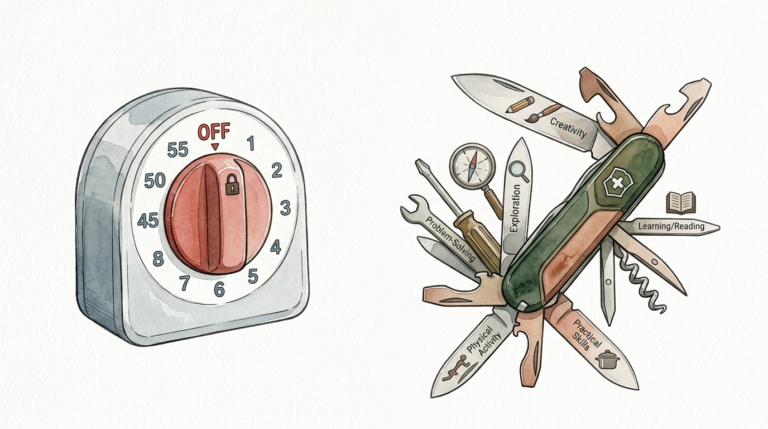
- Use a Visual Timer: If you do allow screen time, use a physical, analog timer (the ones with the red disc). It makes the concept of time visible and reduces the “shock” when the screen goes off.
- Create an “Idea Wall”: Use chalkboard paint or a giant roll of paper on a wall. It provides a constant, low-friction outlet for creativity that is always “on.”
- Rotate Toys: Too many options lead to overwhelm and a retreat to screens. Keep three toys out and rotate them weekly. Novelty is the screen’s biggest competitor.
Advanced Considerations for Serious Practitioners
If you want to go deeper, look into “Biophilic Design” and “Acoustic Engineering.” These concepts address the subconscious ways our environment affects our nervous system.
Biophilic Integration
Biophilic design is the practice of bringing nature indoors. Studies show that looking at plants or natural wood grain lowers cortisol levels. When a child is calm, they are less likely to seek the “numbing” effect of a screen. Use indoor trees, water features, or natural stone to create a grounding atmosphere.
Acoustic Buffering
Screens provide a “wall of sound” that blocks out the world. To compete with this, you need a home that supports “Acoustic Comfort.” Use thick rugs, heavy curtains, and cork flooring to dampen echoes. A quiet home allows a child to hear their own thoughts, which is the first step toward independent play.
Circadian Lighting Systems
Install smart bulbs that automatically shift from cool white in the morning to warm amber in the evening. This mirrors the sun’s natural cycle. By 6:00 PM, your home should feel like a campfire, not a clinical laboratory. This physiological “nudge” makes it easier for kids to put down devices as the day ends.
The “Saturday Morning” Scenario
Imagine two different homes on a Saturday morning.
In Home A, the TV is on the wall, facing the kid’s bedroom door. The remote is on the nightstand. The child wakes up, scans for the remote, and is in a “YouTube trance” before their eyes are even fully open. The environment chose their morning for them.
In Home B, the TV is in a cabinet in the basement. The living room coffee table has a half-finished puzzle. A basket of drawing pads sits by the window. The child walks out, sees the sunlight on the puzzle, and sits down to find two pieces. They aren’t “fighting” an addiction because the trigger isn’t there to start the fight.
This isn’t magic. It is architecture. By changing what they see, you change what they do.
Final Thoughts
Designing a screen-free home is not about being a “Luddite” or hating technology. It is about acknowledging that children are biologically ill-equipped to handle the seductive power of modern design. We have to be the architects of their focus.
Start small. Hide one remote. Move one chair. Buy one plant. Every visual trigger you remove is a victory for your child’s developing brain. You are giving them the gift of a quieter mind and a more vibrant imagination.
The goal isn’t a house without tech. It is a house where tech is a tool used with intention, rather than a default state of being. Experiment with your layout this weekend and watch how the “Visual Scavenging” slowly fades away, replaced by the natural curiosity of a child.
Sources
1 sharpeminds.ca | 2 simplicityhomeliving.com | 3 amlegendhomes.com | 4 psychologytoday.com | 5 timetimer.com | 6 crosswindscounseling.org | 7 kingascorner.com | 8 thechildunplugged.com | 9 linksaba.com | 10 customhomegroup.com | 11 lessonpix.com | 12 houseandhome.com | 13 youtube.com | 14 youtube.com | 15 premierhealth.com | 16 nicklauschildrens.org | 17 claymatesusa.com | 18 shabbyfufu.com | 19 freedom.to | 20 ncat.edu