Signs Of Cognitive Overload In Kids
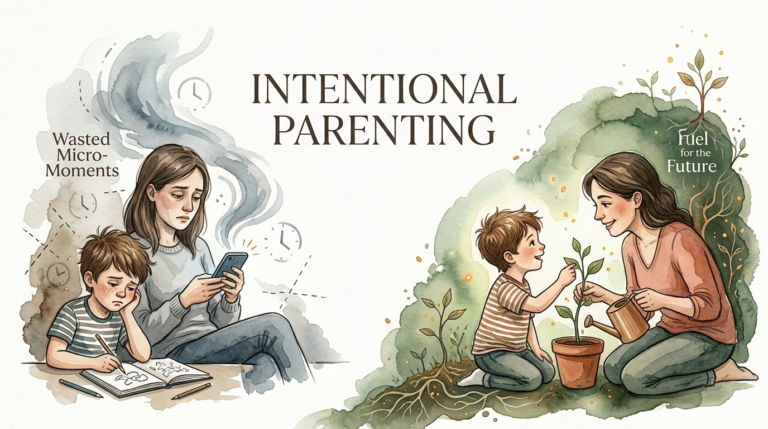
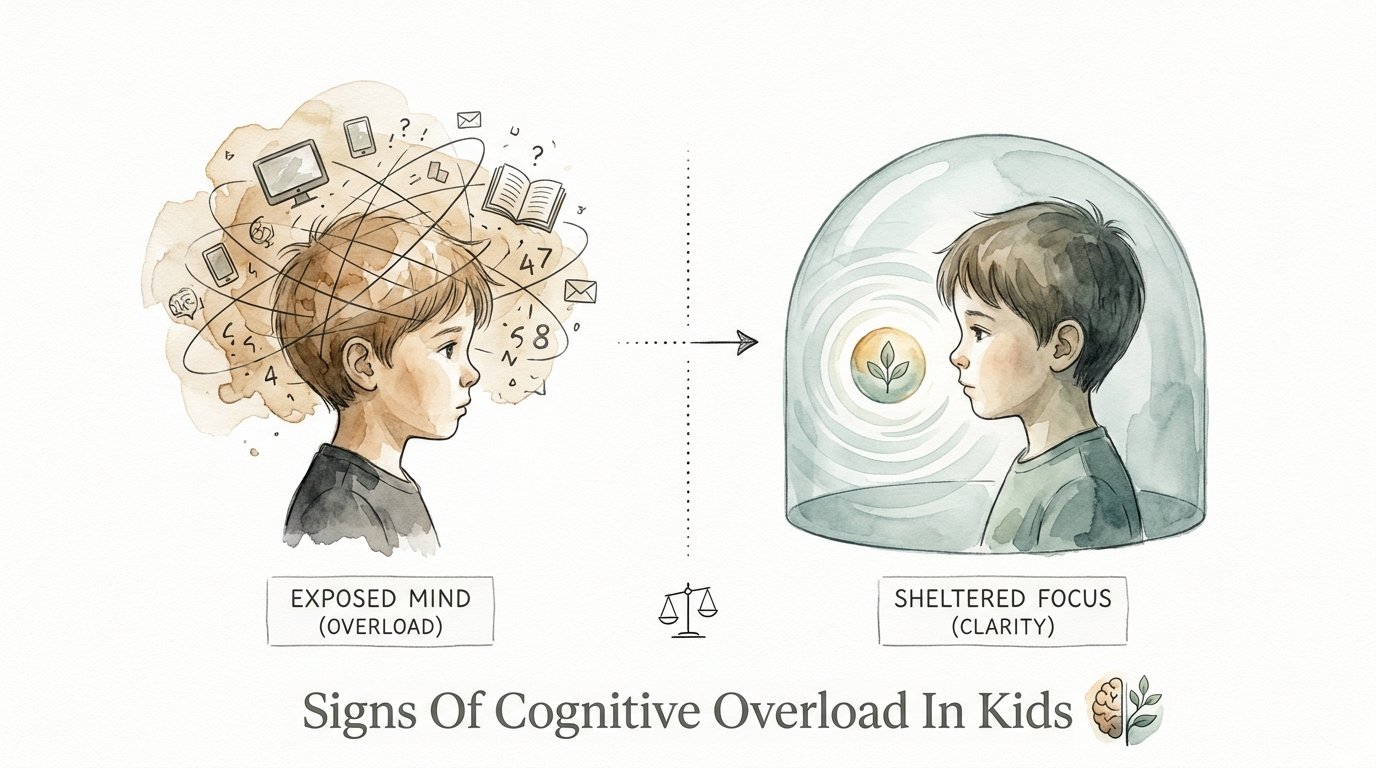
The digital world is designed to harvest their attention; the real world is designed to grow it. Every ‘ping’ and ‘pop’ in a kids’ app is a deliberate strike at their developing focus. Overuse leaves a brain ‘exposed’—unable to filter out noise or concentrate on slow, meaningful tasks. Sheltering their attention allows their concentration to take root and grow deep.

Imagine a world where your child can sit with a book for an hour without looking for a shortcut. Think about a morning where they wake up curious about the day rather than reaching for a tablet. This is not a dream from the 1950s; it is the result of protecting their cognitive environment today. We live in an era where the “Exposed Mind” is the default, but a “Sheltered Focus” is the ultimate competitive advantage for the next generation.

Understanding this shift starts with recognizing that attention is a finite resource. It is like a muscle that needs resistance to grow. Digital platforms remove all resistance, providing instant gratification that weakens the mental “core.” We are going to explore how to rebuild that strength and move your family from digital exhaustion to deep, meaningful engagement.
Signs Of Cognitive Overload In Kids
Cognitive overload happens when the amount of information entering the brain exceeds its ability to process it. In children, whose prefrontal cortex is still under construction, this looks less like “stress” and more like a total system crash. Because kids cannot always vocalize that their brain feels “full,” they show it through their behavior.
One of the most common signs is heightened irritability and “transition tantrums.” These occur when a child is forced to move from a high-stimulation environment, like a fast-paced video game, back to the “slow” real world. The drop in dopamine feels physically painful to them, leading to explosive reactions.
Mental fog and forgetfulness are also major indicators. You might notice your child struggling to follow a simple three-step instruction or losing their train of thought mid-sentence. This “Digital Dementia” is often a result of chronic sensory overstimulation. Their brains have been conditioned to process micro-bursts of information, making sustained thought feel like an impossible chore.
Other signs include:
- Shortened Attention Span: They cannot stick with a puzzle, book, or board game for more than a few minutes without getting restless.
- Poor Impulse Control: They act before thinking, struggling to wait their turn or resist immediate temptations.
- Sleep Disturbances: Difficulty falling asleep or frequent waking, often caused by the blue light and high-arousal content of late-night screen use.
- Lack of Persistence: They give up on difficult tasks immediately, expecting the “easy win” they get from apps.
How Digital Overstimulation Rewires the Brain
Apps and games are not just “fun.” They are expertly designed dopamine delivery systems. Features like “leveling up,” variable rewards, and auto-playing videos mimic the mechanics of gambling to keep the brain in a state of constant seeking. This creates a dopamine-driven feedback loop where the child’s brain starts craving the next hit of stimulation.
This constant flood of dopamine causes the brain to desensitize its receptors. Over time, the child needs more intense stimulation just to feel “normal.” Real-life activities like playing outside or reading a book don’t stand a chance against a 4K, high-speed digital environment. They feel boring because the brain’s “pleasure threshold” has been set too high.
The prefrontal cortex takes the biggest hit. This is the area responsible for executive functions: planning, impulse control, and sustained attention. Research shows that excessive screen time can actually lead to a premature thinning of the cerebral cortex. When the brain is constantly interrupted by notifications and fast-paced imagery, it never gets the chance to practice “voluntary focus.”
Instead of the brain learning to direct its own attention, it becomes “reflexive.” It reacts to whatever is brightest or loudest on the screen. This leaves the child with an “Exposed Mind”—one that is at the mercy of their environment rather than in control of it. Protecting this development requires a deliberate effort to create “low-dopamine” zones where the brain can rest and reset.
The Long-Term Benefits of Sheltered Focus
Sheltering a child’s focus is not about being “anti-tech.” It is about being “pro-development.” When you create boundaries around their attention, you are giving their brain the space it needs to mature properly. The benefits of this approach show up in every area of their life, from the classroom to the playground.
Academic performance is the most immediate winner. Children with sheltered focus possess a higher “persistence threshold.” They are willing to sit with a math problem longer and can engage in “deep work” without needing a mental break every five minutes. They aren’t just memorizing facts; they are building the cognitive architecture to solve complex problems.
Emotional regulation improves dramatically when the dopamine baseline returns to a healthy level. Without the constant “highs” and “lows” of digital stimulation, children become more resilient. They can handle boredom without a meltdown and are better at self-soothing. This emotional stability is a direct result of a brain that isn’t being constantly “shaken” by digital pings.
Creative play also makes a massive comeback. When a child isn’t being entertained by a screen, they have to entertain themselves. This is where “Sheltered Focus” turns into innovation. They start building worlds with blocks, drawing intricate stories, and engaging in the kind of unstructured play that builds “gray matter” and white matter in the brain.
Common Mistakes Parents Make with Screens
Most parents have the best intentions, but common pitfalls can accidentally undermine a child’s focus. One of the biggest errors is using screens as a “universal pacifier.” Whether it is at a restaurant, in the car, or during a long wait, reaching for the tablet prevents the child from learning how to manage their own boredom. Boredom is the “vacuum” that draws out creativity and patience.
Enforcing sudden, unexplained screen bans is another frequent mistake. This often leads to “secretive usage” and ruins the trust between parent and child. Instead of a hard ban, focus on “replacing” the time with high-value activities. Taking something away creates a hole; filling it with something better creates a habit.
Failing to model the behavior is perhaps the most damaging mistake. If you are constantly checking your phone at the dinner table while telling your child to “get off the iPad,” the message is lost. Children emulate what they see, not what they are told. Your own “Exposed Mind” serves as a blueprint for theirs.
Common pitfalls to avoid:
- Inconsistent Rules: Letting them have unlimited time one day and none the next creates anxiety and “nagging.”
- Ignoring Quality: Thinking all screen time is equal. Passive scrolling is far more damaging than interactive, educational creation.
- Screens Before Bed: Allowing blue light to suppress melatonin release, which sabotages the deep sleep necessary for brain healing.
Limitations: When Technology is Actually Helpful
Technology is not the enemy. It is a tool that, when used with “Sheltered Focus,” can expand a child’s world. Complete tech bans can sometimes backfire, leaving children isolated from their peers or unable to navigate the digital literacy required in modern schools. The goal is “Digital Minimalism,” not “Digital Exile.”
High-quality, interactive tech can support personalized learning. Apps that require active problem-solving—like coding platforms, digital art tools, or music composition software—can actually build cognitive skills. These activities are “active” rather than “passive.” The child is the creator, not just a consumer.
Video chatting with distant family members is another clear exception. The American Academy of Pediatrics notes that this kind of interactive, social tech does not have the same negative impacts as mindless video consumption. It builds communication skills and strengthens bonds, which are vital for healthy development.
Context is everything. Technology should be a “planned event” rather than a “default state.” Using a computer for a specific project at a desk is very different from lounging on a couch with a smartphone. The physical environment and the intentionality of the task change how the brain processes the experience.
Exposed Mind vs. Sheltered Focus: A Quick Comparison
| Feature | Exposed Mind | Sheltered Focus |
|---|---|---|
| Attention Style | Reactive / Fragmented | Voluntary / Sustained |
| Dopamine Baseline | High (leads to crashes) | Stable (leads to calm) |
| Boredom Tolerance | Very Low | High (leads to creativity) |
| Learning Mode | Passive Consumption | Active Creation |
| Emotional State | Impulsive / Restless | Regulated / Patient |
Practical Tips for Protecting Their Attention
Restoring focus requires a change in the home environment. You don’t need a PhD in psychology to start; you just need to be consistent. Creating “Friction” is your best friend. The more steps it takes to get to a screen, the less likely the brain is to default to it as a habit.
Implementing an “Analog Hour” every evening is a game-changer. During this time, every person in the house—parents included—engages in a non-digital activity. This might be reading, board games, or drawing. This “Sheltered Focus” window allows the nervous system to down-regulate and prepares everyone for better sleep.
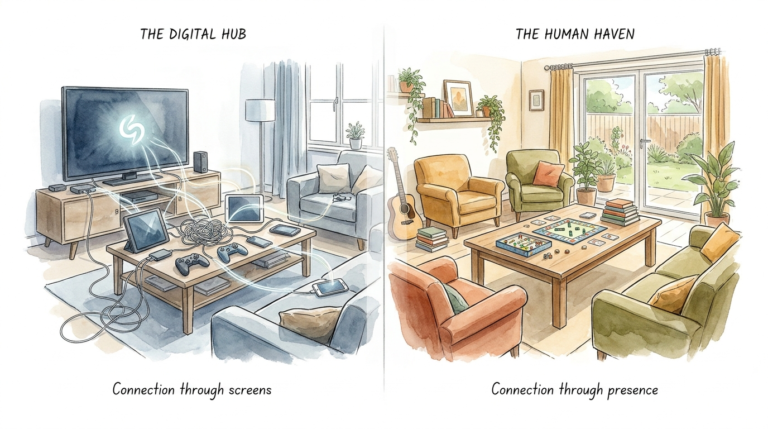
The “Foyer Phone” method is another powerful tactic. Designate a bowl or a charging station near the front door. When family members come home, the devices stay at the “gate.” This prevents the phone from becoming a “phantom limb” that follows you from room to room, siphoning off your attention during family interactions.
Other best practices include:
- Turn Off All Notifications: On any device the child uses, disable pings, red badges, and pop-ups. Information should be “pulled” when needed, not “pushed” to interrupt.
- Designate Tech-Free Zones: The kitchen table and the bedrooms should be sacred ground. No exceptions.
- High-Friction Setup: Store tablets in a high cupboard or keep them powered off when not in use. The “out of sight, out of mind” rule is incredibly effective for young children.
- Outdoor Nature Time: Nature is the ultimate antidote to cognitive overload. It replenishes voluntary focus and lowers cortisol levels almost instantly.
Advanced Tactics for Digital Minimalism
Serious practitioners of digital minimalism often move beyond “limits” and into “intentionality.” This involves auditing the apps your children use. Delete anything that uses “infinite scroll” or “autoplay.” These features are designed to bypass the prefrontal cortex’s ability to say “enough.”
Consider “Batching” tech use. Instead of allowing 15 minutes of screen time here and there throughout the day, consolidate it into one longer session on the weekend. This prevents the “fragmentation” of the child’s day and allows them to practice staying in a “deep focus” state during their offline hours.
Encourage “Analog Social Media.” Help your child host real-world gatherings, like a neighborhood craft club or a weekend soccer game. Showing them the deep value of real-world relationships provides a shield against the “low-friction” but empty validation of social media likes later in life.
Teach your children about “Attention Harvesting.” Explaining to a ten-year-old that an app is trying to “steal” their time to show them ads can be very empowering. It turns focus into a matter of “autonomy.” They aren’t just following rules; they are protecting their own minds from being manipulated by developers.
Example Scenario: From Overload to Focus
Consider the case of “Leo,” an 8-year-old who spent three hours a day on “short-form” video apps. Leo was irritable, struggled to finish his homework, and had frequent meltdowns when the tablet was taken away. His parents noticed he had stopped playing with his Lego sets, once his favorite activity.
The family started a “Digital Reset.” They moved the tablet to the foyer and replaced Leo’s morning “screen time” with 20 minutes of outdoor play. They also instituted a “no screens on school nights” rule, replacing it with a family read-aloud hour.
The first week was difficult. Leo was bored and restless. By the second week, however, something shifted. Leo started building a “city” out of his old Legos again. He was able to sit and work on his math homework for 20 minutes without asking for a break. His “Exposed Mind” was beginning to heal, replaced by a “Sheltered Focus” that allowed him to engage with the world on his own terms.
Final Thoughts
The struggle for our children’s attention is the defining parenting challenge of this decade. Technology is moving faster than our biology, and the “Exposed Mind” is the unfortunate casualty. However, by taking intentional steps to shelter their focus, we provide them with the mental clarity and emotional resilience they need to thrive.
Building a “Sheltered Focus” environment isn’t about restriction; it is about freedom. It is the freedom to think deeply, to create without distraction, and to connect with others authentically. It starts with small, daily choices that prioritize the “slow” real world over the “fast” digital one.
Experiment with these strategies in your own home. Start with one “Analog Hour” or a “Tech-Free Table.” You will likely find that as the digital noise fades, your child’s natural curiosity and concentration will begin to flourish. Protecting their mind today is the greatest gift you can give their future self.
Sources
1 sarahwilsonpsychology.co.uk | 2 potsdam.edu | 3 schreiberpediatric.org | 4 healthywithin.com | 5 thejacobsladdergroup.org | 6 calnewport.com | 7 greenchildmagazine.com | 8 instrucko.com | 9 everymoviehasalesson.com | 10 healthychildren.org | 11 compasscounselingpsych.com | 12 simplebyemmy.com | 13 thegoodtrade.com