sunday family night ideas without screens
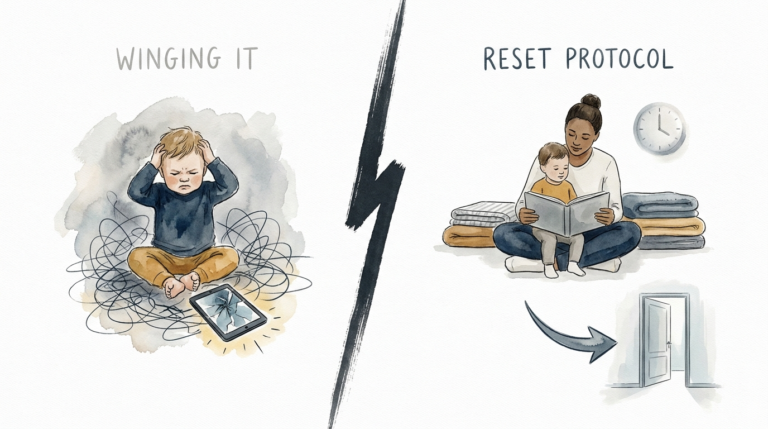
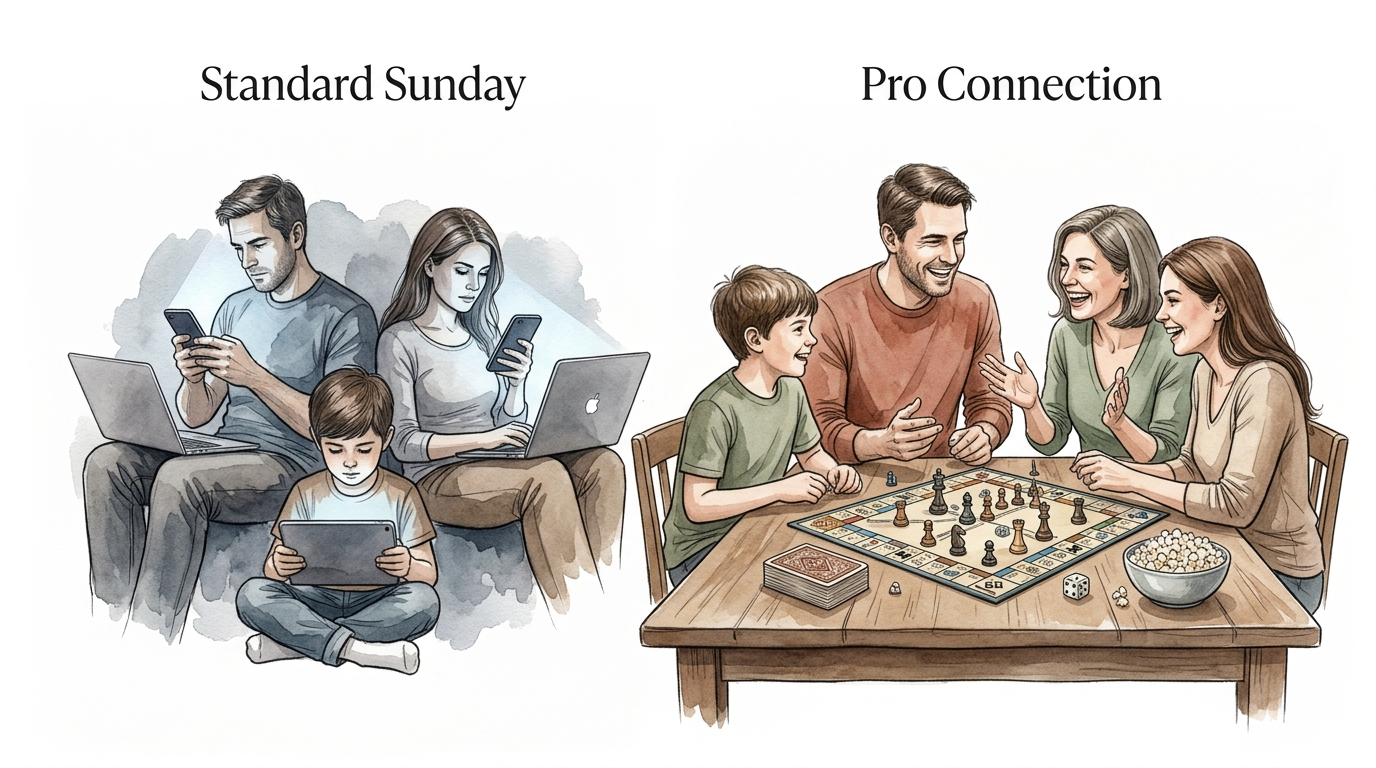
Same room, different worlds. Let’s fix that. The ‘Standard’ Sunday is a slow slide into the work week via Netflix. The ‘Pro’ Sunday is a tactical reset that builds family bonds. Which one are you choosing?
Most families spend their Sunday evenings in a “digital coma.” Everyone is physically present, but mentally, they are light-years apart. One person is scrolling through travel reels on Instagram. Another is lost in a YouTube rabbit hole. The kids are grinding for XP in a virtual world while you worry about Monday’s 9 AM meeting.
This habit feels like rest, but it actually drains your battery. Screens keep your brain in a state of high-alert alertness while simultaneously isolating you from the people on your couch. To truly prepare for the week, you need more than just “downtime.” You need a structured, intentional reset that puts your relationships first.
sunday family night ideas without screens
A screen-free Sunday family night is an intentional block of time where all digital devices are powered down to prioritize face-to-face connection. This isn’t just about “taking a break” from tech. It is a tactical maneuver designed to lower the collective stress level of the household and strengthen emotional ties.
In real-world terms, this is where the “Pro Connection” happens. It replaces passive consumption with active engagement. Instead of watching a story on a screen, you are creating one in your living room. Research indicates that more than 60% of parents want to reduce their children’s screen time, yet many struggle to find viable alternatives that don’t end in a tantrum.
This practice exists to combat the “technology creep” that fills every gap in our day with notifications and blue light. It is used in high-functioning households to ensure that children learn essential social skills, such as reading facial expressions and active listening. Think of it as a “nervous system reset.” You are trading the high-speed dopamine hits of a smartphone for the slow-burning, long-lasting satisfaction of a shared laugh or a solved puzzle.
How It Works: Transitioning to a Screen-Free Evening
Moving from a high-stimulation digital environment to a low-stimulation physical one requires a plan. You cannot simply pull the plug and expect everyone to be happy. You need a process.
The Power-Down Ritual
Establish a “Tech Vault” or a “Phone Jail.” This is a central basket where all devices go at a specific time, such as 5:00 PM. Make it a ceremony. Let the kids lead the charge. When the devices are out of sight, the brain stops looking for them.
Setting the Scene
Change the environment. Lower the overhead lights and use lamps or candles. This signals to the brain that the day is winding down. Put on some low-fidelity background music—not from a screen, but from a dedicated speaker. The sensory shift is crucial for moving out of “work mode.”
Choosing the Anchor Activity
Every successful night needs an “Anchor.” This is the main event. It could be a long-form board game, a complex recipe, or a creative project. The goal is “deep play.” This is activity that requires focus and cooperation. Avoid activities that are too short or too simple, as they leave gaps where people will instinctively reach for their phones.
Benefits of a Pro Sunday Connection
The advantages of this approach are both measurable and observable. You aren’t just “playing games”; you are rewiring your family’s dynamic.
1. Deeper Emotional Bonds
Face-to-face interaction is the foundation of trust. Without screens, you are forced to make eye contact. You hear the nuances in a child’s voice. You notice the small details of their day that usually get buried under the noise of a digital feed.
2. Improved Sleep Quality
Blue light from screens suppresses melatonin, the hormone that tells your body it’s time to sleep. By eliminating screens in the evening, you allow everyone’s circadian rhythm to reset. Families often find they fall asleep faster and stay in deep sleep longer after a screen-free night.
3. Enhanced Social-Emotional Learning
Children learn empathy and problem-solving through real-world interaction. A board game teaches them how to lose gracefully. A collaborative cooking session teaches them how to follow instructions and work as a team. These are life skills that a tablet cannot provide.
4. Reduced Anxiety
Constant connectivity often means constant comparison. Unplugging removes the “FOMO” (fear of missing out) and allows the family to exist in the present moment. This lowers cortisol levels and creates a “safe harbor” feeling within the home.
Challenges and Common Mistakes
The transition to a “Pro” Sunday isn’t always smooth. Many families fail because they fall into predictable traps.
The “Boredom” Panic
When you first remove screens, children (and adults) will experience boredom. This is actually a sign of “digital withdrawal.” The mistake most parents make is immediately jumping in to entertain the kids. Allow the boredom to exist. Boredom is the precursor to creativity. If you wait it out, your kids will eventually invent a game or pick up a book.
Lack of Planning
A “Standard” Sunday happens by default. A “Pro” Sunday happens by design. If you haven’t decided what you’re doing by 5:00 PM, someone will turn on the TV out of habit. Always have your anchor activity and your meal plan ready before the “Power-Down” begins.
Being Too Rigid
If the night feels like a forced march, everyone will resent it. The goal is connection, not compliance. If a game is causing more stress than joy, pivot. The schedule should be a framework, not a cage.
Limitations: When This Method Faces Resistance
There are realistic constraints to consider. This approach may not work perfectly in every scenario.
Age Discrepancies
If you have a toddler and a teenager, finding a single activity that engages both is difficult. In these cases, you may need to split into “squads” for the anchor activity and regroup for dinner. The teenager may feel “punished” by the lack of tech, which requires a conversation about the “why” behind the reset.
Space Constraints
Not every home has a massive dining table or a backyard. In smaller apartments, you have to be more creative with your activities. Floor-based activities, like building a blanket fort or playing “floor-is-lava,” are excellent workarounds.
Work Emergencies
For some professionals, being completely “off-grid” for five hours on a Sunday is not feasible. If you must check emails, set a “window.” Step out of the family zone, handle the task in 15 minutes, and return to the group. Do not “doomscroll” while you are in the family space.
Standard Sunday vs. Pro Connection
Understanding the difference between a passive Sunday and a tactical reset is best seen in a side-by-side comparison.
| Feature | Standard Sunday (Passive) | Pro Connection (Active) |
|---|---|---|
| Primary Activity | Netflix / Doomscrolling | Board games / Hands-on projects |
| Energy Level | Low / Drained | Focused / Renewed |
| Social Dynamic | Isolation in the same room | Active collaboration |
| Mental State | “Sunday Scaries” (Anxiety) | Grounded and prepared |
| Communication | Surface-level / Grunts | Deep stories / Shared laughter |
Practical Tips for a Successful Screen-Free Night
To make this routine stick, you need actionable tactics. These tips help you optimize the experience and ensure it becomes a tradition everyone looks forward to.
- The Rotating Lead: Let a different family member choose the anchor activity each week. This gives everyone “skin in the game” and ensures variety.
- Theme Your Nights: Use themes like “Breakfast for Dinner” or “Indoor Camping.” A theme provides a natural structure and makes the evening feel special rather than restrictive.
- Invest in “Forever Games”: Stock up on high-quality board games or card decks that have high replay value. Classics like Jenga or new favorites like Taco vs. Burrito are great starting points.
- Use “Low-Supply” Games: You don’t need a closet full of toys. Learn games that require only your imagination, such as “Ninja” or “Stinky Pinkies.”
- The 15-Minute Nature Burst: If the energy in the house feels stagnant, go for a quick “Night Walk” with flashlights. The change of air and movement acts as a reset button.
Advanced Considerations for Long-Term Success
For those who want to take their Sunday Reset to the next level, consider how this night integrates with your overall weekly strategy.
The Family “Sync”
Use the last 20 minutes of your screen-free block to “sync” the calendars. Discuss the upcoming week’s commitments, school projects, and meal plans. Doing this without screens means everyone is focused and no one is distracted by a pinging notification. It turns a chore into a moment of shared clarity.
Neurobiological Priming
Understand that you are training your family’s brains to find pleasure in “low-dopamine” activities. This builds resilience against the addictive nature of modern tech. Over time, your children will develop a higher threshold for boredom and a greater capacity for deep work—a massive competitive advantage in the modern world.
Scaling for Large Groups
If you have a large extended family or frequent guests, create “stations.” One group might be doing a puzzle in the corner, while another is playing a high-energy game in the living room. Rotate the groups every 45 minutes to keep the energy moving and ensure everyone interacts with everyone else.
Examples of Screen-Free Sunday Scenarios
To help you visualize how this looks in practice, here are three realistic scenarios based on different family types.
Scenario 1: The High-Energy Household
The family starts with “The Garage Gym.” They move the car out and spend 30 minutes doing a basic obstacle course or riding scooters. This burns off the “witching hour” energy. They then move inside for a “Taco Bar” dinner where everyone has a specific prep job (chopping lettuce, grating cheese). The anchor activity is a tournament of “Ninja,” a high-movement game where the goal is to tag your opponent’s hand in a single fluid motion.
Scenario 2: The Creative Duo (Parent + Child)
They spend the afternoon building a massive blanket fort in the living room using every pillow in the house. Dinner is eaten inside the fort by candlelight. The anchor activity is storytelling. They use a “Story Starter” deck—a set of cards with prompts—to invent a shared adventure. This focuses on imagination and language development without the need for any digital tools.
Scenario 3: The Multi-Generational Reset
Grandparents, parents, and kids gather for a “Sunday Roast.” The screens go in the basket as soon as the door opens. After dinner, they play “Stinky Pinkies.” One person thinks of a rhyming pair (like “Fox Box”) and gives a clue (“An orange animal in a container”). The group has to guess the rhyme. This game scales from simple one-syllable rhymes for the kids to complex riddles for the adults.
Final Thoughts
Transforming your Sunday evening from a digital slide into a tactical reset is one of the most powerful moves you can make for your family’s health. It moves you from a state of passive consumption to one of active connection. It replaces the “Sunday Scaries” with a sense of groundedness and shared purpose.
Start small. You don’t have to go five hours without a phone on your first try. Commit to a 90-minute window this Sunday. Choose an anchor activity, put the phones in a basket, and see what happens. You might find that the “boredom” you feared is actually the space where your family’s best memories are made.
Consistency is the secret sauce. When this becomes a non-negotiable part of your week, you aren’t just fixing your Sundays. You are building a culture of presence that will serve your family for years to come.
Sources
1 connecticutchildrens.org | 2 msrachelhollis.com | 3 cleanmama.com | 4 neathousesweethome.com | 5 bedthreads.com | 6 screenfree.org | 7 childrenshospital.org | 8 haven-psychology.com | 9 haven-psychology.com | 10 oureverydayparables.com | 11 b1057.com | 12 thechildunplugged.com | 13 ssww.com | 14 bloomokids.com | 15 muddypuddles.com | 16 medium.com | 17 bestofthislife.com | 18 medicalnewstoday.com | 19 simchafisher.com