screen time chart for adults
Is your morning routine building you up or breaking you down? We set rules for our kids, but we live in a fragile state of constant digital reactivity. Use this chart to build a resilient schedule that puts your focus first.
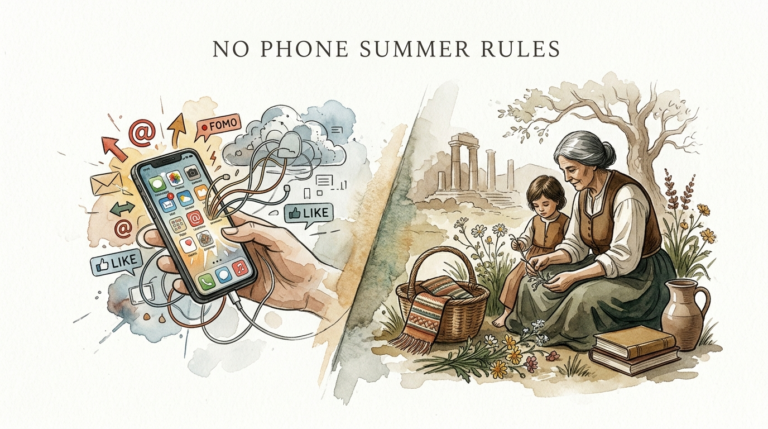
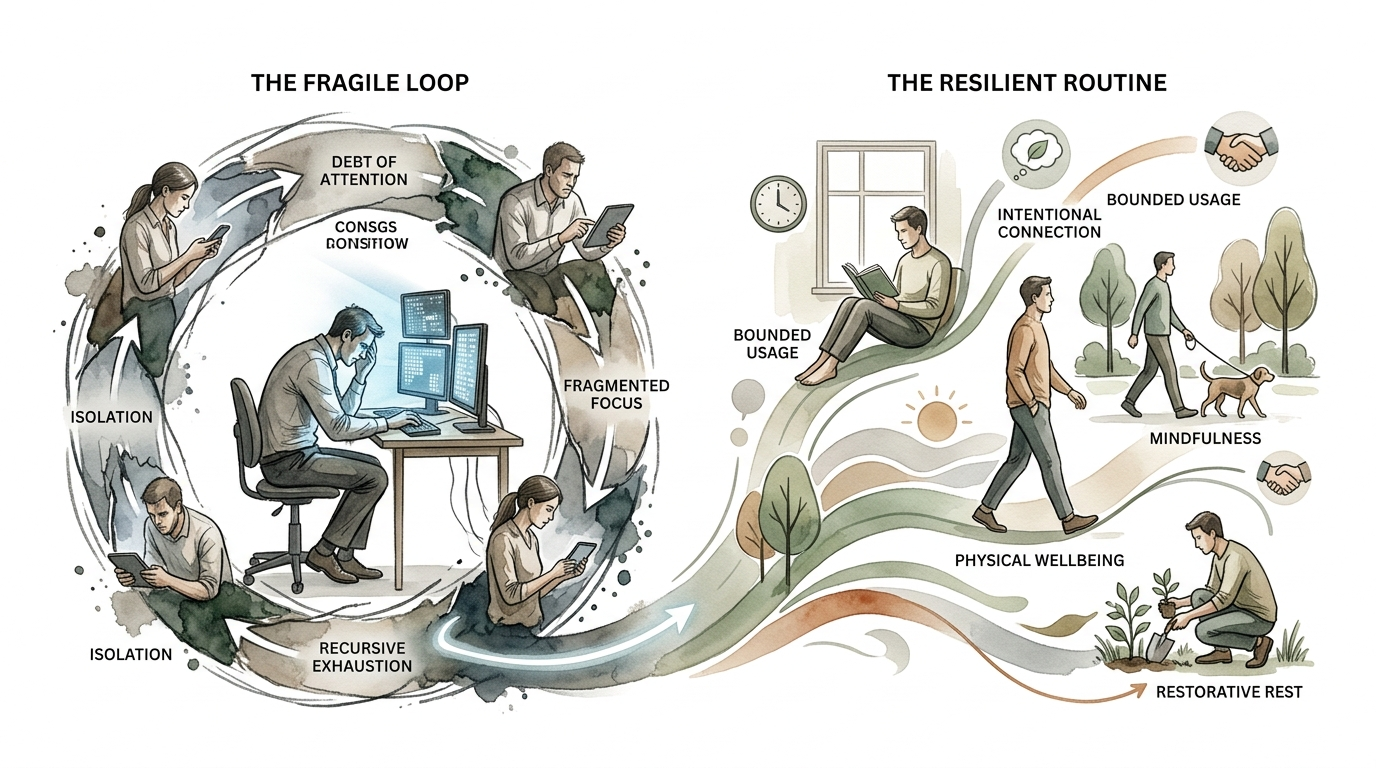
Most of us start the day in a “Fragile Loop.” The alarm goes off, and before our feet hit the floor, we are scrolling. We check emails, look at news headlines, and dive into social media feeds. This immediately puts the brain into a reactive state, chasing dopamine hits and spiking cortisol levels before we even have a chance to breathe.
Building a resilient routine is about reclaiming that first hour. It is about shifting from being a consumer to being a creator. When you control your digital intake, you control your mental energy. This guide will show you how to move from digital exhaustion to peak performance using a structured approach to your daily tech use.
screen time chart for adults
A screen time chart for adults is a visual framework designed to categorize and limit digital interactions throughout the day. Unlike a child’s chore chart, which focuses on earning rewards, an adult chart focuses on preserving cognitive resources. It serves as a roadmap for when to be connected and when to be intentionally offline.
In the real world, we use these charts to combat “continuous partial attention.” This is a state where you are never fully focused on one task because you are constantly monitoring multiple digital channels. The average American adult spends about 7 hours and 4 minutes on screens daily. A chart helps you claw back that time for deep work, exercise, and meaningful rest.
Think of it as a budget for your brain. Just as you wouldn’t spend your entire paycheck in the first hour of the month, you shouldn’t spend your entire focus in the first hour of the day. A screen time chart typically breaks the day into “Red Zones” (no tech), “Yellow Zones” (intentional utility), and “Green Zones” (leisure or work).
How to Build Your Resilient Schedule
Creating a schedule that actually works requires more than just willpower. It requires a system that anticipates your weaknesses. If you rely on discipline alone, you will eventually fail when stress levels rise. Instead, use these steps to build a resilient structure.
First, perform a digital audit. Look at your phone’s built-in tracking to see where your time actually goes. Most people underestimate their usage by 30% to 50%. Once you have the data, categorize your apps into “Tools” (maps, banking, utility) and “Temptations” (social media, infinite scrolls, games).
Next, implement the “16-8 Digital Fast.” Just as intermittent fasting restricts eating to an eight-hour window, digital fasting restricts non-essential screen time. Aim for 16 hours of “low-tech” living, which includes sleep and the hours immediately before and after it. This leaves an eight-hour window for focused work and intentional connection.
Finally, set up physical barriers. Use a timer lock-box or a designated “phone hotel” in a different room. If your phone is in your pocket, your brain is already losing 10% of its cognitive capacity just trying to ignore it. Moving it to another room eliminates the “Just One Check” trap.
Benefits of Digital Boundaries
The most immediate benefit of a screen time chart is a massive reduction in daily stress. Every notification triggers a small cortisol spike, keeping your nervous system in a state of high alert. By batching your notifications and checking them only at specific times, you allow your body to exit “survival mode” and enter “thrive mode.”
You will also notice a significant increase in your attention span. Constant scrolling trains the brain to expect a reward every few seconds. When you remove that stimulus, your brain slowly rewires itself for deeper, more sustained focus. This is essential for high-level problem-solving and creative work.
Better sleep is another undeniable advantage. Blue light from screens suppresses melatonin, the hormone responsible for sleep. By cutting off screens two hours before bed, you allow your circadian rhythm to reset. This leads to deeper REM cycles and a feeling of being genuinely refreshed in the morning.
Challenges and Common Mistakes
The biggest mistake adults make is trying to go “cold turkey” on all technology. This is unsustainable and often leads to a “binge” of scrolling later in the week. Technology is a tool, not an enemy. The goal is intentionality, not total abstinence.
Another pitfall is the “work excuse.” Many people believe they must be available 24/7 for work emergencies. In reality, very few roles require instant responses at 10 PM on a Tuesday. Failing to set boundaries with colleagues leads to burnout and a “Fragile Loop” where your personal life is constantly interrupted by digital noise.
Lastly, watch out for “app-switching fatigue.” This happens when you constantly bounce between Slack, email, and project management tools. Even if it feels like work, this rapid switching drains your mental battery. A resilient routine focuses on single-tasking during “deep work” blocks.
Limitations: When This May Not Work
While a screen time chart is powerful, it isn’t a one-size-fits-all solution. There are seasons of life where rigid schedules are impossible. New parents, for instance, may find that their “routine” is dictated entirely by a newborn’s needs. In these cases, the goal is “grace over perfection.”
Environmental limitations also play a role. If your entire job requires you to be on a computer for eight hours, you can’t simply stop using screens. For these practitioners, the focus should shift to the 20-20-20 rule: every 20 minutes, look at something 20 feet away for 20 seconds to reduce eye strain and mental fatigue.
Additionally, those in high-stakes emergency roles—like doctors or first responders—may need to remain reactive by necessity. For these individuals, the “Resilient Routine” happens during their off-hours, focusing on extreme recovery and total digital disconnection when not on call.
Comparison: The Fragile Loop vs. The Resilient Routine
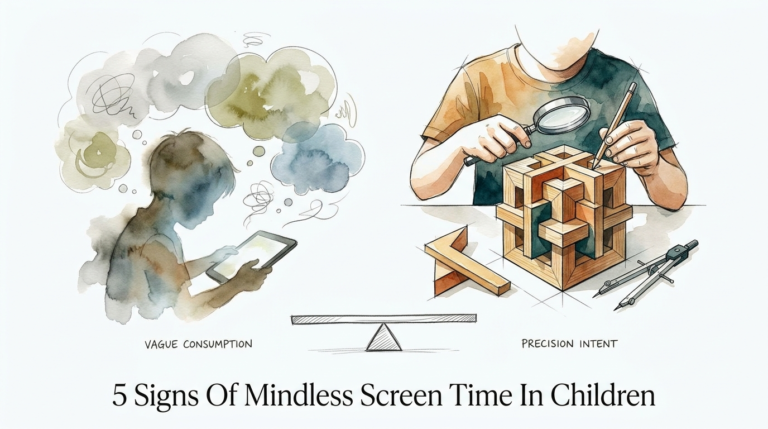
Understanding the difference between these two states is key to making a lasting change. The Fragile Loop is built on reactivity, while the Resilient Routine is built on proactivity.
| Feature | The Fragile Loop | The Resilient Routine |
|---|---|---|
| Primary Driver | External Notifications | Internal Priorities |
| Morning Habit | Instant Scrolling | Focused Reflection/Movement |
| Focus Level | Fragmented | Deep and Sustained |
| Energy Outcome | Drained/Fried | Energized/Calm |
| Resilience | Collapses under stress | Survives real-life interruptions |
Practical Tips and Best Practices
Start by turning your phone to grayscale. Removing the bright colors makes apps like Instagram and TikTok significantly less rewarding to the brain. This simple tweak can reduce your screen time by up to 20% almost overnight because the “dopamine hits” are less intense.
Delete social media apps from your phone and access them only via a desktop browser. This adds “friction” to the habit. If you have to walk to a computer and log in, you are far less likely to scroll mindlessly for an hour. Friction is the best friend of the resilient practitioner.
Use “Do Not Disturb” as your default setting. Instead of allowing your phone to interrupt you whenever it wants, set specific “windows” where you manually check for messages. This puts you back in the driver’s seat of your own attention.
Advanced Considerations
For those looking to optimize even further, consider the role of neuroplasticity. Your brain is constantly changing based on how you use it. When you engage in deep, focused work, you strengthen the neural pathways associated with concentration. Conversely, when you scroll, you are literally training your brain to be distractible.
Understand the “Cognitive Switching Penalty.” Every time you check a “quick” email while working on a big project, it takes your brain an average of 23 minutes to return to full focus. Over an eight-hour day, these “quick checks” can destroy your entire productivity output.
You might also explore the impact of light spectrums beyond just blue light. Morning sunlight exposure for 10 to 15 minutes helps set your internal clock and improves mood more effectively than any app. Combining low screen time with high natural light exposure is the “gold standard” for cognitive health.
Example Scenario: The Professional Reset
Consider Sarah, a marketing executive who found herself constantly “on.” She would wake up to 50 Slack messages and spend her entire morning responding to them while still in bed. By 10 AM, she felt mentally exhausted and had accomplished none of her own strategic goals.
Sarah implemented a screen time chart. She designated 7 AM to 8:30 AM as a “No-Screen Zone” for exercise and reading. She set her first “Batch Check” for 9 AM. During the workday, she used the “Brick” method—completely locking her distracting apps for 90-minute sprints of deep work.
Within two weeks, Sarah reported a 67% reduction in her non-work screen time. More importantly, her anxiety levels plummeted. She was getting more done in less time, allowing her to truly disconnect in the evening without the lingering guilt of “missed work.”
Final Thoughts
Reclaiming your morning and your focus is not about hating technology. It is about recognizing that your attention is your most valuable resource. If you do not protect it, the digital world will happily consume it for you.
A screen time chart for adults provides the guardrails necessary to navigate a hyper-connected world without losing your sanity. By shifting from a Fragile Loop to a Resilient Routine, you ensure that your energy is spent on things that actually matter.
Experiment with these schedules. Start small, perhaps by reclaiming just the first 30 minutes of your day. As you feel the benefits of clarity and calm, you will find it easier to expand those boundaries. Your brain will thank you for the space to breathe.
Sources
1 sevendaysvt.com | 2 freedom.to | 3 jaimedicalsystems.com | 4 glosso.fr | 5 medium.com | 6 analgesichealthcare.com | 7 starkhelpcentral.com | 8 elevationbehavioraltherapy.com | 9 stanford.edu | 10 stanford.edu | 11 nuvancehealth.org