kids always on tablet
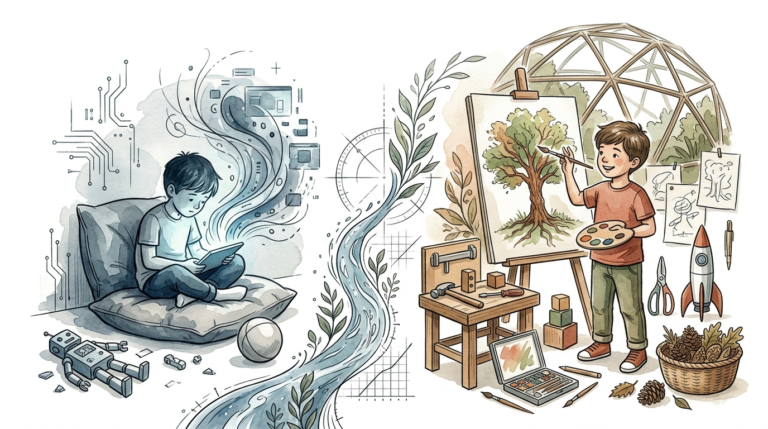
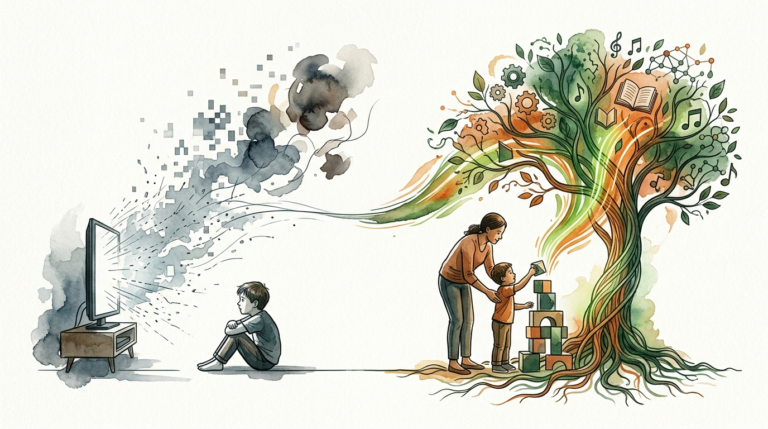
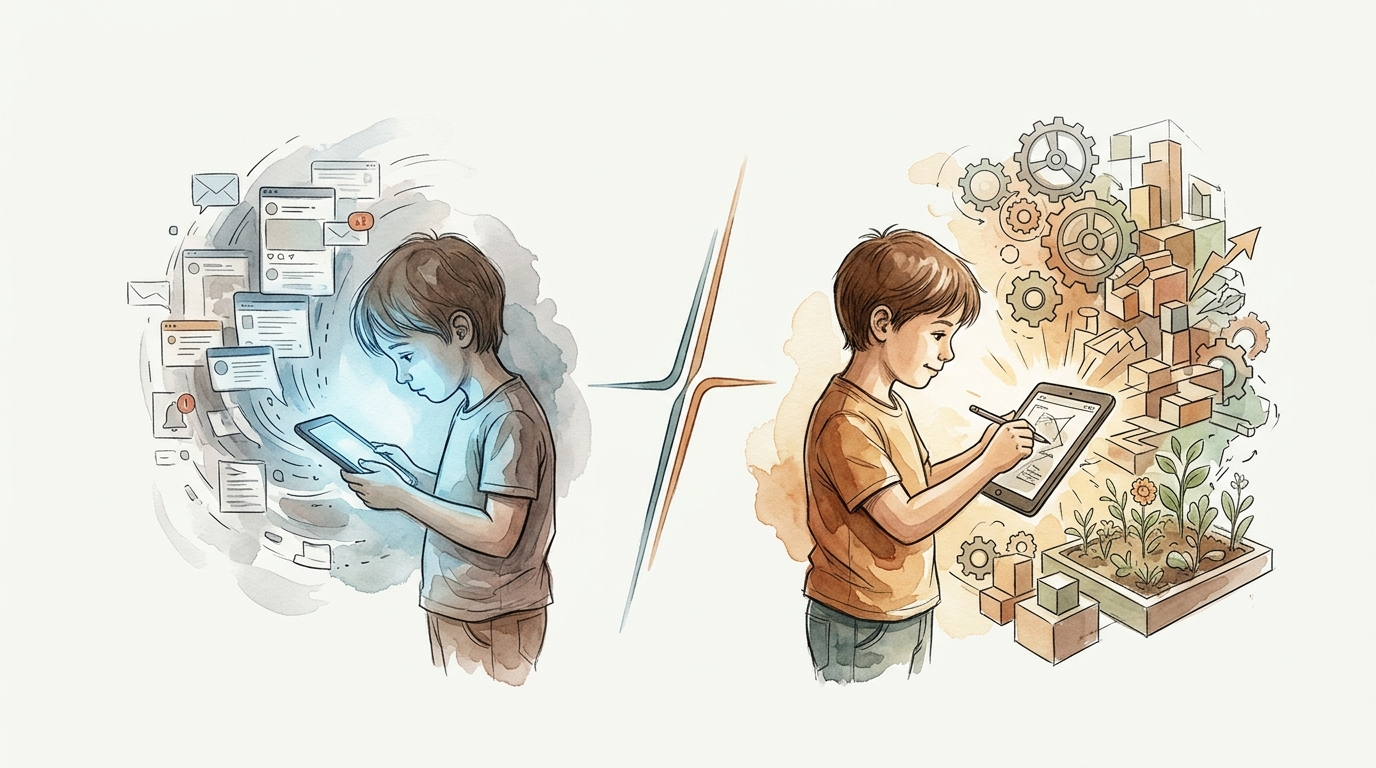
Are they watching life happen, or making it happen? Being ‘always on the tablet’ trains the brain to wait for someone else’s creativity to provide a spark. Give them tools, not apps. Watch the transition from a passive consumer to an active producer.
The modern home often hums with the soft blue glow of a screen. We see it at the dinner table, in the backseat of the car, and on a lazy Saturday morning. It is the easiest way to find a moment of peace, but we must ask ourselves what that peace costs in the long run.
When we talk about kids and technology, we usually focus on the minutes or hours spent scrolling. We worry about “screen time” as a flat metric. However, the real issue isn’t just the clock—it is the mindset. We are raising a generation of expert consumers who know exactly how to find the next video, but may struggle to build their own world from scratch.
Moving from a consumer to a producer is a fundamental shift in how a child views the world. It changes them from someone who waits to be entertained into someone who seeks to solve, create, and contribute. This guide will walk you through why this shift matters and how you can facilitate it in your own home.
kids always on tablet
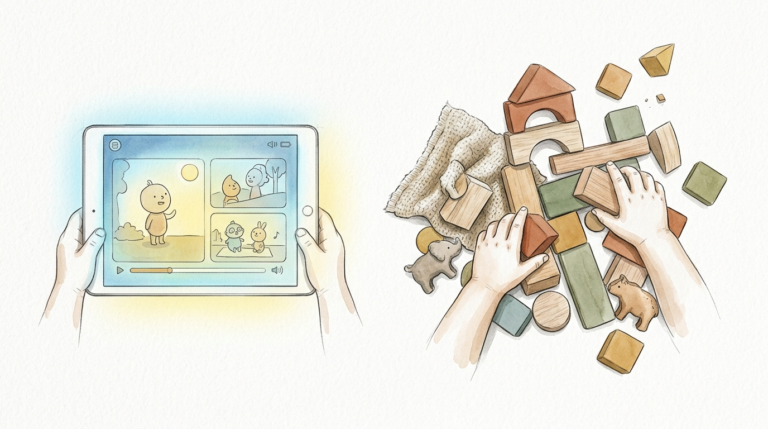
The phrase “kids always on tablet” has become a shorthand for a specific kind of modern childhood. It describes a state of passive consumption where the device acts as an external brain. Instead of a child looking around a room and thinking, “What can I build with these blocks?” they wait for an algorithm to feed them the next spark of interest.
In the real world, this looks like a child who is perfectly content to watch four hours of someone else playing with toys on YouTube, yet becomes bored or frustrated within five minutes of having those same toys in front of them. The tablet provides a high-intensity reward with zero effort. The brain begins to crave the “easy win,” making the effort-filled work of actual creation feel dull by comparison.
This phenomenon exists because tablets are designed to be frictionless. They are built by the world’s smartest engineers to keep a user engaged for as long as possible. For a developing mind, this “frictionless” environment can actually be a hindrance. Growth happens where there is resistance—where a child has to figure out why a tower keeps falling or how to mix two colors to get the right shade of green.
We see this play out in classrooms and at home. Research shows that passive screen time, such as watching videos or mindless scrolling, is often linked to shorter attention spans and weaker executive function. The brain is effectively being “trained” to be a recipient, not an agent of change. When a child is “always on the tablet,” they are missing out on the critical trial-and-error that builds true intelligence.
The Science of Passive vs. Active Engagement
The brain is a muscle that strengthens based on the demands placed upon it. When a child is in “producer mode”—painting, building a fort, or even coding a simple game—the prefrontal cortex is lit up. This is the area responsible for planning, problem-solving, and emotional regulation. They are making decisions, failing, and trying again.
Contrast this with “consumer mode.” In this state, the brain is often in a state of hyper-arousal but low cognitive demand. The reward centers are flooded with dopamine from the fast-paced visuals and sounds, but the parts of the brain responsible for deep thought remain relatively quiet. Over time, this imbalance can make it harder for children to focus on “low-stimulation” tasks like reading a book or finishing a puzzle.
How the Transition Happens: Moving Toward Production
Transitioning a child from a consumer to a producer isn’t about throwing the tablet in the trash. It’s about changing the tools they use and the expectations you set. It requires a move from “apps that do the work for you” to “tools that require you to do the work.”
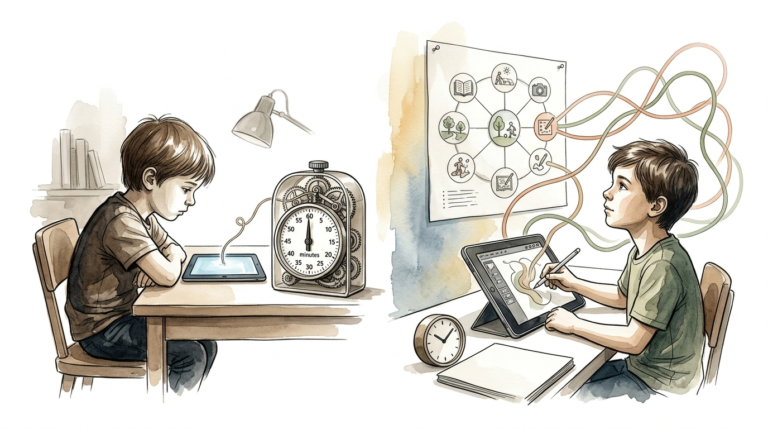
Start by auditing the current digital environment. If your child’s tablet is full of “freemium” games that reward them for just clicking buttons, they are being trained to be a consumer. If, however, they are using a digital music workstation or a stop-motion animation app, they are learning the mechanics of production. The goal is to move the screen from a “television” to a “workbench.”
Step 1: Identify the Hook. What does your child consume? If they watch Minecraft videos, they clearly have an interest in building. If they watch art tutorials, they have an interest in aesthetics. Use their consumption habits as a map for their production potential.
Step 2: Introduce the Tools. Replace the passive app with a creative tool. Instead of watching a drawing video, give them a high-quality sketchbook and real charcoal. Instead of watching someone play a game, introduce them to Scratch—a block-based coding language developed at MIT that lets them build their own games.
Step 3: Celebrate the Process, Not Just the Product. A consumer is focused on the end result—the “like” or the “view.” A producer finds joy in the struggle. When your child builds something, don’t just say “that’s pretty.” Ask them, “How did you figure out how to make that part work?” This reinforces the value of the effort.
Step 4: Create a “Maker Space.” Whether it’s a corner of the living room or a dedicated desk, children need a place where they can leave projects unfinished. Production is messy and often takes time. If they have to clean up their “production” every thirty minutes, they will likely retreat back to the “clean” and easy consumption of the tablet.
The Consumer vs. The Producer: A Comparison
Understanding the difference between these two mindsets is crucial for any parent or educator. It is the difference between being a passenger in life and being the driver. Below is a breakdown of how these mindsets differ across several key developmental areas.
| Feature | The Consumer Mindset | The Producer Mindset |
|---|---|---|
| Source of Satisfaction | External: Likes, views, or new content. | Internal: Solving a problem or finishing a project. |
| Response to Boredom | Frustration: “There’s nothing to watch.” | Curiosity: “What can I make with this?” |
| Attention Span | Short: Needs constant rapid-fire stimulus. | Long: Can enter a “flow state” during creation. |
| Skill Development | Stagnant: Learns how to navigate interfaces. | Growth: Learns mechanics, logic, and craft. |
| Resilience | Low: Gives up when the tech glitches. | High: Sees a “glitch” as a problem to be solved. |
When you look at this table, it becomes clear why we want to tilt the scales toward production. The skills learned as a producer—resilience, internal motivation, and long-form focus—are exactly the skills needed for success in adulthood.
Benefits of Raising a Producer
The benefits of this transition are observable and measurable. Parents who successfully guide their children toward a producer mindset often report a significant decrease in “tablet tantrums” and an increase in self-directed play. Here are some of the practical advantages:
- Enhanced Executive Function: Designing a project requires planning, organization, and time management. These are the “CEO skills” of the brain.
- Increased Self-Efficacy: Every time a child makes something—a cake, a birdhouse, or a digital story—they prove to themselves that they can impact the world.
- Natural STEM Learning: Production often involves math and logic. Measuring wood for a birdhouse or calculating the speed of a character in a game makes abstract concepts feel real.
- Emotional Regulation: Deep, creative work often induces a “flow state.” This state is naturally calming and helps children learn to manage their own focus and energy.
- Better Social Skills: Producers often want to share their work or collaborate with others. This leads to deeper, project-based social interactions rather than just “parallel play” on devices.
Ultimately, a child who is a producer is a child who feels powerful. They are not waiting for the world to give them something; they are busy giving something to the world.
Challenges and Common Mistakes
The path from “always on the tablet” to “always in the workshop” is rarely a straight line. There will be resistance. The most common mistake parents make is trying to force the change overnight. If you take away the tablet and expect them to immediately start oil painting, you are going to face a very frustrated child.
The “Cold Turkey” Trap: Sudden removal of screens often leads to high-stress home environments. Instead, use a “bridge” approach. Introduce a creative app that feels like a game but is actually a tool. Let them earn “production time” or “tool money” rather than just taking things away.
The Over-Structuring Error: Many parents think “production” means signed-up lessons every day. If every minute of their creative time is directed by an adult, they are still just “consuming” your instructions. True production requires autonomy. They need to be allowed to make things that look “bad” or don’t work correctly.
Mistaking Education for Production: Just because an app is “educational” doesn’t mean it is productive. An app that asks a child to identify letters by tapping them is still a consumption model. An app that lets them draw their own letters and animate them is a production model. Look for the “creative output.”
Limitations and Realistic Constraints
It is important to acknowledge that total production all the time is not realistic. We all need to consume sometimes. Watching a high-quality documentary, reading a book for pleasure, or having a video call with a grandparent are all forms of “consumption” that have immense value. The goal is balance, not elimination.
Furthermore, not every child will gravitate toward the same tools. One child might love the “production” of baking, while another might find it tedious. One might love coding, while another wants to be outside building a fort. As a parent, your job is to provide the “buffet” of tools and see what sticks.
Environmental factors also play a role. If you live in a small apartment, “making” might look different than if you have a backyard and a garage. The key is to find the “production” that fits your life. Digital production (coding, digital art) is a fantastic option for families with limited physical space or high mobility.
Practical Tips for Immediate Application
If you want to start this transition today, here are some actionable steps you can take. These are designed to be “low-barrier” ways to shift the energy in your home.
- The “One-for-One” Rule: For every hour of passive consumption (watching TV/YouTube), the child must spend an hour in “production” (drawing, building, writing, or practicing a skill).
- Mute the Audio: If they are watching a video, encourage them to mute it and narrate what is happening themselves. This small shift turns them into a storyteller rather than just an observer.
- Upgrade the Hardware: If your child is interested in digital art, a proper stylus can change the experience from “smearing fingers” to “precision drawing.” It makes the activity feel like a craft.
- Leave “Boredom” Alone: When your child says they are bored, resist the urge to provide a solution. Boredom is the “soil” in which the seeds of production grow. Let them sit in the discomfort until they find their own way out.
- Model the Behavior: If you are always on your phone scrolling through news, you are modeling consumption. Let them see you reading, fixing a leaky faucet, or working on a hobby.
Advanced Considerations: The Career Trajectory
For those looking at the long-term impact, the producer mindset is one of the most valuable assets a child can carry into the future workforce. In an era of AI and automation, the ability to simply “follow instructions” or “consume data” is becoming less valuable. The world is increasingly rewarding those who can synthesize information to create something new.
A child who grows up building things—whether they are digital or physical—is learning how to learn. They are developing a “Growth Mindset,” the belief that their abilities can be expanded through effort. This persistence is the number one predictor of success in complex fields like engineering, medicine, and the arts.
Think about the “Architect Mindset.” An architect doesn’t just look at a pile of bricks; they see the structure that could be there. By giving your kids tools instead of apps, you are training them to be the architects of their own lives. They learn to look at a problem and say, “I can build a solution for this.”
Example Scenario: The Evolution of a Producer
Let’s look at a realistic transition. Meet Leo, a 9-year-old who was “always on the tablet.” Most of his time was spent watching “Let’s Play” videos of other people playing Minecraft.
His parents noticed he loved the *stories* people told while they played. Instead of banning the tablet, they introduced a stop-motion animation kit—a small tripod, some clay, and a simple app. At first, Leo was frustrated. It took him 20 minutes to make a 5-second clip. He wanted the “easy win” of the YouTube video.
But his parents didn’t step in. They let him struggle. By day three, he had figured out how to make his clay figure “jump.” By week two, he was writing a script. By month three, he wasn’t watching “Let’s Play” videos anymore; he was busy figuring out how to edit his own “short films.”
Leo didn’t just stop using the tablet; he changed his relationship with it. It was no longer a pacifier; it was a film studio. He was no longer a consumer; he was a director.
Final Thoughts
The journey from a passive consumer to an active producer is perhaps the most important developmental shift a child can make in the digital age. It is a shift from dependency to autonomy, from boredom to curiosity, and from “watching life happen” to “making life happen.”
By providing tools instead of just apps, you are giving your children the ability to find the “spark” within themselves. You are teaching them that they have agency and that their ideas have weight. The tablet is just a piece of glass and plastic; it is what they *do* with it that determines the shape of their future.
Don’t be afraid of the mess, the broken projects, or the initial frustration. These are the sounds of a brain waking up. Encourage them to tinker, to fail, and to build. Watch the transition happen, and you will see your child transform into a capable, resilient, and creative producer who is ready for whatever the world throws at them.
Sources
1 facebook.com | 2 lelycee.org | 3 kindercare.co.nz | 4 medium.com | 5 markmerrill.com | 6 substack.com | 7 coast-psychology.com | 8 harvard.edu | 9 nih.gov | 10 robocraze.com | 11 stillwareltd.com | 12 drlisadamour.com | 13 ajc.com | 14 expressable.com | 15 substack.com | 16 harvard.edu