screen time rules printable teens
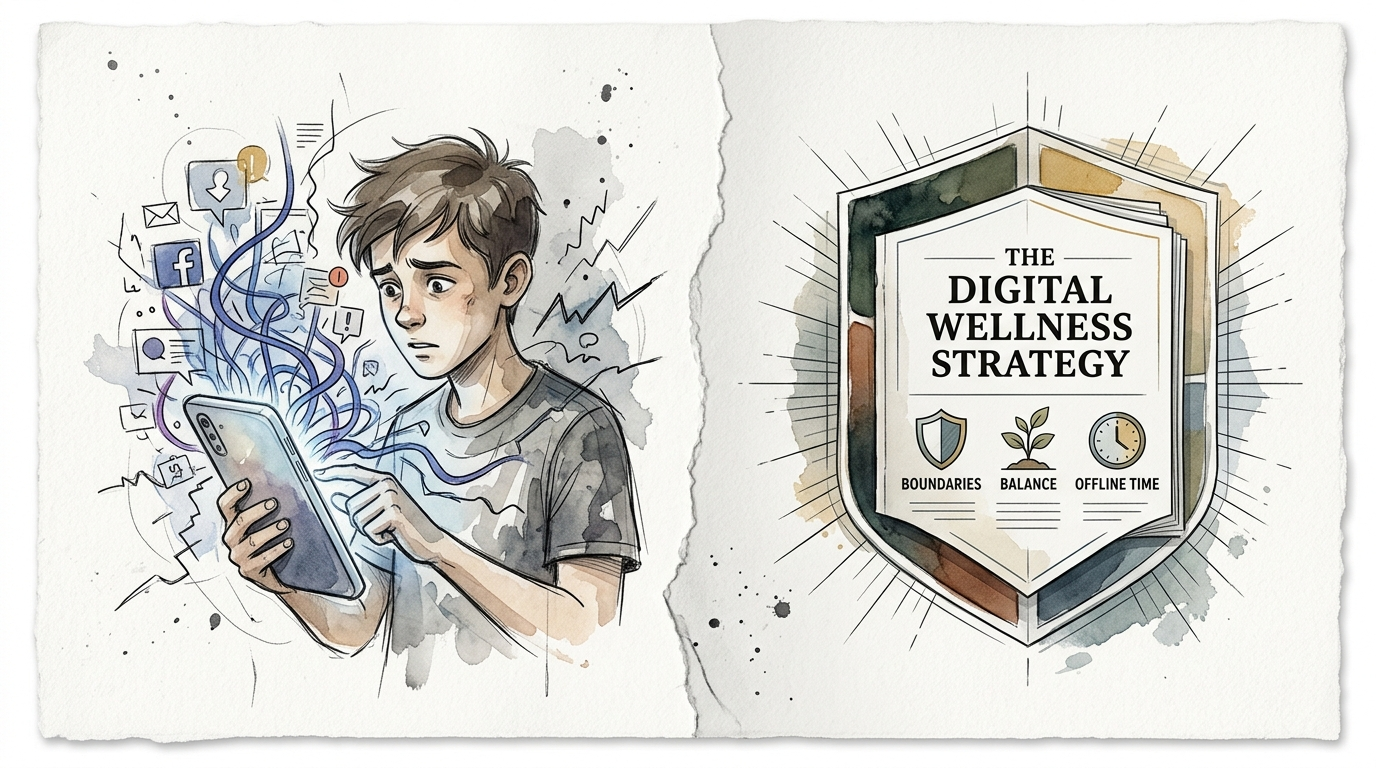
The digital world is a wild frontier. Are you sending them in unprotected, or giving them a map? Teens need more than just ‘no.’ They need a strategy. This printable rule set isn’t about control—it’s about building shelter from the digital storm.
Every parent knows the feeling of walking into a room and seeing a teenager bathed in the blue light of a smartphone. It is a silent, glowing wall that can feel impossible to climb. But modern parenting requires us to stop fighting the screen and start managing the relationship.
Technology is not a phase. It is the environment our children live in. Providing a structured approach helps them navigate the highs of social connection and the lows of infinite scrolling without losing their sense of self.
screen time rules printable teens
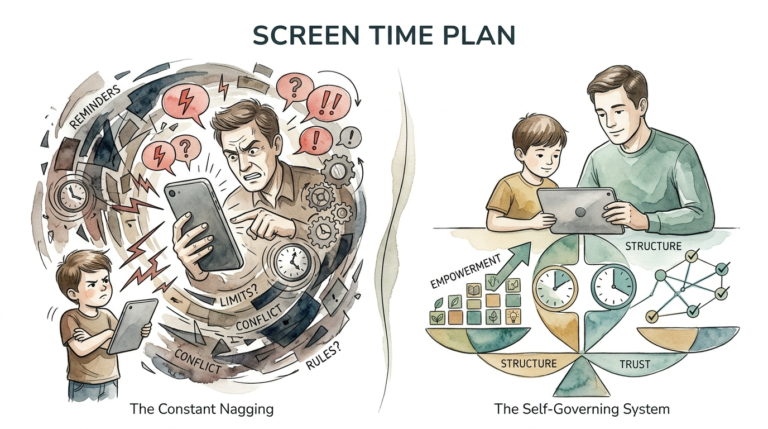
A screen time rules printable for teens is a physical contract that outlines the expectations, boundaries, and consequences of device usage. Think of it as a collaborative roadmap rather than a list of restrictions. This document moves the conversation from a daily power struggle to a settled agreement.
In the real world, adults sign contracts for everything from employment to car loans. Introducing this concept to a teenager prepares them for adult responsibilities. It creates a “Sheltered Strategy” where they have the freedom to explore within safe parameters, rather than being “Exposed” to the unfiltered chaos of the web without a plan.
These printables typically live in a shared space like the kitchen or the back of a bedroom door. Having a physical copy prevents “selective amnesia” when it comes to house rules. It serves as a neutral third party that both parent and child can reference when conflicts arise.
The Biological Battle: Why Teens Struggle with Limits
Teenagers are not just being stubborn when they refuse to put the phone down. Their brains are physically wired to crave the digital rewards that apps provide. Understanding the neuroscience behind this behavior helps parents approach the situation with more empathy and less anger.
The adolescent brain is undergoing a massive renovation. The prefrontal cortex, which is responsible for impulse control and long-term planning, is still under construction. Meanwhile, the reward centers of the brain, like the ventral striatum, are fully operational and highly sensitive to dopamine.
Social media apps are designed by experts to exploit this specific biological window. Every like, comment, and notification triggers a hit of dopamine. For a teen, the pull of a “streak” on Snapchat or a viral video on TikTok is significantly harder to resist than it is for an adult. This is why a simple “turn it off” often fails without a structured strategy in place.
The Science of the Digital Sunset
Sleep is the most critical casualty of unregulated screen time. Most teenagers are currently averaging nearly 7 hours of screen time per day, and much of that happens late at night. This is not just a time management issue; it is a chemical one.
Blue light emitted by smartphones suppresses the production of melatonin, the hormone that tells our bodies it is time to sleep. When a teen scrolls until midnight, they are effectively telling their brain that it is still midday. This leads to a cycle of sleep deprivation that impacts mood, academic performance, and physical growth.
A effective printable rule set must include a “Digital Sunset.” This is a hard deadline—usually 60 minutes before bed—where all devices go to a central charging station. Removing the device from the bedroom is the single most effective way to protect a teen’s mental health.
How to Build Your Collaborative Contract
Creating a set of rules should never be a solo mission. If you want a teenager to follow the plan, they must help draft the map. This increases their sense of autonomy and reduces the urge to rebel against “unfair” mandates.
Start by holding a family meeting when everyone is calm. Avoid bringing up the contract immediately after a fight about phones. Instead, frame the conversation around “digital wellness” and the goal of helping them succeed in a high-tech world.
Follow these steps to build your custom strategy:
- Identify Non-Negotiables: Start with the basics like “No phones at dinner” or “Devices charge in the kitchen at 9 PM.”
- Define Quality vs. Quantity: Not all screen time is equal. Distinguish between productive use (homework, creative coding, art) and passive consumption (scrolling TikTok).
- Discuss Privacy and Security: Set clear expectations about what apps can be downloaded and who has access to passwords.
- Negotiate the “Flex” Time: Give them a chance to earn extra time through chores, grades, or physical activity. This makes screen time a privilege rather than a right.
- Set Clear Consequences: Everyone should know exactly what happens if a rule is broken. This removes the “mean parent” element and replaces it with predictable outcomes.
Benefits of a Written Agreement
Verbal rules are easy to ignore or misinterpret. A written “screen time rules printable for teens” changes the dynamic in several measurable ways. It provides clarity that spoken words simply cannot match.
A written document reduces emotional friction. When a rule is broken, the parent doesn’t have to invent a punishment on the fly. They simply point to the paper. This keeps the focus on the teen’s choice rather than the parent’s mood.
It also fosters a sense of accountability. Signing their name to a contract gives a teenager a sense of ownership over their behavior. They are no longer just “doing what they are told”; they are keeping their word.
Challenges and Common Mistakes
The biggest mistake parents make is inconsistency. If the rules only apply when the parent is stressed, the teen will learn to view the rules as arbitrary. Consistency is the only way to build trust in the system.
Another common pitfall is using screen time as a generic punishment for unrelated issues. If a teen gets a bad grade in math, taking away their phone might feel like a win for the parent, but it often creates resentment rather than improvement. Unless the device was the direct cause of the problem, try to keep the consequences relevant to the behavior.
Avoid the “Zero-Tolerance” trap. Technology is a tool, and sometimes exceptions are necessary. If a teen is working on a group project or talking to a distant relative, be willing to adjust. Rigidity can lead to secretive behavior, which is much harder to manage than open negotiation.
When This Strategy May Not Be Ideal
A printable contract is a powerful tool, but it is not a magic wand. There are situations where a simple rule set is insufficient and a more intensive approach is required.
If a teenager is showing signs of genuine internet gaming disorder or clinical depression linked to social media, a piece of paper on the fridge will not be enough. These situations require professional intervention from a therapist or pediatrician.
Similarly, if the home environment is highly volatile or if there is a history of broken trust, the “collaborative” part of the contract may fail. In these cases, technical lockdowns via parental control software might be necessary as a temporary safety measure while the relationship is repaired.
Comparing Different Parenting Approaches
There is no one-size-fits-all solution for digital parenting. Different families require different levels of oversight based on the teen’s maturity and history.
| Approach | Philosophy | Complexity | Long-Term Goal |
|---|---|---|---|
| Total Lockdown | Strict control via software and confiscation. | High technical effort. | Immediate safety through restriction. |
| Laissez-Faire | Minimal rules; trusting the teen to figure it out. | Low effort. | Autonomy through experience. |
| Collaborative Strategy | Written contracts and regular family check-ins. | Medium effort. | Digital literacy and self-regulation. |
The collaborative strategy, supported by a “screen time rules printable for teens,” offers the best balance for most families. It provides the “Sheltered Strategy” needed for healthy growth while avoiding the “Exposed Vulnerability” of a completely hands-off approach.
Practical Tips for Success
Immediate application is the key to making these rules stick. Don’t wait for the “perfect” moment to start. Use these best practices to ensure your strategy works from day one.
- Model the Behavior: If you tell your teen to put the phone away at dinner but then check your emails under the table, the rules will fail. You must follow the house rules too.
- Create Tech-Free Zones: Designate specific areas of the house, like the dining room and bedrooms, as permanently phone-free.
- The 20-Minute Grace Period: When it is time to get off a game or social media, give a 15-minute and 5-minute warning. Abruptly ending a session can cause a dopamine crash and lead to an outburst.
- Focus on “Add-Ons,” Not Just “Take-Aways”: Instead of just telling them what they can’t do, suggest what they *should* do. Encourage high-quality digital hobbies like video editing, music production, or graphic design.
Advanced Considerations: The 4-Hour Warning
Recent studies from the CDC and other health organizations suggest that “recreational” screen time beyond 4 hours a day is a significant tipping point for mental health risks. While the American Academy of Pediatrics has moved away from strict hourly limits, this 4-hour threshold serves as a vital benchmark for parents.
For a serious practitioner of digital parenting, the goal is to help the teen understand their own metrics. Teach them how to check their “Screen Time” settings on their iPhone or “Digital Wellbeing” on Android. Have them report their weekly averages during Sunday dinner.
When a teen can see the data themselves, they often realize how much of their life is disappearing into a “doomscroll.” Turning the data into a conversation rather than an accusation is an advanced technique that fosters long-term self-awareness.
Examples and Scenarios
How does this work in a real Tuesday night? Let’s look at a few common situations.
Scenario A: The Homework Blackhole.
A teen says they are doing homework on their laptop, but they have Discord and YouTube open in other tabs.
The Strategy: The contract should specify that “School Hours” are for educational tabs only. If the rule is broken, the laptop moves to the kitchen table where it can be seen, rather than in the bedroom.
Scenario B: The Midnight Scroll.
You catch your teen under the covers with their phone at 1 AM.
The Strategy: This is a direct violation of the “Digital Sunset” clause. The consequence is a “Tech Reset” where the device is held by the parent for 24-48 hours. No yelling is required; the paper already defined the price of the choice.
Scenario C: The Social Media Drama.
Your teen is clearly upset after a group chat conflict.
The Strategy: This is an opportunity for “Context over Content.” Use the contract’s “Open Communication” clause. Let them know they can come to you with digital drama without the fear that you will simply “delete the app” as a reaction.
Final Thoughts
Building a digital strategy for your teenager is a marathon, not a sprint. The goal is not to have a perfectly compliant child who never touches a screen. The goal is to raise an adult who knows how to put the phone down when they need to.
A screen time rules printable for teens is the scaffolding that allows that maturity to grow. It provides a safety net during the years when their biology is working against their better judgment. It turns the “Wild Frontier” into a manageable garden.
Encourage your teen to experiment with digital fasts or “Phone-Free Fridays.” Over time, they will begin to notice that they feel better, sleep deeper, and think clearer when they are in control of the technology, rather than the other way around. Keep the conversation open, keep the contract visible, and remember that you are building a shelter, not a cage.
Sources
1 impact-psych.com | 2 qustodio.com | 3 nih.gov | 4 harvard.edu | 5 kidshubms.com | 6 meetcircle.com | 7 wirelessnation.co.nz | 8 sbesyes.org | 9 aacap.org