screen time checklist printable
Turn screens from a daily headache into a reward for a job well done. Screens aren’t the enemy, but the lack of a plan is. Use this printable checklist to transform screen time from a nuisance into a valuable asset that teaches your kids responsibility and balance.
Parenting in a digital world often feels like a constant tug-of-war. You want your kids to be tech-savvy, but you also want them to touch grass, read books, and help with the dishes. Without a clear system, “five more minutes” turns into five hours, and your living room becomes a battleground of power struggles and tantrums.
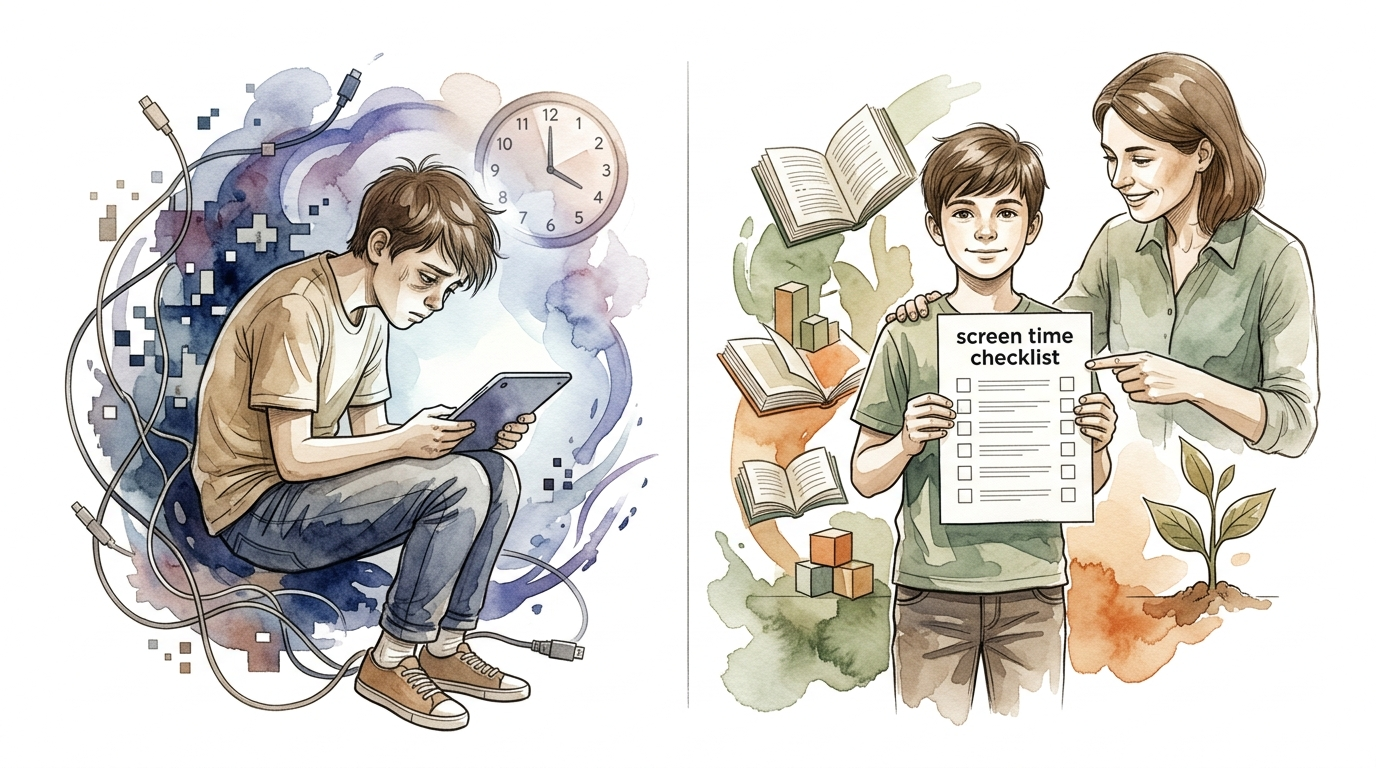
The Screen Nuisance vs The Growth Asset is a shift in perspective. Instead of viewing technology as something to hide or fight, we can frame it as a powerful motivator. A well-designed system doesn’t just limit YouTube; it builds executive functioning skills that will serve your children for a lifetime.
This guide walks you through the psychology of why checklists work and how to implement one without losing your sanity. We are moving away from reactive “putting out fires” and moving toward a proactive culture of accountability. Your family deserves a digital rhythm that works for everyone.
screen time checklist printable
A screen time checklist printable is a visual tool that defines the specific tasks a child must complete before they can access digital entertainment. It acts as a contract between parent and child, removing the need for constant negotiation. Instead of asking for permission, the child looks at the list to see if they have earned their time.
These tools exist to solve the “dopamine first” problem. Digital media provides instant gratification that makes mundane tasks like making a bed or reading a book feel excruciatingly slow. The checklist reorders the day, ensuring that biological and household needs are met while the brain is still fresh and focused.
In real-world situations, families use these printables to bridge the gap between “I’m bored” and “I’m productive.” During summer breaks or long weekends, a printable checklist provides the structure that school normally offers. It helps children visualize their progress and take ownership of their daily routine.
Think of it as a flight manifest for the day. A pilot doesn’t take off until every box is checked. By using a printable version, you give your child a physical, tangible way to track their “pre-flight” duties. This simple piece of paper transforms you from a “screen warden” into a supportive coach who is rooting for them to finish their list.
How to Build Your Digital Responsibility System
Start by identifying the non-negotiables for your household. Most successful checklists include three main categories: hygiene, household contributions, and personal growth. If you want the system to last, keep the requirements clear and measurable.
Begin with the “Essentials.” These are the basic requirements for being a functioning human. Brushing teeth, getting dressed, and eating a healthy breakfast should always be at the top of the list. These tasks are the foundation of self-care and ensure the child is ready for the day before they dive into a digital world.
Move into “Household Wins.” Choose chores that are age-appropriate and actually helpful. This might include loading the dishwasher, feeding the dog, or tidying the playroom. Including these tasks teaches children that they are part of a team and that their contributions matter to the family’s success.
Focus on “Brain Food” next. Screens are high-stimulation, so it’s vital to balance them with “slow” activities. Require 20 to 30 minutes of independent reading or 45 minutes of creative play—like LEGOs, drawing, or building a fort—before the iPad comes out. This protects their attention span from being solely dependent on rapid-fire digital content.
Establish the “Outdoor Rule.” Physical movement is a biological necessity. Make one hour of outdoor play a prerequisite for indoor gaming. Movement regulates the nervous system and makes the eventual transition away from screens much easier when the time is up.
The Benefits of a Checklist Approach
Visual systems reduce cognitive load for both parents and kids. When the rules are written down, you no longer have to remember every detail or repeat yourself ten times. The “authority” shifts from your voice to the paper, which significantly lowers the emotional temperature of the household.
Checklists build the “prefrontal cortex,” the part of the brain responsible for planning and impulse control. Children learn to delay gratification, a skill that is a high predictor of long-term success. They start to realize that “fun stuff” happens after “important stuff,” which is a fundamental life lesson.
Families often report a massive decrease in “screen-induced tantrums.” Because the child knows exactly what is required to get their time, they feel a sense of agency. They aren’t being told “no”; they are being told “not yet,” which is much easier for a developing brain to process.
Structure creates a sense of safety. Children thrive when they know the boundaries. A checklist provides a predictable environment where expectations are clear and rewards are consistent. This stability fosters a healthier relationship with technology and prevents screens from becoming a source of anxiety.
Challenges and Common Mistakes to Avoid
Inconsistency is the fastest way to kill a new system. If you enforce the checklist on Monday but let it slide on Tuesday because you’re tired, the child learns that the rules are negotiable. Kids are natural “lawyers” and will find the loopholes in any inconsistent application of the rules.
Overloading the list is another frequent pitfall. If a child sees 15 chores standing between them and their favorite game, they may feel overwhelmed and give up before they start. Keep the list lean and achievable. The goal is to build a habit of success, not to create a grueling gauntlet of labor.
Vague instructions lead to frustration. Instead of writing “clean your room,” write “put all toys in the bin” or “make the bed.” Specificity prevents the inevitable “I thought I was done” arguments that arise when parents and kids have different definitions of “clean.”
Failing to model the behavior can undermine your authority. If you are scrolling through social media while telling your child they haven’t “earned” their screen time, the hypocrisy will create resentment. Try to engage in some of the checklist activities, like reading or going outside, alongside them to show that these values apply to everyone.
When the Checklist May Not Be Ideal
Rigid adherence to a checklist during times of crisis or sickness can be counterproductive. If a child has a high fever, forcing them to “earn” a movie by doing chores is unrealistic. In these moments, the system should give way to compassion and recovery.
Travel and vacations usually require a different set of rules. Trying to manage a complex checklist in a hotel room or on a long road trip often creates more stress than it saves. It is okay to have “vacation rules” where the checklist is temporarily suspended in favor of family bonding and convenience.
Neurodivergent children may need a more customized approach. For a child with ADHD or autism, a standard checklist might be too stimulating or not stimulating enough. Some may require a “First-Then” visual board rather than a long list of tasks to prevent sensory overload and meltdown.
Special events, like a rainy day or a family movie night, should be treated as exceptions. If the goal of the checklist is to build a healthy relationship with tech, then celebrating with tech together as a family can be a positive experience that doesn’t need to be “earned.”
Manual Printables vs. Digital Management Apps
Choosing the right format depends on your family’s specific needs and the age of your children. While printables offer a tactile experience, digital apps provide automated enforcement that can be a lifesaver for busy parents.
| Feature | Printable Checklist | Digital Apps (e.g., Bark, Qustodio) |
|---|---|---|
| Ease of Use | High (Just print and go) | Medium (Requires setup and syncing) |
| Cost | Free / Very Low | Subscription Based |
| Accountability | Self-monitored / Parent-checked | Automatic Lock/Unlock |
| Developmental Focus | Teaches self-regulation | Focuses on external control |
Printables are superior for teaching internal motivation. When a child physically checks a box, they get a small win. This builds the habit of checking in with themselves before reaching for a device. Apps are excellent for “safety nets,” ensuring that even if you get distracted, the screen will eventually shut off.
Best Practices for a Seamless Transition
Involve your children in the creation of the list. Research shows that kids are much more likely to follow rules they helped create. Ask them, “What do you think is a fair amount of reading to do before you play Minecraft?” This gives them a sense of ownership and reduces the feeling of being controlled.
Use “First-Then” language to frame the requirements. Instead of saying, “You can’t have your tablet until you do the dishes,” try “First do the dishes, then you can have your tablet time.” This small shift in phrasing moves the focus away from the restriction and toward the upcoming reward.
Laminate your printable checklist and use dry-erase markers. This makes the system feel official and allows you to reuse the same sheet every day. It also makes the “check-off” process more satisfying for the child, as they can physically wipe the slate clean each morning.
Schedule a weekly “Digital Check-In.” Use this time to discuss what worked and what didn’t. If the morning routine is still a struggle, adjust the checklist. If they are consistently finishing their tasks early, maybe add a “Bonus Task” for extra time. Flexibility within the structure keeps the system relevant as they grow.
Advanced Considerations for Long-Term Success
As children enter their pre-teen years, the focus should shift from “earning” time to “managing” time. Advanced practitioners of this system move toward a “Time Budget” model. Instead of a daily list, give them a weekly allowance of hours that they must manage alongside their growing responsibilities.
Encourage “Digital Citizenship” over mere compliance. Talk to them about why too much screen time affects their mood and sleep. Explain the concept of “dopamine loops” in simple terms. The ultimate goal isn’t just to have them finish a checklist; it’s to help them understand their own brain and how to protect it.
Integrate “Screen-Free Zones” into your household rhythm. A checklist is great for managing the *quantity* of tech, but you also need to manage the *location*. Make bedrooms and dining tables tech-free zones by default. This reinforces the idea that screens are a part of life, but not the center of it.
Focus on “Content Quality” as they get older. Not all screen time is created equal. Coding a game in Scratch or editing a video for a school project is cognitively different from mindlessly scrolling through short-form videos. You might choose to have different checklist requirements for “creative” versus “passive” consumption.
The “Saturday Morning” Scenario
Imagine it is 7:30 AM on a Saturday. In a house without a system, the first thing the kids do is hunt for their tablets. Within thirty minutes, they are overstimulated, and the first argument over a charger begins. You spend your morning playing “screen police,” and by noon, everyone is grumpy.
In a house with a checklist, the Saturday morning looks different. The kids know the screens don’t come out until the list is done. They spend the first hour eating breakfast, getting dressed, and perhaps building a marble run. You get to enjoy your coffee while they engage in self-directed play.
By 10:00 AM, they have finished their chores and their reading. They bring you the checklist, you give it a quick “thumbs up,” and they head off to their games with a sense of accomplishment. Because they moved their bodies and used their brains first, the “post-screen crash” is significantly less intense.
The difference isn’t just about the minutes spent on a device. The difference is the atmosphere of the home. One scenario is built on conflict and reactive parenting; the other is built on clear expectations and earned rewards. The checklist turns a potential headache into a smooth, predictable routine.
Final Thoughts
The screen time checklist printable is more than just a piece of paper; it is a framework for raising responsible digital citizens. By setting clear boundaries and rewarding positive behavior, you are teaching your children that technology is a tool to be used, not a master to be followed. This system shifts the power dynamic from “Parent vs. Child” to “Child vs. Responsibilities,” which is exactly where it belongs.
Don’t be afraid to experiment and iterate. Your first checklist might not be perfect, and that’s okay. The key is to start. As you see your children taking ownership of their tasks and moving toward screens with a sense of balance, you’ll realize that the “screen nuisance” has finally become a “growth asset.”
Consistency and connection are the secret ingredients. Use this tool to open up conversations about health, focus, and family values. You aren’t just managing devices; you are shaping the way your children interact with the world around them. Start today, and watch your daily headache turn into a reward for a job well done.
Sources
1 mimosasandmotherhood.com | 2 etsy.com | 3 theottoolbox.com | 4 theottoolbox.com | 5 nih.gov | 6 jetlearn.com | 7 harvard.edu | 8 youthfirstinc.org | 9 internetmatters.org | 10 makerkids.com | 11 choc.org | 12 raisingchildren.net.au | 13 osfhealthcare.org