screen time hacks
Don’t just hide the tablet—change the culture of your home. Hiding devices is a temporary fix that creates resentment. These hacks build a legacy of self-regulation and healthy digital boundaries.
Building a home where technology serves the family rather than the other way around is the ultimate goal. In a world where the average global citizen spends approximately 6 hours and 51 minutes on screens every day, simply locking away a phone is no longer enough. For teenagers, that number often climbs to 7 or even 9 hours daily, leading to significant impacts on mental health and social development.
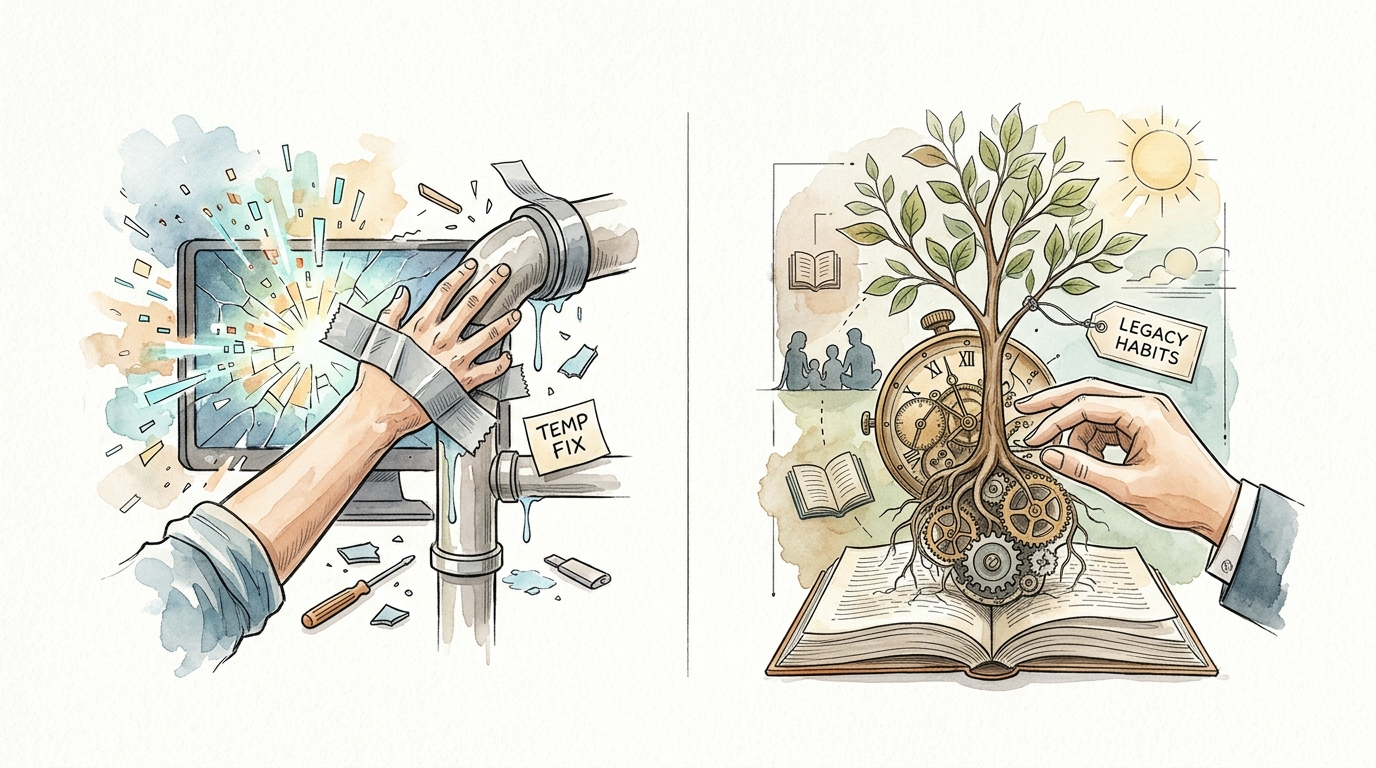
This guide moves beyond the “Temporary Fix” of parental controls. It focuses on “Legacy Habits” that empower both you and your children to navigate the digital world with intention. By understanding the neurobiology of why we scroll and implementing systems that favor connection over consumption, you can reclaim your family’s time.
screen time hacks
Screen time hacks are strategic adjustments to our environment, device settings, and daily routines designed to reduce compulsive technology use. These are not just “rules” to be enforced. They are systems that lower the friction of putting a device down and increase the rewards of real-world interaction.
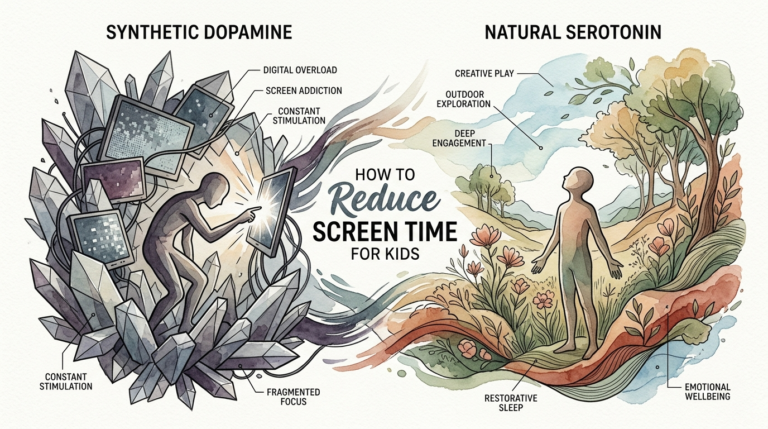
In a practical sense, these hacks exist because digital platforms are engineered for addiction. Apps use bright colors and variable rewards to trigger dopamine, making it physically difficult to stop scrolling. Screen time hacks work by disrupting these triggers. For example, removing the vibrant colors from a display makes a social media feed feel significantly less stimulating.
You see these hacks used in high-performance environments, such as “Deep Work” offices or tech-free retreats, where focus is the primary currency. In the home, they serve as the guardrails that prevent digital “junk food” from replacing meaningful family engagement. They allow technology to be a tool for education and connection rather than a default response to boredom.
How to Implement Effective Digital Systems
Transitioning from a restrictive environment to one of self-regulation requires a phased approach. You cannot simply flip a switch and expect immediate compliance. Instead, follow these steps to build a sustainable digital culture.
Step 1: The Grayscale Shift
The most powerful immediate hack is switching devices to grayscale mode. This removes the dopamine-inducing allure of bright icons and red notification badges. Research shows that college students who switched to grayscale reduced their screen time by an average of 37.9 minutes per day. To do this, look under “Accessibility” and “Display & Text Size” in your device settings.
Step 2: Establish a “Digital Sunset”
Human biology is sensitive to blue light, which suppresses melatonin and disrupts sleep. A digital sunset involves turning off all screens 60 minutes before bedtime. This allows the brain to transition into a restful state naturally. Instead of screens, encourage reading physical books, journaling, or quiet conversation.
Step 3: Create a “Phone Parking Lot”
Designate a central location, like a decorative basket in the kitchen, where all phones are “parked” during meals and after 8:00 PM. This removes the temptation of phantom vibrations and ensures that family time remains uninterrupted. When a phone is out of sight, it is often out of mind.
Step 4: Collaborative Media Planning
Instead of dictating limits, sit down with your family to create a shared media plan. Discuss why boundaries matter—such as the link between high screen time and increased anxiety or depression. When children understand the “why” behind a rule, they are more likely to respect it.
Benefits of a Pro-Regulation Home
Moving toward a culture of self-regulation offers measurable improvements in both physical health and psychological well-being. These benefits are not just for children; they apply to parents who model these behaviors as well.
Enhanced mental health is perhaps the most significant advantage. Studies have found that teenagers who spend more than 4 hours a day on screens are twice as likely to be diagnosed with depression or anxiety compared to those with lower usage. By implementing screen time hacks, you are actively protecting your family’s emotional stability.
Better sleep quality is another immediate benefit. By eliminating screens in the hour before bed, you allow the body’s circadian rhythm to function correctly. This leads to deeper REM sleep and improved cognitive function the following day. Families often report feeling more rested and less irritable within just one week of starting a digital sunset.
Finally, these hacks foster genuine social connection. When the “noise” of social media is silenced, family members are forced to engage with one another. This strengthens bonds, improves communication skills, and creates a sense of belonging that digital “likes” can never replicate.
Challenges and Common Pitfalls
The path to a healthy digital culture is rarely a straight line. You will encounter resistance, especially if the previous environment was highly restrictive or entirely unregulated.
The Trap of Parental Hypocrisy
One of the most frequent mistakes is setting rules for children that parents do not follow. Children are expert observers. If you tell them to put their tablet away while you are simultaneously scrolling through a news feed, the message is lost. You must model the boundaries you wish to see.
Resentment from Sudden Changes
Implementing a “tech-free” home overnight often leads to rebellion and resentment. This is because digital platforms provide a sense of autonomy and competence for children. Removing them abruptly feels like a loss of identity. It is better to introduce hacks gradually, explaining the benefits of each step as you go.
Relying Solely on Tech Limits
Parental control apps are useful, but they are not a substitute for teaching self-discipline. If a child only stops because a timer runs out, they haven’t learned how to stop on their own. The goal is to move from “policing” to “coaching,” where the child learns to recognize when their brain feels “fuzzy” or overstimulated.
Limitations of Universal Rules
While screen time hacks are effective, they are not a one-size-fits-all solution. Every child has different needs, and every home has unique circumstances.
Environmental limitations, such as a lack of outdoor space or safe neighborhoods, may make “screen-free” time more difficult to fill. In these cases, focus on the quality of screen time rather than just the quantity. Educational games or collaborative family movie nights are different from mindless scrolling.
Neurodivergent children may also require a different approach. For some children with ADHD or autism, screens can be a tool for regulation or a way to process information. In these scenarios, strict time limits might cause more harm than good. Consult with a professional to tailor digital boundaries to your child’s specific developmental needs.
Restrictive Policing vs. Collaborative Regulation
Understanding the difference between these two approaches is key to building a legacy of healthy habits.
| Feature | Restrictive Policing | Collaborative Regulation |
|---|---|---|
| Primary Tool | Locking devices / Hiding tech | Shared media plans / Gray-scaling |
| Long-term Goal | Compliance through fear | Self-discipline and autonomy |
| Family Dynamic | Adversarial (Cop vs. Criminal) | Partnership (Coach vs. Athlete) |
| Efficiency | High initial, low long-term | Low initial, high long-term |
Practical Tips for Daily Life
You can begin implementing these best practices immediately to start shifting the energy in your home.
- Use “Tickets” for Screen Time: Give children a set number of tickets each week, with each ticket representing 30 minutes of usage. This teaches them to “spend” their time wisely on content they actually value.
- The “Active Consumption” Rule: Encourage activities where the user is creating rather than just consuming. Coding a game or editing a video is cognitively superior to watching an endless loop of short-form videos.
- Audit Your Notifications: Go into the settings of every device and turn off non-human notifications. If it isn’t a message from a real person, you don’t need a vibration or sound to alert you to it.
- Batch Your Digital Tasks: Check emails and social media at specific intervals (e.g., 9:00 AM, 1:00 PM, and 6:00 PM) rather than reacting to every ping. This creates “blocks” of focused time.
- Optimize Your Home Screen: Move addictive apps off the main home screen and into folders. This adds a layer of friction that forces you to be intentional about opening them.
Advanced Considerations for Serious Practitioners
For those who want to go deeper, understanding the neurobiology of digital addiction is essential. Digital platforms utilize “variable reward schedules,” a psychological concept where the user never knows exactly when they will find something interesting. This is the same mechanism that makes slot machines addictive.
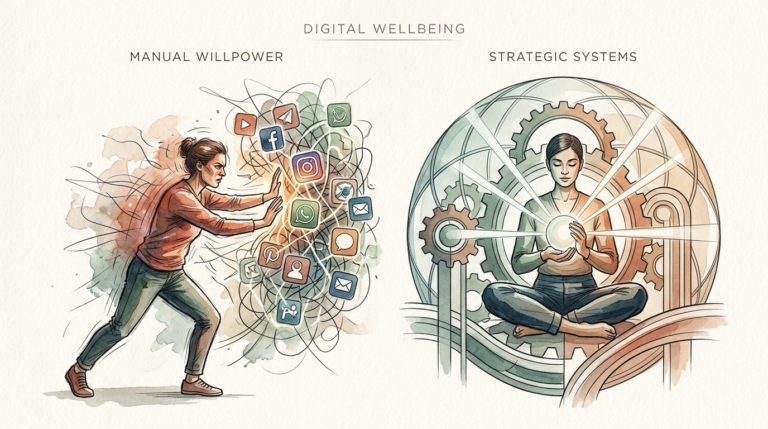
To counter this at a high level, consider “Technical Friction Tuning.” This might involve setting up a home network filter, like a Pi-hole or a sophisticated router with scheduling capabilities, that automatically disables high-dopamine sites during work or sleep hours. This takes the burden of willpower off the individual and places it on the infrastructure.
Furthermore, consider the “Dopamine Fast.” Periodically taking 24 to 48 hours completely off-grid can help reset your brain’s sensitivity to rewards. After a fast, simple activities like walking in nature or having a long conversation feel much more satisfying because the brain is no longer expecting the hyper-stimulation of a glowing screen.
Scenario: The Weekend Digital Reset
Imagine a family of four heading into a Saturday morning. In a typical home, everyone might spend the first two hours in separate rooms scrolling through their respective feeds. This often results in a “digital hangover”—a feeling of lethargy and irritability.
In a “Hacked” home, the weekend starts differently. On Friday evening, all devices are placed in the kitchen “parking lot.” Saturday morning is dedicated to a high-engagement activity, such as a hike or a shared cooking project. Because the phones are out of sight and set to grayscale, the “pull” of the digital world is minimized.
When screen time is finally allowed on Saturday afternoon, it is intentional. Perhaps the family watches a documentary together or the kids play a specific game they’ve been looking forward to. Because they’ve had a morning of real-world connection, the transition back to screens doesn’t feel like a desperate escape; it feels like a chosen activity with a clear beginning and end.
Final Thoughts
The goal of screen time hacks is not to eliminate technology but to put it back in its proper place. Don’t just hide the tablet—change the culture of your home. By moving from a model of restriction to a model of regulation, you are giving your children the most valuable skill of the 21st century: the ability to focus in an age of distraction.
Start small by choosing one or two of the hacks mentioned here. Whether it’s the shift to grayscale or the implementation of a phone parking lot, the key is consistency. Over time, these small changes will aggregate into a home culture where connection is the default and technology is a tool for growth.
Experiment with these systems and see how your family responds. You may find that once the digital noise is silenced, the sounds of laughter, curiosity, and deep conversation naturally take its place. This is the legacy of a healthy digital home.
Sources
1 healthline.com | 2 mindfulmamamentor.com | 3 medlineplus.gov | 4 screenagersmovie.com | 5 parents-together.org | 6 trykondo.com | 7 luriechildrens.org | 8 medicinalmedia.com | 9 nih.gov | 10 nih.gov | 11 solutionhealth.org | 12 lwtears.com | 13 notconsumed.com