family bonding ideas
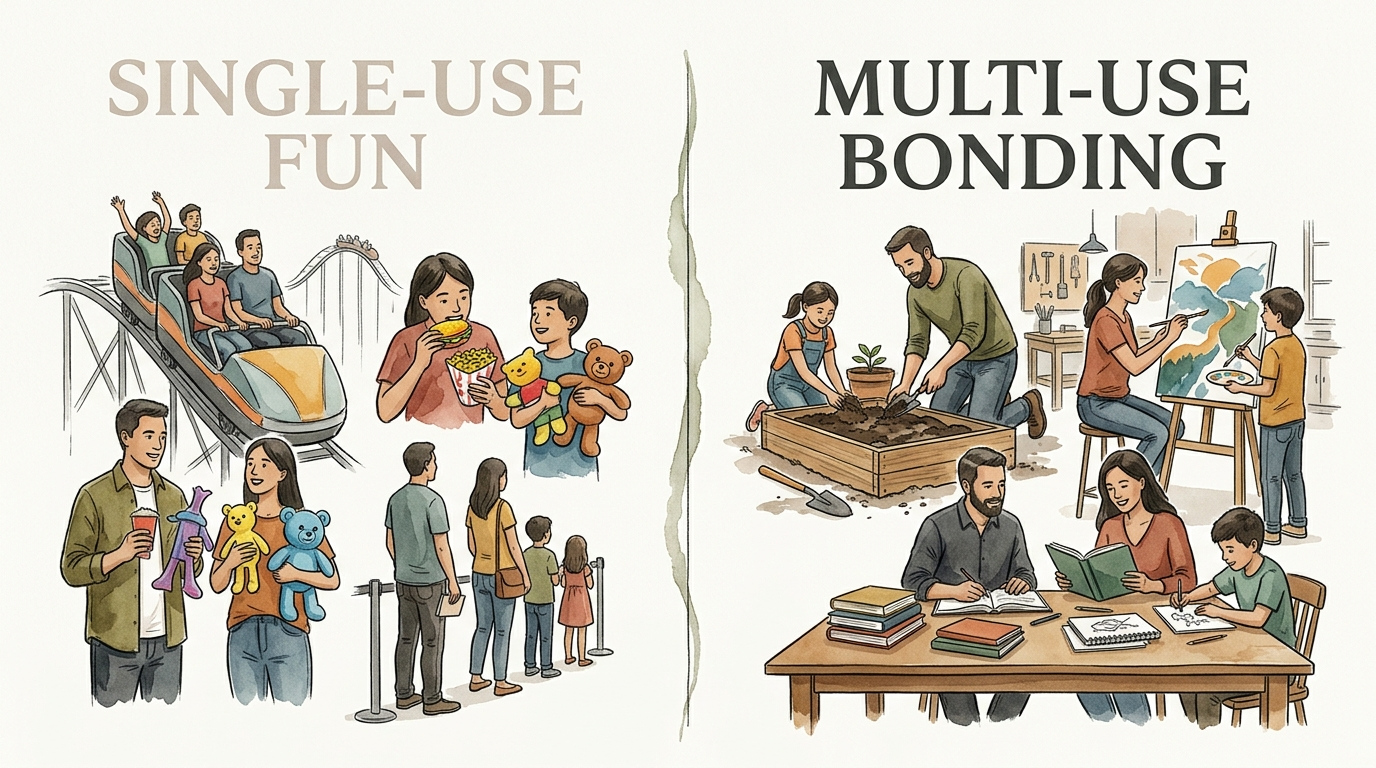
Why just have fun when you can build a life skill together? Stop looking for one-off entertainment. The best bonding ideas are multi-use: they teach a skill, solve a problem, and bring the family closer all at once.

If you are tired of the “I’m bored” chorus or the mindless glow of a screen, you are in the right place. Most families fall into the trap of passive entertainment—watching a movie or going to a park where the kids play while the parents scroll. This is single-use fun. It fills time, but it doesn’t fill the tank of resilience, capability, or connection.
Choosing to build skills together changes the family dynamic from a group of individuals living under one roof to a high-functioning team. We are going to explore how to turn everyday life into a training ground for confidence and connection.
family bonding ideas
Family bonding ideas centered on life skills are activities that combine high-quality connection with practical education. Instead of just “spending time,” these activities involve learning how the world works. This might mean cooking a meal together, fixing a leaky faucet, or managing a family budget.
In a real-world setting, this looks like a parent and child working through a complex recipe. They aren’t just making dinner; they are practicing chemistry, fractions, and patience. They are learning to communicate under pressure. Research suggests that these “intentional moments” are repeatable and simple, yet they strengthen emotional ties more than expensive, one-time vacations (1.1.8).
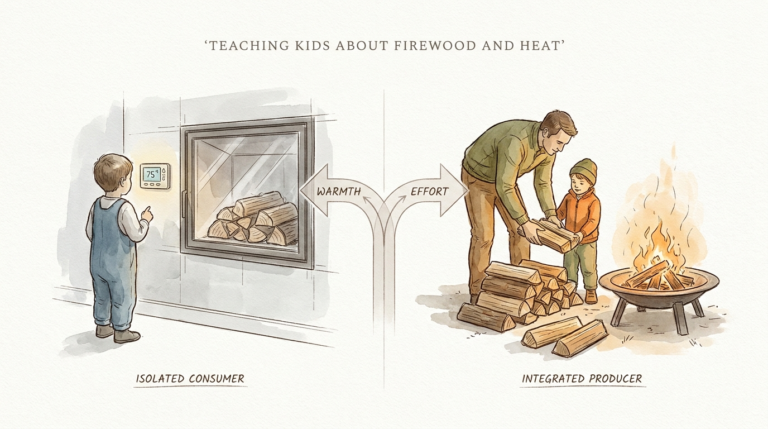
Think of your family as a small organization. Every organization needs shared goals and a diverse skill set to thrive. When you engage in skill-building bonding, you are investing in the long-term character development of your children. You are moving them from being consumers of entertainment to creators of their own lives.
How to Turn Daily Life into a Skill-Building Lab
You don’t need a PhD or a specialized workshop to start building skills. You only need to shift your perspective on daily tasks. The process follows a simple progression known as scaffolding, which helps children move from observation to independence (1.1.8).
First, identify a skill that benefits the household. This could be anything from basic car maintenance to plant care or digital literacy. Once you have the skill, follow these steps to make it a bonding experience:
- The “I Do, We Do, You Do” Method: Start by letting your child watch you perform the task. Explain your thought process out loud. Next, perform the task together, letting them handle small parts of it. Finally, let them take the lead while you act as their “consultant” (1.3.5).
- Break Tasks into Micro-Steps: Large projects like “cleaning the house” are overwhelming. Break it down into “sorting the laundry by color” or “wiping down the baseboards.” This reduces frustration and allows for frequent “micro-wins” (1.3.5, 1.3.7).
- Use Visual Aids: For younger children, use charts or picture schedules. This helps them understand the sequence of a task without you needing to nag them. Visual cues provide structure and support independence (1.3.5).
- Embrace the Mess: Learning is messy. If you are teaching a child to bake, flour will get on the floor. If you are teaching them to garden, there will be dirt under the fingernails. Prioritize the connection and the lesson over a “perfect” result.
Communication is the “super glue” of these activities. Talk about what you are doing, why it matters, and how you feel about it. Use “Storytelling Circles” to discuss what went well or what was challenging during the activity (1.1.9).
The Massive Benefits of Skill-Based Bonding
The advantages of this approach extend far beyond just having a clean house or a fixed bike. Engaging in shared tasks provides measurable mental and physical health benefits for every family member.
Mental Health and Resilience: Face-to-face communication during shared activities significantly reduces the occurrence of depression and anxiety (1.2.1). When families work through a challenge together—like figuring out how to pitch a tent—they develop “family resilience.” This is the capacity to adapt and grow despite facing significant stressors (1.2.9).
Academic and Cognitive Performance: Active learning is far superior to passive consumption. Studies indicate that physical and outdoor activities positively influence math and language performance (1.5.2). When kids learn about money by counting coins or role-playing grocery shopping, they are building executive function skills like planning, problem-solving, and impulse control (1.4.3, 1.4.8).
Stronger Character Foundations: Children learn honesty, respect, and responsibility through the examples set during these activities (1.2.5). A child who helps manage a family “save/spend/give” jar learns the value of money and empathy for others in need (1.4.7, 1.3.7).
Improved Social Skills: Cooperative games and projects teach children how to take turns, read body language, and manage their emotions (1.1.3). These skills are essential for building healthy friendships and succeeding in the future workplace (1.1.7).
Challenges and Common Mistakes
Even with the best intentions, skill-building bonding can go sideways. Many parents fall into common traps that turn a bonding moment into a stressful chore.
The Perfectionism Trap: This is the most frequent error. If you take the screwdriver out of your child’s hand because they are “doing it too slowly,” you have killed the bonding moment. The goal is the process, not the product. When you prioritize the result over the relationship, children become intimidated and stop trying (1.3.4).
The “School” Vibe: If your bonding activity feels like a lecture, your kids will tune out. Avoid being overly academic. Instead of “Today we are learning about irrigation,” say “Let’s see if we can figure out a way to get water to these plants without carrying the heavy hose.” Keep it discovery-based (1.5.5).
Ignoring Age-Appropriateness: Forcing a toddler to sit through a complex budget meeting or asking a teenager to play a basic “roll the ball” game will cause friction. You must match the complexity of the activity to the child’s developmental stage (1.1.8). Infants need sensory play, while older kids need STEM challenges or collaborative projects (1.1.8).
Lack of Consistency: Bonding isn’t a one-time event. It is a ritual. Doing a massive DIY project once a year is less effective than a 15-minute “check-in” or a weekly cooking night (1.1.8, 1.2.3).
Limitations and Environmental Constraints
While skill-based bonding is powerful, it is important to recognize its realistic boundaries. Not every environment or situation is ideal for every skill.
- Space and Resource Constraints: If you live in a small apartment, “community gardening” might be limited to a windowsill herb garden. If you don’t have tools, home repair bonding might be limited to simple fixes. Adapt the skill to your environment.
- Safety Boundaries: Some skills are inherently dangerous. While you can involve a child in car maintenance, they shouldn’t be under a car that is only supported by a jack. Always prioritize physical safety and provide proper supervision (1.2.3).
- Attention Spans: Young children have short attention spans. A bonding activity that takes three hours will likely end in a meltdown. Keep activities for toddlers under 15-20 minutes, and gradually increase time as they grow (1.3.7).
- Internet and Digital Access: In some rural areas, digital literacy bonding (like coding together) can be difficult due to spotty internet (1.4.7). In these cases, focus on analog skills like navigation with a physical map or outdoor survival.
Passive Entertainment vs. Active Skill Bonding
It is helpful to see how these two approaches stack up. While movies and theme parks have their place, they serve a very different purpose than skill-building activities.
| Feature | Passive Entertainment (Movies/Parks) | Active Skill Bonding (Cooking/Repair) |
|---|---|---|
| Role of Family | Consumers | Collaborators / Creators |
| Cognitive Load | Zero to Low | High (Problem Solving) |
| Communication | Minimal (Sitting in silence) | Constant (Negotiation/Feedback) |
| Long-term Value | Fleeting Memory | Useful Life Skill |
| Cost | Often High (Tickets/Food) | Low to Moderate (Supplies) |
| Result | Relaxation / Escape | Confidence / Resilience |
Passive screen time can lead to irritability, fatigue, and a “sluggish state of monotony” (1.5.4, 1.5.6). In contrast, active play and shared challenges trigger the release of endorphins and bonding hormones that create lasting emotional connections (1.5.7).
Practical Tips for Success
Start small and be intentional. You don’t have to overhaul your entire weekend. Use these tips to integrate bonding into your existing routine.
- The 15-Minute “Power Skill”: Pick one small thing each day. Show your child how to address an envelope, how to check the tire pressure, or how to properly sharpen a pencil. Short, frequent bursts are better for learning.
- Positive Reinforcement: Praise the *effort*, not just the achievement. Say “I loved how you didn’t give up when that knot was hard to tie” instead of “Good job on the knot.” This builds a growth mindset (1.3.5).
- Shared Decision-Making: Let the kids have a voice. When establishing family rules or choosing which skill to learn next, give them options. Higher cooperation comes from having a voice in the process (1.2.3).
- Outdoor Learning: Take the learning outside whenever possible. Nature-based play is shown to improve motor skills, memory retention, and social skills (1.4.5).
- Use Household Chores: Stop viewing chores as something to “get through.” View them as training. Wiping tables, folding towels, and putting away groceries are all opportunities for toddlers to practice responsibility and motor skills (1.3.8).
Advanced Considerations for Serious Practitioners
For families who want to go beyond the basics, you can scale these activities into deeper mastery or community impact.
Community Gardening and Service: Take your family skills and apply them outside the home. Helping at a community garden or a local food bank allows your family to practice skills while building empathy and social connection (1.1.7).
Entrepreneurial Micro-Businesses: If your family has built a skill like baking, gardening, or simple crafts, consider a small project like a neighborhood stand. This teaches the highest level of life skills: financial management, marketing, and customer service.
Scaling Complexity: As your children grow, move from “fixing things” to “building things.” A family that can follow a recipe can eventually design their own recipes. A family that can fix a bike can eventually restore an old piece of furniture. This progression builds a deep sense of “self-efficacy”—the belief that they can handle whatever life throws at them.
Real-World Scenarios
How does this look in a real Tuesday afternoon? Let’s look at three scenarios.
Scenario 1: The Family “Board Meeting”
Once a week, the family gathers for 20 minutes to discuss the upcoming schedule and the budget. You show the kids the utility bill and discuss why turning off lights matters. You let them help choose one “fun” item for the grocery list within a specific price limit.
*Skills learned: Financial literacy, planning, and delayed gratification (1.4.3).*
Scenario 2: The Garden-to-Table Project
You spend Saturday morning planting seeds in a small plot or pots. You explain how much water they need and why. Six weeks later, you harvest the lettuce and make a salad together.
*Skills learned: Biology, patience, and healthy food choices (1.3.7, 1.4.5).*
Scenario 3: The “Survival Hike”
Instead of just walking a trail, you bring a physical map and a compass. You let the child “lead” the way, checking the map at every fork. You discuss what to do if you get lost and how to identify basic local plants.
*Skills learned: Navigation, critical thinking, and emergency preparedness (1.1.5, 1.5.2).*
Final Thoughts
Building a life skill together is about more than just the skill itself. It is about creating a culture where every family member feels valued, capable, and connected. When you choose active bonding over passive entertainment, you are giving your children a powerful advantage that lasts well beyond the classroom (1.3.2).
You are teaching them that they have the agency to solve problems and the support of a team that loves them. These “intentional moments” become the foundation of a robust family dynamic that can weather any storm (1.2.8).
Start today with one simple task. Invite your child into your world, hand them the “metaphorical” screwdriver, and watch as your relationship—and their confidence—grows one step at a time. Explore related ideas like mindfulness or community service to keep the momentum going as your family evolves.
Sources
1 parentpowered.com | 2 nurturingparenting.com | 3 mlhco.ca | 4 renegadeeducator.com | 5 consumerfinance.gov | 6 highlandspringsclinic.org | 7 southhillscounseling.com | 8 chromaela.com | 9 sidekickssupport.com | 10 malvern.bank | 11 chesapeakefamily.com | 12 darlingpsychology.com | 13 superparkunited.com | 14 mentalhealthcenterkids.com | 15 notconsumed.com | 16 msstate.edu