screen time tantrums
A screen time tantrum isn’t a failure—it’s a high-stakes coaching moment. We see the meltdown as the problem, but it’s actually the symptom. Use these moments to build the emotional regulation skills they’ll use for the rest of their lives. Here’s our transition toolkit.

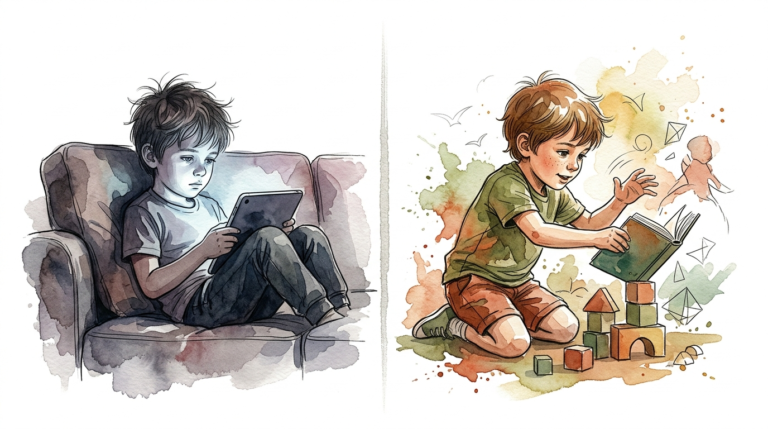
Imagine your child is fully immersed in a digital world. Their brain is firing in ways that a coloring book simply can’t match. When we suddenly demand they “turn it off,” we aren’t just asking for a change in activity; we are asking their developing brain to perform a massive neurochemical pivot. This article explores how to transform these volatile transitions into opportunities for growth.

screen time tantrums
Screen time tantrums are intense emotional outbursts that occur when a child is asked to disengage from a digital device. These reactions often include screaming, crying, physical aggression, or deep defiance. While they look like “bad behavior,” they are actually a physiological response to a sudden drop in stimulation.
At the core of this phenomenon is the dopamine loop. Activities like gaming or watching high-paced videos trigger a steady stream of dopamine, the brain’s “reward” chemical. This creates a state of high arousal and pleasure. When the screen goes dark, dopamine levels crash. For a child with an under-developed prefrontal cortex—the part of the brain responsible for impulse control and emotional regulation—this crash feels physically painful.
In the real world, these tantrums happen because the “thinking brain” (the prefrontal cortex) is being out-muscled by the “feeling brain” (the amygdala). The child is not choosing to be difficult; their nervous system is struggling to recalibrate to the slower pace of reality. Recognizing this shift allows us to move from punishment to partnership.
The Transition Toolkit: How to Navigate the Shift
Effective transitions require a proactive system rather than a reactive one. The goal is to create a “bridge” between the high-stimulation digital world and the lower-stimulation physical world.
- Implement “Bridge” Activities: Instead of asking a child to go from Minecraft to math homework, suggest a medium-energy activity first. A quick snack, a short physical game, or a transition toy helps the brain step down its arousal levels gradually.
- Use Visual and Auditory Cues: Since young children often lack a concrete sense of time, verbal warnings like “five minutes” can feel abstract and frustrating. Visual timers or hourglasses allow them to see the time disappearing, making the end less of a surprise.
- Collaborative Ending Routines: Ask your child to show you what they achieved in their game or show right before the time is up. This validates their experience and helps them “close the loop” on their digital task before switching off.
- Physical Connection: A gentle hand on the shoulder or sitting next to them for the final minute of screen time can help ground their nervous system. This signals safety and connection, which counters the isolation of screen immersion.
Focusing on the “hand-off” rather than the “shut-down” reduces the friction that leads to outbursts. When children feel involved in the process, they are less likely to perceive the end of screen time as an arbitrary loss of control.
The Benefits of an Emotional Intelligence Approach
Treating a screen time tantrum as a coaching moment builds a foundation for long-term emotional intelligence. This approach moves beyond simple compliance and focuses on building internal skills.
Resilience and Regulation: When we help a child navigate the “dopamine crash” without shaming them, they learn how to sit with uncomfortable feelings. This is the bedrock of self-regulation. Over time, they develop the “mental brakes” necessary to stop an activity even when they don’t want to.
Strengthened Parent-Child Bond: Approaching a meltdown with empathy rather than anger builds trust. The child learns that you are a partner in their struggle, not an adversary. This connection makes them more likely to cooperate in the future because they feel understood.
Improved Cognitive Flexibility: Transitions are essentially exercises in cognitive flexibility. By practicing these shifts daily, children strengthen the neural pathways required to move between different tasks and emotional states. This skill is highly transferable to school and social environments.
Challenges and Common Mistakes
Even with the best intentions, certain habits can inadvertently fuel the fire of a screen time tantrum. Understanding these pitfalls is essential for maintaining a calm household.
The “Two-Minute Warning” Trap: Research suggests that for some children, a quick two-minute warning can actually increase anxiety and resistance. It serves as a countdown to a “loss,” putting the child on high alert. If you find warnings make things worse, try using natural stopping points instead, like the end of a level or an episode.
Using Screens as a “Stop-Gap”: Using a tablet to quiet a child during a public outburst or a long wait can be tempting. However, this teaches the child that digital stimulation is the primary tool for managing boredom or distress. This creates a dependency that makes future transitions even harder because the child hasn’t practiced other regulation strategies.
Inconsistent Boundaries: If “five more minutes” frequently turns into twenty, the child learns that the boundary is negotiable. This leads to bargaining and escalating behavior as they test where the true limit lies. Clarity and consistency are the kindest things you can provide a developing brain.
Limitations: When This Approach May Not Be Ideal
While a coaching-first approach is highly effective, it has practical boundaries. In high-stress situations where safety is an issue, immediate intervention must take precedence over a teaching moment.
Environmental factors also play a role. A child who is over-tired, hungry, or getting sick will have significantly less “regulatory fuel.” In these moments, even the best transition toolkit may fail. It is okay to recognize that some days require more management and less “coaching” until the child’s basic needs are met.
Neurodivergent children, such as those with ADHD or Autism, may also face unique physiological hurdles. Their brains may hyper-fixate on digital content to a degree that traditional transitions feel impossible. In these cases, working with a specialist to design highly specific, sensory-based transition routines is often necessary.
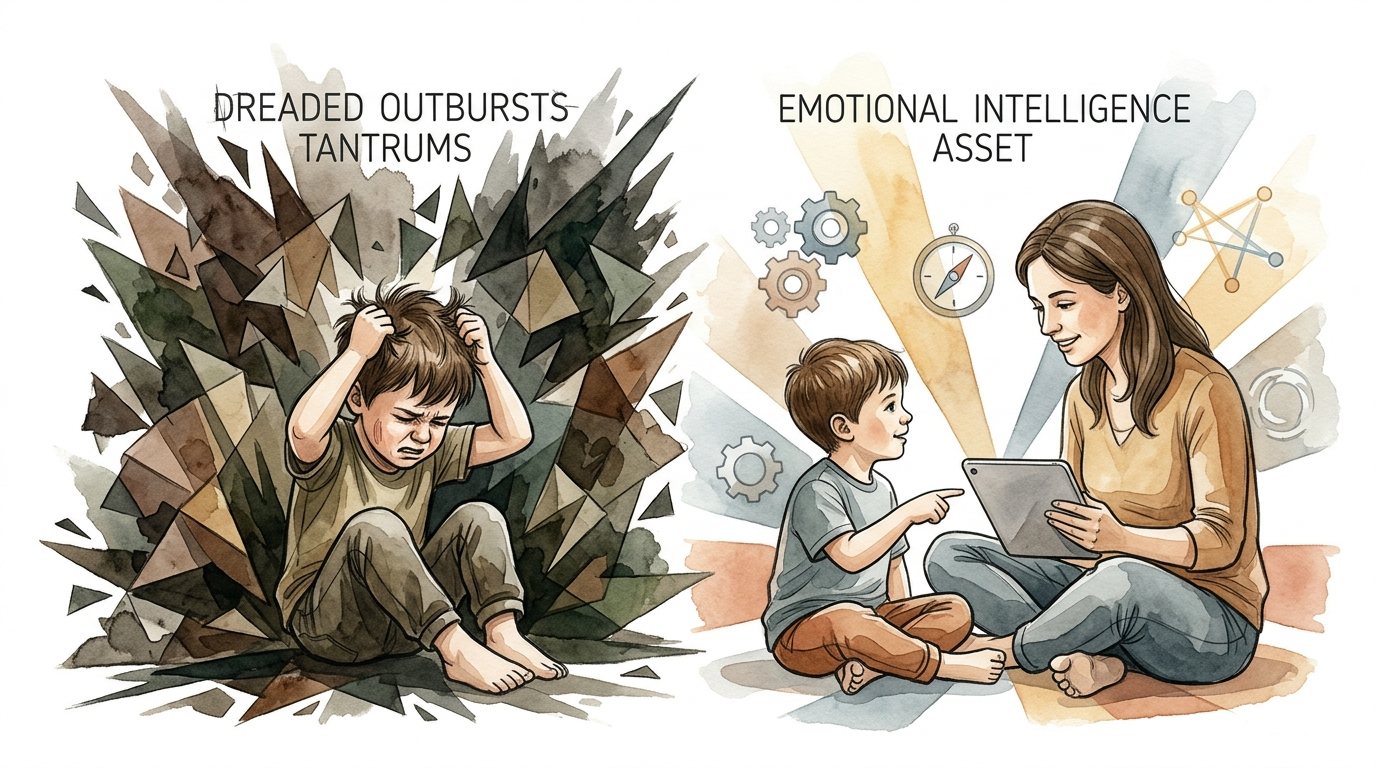
Dreaded Outbursts vs Emotional Intelligence Asset
The way we frame the conflict determines our response. Shifting from a “behavioral management” mindset to an “emotional coaching” mindset changes the outcome of the interaction.
| Feature | Dreaded Outburst Mindset | Emotional Intelligence Asset Mindset |
|---|---|---|
| Primary Goal | Immediate compliance and silence. | Skill-building and regulation. |
| Parental Role | The disciplinarian / enforcer. | The coach / co-regulator. |
| View of Conflict | A sign of disrespect or failure. | A data point on the child’s needs. |
| Long-term Result | Resentment and power struggles. | Self-awareness and autonomy. |
Practical Tips for Immediate Results
Start applying these strategies today to see a shift in your home’s digital dynamic.
- Preview the Content: Know what your child is watching. High-arousal, fast-cut content (like some YouTube “unboxing” videos) is much harder to transition away from than slower-paced educational content.
- Narrate the Process: “I see you’re really enjoying that game. It’s hard to stop when you’re doing so well. We have three minutes until the timer goes off.” This validates their feeling while holding the limit.
- Physical Movement: Encourage a “body reset” after the screen goes off. Jumping jacks, a quick stretch, or even a big bear hug can help shift the nervous system out of its sedentary, high-arousal state.
- Establish Tech-Free Zones: Keeping screens out of bedrooms and off the dinner table prevents the “constant access” mentality that makes transitions feel more like a deprivation.
Advanced Considerations for Long-Term Success
For parents looking to deepen their approach, consider the Collaborative & Proactive Solutions (CPS) model developed by Dr. Ross Greene. This method suggests that “kids do well if they can”—and if they aren’t doing well, it’s because they lack the skills to meet the expectation.
Addressing screen time through CPS involves sitting down with your child during a calm moment (not during a tantrum) and asking, “What makes it hard to turn off the tablet when I ask?” You might be surprised to find they are worried about losing progress in a game or feel lonely when the stimulation stops. Once you identify the root “unsolved problem,” you can brainstorm solutions together that work for both of you. This builds higher-level problem-solving skills that serve them well into adolescence and adulthood.
Example Scenario: The Tablet Hand-Off
Let’s look at how a typical “shut-down” can be transformed into a “coaching transition.”
The Old Way:
Parent walks into the room, sees the child on the tablet, and says, “That’s it, time is up. Give it to me now.” The child refuses. The parent grabs the device. The child screams. The parent threatens to take away the tablet for a week. Everyone is miserable.
The Coaching Way:
Ten minutes before the end, the parent sits near the child and asks, “What’s happening in your game?” The child explains a level they are trying to beat. The parent says, “That sounds exciting! We have ten minutes left. Do you think you can finish this level or save your progress by then?”
At the five-minute mark, the parent sets a visual timer where the child can see it. When the timer goes off, the parent says, “Timer is up. I’m going to put the tablet on the charger now. Would you like to help me set the table or do you want to race me to the kitchen first?” The child might still huff, but the “bridge” of choice and the connection established earlier prevents the full-blown meltdown.
Final Thoughts
Screen time tantrums are one of the modern era’s most exhausting parenting challenges. They test our patience and often make us feel like we’ve lost control. However, by understanding the neurobiology of the dopamine loop and the limitations of a developing brain, we can shift our perspective. These outbursts are not a sign that you are a bad parent or that your child is “addicted”—they are a sign that your child needs help navigating a difficult physiological transition.
Consistency, empathy, and a solid toolkit of bridge activities can turn these daily battles into moments of profound growth. You are teaching your child how to manage their impulses, respect boundaries, and regulate their own nervous system. These are the very skills that define emotional intelligence.
Experiment with these strategies and be patient with the process. Real change takes time, especially when you are rewiring neural responses. Each time you handle a transition with calm authority and empathy, you are depositing into your child’s “emotional intelligence asset” account. Stick with it—the long-term payoff is a more resilient, self-aware, and cooperative child.
Sources
1 tapouts.com | 2 healthychildren.org | 3 healthychildren.org | 4 utah.edu | 5 childrenandscreens.org | 6 peaceathomeparenting.com | 7 ourtinythinks.com | 8 integrative-psych.org | 9 kidswellhealth.com | 10 kidswellhealth.com | 11 potsdam.edu | 12 healingleaves.co.za | 13 youtube.com | 14 knox.nsw.edu.au | 15 daar.com.au | 16 youtube.com | 17 youtube.com | 18 scpcn.ca | 19 thejacobsladdergroup.org