Sensory Development Activities For Screen Free Kids
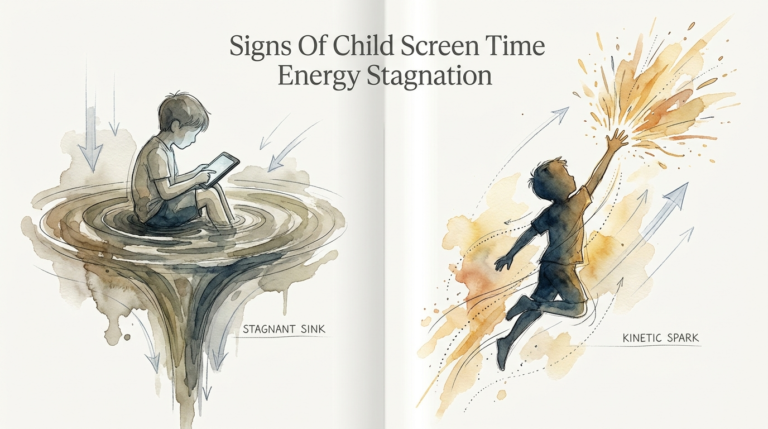
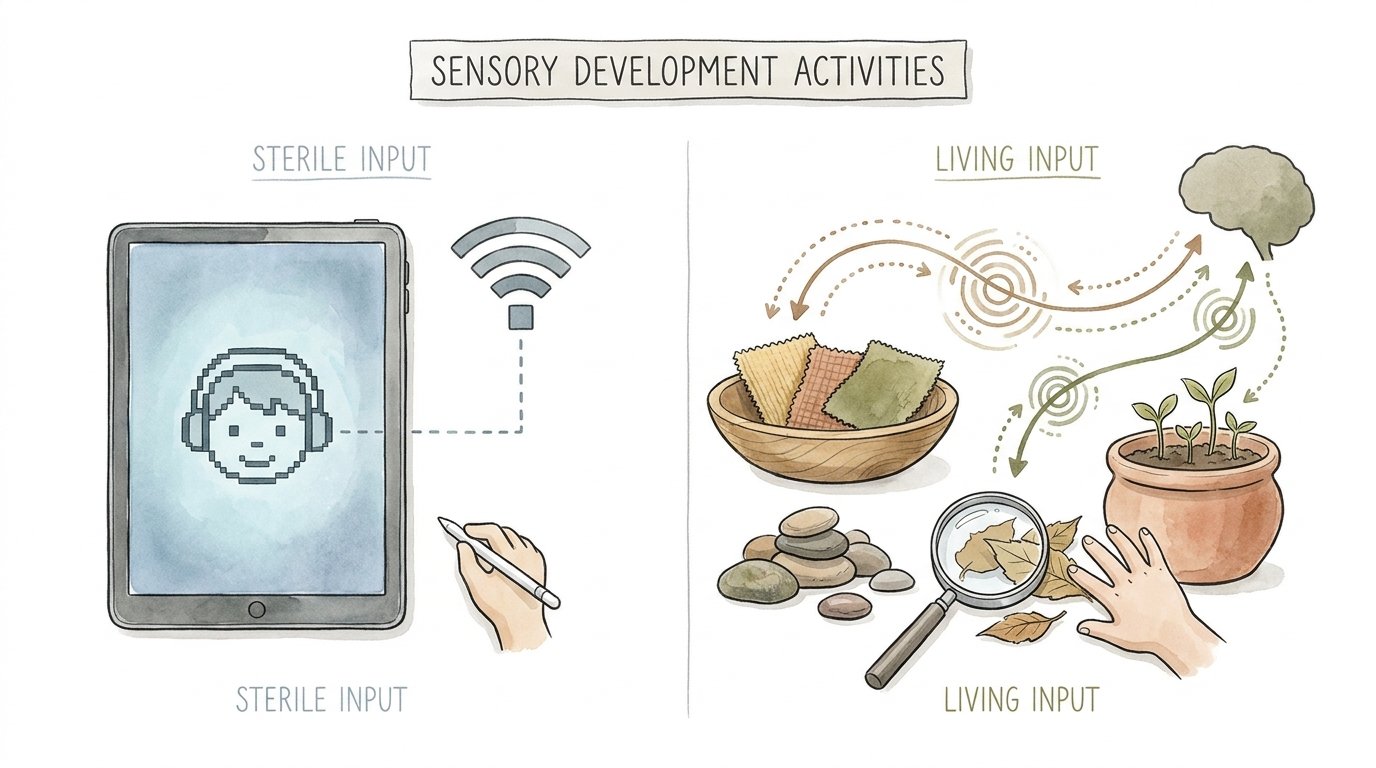
A thousand high-definition pixels can’t teach what one handful of mud can. The iPad offers a sterile, 2D simulation of life where nothing smells, nothing moves on its own, and nothing truly changes. Real development happens in the ‘mess’ of the living world—where textures, smells, and unexpected bugs build a brain that a screen never could.

Most parents want their children to thrive. You likely worry about how much time they spend staring at glowing rectangles. You see them “zoned out” and wonder what it does to their developing minds. The truth is that the human brain evolved to process a symphony of sensory data. Screens provide a whisper of that data. Nature and physical play provide a roar.
Choosing sensory-rich, screen-free activities isn’t just about avoiding “bad” technology. It is about feeding the brain the high-octane fuel it needs. We are talking about building neural pathways through “Living Input.” This guide will show you how to turn your home or backyard into a developmental powerhouse.
Sensory Development Activities For Screen Free Kids
Sensory development activities are hands-on experiences that engage a child’s senses. While most people know the basic five senses, developmental experts track eight distinct systems. These include touch, sight, hearing, smell, and taste, but also the “hidden” systems: vestibular (balance), proprioceptive (body awareness), and interoception (internal states).
These activities exist because the brain grows through “experience-dependent plasticity.” When a child squishes cold mud, their brain isn’t just feeling dirt. It is processing temperature, resistance, moisture, and weight simultaneously. This multisensory input builds a more robust, flexible brain. Research shows that children engaged in multisensory learning demonstrate 34% better engagement and retention than those in single-sense environments.
In the real world, these activities are used by occupational therapists to help children regulate their emotions and improve focus. At home, they serve as the foundation for everything from fine motor skills to advanced problem-solving. A child who learns to balance on a log is training the same vestibular system that will eventually help them sit still in a classroom chair.
How It Works: Engaging the 8 Senses
Engaging the senses requires more than just giving a child a toy. You need to create an environment where they can safely explore “Just Right” challenges. This means the activity is hard enough to be interesting but easy enough to avoid a total meltdown.
The Foundation: Tactile and Proprioceptive Input
Tactile play involves the skin’s receptors. You can start with a simple sensory bin. Fill a large plastic tub with dried beans, rice, or kinetic sand. Hide small plastic animals or “treasures” inside. As the child digs, their brain maps out the textures and boundaries of the objects.
Proprioception is the “heavy work” of the sensory world. This system relies on receptors in the muscles and joints. Activities like pushing a weighted laundry basket or “animal walks” (like crawling like a bear) provide deep pressure. This input is incredibly grounding. It tells the brain exactly where the body is in space, which reduces anxiety and “wild” behavior.
The Movement: Vestibular System
The vestibular system is located in the inner ear. It detects gravity and head movement. Activities that involve spinning, swinging, or hanging upside down are vital. A simple blanket swing—where two adults hold the ends of a sturdy blanket with a child inside—provides powerful vestibular input. This helps develop the balance and core strength needed for nearly every physical task in life.
The Internal: Interoception
Interoception is the sense of what is happening inside the body. You can practice this by asking your child to “listen” to their heart after running. Ask them how their tummy feels when they are hungry versus full. This awareness is the first step toward emotional regulation. If a child can’t feel their heart racing, they won’t know they are getting angry until it is too late.
Benefits of Sensory Play
Sensory play offers measurable advantages that digital simulations cannot match. MRI studies have shown that excessive screen time is linked to reduced brain development in areas responsible for language and literacy. In contrast, sensory play actively builds these areas.
Cognitive Growth: When children explore different materials, they are performing “mini-experiments.” They learn cause and effect. They observe how water pours but sand clumps. This is the beginning of scientific thinking and mathematical concepts like volume and weight.
Fine and Gross Motor Skills: Pinching small beads out of a sensory bin strengthens the “pincer grasp.” This is the exact skill needed to hold a pencil or zip a jacket later. Running, jumping, and climbing build the large muscle groups required for physical health and stamina.
Emotional Regulation: Sensory play is often “meditative” for kids. Running hands through a bin of smooth stones or squeezing playdough can lower cortisol levels. It provides a safe outlet for energy and a way to “reset” after a stressful day at school.
Language Development: Sensory activities naturally lead to descriptive language. You aren’t just playing; you are talking about things that are “slimy,” “gritty,” “fragile,” or “heavy.” This expands a child’s vocabulary in a way that watching a cartoon never will.
Challenges and Common Mistakes
The biggest challenge for most parents is the mess. We live in a world that values “clean and organized.” However, a sterile environment is a sensory desert. If you are too afraid of the “mess,” you might accidentally limit your child’s growth.
Mistake: Forcing the Experience. Never force a child to touch something they find aversive. If they hate the feeling of wet grass or slime, don’t push them. This can cause a “fight or flight” response. Instead, offer tools like shovels or tongs so they can interact with the material from a distance.
Mistake: Over-Stimulation. More is not always better. A room filled with flashing lights, loud music, and five different sensory bins can lead to a sensory meltdown. Look for signs of “overloading,” such as covering ears, squinting, or becoming suddenly aggressive or lethargic.
Mistake: Lack of Variety. Many parents stick to just one type of play, like a water table. To build a balanced brain, you need to rotate activities. If you did tactile play yesterday, try a vestibular-heavy activity like a backyard obstacle course today.
Limitations: When This May Not Be Ideal
Sensory play is not a “cure-all” and has its own boundaries. If a child has a diagnosed Sensory Processing Disorder (SPD), some activities might be genuinely painful or terrifying for them. In these cases, you should work with a licensed Occupational Therapist rather than experimenting alone.
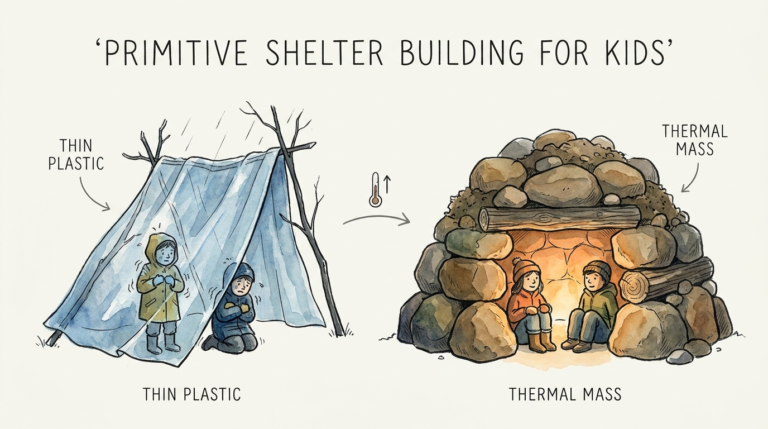
Environmental constraints also play a role. If you live in a small apartment, a mud kitchen might not be feasible. You have to adapt. “Dry” sensory bins (like rice) are easier to clean up indoors than “wet” ones. Safety is also a major limitation. Small items like water beads or dried beans are choking hazards for toddlers. Always match the material to the child’s developmental age, not just their chronological age.
Comparison: Sterile Input vs. Living Input
Understanding why “real world” play wins requires looking at the quality of the data the brain receives.
| Feature | Sterile Input (Screens) | Living Input (Sensory Play) |
|---|---|---|
| Dimensions | 2D (Flat) | 3D (Physical Space) |
| Senses Engaged | Mostly 2 (Sight/Sound) | Up to 8 (Full Spectrum) |
| Brain Activity | Passive Consumption | Active Problem Solving |
| Physical Effect | Sedentary/Static | Dynamic Movement/Strength |
| Social Component | Isolated | Cooperative/Interactive |
Practical Tips for Parents
Starting a sensory-rich lifestyle doesn’t require a huge budget. Most of the best tools are already in your kitchen or backyard.
- Use a “Yes” Space: Create a corner of the house or a spot in the yard where the answer is always “yes.” Yes, you can dump that. Yes, you can splash. Using a cheap plastic tarp or an old shower curtain makes cleanup 90% faster.
- Follow the Lead: Watch what your child naturally gravitates toward. If they are constantly jumping off the couch, they are seeking proprioceptive and vestibular input. Give them a mattress on the floor to jump on instead.
- Rotate Fillers: Don’t keep the same sensory bin out for a month. Change the filler weekly. Switch from rice to water, then to dried leaves, then to shaving cream. This keeps the “novelty” high and prevents boredom.
- Incorporate Smell: Add a few drops of essential oils or kitchen spices (like cinnamon or ginger) to playdough or rice bins. This engages the olfactory system, which is directly linked to the brain’s emotional center.
Advanced Considerations: The Sensory Diet
For serious practitioners, the goal is to create a “Sensory Diet.” This is a planned schedule of activities throughout the day that keeps a child’s nervous system organized. It isn’t about “doing more.” It is about doing the *right* thing at the *right* time.
If your child is lethargic and “zoned out” in the morning, they might need “alerting” activities. This includes fast swinging, jumping, or sour tastes (like lemon water). If they are “hyper” and bouncing off the walls before bed, they need “calming” activities. This includes deep pressure (weighted blankets), slow rocking, or “heavy work” like pushing a stack of books across the floor.
Advanced practitioners also look at “Bilateral Coordination.” This is the ability to use both sides of the body at the same time. Activities like kneading dough, cutting with scissors, or riding a bike are high-level sensory tasks that require both brain hemispheres to communicate perfectly.
Examples and Scenarios
Let’s look at a “The Mud Kitchen” scenario. A child is outside with a bucket of water, a pile of dirt, and some old pots and pans.
First, they have to use **proprioception** to carry the heavy water bucket. Then, they use **tactile** senses to mix the mud to the right consistency. They might add some “spices” like crushed dried leaves (**olfactory**). They use **fine motor skills** to stir the “soup” with a stick.
This simple activity is doing more for their brain than any “educational” app ever could. They are learning about viscosity, weight, biology (insects in the dirt), and imaginative play. They are also building a “stable visual field” by moving their head and eyes while they work, which is a key part of the **vestibular** system.
Another example is the “Blind Taste Test.” Have your child close their eyes and try small bits of different foods—something crunchy (apple), something soft (banana), something salty (pretzel), and something sour (pickled cucumber). This engages the **gustatory** (taste) system and forces them to rely on textures and smells, sharpening their awareness.
Final Thoughts
The “mess” of sensory play is actually the sound of a brain growing. While screens offer a convenient distraction, they cannot provide the rich, multidimensional input that a child’s nervous system craves. By prioritizing tactile, vestibular, and proprioceptive experiences, you are building a foundation for lifelong learning and emotional health.
Start small. You don’t need a custom-built sensory room. A bowl of ice cubes, a pile of autumn leaves, or a “heavy work” chore like helping carry the groceries can be a developmental win. The goal is to move from “Sterile Input” to “Living Input” whenever possible.
Encourage your child to get their hands dirty. Let them climb the tree, jump in the puddle, and smell the spices in the cabinet. These moments of real-world connection are the building blocks of a resilient, capable, and curious mind. Experiment with these activities and watch how your child’s focus and mood begin to shift.
Sources
1 kidsusamontessori.org | 2 standrewssukhumvit.com | 3 curiousneuron.com | 4 thewayyousayllc.com | 5 paedsinapod.com.au | 6 blumekidstherapy.com | 7 uplifttherapycenter.com | 8 sensoryintelligence.com | 9 tcms.care | 10 messyplaykits.com | 11 brainbalancecenters.com | 12 theeducatorsspinonit.com | 13 developlearngrow.com | 14 sensorynstuff.com | 15 developlearngrow.com | 16 aota.org | 17 cornell.edu | 18 fitandfunplayscapes.com | 19 styldgrace.com | 20 sarajcreations.com | 21 autismparentingmagazine.com