no phone summer list
Stop letting algorithms choose your day. Take back control with a precise plan for joy. Standard summers are spent reacting to notifications. A ‘Precision Summer’ is spent doing exactly what makes you feel alive. Grab the list. #SummerGoals #MindfulLiving
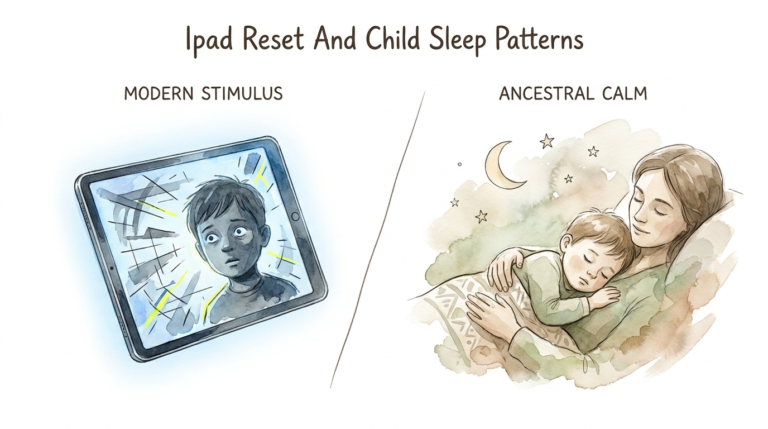
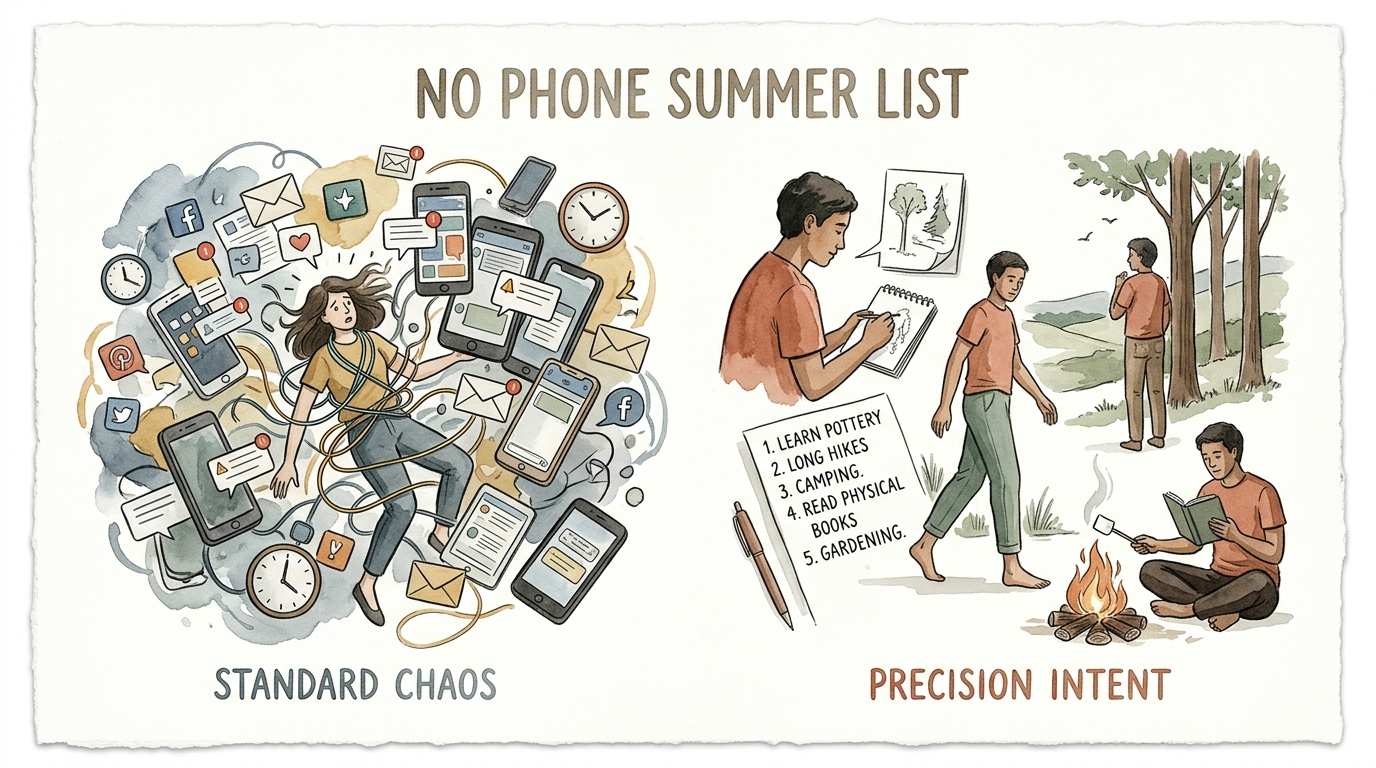
The heat of July often brings a familiar, glazed look to our eyes. We find ourselves sitting on the porch, not watching the sunset, but scrolling through a feed of people we barely know. This is the hallmark of Standard Chaos—a season where the schedule disappears and digital noise fills the void. We start the day reacting to a chime and end it with a thumb-cramp, wondering where the last three hours went.
A Precision Summer is the intentional antidote to this reactive state. It represents a shift from being a passive consumer of content to an active participant in your own life. This guide provides the blueprint for reclaiming those 1,104 hours of potential summer fun between June and August. Instead of letting a glowing rectangle dictate your mood, you can use this framework to design a season that feels genuinely alive.
Mindful living during these months is not about punishing yourself or retreating to a cave. It involves creating a high-energy environment where your attention is your most valuable currency. When you stop reacting, you start creating. This transition requires a list, a plan, and a willingness to be “bored” until the real magic happens.
no phone summer list
Creating a “no phone summer list” is the first step toward moving from Precision Intent to real-world action. The following ideas are designed to be tactile, engaging, and impossible to replicate through a screen. These activities focus on “single-purpose” experiences that allow your brain to settle into a flow state without the interruption of pings or push notifications.
Outdoor and Nature Adventures
- Try Chaos Gardening: Scatter a diverse mix of native wildflower seeds in a prepared patch of dirt and let nature decide what grows. This low-maintenance trend prioritizes spontaneity over rows and supports local pollinators.
- Go Geocaching with a GPS: Use a dedicated handheld GPS device to find hidden treasures in your local parks. This provides the thrill of the hunt without the distraction of a smartphone.
- Master the Analog Map: Travel to a nearby town or nature preserve using only a physical paper map. Learning to navigate using landmarks and street names builds spatial awareness that GPS has largely eroded.
- Practice “Forest Bathing”: Spend at least 20 minutes in a wooded area with no objective other than observing. Research shows this can reduce cortisol levels by up to 21 percent.
- Catch Fireflies: Revisit a childhood classic. Spend the twilight hours in the grass, watching the natural light show, and appreciating the quiet transition from day to night.
Creative and Skill-Based Projects
- Build a Physical “Bored Board”: Use a chalkboard or a large piece of paper in the kitchen to list every non-digital activity you enjoy. When the urge to scroll hits, look at the board instead of your phone.
- Start a Flower Press: Gather local blooms and press them inside heavy books. Later in the summer, you can use these to create handmade postcards or framed art.
- Learn a High-Focus Instrument: Pick up a ukulele, harmonica, or even a set of spoons. The goal is to engage your fine motor skills and auditory senses.
- Host an “Old-School” Game Tournament: Set up a bracket for checkers, chess, or a massive board game marathon. Physical pieces and face-to-face competition create a different social dynamic than online gaming.
- Make Homemade Ice Cream: Skip the store-bought pint. Use a hand-cranked or electric churn to make a batch from scratch. The process is slow, rewarding, and delicious.
Quiet and Reflective Practices
- Read a “Real” Book: No Kindles, no tablets, and no audiobooks for this specific task. Feel the weight of the paper and the smell of the ink as you turn physical pages.
- Write Morning Pages: Spend ten minutes every morning writing longhand in a journal before you check any news or weather. This “bookends” your day with your own thoughts rather than the world’s problems.
- Watch the Sunrise Intentionally: Wake up before the sun and sit outside until the light fully changes. Do not take a photo of it. Simply witness it.
- Sketch Your Surroundings: You do not need to be an artist. Sit in your backyard and try to draw a single leaf or the silhouette of your house. It forces you to look closer than a camera ever would.
How to Do a Digital Detox Summer
Transitioning to a Precision Summer requires more than just a list; it requires a system. Our brains are currently wired for the “variable rewards” of social media—the same psychological mechanism that makes slot machines addictive. To break this cycle, you must introduce friction between yourself and your devices while providing easy paths to analog alternatives.
Start by establishing a “Phone Hotel.” This is a designated spot, ideally in a drawer or a basket away from the main living area, where your phone lives when you are at home. If the device is out of sight, the “out of sight, out of mind” principle can help reduce the compulsive urge to check for notifications. You can check it at specific intervals, such as once every three hours, but it should not stay in your pocket.
Decentralize your phone’s functions. Most of our screen time comes from the fact that our phone is our clock, our camera, our map, and our music player. By using a dedicated alarm clock, a film or DSLR camera, and a physical map, you remove the “gateway” excuses for picking up the smartphone. When you use a single-purpose device, you eliminate the risk of falling down a rabbit hole of emails while you were “just trying to check the time.”
Set hard boundaries for the first and last hours of the day. Reaching for a phone immediately upon waking triggers a reactive mindset. Instead, use the first hour of your day for the “Morning Pages” or outdoor light exposure mentioned in the list. Similarly, putting the phone away an hour before bed protects your circadian rhythm from blue light and allows your brain to decompress for better sleep quality.
Benefits of a Precision Summer
The advantages of a phone-free or “Precision” approach to summer are both biological and psychological. When you remove the constant stream of digital input, your brain’s “default mode network” begins to engage more effectively. This is the state where creativity happens and where you process complex emotions and memories. Standard Chaos keeps this network suppressed under a layer of shallow processing.
Measurable improvements in mental health often follow a digital detox. Excessive social media use is linked to higher levels of anxiety, depression, and feelings of isolation due to constant comparison. By stepping away, you reclaim your self-image. You stop comparing your “behind-the-scenes” reality to everyone else’s “highlight reel.” This leads to a significant increase in life satisfaction and a sense of being “present” in your own experiences.
Physical health also sees a boost. Screens encourage a sedentary lifestyle often referred to as “sitting is the new smoking.” A Precision Summer naturally leads to more movement—whether it is gardening, walking, or simply standing while you cook. Additionally, the reduction in blue light exposure improves melatonin production, leading to deeper, more restorative sleep. You wake up feeling energized rather than “screen-tired.”
Challenges and Common Mistakes
The most common mistake people make when starting a no-phone summer is the “Cold Turkey Trap.” Attempting to go from six hours of daily screen time to zero overnight often leads to a quick burnout and a sense of failure. This approach ignores the reality of neurobiology. Your brain is used to dopamine spikes, and removing them all at once can cause irritability and a “phantom vibration” sensation where you think you feel your phone buzzing.
Failing to plan for “Digital Friction” is another frequent pitfall. If you decide to go to the beach without a phone but don’t bring a book or a frisbee, you will likely spend the whole time thinking about what you’re missing online. You must replace the digital habit with a physical one. Boredom is the space where creativity grows, but if that space isn’t supported by tools (like a sketchpad or a deck of cards), it will likely just lead back to the screen.
Underestimating the “Just Checking” habit can also derail your progress. Many people think they can just check their work email for five minutes while the kids are playing. However, the “popcorn brain” effect means that even after you put the phone down, your mind stays stuck in the digital world for another 20 minutes. This fragmented attention prevents you from ever reaching a state of deep focus or relaxation.
Limitations of Going Screen-Free
A Precision Summer is not always practical in every situation, and acknowledging these limitations is key to a sustainable plan. Safety is the primary concern. When hiking in remote areas or traveling alone, a smartphone is a vital tool for emergencies and communication. In these cases, the goal is not to be “phone-free” but to be “entertainment-free.” You keep the device for its utility while disabling all non-essential apps.
Work-life balance presents another boundary. For many professionals, being completely unreachable for three months is not an option. In this scenario, the Precision approach involves “time-blocking.” You might dedicate 9:00 AM to 10:00 AM for digital tasks and keep the rest of the day analog. This allows you to fulfill your responsibilities without letting them bleed into your personal time and family interactions.
Practical logistics like banking, flight updates, and healthcare portals often require digital access. Trying to force a 100% analog life in a 2026 digital economy can create unnecessary stress. The key is to distinguish between “Tools” and “Traps.” A tool is a digital service you use to complete a specific task efficiently. A trap is an app designed to keep you scrolling after the task is finished.
Precision Intent vs. Standard Chaos
Understanding the difference between these two states helps you identify which direction your summer is currently heading. Standard Chaos is the default state of the modern world, while Precision Intent is a deliberate, high-energy choice. Use the following comparison to evaluate your current habits.
| Feature | Standard Chaos | Precision Intent |
|---|---|---|
| Morning Routine | Immediate scrolling in bed. | Sunlight exposure and journaling. |
| Attention Span | Fragmented, “popcorn brain.” | Deep, sustained focus. |
| Social Interaction | Phones on the table at dinner. | Undivided attention to others. |
| Stress Levels | High, reactive to notifications. | Low, proactive and calm. |
| Memories | Vague and digitally mediated. | Vivid and physically felt. |
Practical Tips for Success
If you want to make a Precision Summer stick, focus on micro-habits that reduce your reliance on willpower. Willpower is a finite resource; environment design is permanent. By making the “wrong” choice harder and the “right” choice easier, you can automate your digital minimalism.
- Use a “Dumb Phone” for Outings: Consider purchasing a basic flip phone for the summer. You can swap your SIM card into it when you go to the beach or out with friends. This allows you to make calls and texts without the temptation of the mobile web.
- Apply the 20-20-20 Rule: If you must use a screen for work, every 20 minutes, look at something 20 feet away for 20 seconds. This reduces eye strain and breaks the “screen trance.”
- Kill All Non-Human Notifications: Go into your settings and disable every notification that isn’t a direct message or call from a real person. Apps do not need to “remind” you to check them.
- Print Your Boarding Passes and Tickets: Avoid using your phone as a wallet. Having physical paper for your summer travels reduces the number of times you have to pull your device out in public.
- Set Up Grayscale Mode: Turning your phone’s screen to black and white makes the icons and images much less appealing to the brain’s reward system. It transforms a “slot machine” into a “utility tool.”
Advanced Considerations for Practitioners
For those who have already mastered the basics of digital minimalism, a Precision Summer can be used as a “Dopamine Fast.” This involves not only removing phones but also limiting other high-stimulation inputs like processed sugar or excessive caffeine. The goal is to “reset” your baseline level of enjoyment so that simple things—like the smell of rain or a conversation with a neighbor—feel deeply rewarding again.
Consider the concept of “Cognitive Load Theory.” Every notification and digital task takes up a small amount of your brain’s working memory. Over time, this cumulative load leads to mental exhaustion. By practicing “Digital Sabbaths”—full 24-hour periods with no technology once a week—you allow your cognitive reserves to fully replenish. This level of discipline separates the advanced practitioner from the casual user.
Scaling this beyond summer is the ultimate goal. A Precision Summer should be viewed as a laboratory. You are experimenting with different ways of living to see which ones bring the most joy and productivity. By the end of August, you shouldn’t just be returning to your old habits. You should be integrating your favorite “Precision” techniques into your permanent lifestyle, creating a year-round buffer against digital chaos.
Example Scenario: The Weekend Reset
Imagine a typical Friday evening under the Standard Chaos model. You come home, scroll through work emails, watch three hours of a streaming show you don’t really like, and go to bed with a headache. On Saturday, you spend the morning looking at other people’s vacation photos while sitting in your own living room. The weekend passes in a blur of blue light.
Now, consider the Precision Intent weekend. On Friday at 5:00 PM, you put your phone in its “Hotel” and leave it there. You spend the evening playing a board game with your family and reading 50 pages of a novel. Saturday morning begins with 15 minutes of sunlight and a walk to the local farmer’s market—using a paper map if you’re in a new area. You take three photos total using a dedicated camera. By Sunday evening, you feel like you have lived a full week’s worth of experiences because your attention was never divided.
This scenario demonstrates that you don’t need to change your location to change your summer. You only need to change where you place your focus. The simple act of putting down the phone transforms a mundane weekend into a series of vivid, lasting memories.
Final Thoughts
Reclaiming your summer from the grip of algorithms is one of the most radical acts of self-care you can perform. We live in an era where our attention is constantly being harvested for profit. By choosing a Precision Summer, you are declaring that your time and your joy are not for sale. You are choosing to be present for the sunsets, the conversations, and even the “boring” moments that make life meaningful.
The “no phone summer list” is your starting point, but the true value lies in the mindset shift. When you stop reacting to notifications, you regain the ability to hear your own thoughts. You rediscover hobbies you’ve neglected and people you’ve been “too busy” to call. This season offers a rare opportunity to rewire your brain for focus and happiness.
Start small if you must, but start today. Put the phone in the drawer for just one hour this evening. Sit outside and see what happens when you aren’t waiting for a chime. You might find that the real world is far more interesting than anything happening on your screen. Experiment with these principles, embrace the quiet, and take back control of your joy.
Sources
1 acon24.com | 2 richinwhatmatters.com | 3 clevelandclinic.org | 4 parentmap.com | 5 meer.com | 6 miamiherald.com | 7 wileyphone.com | 8 austram.com | 9 woodlandtools.com | 10 thecommon.place | 11 forbes.com | 12 georgetown.edu | 13 anthembluecross.com