Creating A Screen Free Home Environment
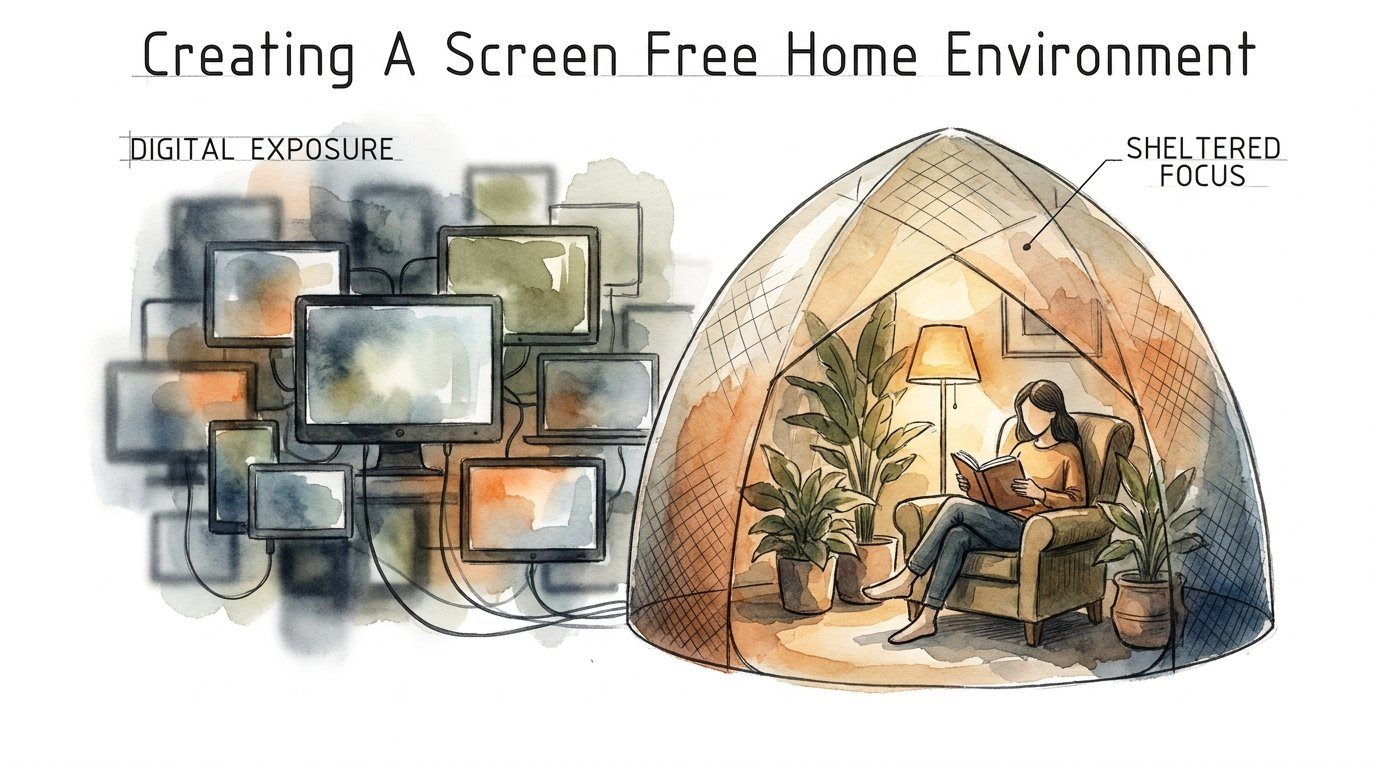
Is your living room accidentally triggering your child’s next meltdown? We can’t ask kids to reset while every room in the house is screaming ‘Watch me!’ We redesigned our environment to shelter their focus rather than expose it to digital temptation. Here’s how we built a focus sanctuary.

The modern home has become a minefield of notifications and blue light. From the smart fridge to the tablet on the counter, children are constantly bombarded with “digital exposure.” This keeps their brains in a state of reactive attention, always scanning for the next hit of dopamine.

When we talk about a focus sanctuary, we are talking about intentionally shifting from an environment of digital exposure to one of sheltered focus. This isn’t just about “no screens.” It is about engineering a space that actively invites deep play, creativity, and emotional regulation.
Creating A Screen Free Home Environment
A screen-free home environment is a deliberate physical and social setup where digital devices are secondary to human interaction and tactile exploration. It is a space designed to protect a child’s developing brain from the hyper-stimulating “cortex-thinning” effects of excessive media.
In the real world, this looks like a living room where the TV isn’t the focal point and bedrooms are strictly tech-free zones. It exists to provide the “boredom” necessary for creativity to flourish. Without the constant buzz of background TV, which research shows can negatively impact language development in infants, children are forced to engage with their three-dimensional world.
Think of it as a “sensory reset.” When a child walks into a room designed for focus, their nervous system begins to downregulate. They move from the “reactive attention” system—the part of the brain that reacts to movement and noise—to the “focused attention” system located in the prefrontal cortex. This is where self-regulation and problem-solving live.
Building Your Sanctuary: The Step-by-Step Process
Transitioning a high-tech home into a focus sanctuary requires more than just hiding the remotes. It requires a system of environmental design and behavioral modeling.
Step one is the Physical Audit. Walk through your home at a child’s eye level. Identify every screen or device that “screams” for attention. This includes tablets on chargers, smart speakers, and the giant black mirror on the wall—the TV.
Step two is Visual Decoupling. If you cannot remove the TV, you must hide it. Use a decorative screen, a sliding cabinet, or even a simple fabric cover. When the screen is invisible, the “cue” to watch it disappears. Research suggests that background TV alone can distract children even when they aren’t actively watching, so making it physically inaccessible is key.
Step three is the Creation of “Nodes.” Designate specific areas for specific screen-free activities. A “Reading Nook” should have a soft rug, a dimmable LED light (as harsh fluorescents can trigger sensory overload), and a curated selection of physical books. A “Creative Corner” should feature a low table with tactile materials like clay, paper, and crayons.
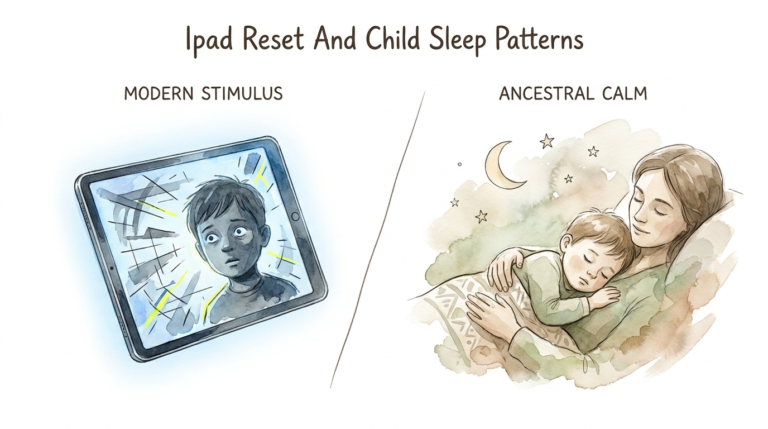
Step four is the Charging Station. Move all chargers to a single, public location like a kitchen drawer or a hallway shelf. No devices should ever be charged in bedrooms. This “bedtime for devices” ensures that the hour before sleep is spent in a sheltered focus state, which is critical for healthy circadian rhythms and brain development.
Why Shelter Matters: The Measurable Benefits
The advantages of a focus sanctuary are both immediate and long-term. In the short term, you will notice a significant decrease in “transition meltdowns.” These often occur because a child’s brain is struggling to switch from the high-dopamine environment of a screen to the low-dopamine environment of “real life.”
Measurable developmental benefits include:
- Improved Attention Spans: Without constant digital interruption, children practice “sustained attention,” strengthening the prefrontal cortex.
- Better Social-Emotional Skills: Screen-free interactions require children to read facial expressions and body language, skills that are often delayed in high-screen-use environments.
- Physical Health: Research links excessive screen time to sedentary behavior and obesity. A focus sanctuary naturally encourages movement and fine motor skill development through tactile play.
- Deeper Sleep: Removing blue light from bedrooms and evening routines allows the brain to produce melatonin naturally, leading to more restful sleep cycles.
One landmark NIH study found that children who spent more than two hours a day on screens scored lower on language and thinking tests. By building a sanctuary, you are quite literally protecting the structural integrity of your child’s developing brain, particularly the white matter pathways that support literacy and cognitive control.
Pitfalls and Power Struggles: Common Mistakes
The biggest mistake parents make is attempting a “cold turkey” digital detox without replacing the stimulation. If you remove the tablet but leave a sterile, empty room, the child will experience intense boredom that leads to aggression rather than creativity.
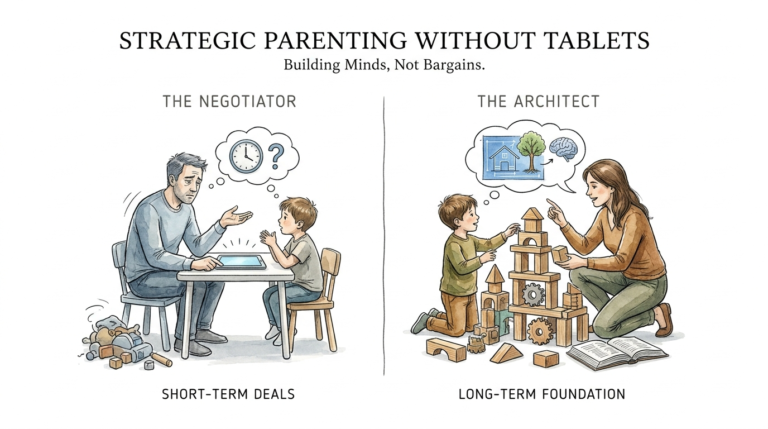
Another frequent error is using screens as a reward or punishment. When you say, “If you clean your room, you get 30 minutes of iPad,” you are elevating the screen to a “high-value prize” status. This makes the digital exposure even more addictive. Instead, offer privileges like extra reading time or a trip to the park.
Neglecting to model the behavior is the third major pitfall. If you are preaching a screen-free sanctuary while scrolling on your phone in the “Reading Nook,” the system will fail. Children are expert observers. They need to see you engaging in sheltered focus—reading a physical book, journaling, or simply being present—to value the space themselves.
When the World Won’t Unplug: Realistic Limitations
A focus sanctuary is a tool, not a prison. In today’s world, total digital elimination is often impractical and can lead to “digital illiteracy” as children age. Teens, for instance, need to learn to navigate the digital world responsibly rather than being completely sheltered until adulthood.
Environmental limitations also play a role. If you live in a small apartment, you might not have space for a dedicated “sensory room.” In these cases, the sanctuary becomes a “time” rather than a “place.” You might designate the dining table as a permanent tech-free zone or use room dividers to temporarily section off a focus area.
Furthermore, some educational content can be beneficial when co-viewed. The limitation here isn’t the screen itself, but the “passive consumption” that replaces active learning. The sanctuary should be flexible enough to allow for intentional, high-quality digital use while keeping the “default” state of the home grounded in the physical world.
Sheltered Focus vs. Digital Exposure: A Comparison
Understanding the difference between these two environments is essential for effective home design.
| Factor | Digital Exposure Environment | Sheltered Focus Sanctuary |
|---|---|---|
| Primary Stimulus | Rapid, high-contrast visual/auditory input. | Tactile, three-dimensional, and sensory-balanced. |
| Attention System | Reactive Attention (Midbrain). | Focused/Sustained Attention (Prefrontal Cortex). |
| Child’s State | Often overstimulated or “zoned out.” | Regulated, curious, and engaged. |
| Maintenance | Low effort (let the device entertain). | High intentionality (curating toys/books). |
Practical Tips for a High-Focus Home
To maintain a focus sanctuary, you need to treat the environment as a living system. It requires regular “tuning” to remain effective.
- Toy Rotation: Too many toys create “visual noise.” Keep only 3–5 high-quality items available and rotate them weekly to maintain curiosity.
- Audio-Only Options: Use a simple radio or a dedicated screen-free music player. Music and audiobooks provide stimulation without the “locking” effect of visual screens.
- The “Out of Sight” Rule: Use opaque bins for storage. If a child can see the tangled mess of plastic through a clear bin, their brain registers clutter, which increases cortisol and decreases focus.
- Nature Integration: Bring the outdoors in. Plants, natural light, and even a “nature tray” with rocks and pinecones have a therapeutic effect and have been shown to buffer against the negative effects of screen time.
Optimization is key. Use dimmable warm-toned lighting in the evenings to signal to the brain that it’s time to downregulate. Avoid “cool” blue-toned bulbs in focus areas, as these mimic daylight and keep the nervous system on high alert.
The Neuroscience of the Sanctuary: Advanced Considerations
For serious practitioners, understanding neuroplasticity is vital. A child’s brain “specializes” based on its environment. When exposed to high levels of digital media before age two, the brain’s visual processing networks mature prematurely. This sounds like a benefit, but it comes at a cost: it reduces cognitive flexibility and decision-making efficiency later in life.
By creating a focus sanctuary, you are providing “green time” for the brain. This environment supports the development of the “executive center,” allowing for better emotional regulation through “co-regulation” with a caregiver. In a screen-free space, the caregiver is more likely to be present and responsive, which is the single most important factor in healthy brain architecture.
Advanced strategies include “sensory-zoning.” This involves using specific colors—blues and greens—to promote calmness in reading areas, while using vibrant accents in creative corners to spark curiosity. This level of environmental engineering helps children with ADHD or sensory processing disorders thrive by providing controlled, predictable stimuli.
Real-World Reset: The Weekend Sanctuary Scenario
Imagine a typical Saturday morning. In a high-exposure home, the child wakes up and immediately asks for the tablet or turns on the TV. By 10:00 AM, they are irritable, having already consumed two hours of rapid-fire content. When it’s time to get dressed, a meltdown ensues because the “real world” is boring and slow compared to the screen.
Now, imagine the same morning in a focus sanctuary. The TV is hidden behind a cabinet. The tablet is in a locked kitchen drawer. Instead, the child finds a “basket of invitation” on the living room rug containing a few magnets and a tray of sand. They engage in tactile play for 45 minutes.
When the parent joins them, they read a physical book together. The child’s “reactive attention” remains quiet, while their “focused attention” is active. Because their dopamine levels haven’t been artificially spiked by a screen, the transition to lunch is smooth and cooperative. This isn’t magic—it’s neurological engineering.
Final Thoughts
Building a focus sanctuary is the most powerful move a parent can make in the digital age. It is an act of reclaiming the home as a place of growth rather than a place of consumption. By shifting from digital exposure to sheltered focus, you give your child the gift of their own attention.
Start small. Pick one corner, hide one screen, and commit to one hour of true “focus time” every day. You aren’t just changing your living room; you are changing the trajectory of your child’s brain development and your family’s emotional health.
The results won’t be instant, but they will be profound. As the digital noise fades, you will start to hear more of the sounds that matter: the rustle of pages, the clinking of blocks, and the sound of a child who is finally, truly, focused.
Sources
1 medlineplus.gov | 2 kingdomplayroom.com | 3 childrenandscreens.org | 4 sunshine-parenting.com | 5 choc.org | 6 wonderwall.sg | 7 youtube.com | 8 medium.com | 9 nashvilleparent.com | 10 childrensdayton.org | 11 ocpsychologycenter.com | 12 screenflex.com | 13 psychologytoday.com | 14 smhvenice.com | 15 nyp.org | 16 piqe.org | 17 vitalitenb.ca | 18 neurosciencenews.com