Effects Of Screen Refresh Rates On Child Brain
Why does 30 minutes of high-speed video leave them more exhausted than 3 hours of quiet observation? Screens use high-energy ‘active’ delivery to keep a child’s attention hostage, while nature uses a ‘passive’ rhythmic flow that restores it. Stats indicate that high-refresh-rate content correlates with higher irritability. It’s time to trade the high-voltage screen for the low-voltage breeze.

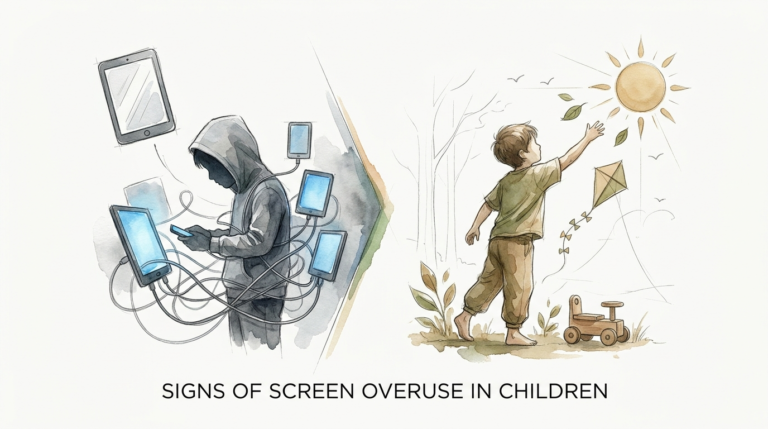
Imagine the last time your child watched a fast-paced cartoon. Their eyes were likely glued to the panel, their body frozen, yet their brain was racing at a million miles per hour. Contrast that with a stroll through a local park. They might be running, climbing, and exploring, yet they return home with a sense of calm rather than a hair-trigger temper. This discrepancy is not a coincidence. It is the result of how different environments interact with the human neurological system.

Understanding this dynamic matters because we are living in the first era of “hyper-speed” parenting. Devices today feature refresh rates of 60Hz, 120Hz, or even 240Hz, pushing visual information into the brain faster than the human eye was ever evolved to process. This creates a state of perpetual high-alertness that drains the prefrontal cortex—the part of the brain responsible for impulse control and focus. We are essentially asking our children to run a mental marathon every time they pick up a tablet.
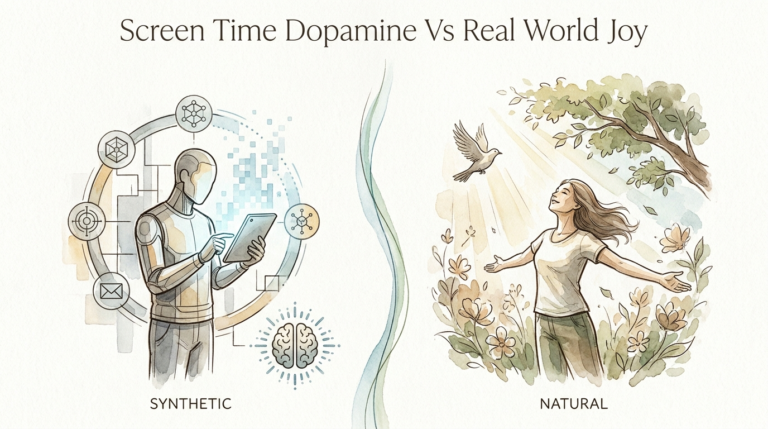
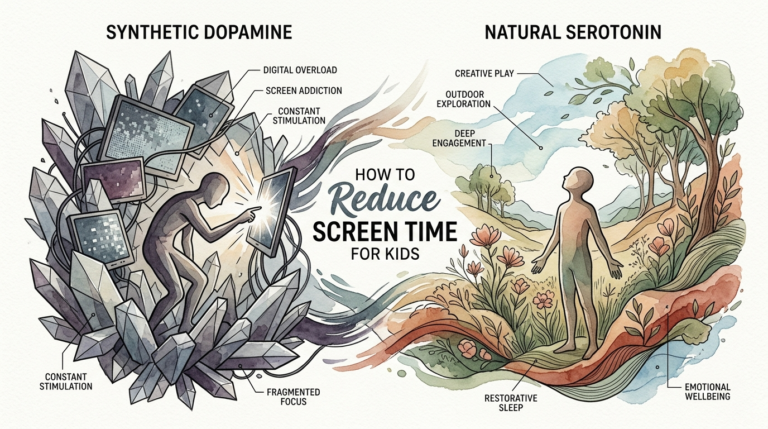
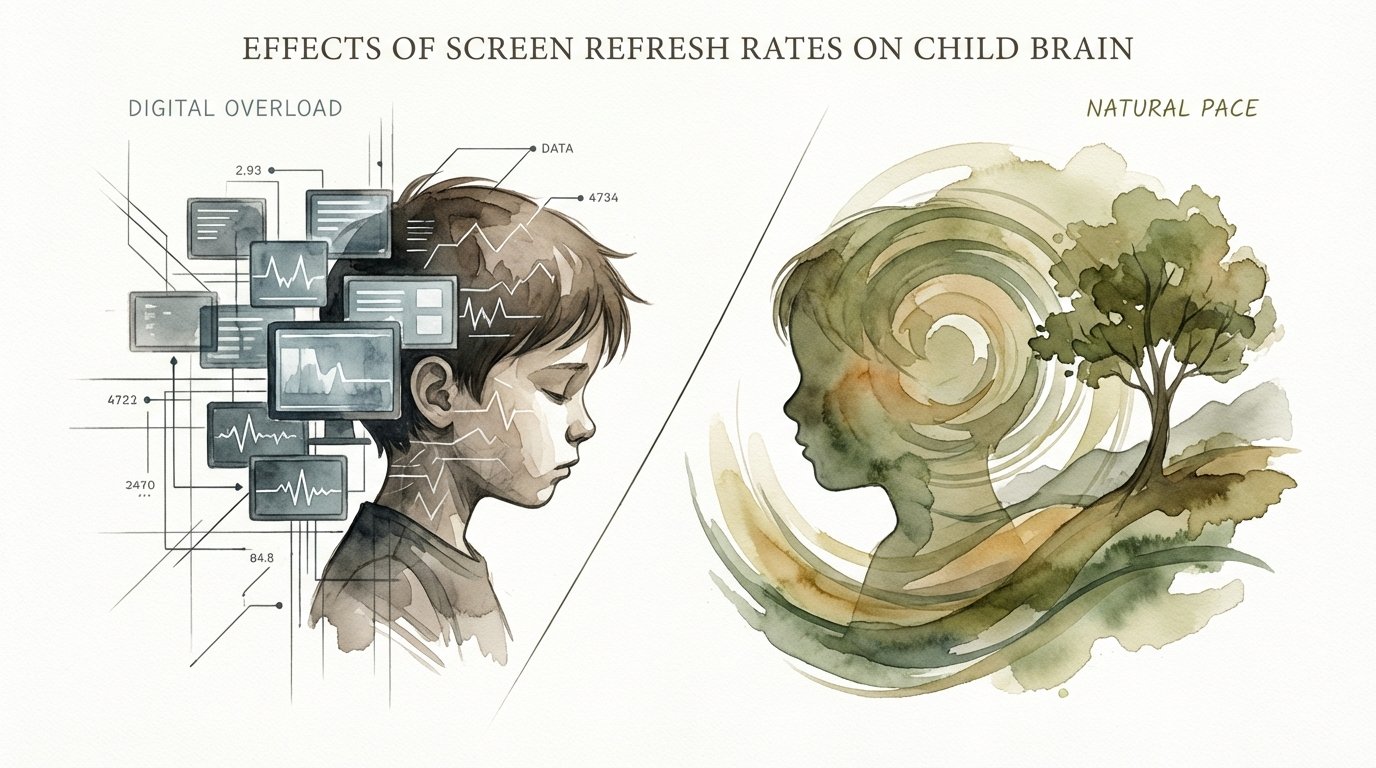
Digital overload is not just a buzzword; it is a physiological reality. When we compare the jagged, high-frequency stimulation of a screen to the organic, fractal patterns of a forest, we see two entirely different versions of reality. One demands attention, while the other invites it. One depletes the mind, while the other restores it.
Effects Of Screen Refresh Rates On Child Brain
Screen refresh rate refers to how many times per second an image is updated on a display. For most modern smartphones and tablets, this is at least 60 times per second (60Hz), with premium devices reaching 120Hz. While adults appreciate the “smoothness” of a high-refresh-rate screen, a child’s brain processes this high-velocity data differently.
To a developing brain, a 120Hz screen is a barrage of sensory input. Each frame represents a new packet of data that the visual cortex must decode and the brain must “stitch” together to create the illusion of motion. This process is computationally expensive for a child’s neurobiology. When the pace of visual changes exceeds the brain’s processing threshold, the result is sensory overload. This is often the root cause of the irritability parents see after “screen time.”
Studies suggest that high screen exposure in early childhood can lead to accelerated but inefficient brain maturation. Instead of building deep, flexible neural pathways for complex thinking, the brain prioritizes the visual processing networks required to keep up with the screen’s speed. This “premature specialization” comes at a cost. It can lead to a thinned cortex and reduced white-matter integrity, which are crucial for literacy and emotional empathy.
Think of it like an engine running at its redline for hours. Eventually, the system begins to overheat. In children, this “overheating” presents as Electronic Screen Syndrome. Symptoms include mood swings, meltdowns, and a low threshold for frustration. The high-refresh-rate content acts as a stimulant, triggering a fight-or-flight stress response that leaves the child physically sedentary but neurologically exhausted.
How Soft Fascination Restores the Brain
Nature works on a different frequency. According to Attention Restoration Theory (ART), natural environments engage what is known as “soft fascination.” This is a form of effortless, bottom-up attention. When a child watches a leaf tumble or follows the rhythmic movement of water in a stream, their brain is not being “held hostage.” Instead, the environment provides enough interest to keep the mind engaged without demanding the high-voltage “directed attention” required by a screen.
Directed attention is the mental muscle we use to ignore distractions and focus on a specific task, like a math problem or a fast-moving video game. This muscle is finite. Once it is exhausted, we experience Directed Attention Fatigue (DAF). Children are particularly susceptible to DAF because their prefrontal cortex—the home of directed attention—is the last part of the brain to fully develop.
Nature offers the perfect antidote to this fatigue. The “passive” delivery of natural stimuli allows the directed attention system to go offline and rest. Research has shown that just 30 minutes in a green environment can significantly improve a child’s performance on focus-based tasks. The brain literally resets itself when it stops trying to keep up with 120 frames per second and starts syncing with the slower, more predictable patterns of the natural world.
Benefits of Transitioning to Natural Pacing
The transition from a high-voltage digital environment to a low-voltage natural one yields measurable cognitive and emotional dividends. Parents who prioritize “green time” over screen time often report a noticeable shift in their child’s baseline temperament.
- Improved Impulse Control: By allowing the prefrontal cortex to rest, children regain the ability to regulate their emotions and resist immediate gratification.
- Enhanced Sensory Integration: Nature engages all five senses—smell, touch, sound, sight, and even taste. This holistic stimulation builds more robust neural connections than the two-dimensional input of a screen.
- Reduced Anxiety: The lower cortisol levels associated with natural environments help soothe the nervous system, reducing the “hair-trigger” irritability caused by digital overstimulation.
- Better Sleep Quality: Natural light helps regulate the circadian rhythm, whereas the blue light and high-frequency flicker of screens suppress melatonin production.
These benefits are cumulative. The more time a child spends in a naturally paced environment, the more “neurologically resilient” they become. They develop the ability to tolerate boredom, which is a prerequisite for creativity and deep thinking.
Challenges and Common Mistakes in Digital Management
One of the most frequent errors parents make is using high-speed digital content as a tool for “co-regulation.” When a child is upset, handing them a tablet provides an immediate distraction. This seems like it works because the child becomes quiet. However, this is “passive” engagement that does not teach the child how to soothe themselves. It merely “numbs” the nervous system with high-intensity visual input.
Another common mistake is assuming that “educational” apps are exempt from these rules. Even if the content is teaching phonics or math, if it uses high-speed animation and frequent reward dings, it is still taxing the child’s directed attention. The “pace” of the delivery is often more important than the “purity” of the content.
Parents also frequently forget the “re-entry” period. Stopping a screen session abruptly is like slamming on the brakes of a car going 100 miles per hour. The child’s brain is still tuned to a high-voltage frequency, but the environment has suddenly become “boring.” This transition is the primary trigger for the “screen-time meltdown.”
Limitations and Realistic Constraints
While the “low-voltage breeze” is ideal, we must acknowledge that technology is an inescapable part of modern life. It is not always possible to spend three hours in the woods every day. Digital literacy is also a required skill for the 21st century. The goal is balance, not total abstinence.
Environmental limitations play a role as well. Families in dense urban areas may lack immediate access to sprawling forests or parks. In these cases, the “low-voltage” shift must be intentional. This might mean looking at house plants, using a sound machine with natural rhythms, or choosing “slow” media—like audiobooks or single-camera educational programs—instead of high-speed cartoons.
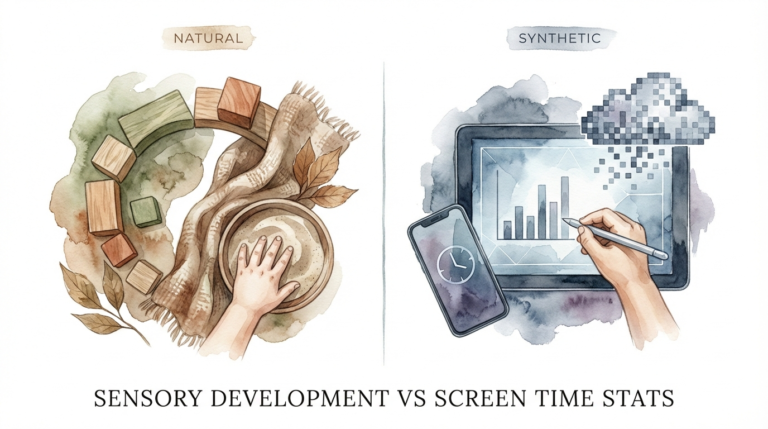
Physical health or weather conditions can also limit outdoor time. In these scenarios, parents must find indoor alternatives that mimic the passive flow of nature. Puzzles, building blocks, and open-ended play with “loose parts” provide a similar restorative effect by allowing the child to set their own pace of interaction.
Comparison: Digital Overload vs. Natural Pace
| Feature | Digital Overload (High Voltage) | Natural Pace (Low Voltage) |
|---|---|---|
| Attention Type | Directed / Forced Attention | Soft Fascination / Passive |
| Biological Response | Elevated Cortisol / High Arousal | Reduced Stress / Parasympathetic Activation |
| Neural Impact | Cortical Thinning (long-term overuse) | Restored Prefrontal Function |
| Sensory Input | Fragmented / High-Refresh (Hz) | Rhythmic / Fractal Patterns |
| Primary Outcome | Mental Fatigue & Irritability | Cognitive Clarity & Calm |
Practical Tips for a Balanced Nervous System
Restoring a child’s focus requires a shift in how we manage their daily “energy budget.” Think of your child’s attention as a battery that is drained by screens and recharged by nature.
- Implement the 20-20-20 Rule: Every 20 minutes of screen use, have your child look at something 20 feet away for 20 seconds. This prevents the “tunnel vision” that locks the brain into a high-voltage state.
- Prioritize “Slow Media”: Choose content with slower scene changes and realistic colors. Avoid “short-form” scrolling videos, which are designed specifically to hijack the dopamine system through novelty.
- Use a “Sensory Reset”: If your child is irritable after a screen session, engage their vestibular system. Swinging, jumping on a trampoline, or hanging upside down helps reset the nervous system much faster than sitting quietly.
- Create “Green Zones”: Designate specific areas of the home, like the dining table or bedrooms, as screen-free natural zones where eyes can rest on textures like wood, wool, or plants.
- Schedule “Boredom Blocks”: Allow for periods of time with no scheduled activity and no screens. This forces the brain to switch from “consuming” to “creating,” which strengthens neural flexibility.
Advanced Considerations: Neural Plasticity and Myelination
For those looking to understand the deeper biological impacts, we must look at myelination. Myelin is the fatty sheath that surrounds nerve fibers, allowing electrical impulses to travel quickly and efficiently through the brain. During the first decade of life, the brain is in a massive “paving” project, laying down these tracks.
Excessive high-speed screen time can interfere with this process. When the brain is constantly stimulated by external sources, it may fail to develop the internal “tracks” required for self-regulation and deep focus. The brain becomes “visually dominant,” where the visual cortex grows at the expense of the auditory and social processing centers. This is why some heavy screen users struggle with non-verbal social cues and complex verbal instructions.
The “low-voltage” environment of nature encourages a more balanced myelination process. It provides the “white noise” and space needed for the brain to integrate sensory data at its own pace. This results in a brain that is not just “fast,” but “deep.” It allows for the development of executive functions like working memory and cognitive flexibility, which are the true markers of intelligence.
Example: The “Digital Detox” Weekend
Consider two different weekend scenarios for a ten-year-old child. In the first, the child spends Saturday and Sunday playing a high-refresh-rate competitive video game for four hours each day. By Sunday evening, the child is likely “edgy,” prone to snapping at siblings, and struggling to wind down for sleep. Their brain is still oscillating at the frequency of the game’s reward loop.
In the second scenario, the family spends those same four hours at a nature preserve. The child climbs trees, skips stones, and observes insects. There is no “score,” no “leveling up,” and no 120Hz refresh rate. By Sunday evening, the child’s nervous system is in a state of “rest and digest.” They are more likely to engage in conversation, read a book, and fall asleep easily. The “passive” delivery of the woods has successfully repaired the “directed attention” damage from the school week.
Final Thoughts
Trading the high-voltage screen for the low-voltage breeze is not about being anti-technology. It is about being pro-biology. Our children are equipped with ancient nervous systems that are currently being tested by futuristic delivery systems. When we understand that irritability is often just a symptom of sensory exhaustion, we can change our approach to parenting in a digital age.
The goal is to provide our children with environments that serve as a sanctuary for their minds. By limiting the high-frequency barrage of modern screens and increasing their exposure to the rhythmic, restorative flow of nature, we give them the best possible chance to develop a focused, resilient, and calm brain.
Start small. A fifteen-minute walk. A desk near a window. A switch from a tablet to a paperback. These small shifts in “voltage” can make a massive difference in the long-term health and happiness of your child. Encourage them to look up from the pixels and find the fascinating, slow-moving world waiting just outside the door.
Sources
1 risenshinepeds.com (https://www.risenshinepeds.com/blog/screen-time-and-adhd) | 2 nih.gov (https://pmc.ncbi.nlm.nih.gov/articles/PMC12488278/) | 3 cmhblr.com (https://www.cmhblr.com/resources/blogs/how-screen-time-affects-your-brain-and-what-neurologists-say-about-digital-fatigue) | 4 handsonotrehab.com (https://handsonotrehab.com/screen-time-brain-sensory-processing/) | 5 neurosciencenews.com (https://neurosciencenews.com/anxiety-neurodevelopment-screen-time-30079/) | 6 drdunckley.com (https://drdunckley.com/screen-time-your-childs-brain/) | 7 medium.com (https://medium.com/@mkj73594/technology-vs-nature-723d7d3f811b) | 8 nih.gov (https://pmc.ncbi.nlm.nih.gov/articles/PMC10330257/) | 9 nih.gov (https://pmc.ncbi.nlm.nih.gov/articles/PMC10100408/) | 10 nih.gov (https://pmc.ncbi.nlm.nih.gov/articles/PMC12579242/) | 11 senseationalspaces.com (https://www.senseationalspaces.com/blogs-1/screen-time-shaping-sensory-processing-tendencies) | 12 nih.gov (https://pmc.ncbi.nlm.nih.gov/articles/PMC12563978/) | 13 psypost.org (https://www.psypost.org/brain-scans-reveal-how-short-videos-impair-memory-and-disrupt-neural-pathways/) | 14 jcdr.net (https://www.jcdr.net/articles/PDF/21132/77605_CE[Ra1]_F(SL)_QC(PS_IS)_PF1(AG_OM)_PFA(IS)_PB(AG_IS)_PN(IS).pdf) | 15 nyp.org (https://www.nyp.org/healthmatters/what-does-too-much-screen-time-do-to-childrens-brains) | 16 apa.org (https://www.apa.org/news/press/releases/2025/06/screen-time-problems-children) | 17 psypost.org (https://www.psypost.org/alarming-study-links-screen-time-in-early-childhood-to-atypical-sensory-processing/)