intentional parenting
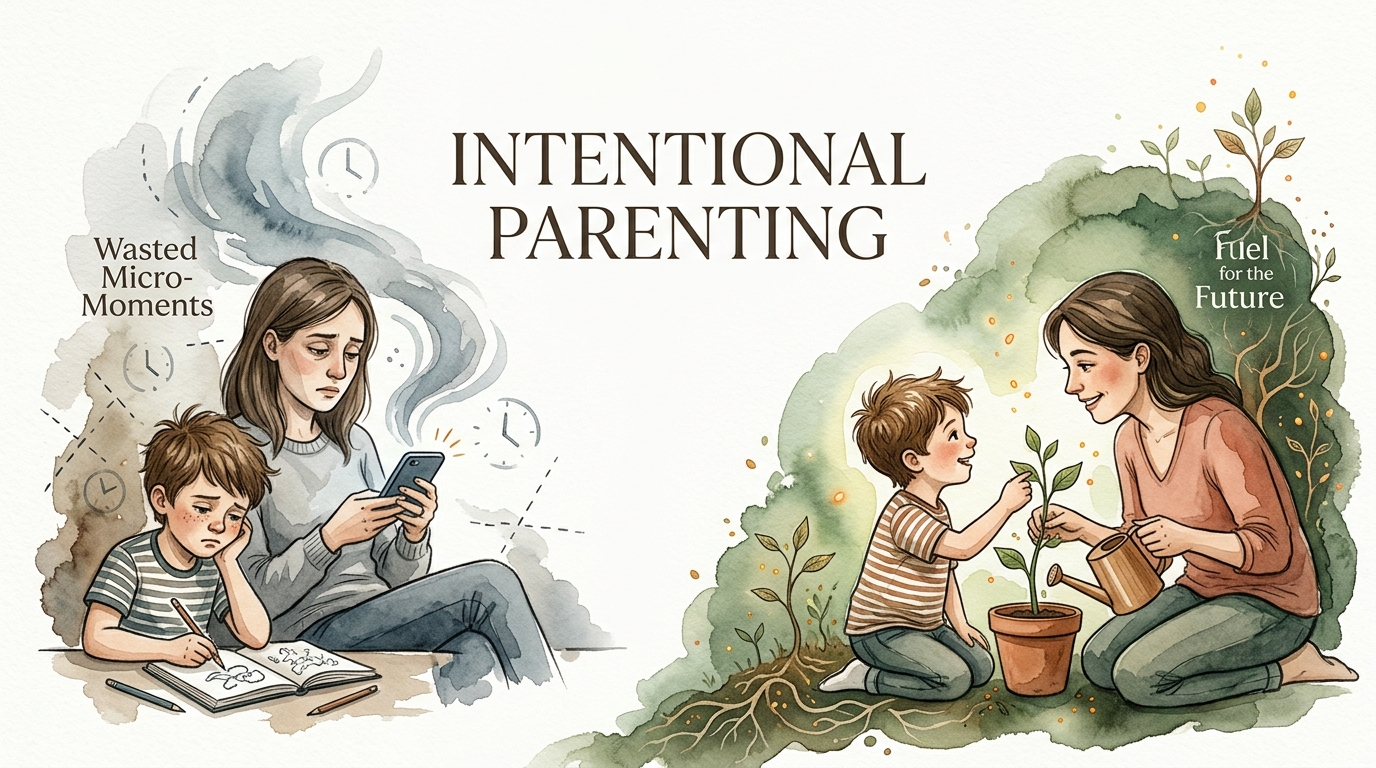
Your attention is the fuel that powers your child’s confidence. Intentional parenting isn’t about being perfect; it’s about turning ‘wasted’ minutes of distraction into ‘fuel’ for your child’s development and self-worth. Every interaction is an opportunity. You are either reacting to the chaos or designing the future. This shift doesn’t require a lifestyle overhaul. It requires a perspective shift.

Stop looking for more time. Start looking at the time you already have. Those five minutes in the car or the thirty seconds during school drop-off are the building blocks of a resilient soul. This guide will show you how to stop parenting on autopilot and start leading with purpose.

intentional parenting
Intentional parenting is the practice of making conscious, value-driven choices about how you raise your children. Most parents operate in a reactive state. They respond to spills, tantrums, and grades based on their current stress level or how they were raised. Intentional parents do the opposite. They act according to a predefined set of goals and values.
Think of it as the difference between a pinball and a pilot. A pinball reacts to every bumper it hits. It has no control over its direction. A pilot knows the destination and adjusts the controls to stay on course. Intentional parenting is the flight plan for your family’s future. It exists because “autopilot” parenting often leads to burnout and disconnection.
In the real world, this looks like choosing a response instead of having a reflex. It means understanding that every child is an individual with unique needs. You don’t parent the child you wish you had; you parent the child standing in front of you. This approach prioritizes the relationship over the rules. It uses everyday moments to instill life skills and emotional intelligence.
How to Transition from Reactive to Intentional
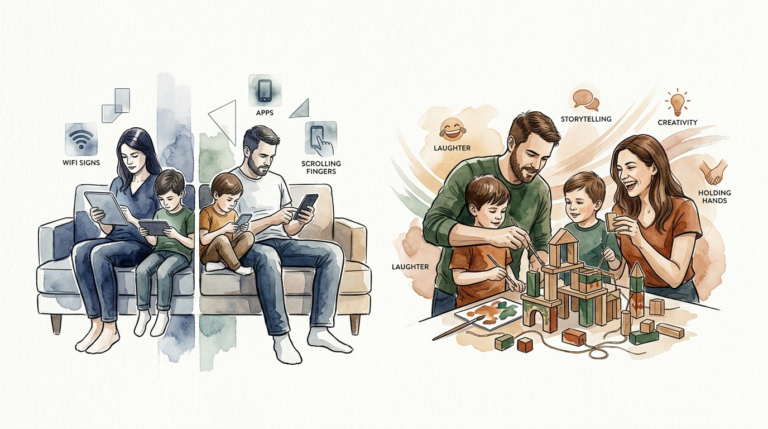
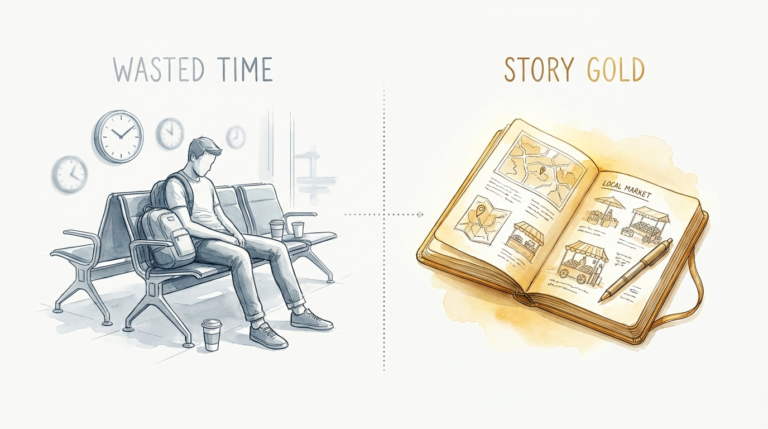
The transition begins with a “Parenting Audit.” You must identify where your attention currently goes. Most parents lose hours to “wasted micro-moments”—scrolling through phones while children play nearby or worrying about work during dinner. Turning these into “fuel” requires a few specific techniques.
The Five-Minute Connection Rule
Focus on being fully present for the first five minutes of key transitions. These transitions include waking up, coming home from school, and the bedtime routine. Put your phone in another room. Make eye contact. Listen more than you speak. This small investment sets the emotional tone for the hours that follow.
The Serve and Return Framework
Borrow this concept from neuroscientists at Harvard. When a child “serves” an interaction—a question, a gesture, or a look—you must “return” it. Acknowledge their focus. If they point at a bird, look at the bird and comment on it. This simple cycle builds brain architecture. It tells the child that their thoughts have value.
Defining Your Core Family Values
You cannot be intentional if you don’t know what you are aiming for. Sit down and write three to five core values. These might be “curiosity,” “kindness,” or “resilience.” When a conflict arises, ask yourself: “Does my response align with our value of kindness?” This framework removes the guesswork from discipline.
The Benefits of Living with Purpose
Living with intention yields measurable results for both you and your child. Research indicates that intentional parenting can improve a child’s resilience and emotional skills by up to 40 percent. This isn’t just about feeling good; it’s about physiological development.
Stronger Brain Architecture
Consistent, positive attention stimulates the prefrontal cortex. This is the part of the brain responsible for executive function and emotional regulation. Children who feel “seen” develop a more robust internal working model of the world. They view the world as a safe place where they can take risks and learn.
Lower Parental Stress
Reactive parenting is exhausting. It feels like you are constantly putting out fires. Intentionality provides a roadmap. When you have a plan, you spend less energy on decision-making. You stop wondering if you are doing the right thing and start trusting the process. This confidence reduces the “guilt cycle” that plagues most modern parents.
Improved Self-Worth
Your attention is the primary mirror through which a child sees themselves. If that mirror is distracted or frustrated, the child feels like a burden. If that mirror is attentive and curious, the child feels like a treasure. Intentionality ensures that the messages you send are the ones you actually want them to receive.
Common Pitfalls and Mistakes
Even the best intentions can go off the rails. Understanding these traps is the only way to avoid them. Most mistakes happen when parents prioritize the “outcome” over the “individual.”
The Perfectionism Trap
Many parents believe being intentional means never losing their cool. This is impossible. Attempting to be perfect creates a high-pressure environment that actually hurts connection. The goal is “repair,” not “perfection.” When you mess up—and you will—intentionality means owning the mistake and reconnecting with your child.
The “Copy-Paste” Method
Parents often try to use techniques that worked for a neighbor or a sibling. This ignores the unique temperament of your specific child. What works for a sensitive, introverted child will fail for a high-energy, extroverted one. Intentionality requires you to be a student of your own child.
Ignoring Your Own Needs
You cannot pour from an empty cup. Some parents become so focused on their child’s development that they neglect their own mental health. This leads to “resentful parenting.” True intentionality includes self-care as a part of the family plan. You must model healthy boundaries if you want your child to have them.
Limitations and Realistic Boundaries
Intentional parenting is powerful, but it isn’t a magic wand. There are realistic constraints that every practitioner must acknowledge.
Environmental Factors
Socioeconomic stress, lack of sleep, and systemic issues can limit a parent’s capacity for intentionality. It is harder to be “present” when you are worried about paying rent or working three jobs. In these cases, intentionality might look like one single “love bridge” per day rather than a full framework.
The Child’s Autonomy
You can be the most intentional parent in the world, and your child will still make their own choices. Parenting is an influence, not a control system. Understanding this boundary is crucial for maintaining your own sanity. Your job is to provide the soil; the child is the seed that determines what kind of flower grows.
Comparison: Reactive vs. Intentional Parenting
Understanding the differences between these two approaches helps you identify where you currently stand.
| Feature | Reactive Parenting | Intentional Parenting |
|---|---|---|
| Primary Goal | Immediate obedience/Stop the noise | Long-term character/Connection |
| Decision Basis | Current mood or past upbringing | Defined family values and goals |
| Communication | Lecture-heavy or distracted | Active listening and “Serve and Return” |
| Discipline | Punitive or inconsistent | Natural consequences and guidance |
| Energy Level | High stress/Burnout | Confident/Sustainability focused |
Practical Tips for Immediate Impact
Start using these techniques today. You don’t need a degree in psychology to move the needle. You just need to be deliberate.
The PRIDE Skills
Use these five techniques during playtime to build a strong bond. They are easy to remember and highly effective.
- Praise: Give specific approval for positive actions. Instead of “Good job,” say “I love how you shared your blocks.”
- Reflection: Repeat what the child says. This shows you are listening and helps them feel understood.
- Imitation: Do what the child is doing. If they build a tower, you build a tower. This validates their interests.
- Description: Narrate what the child is doing like a sports caster. “You are choosing the blue crayon now.”
- Enjoyment: Show genuine enthusiasm. Smile. Laugh. Be there.
Create “Love Bridges”
Use micro-moments to bridge the gaps of physical separation. If you are a working parent, leave a sticky note in a lunchbox. If you are going on a trip, give the child a “token” to hold onto until you return. These small rituals provide emotional certainty in an uncertain world.
Advanced Considerations: The Neuroscience of Connection
For those who want to go deeper, the science of attachment provides a powerful framework. Connection isn’t just a feeling; it is a physiological state known as “co-regulation.”
The Role of the Vagus Nerve
When you are calm and present, your nervous system actually helps “tune” your child’s nervous system. This happens through the vagus nerve. By maintaining your own calm during a child’s meltdown, you are literally providing the biological scaffolding they need to settle down. This is why “checking yourself” is the most advanced parenting skill.
Internal Working Models
Every interaction contributes to a child’s “Internal Working Model.” This is the mental map they use to navigate all future relationships. Securely attached children have a map that says, “I am worthy of love, and people are generally reliable.” Insecurely attached children have a map that says, “I must perform to be loved, or people are dangerous.” Your intentionality is the ink used to draw this map.
Example Scenarios
Translating theory into practice is easier with concrete examples. Let’s look at two common situations.
Scenario A: The Grocery Store Meltdown
Reactive Response: You feel embarrassed. You hiss at the child to stop. You threaten to take away their toys. Your heart rate is 120 bpm. The child feels your panic and screams louder.
Intentional Response: You recognize the child is overwhelmed by the lights and noise. You ignore the stares of strangers. You crouch down to eye level. You say, “It’s really loud in here, and you’re tired. Let’s take three deep breaths together.” You prioritize the child’s nervous system over your own ego.
Scenario B: The “Watch This” Moment
Reactive Response: You say “Cool, honey” without looking up from your phone. You have “wasted” a micro-moment. The child feels invisible.
Intentional Response: You put the phone down immediately. You watch the clumsy somersault. You say, “I saw how hard you tucked your head! You’ve been practicing that, haven’t you?” You have just “fueled” their confidence for the next decade.
Final Thoughts
Your attention is the most valuable currency you will ever spend. Intentional parenting is simply the art of spending it wisely. It is about realizing that the “wasted” minutes of the day are actually the most fertile ground for growth. You don’t have to be a saint. You just have to be a pilot.
Start small. Choose one transition today to be fully present. Notice the shift in your child’s eyes when they realize they have your undivided attention. That spark is the fuel for their future. It is the foundation of a self-worth that no external force can take away.
Consistency is more important than intensity. You don’t need a “grand gesture” every weekend. You need a “micro-connection” every hour. Experiment with these tools. Find the rituals that fit your family’s unique rhythm. The journey from reactive to intentional is a marathon, not a sprint, but every step makes the path clearer for the little feet following behind you.
Sources
1 todaysparent.com | 2 mindspacex.com | 3 psychologytoday.com | 4 yourparentingmojo.com | 5 ldaiowa.org | 6 jacquieellis.com | 7 yourparentingmojo.com | 8 thezoofamily.com | 9 seattleschild.com | 10 instituteofchildpsychology.com | 11 empoweringparents.com | 12 victorychurch.org | 13 aish.com | 14 homeword.com | 15 yourparentingmojo.com | 16 mindsplain.com | 17 nih.gov | 18 apa.org | 19 apa.org | 20 thezoofamily.com | 21 attachmentproject.com | 22 youtube.com | 23 npnhub.com | 24 ucdavis.edu